
Military Aircraft United: 70-Year Service Records Redefine Aviation Durability
Military aircraft united in longevity challenge modern efficiency. The B-52 and C-130 exceed 70 years in service across U.S. states, proving over-engineering wins in 2026.

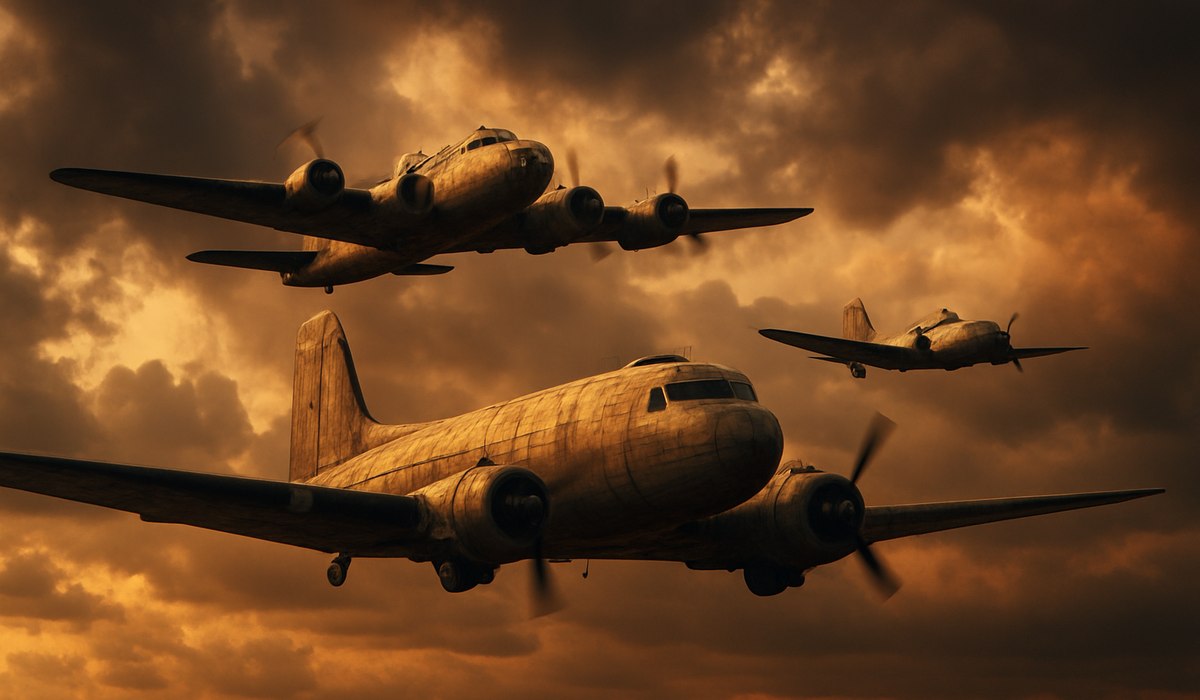
Image generated by AI
Military Aircraft United by Durability: Defying the Efficiency Paradigm
Military aircraft united in exceptional longevity continue operating across U.S. states decades beyond original design projections. The B-52 Stratofortress and C-130 Hercules represent engineering philosophies fundamentally at odds with 21st-century aviation trends. Where modern platforms prioritize lightweight composites and streamlined systems, these workhorses embrace redundancy, reinforced structures, and field-repairable components. This deliberate over-engineering approach transforms what contemporary designers view as inefficiency into strategic advantage—extended operational lifespans that justify massive initial investments while adapting to evolving military requirements.
The sustained viability of military aircraft united by this design ethos challenges assumptions about innovation. Continuous upgrades to avionics, engines, and defensive systems keep these platforms combat-relevant without requiring ground-up redesigns. For civilian aviation professionals monitoring military technology trends, understanding this durability paradigm offers insights into long-term aircraft viability and maintenance cost structures that influence commercial fleet decisions.
The B-52 Stratofortress: Seven Decades of Air Superiority
Introduced in 1955, the B-52 Stratofortress stands as aviation's longest continuously operational bomber platform. Active across U.S. states and forward-deployed locations globally, the B-52 has logged more than 70 years without retirement, defying every successor program intended to replace it. Military planners now project B-52 operations extending to 2050—nearly a century of uninterrupted service.
This longevity stems from deliberate architectural choices prioritizing durability over elegance. Eight turbofan engines provide redundancy; damage to multiple powerplants still permits flight operations. Aluminum airframe construction, though heavier than modern composites, enables unlimited fatigue cycles and straightforward field repairs. The cockpit layout, seemingly antiquated, permits rapid maintenance and component substitution without specialized facilities.
Recent modernization programs address the gulf between 1950s origins and contemporary threats. The B-52 now carries next-generation standoff missiles, advanced radar systems, and digital cockpits. These upgrades occur without structural overhauls, demonstrating how robust baseline design absorbs technological evolution. For defense analysts and aviation enthusiasts, the B-52 exemplifies how military aircraft united by over-engineered principles accumulate strategic value over decades, justifying per-unit development costs across generations of operators.
The C-130 Hercules: Continuous Production and Evolution
The Lockheed Martin C-130 Hercules transport aircraft entered service in 1956 and remains in active production—an unprecedented distinction spanning seven decades. More than 2,400 airframes have been built in variants serving 70 nations, including continuous procurement by the U.S. Air Force across all 50 states and territories. The C-130 represents not retirement followed by replacement, but rather continuous evolution through variant development and component modernization.
The Hercules design prioritizes accessibility and field maintenance above all. Cargo doors open fully to fuselage boundaries, permitting transport of outsized loads without disassembly. The high-wing, high-clearance landing gear configuration enables operations from unprepared surfaces—forward airstrips, desert terrain, and damaged runways. Hydraulic and mechanical systems emphasize redundancy; the aircraft continues flying with multiple system failures that would ground modern designs.
Successive variants—from the original C-130A through contemporary J-models—retain fundamental architecture while advancing avionics, engines, and structural reinforcement. Operators can upgrade aging fleets in-place, extending airframe life indefinitely. The C-130 Hercules exemplifies how military aircraft united by modular design philosophy accumulate decades of service lives without obsolescence, delivering unmatched operational flexibility across diverse environments and mission profiles.
Over-Engineering Over Innovation: A Winning Philosophy
Modern commercial and military aerospace emphasizes efficiency-first design: minimized weight, integrated systems, optimized manufacturing, and planned technology insertion at scheduled intervals. This approach delivers impressive performance metrics and lower initial unit costs. Yet it introduces vulnerability: single-point failures cascade more severely; specialized components require dedicated maintenance infrastructure; and airframe lives terminate at predetermined fatigue limits.
Military aircraft united by legacy over-engineering principles operate under inverse logic. Redundant systems mean individual failures degrade rather than eliminate capability. Standardized, proven components simplify logistics across global operations. Robust airframes tolerate decades of service without structural overhaul. These characteristics appear inefficient during peacetime operations but prove invaluable during sustained campaigns, equipment shortages, or infrastructure damage.
The geopolitical context reinvigorates this philosophy. Extended procurement cycles mean aircraft entering service today must remain viable through 2050. Supply chain disruptions elevate the value of field-repairable, non-exotic materials. Climate resilience demands systems tolerating heat, humidity, salt spray, and extreme cold without performance degradation. By these measures, the apparent inefficiency of over-engineering represents rational long-term strategy rather than design obsolescence.
Other Long-Service Military Aircraft Defining Service Life Standards
Beyond the B-52 and C-130, multiple platforms demonstrate extended operational spans. The KC-135 Stratotanker (operational since 1957) refuels aircraft globally, with airframes exceeding 60 years in continuous service. Strategic maintenance programs and periodic engine replacements maintain capability despite airframe age. The U.S. Navy's P-3C Orion maritime patrol aircraft operated for 64 years (1962–2026), recently retiring after sustained modernization proved economically viable longer than developing replacement platforms.
The Boeing CH-47 Chinook helicopter, introduced in 1962, remains the U.S. Army's primary heavy-lift transport across all states and territories. Continuous production variants incorporate modern avionics and engines while retaining the fundamental tandem-rotor architecture. Operators worldwide maintain fleets exceeding 50 years, supported by parts availability and established maintenance protocols. These examples illustrate systematic patterns: military aircraft united by robust foundational engineering, modular upgrade pathways, and decades-long parts support accumulate operational tenures rivaling or exceeding civilian jetliner fleets.
Military Aircraft Longevity: Key Metrics and Comparative Data
| Aircraft Model | Service Entry | Current Status (2026) | Operational Span | Active Operators | Primary Advantage |
|---|---|---|---|---|---|
| B-52 Stratofortress | 1955 | Active; projected to 2050 | 71+ years | U.S. Air Force | Redundant engines; field-repairable structure |
| C-130 Hercules | 1956 | Continuous production | 70+ years (ongoing) | 70+ nations | Modular design; unprepared surface capability |
| KC-135 Stratotanker | 1957 | Active; periodic modernization | 69+ years | U.S. Air Force | Standardized components; engine swap capability |
| P-3C Orion | 1962 | Recently retired (2026) | 64 years | Former U.S. Navy | Proven avionics integration; logistics network |
| CH-47 Chinook | 1962 | Active; continuous production | 64+ years (ongoing) | Multiple nations | Tandem-rotor lift capacity; modular engines |
| A-10 Thunderbolt II | 1975 | Active; service life extension approved | 51+ years | U.S. Air Force | Redundant hydraulics; gun-based design simplicity |
What This Means for Travelers: Implications for Commercial Aviation
Commercial aviation
Disclaimer
This article is for informational and educational purposes only. It does not constitute legal, financial, or professional advice. While we strive to provide accurate and up-to-date information, travel policies, regulations, and conditions change rapidly. Always verify information with official sources before making travel decisions. Nomad Lawyer makes no representations about the accuracy, reliability, completeness, or suitability of the information provided. Readers should consult qualified professionals for advice specific to their circumstances. The views expressed in this article are those of the author and do not necessarily reflect the views of Nomad Lawyer.
Raushan Kumar
Founder & Lead Developer
Full-stack developer with 11+ years of experience and a passionate traveller. Raushan built Nomad Lawyer from the ground up with a vision to create the best travel and law experience on the web.
Learn more about our team →