
United States Aligns With Global Travel Markets As Tourism Growth Slows Amid Middle East Conflict And Rising Costs
United States Aligns With Global Travel Markets As Tourism Growth Slows Amid Middle East Conflict And Rising Costs

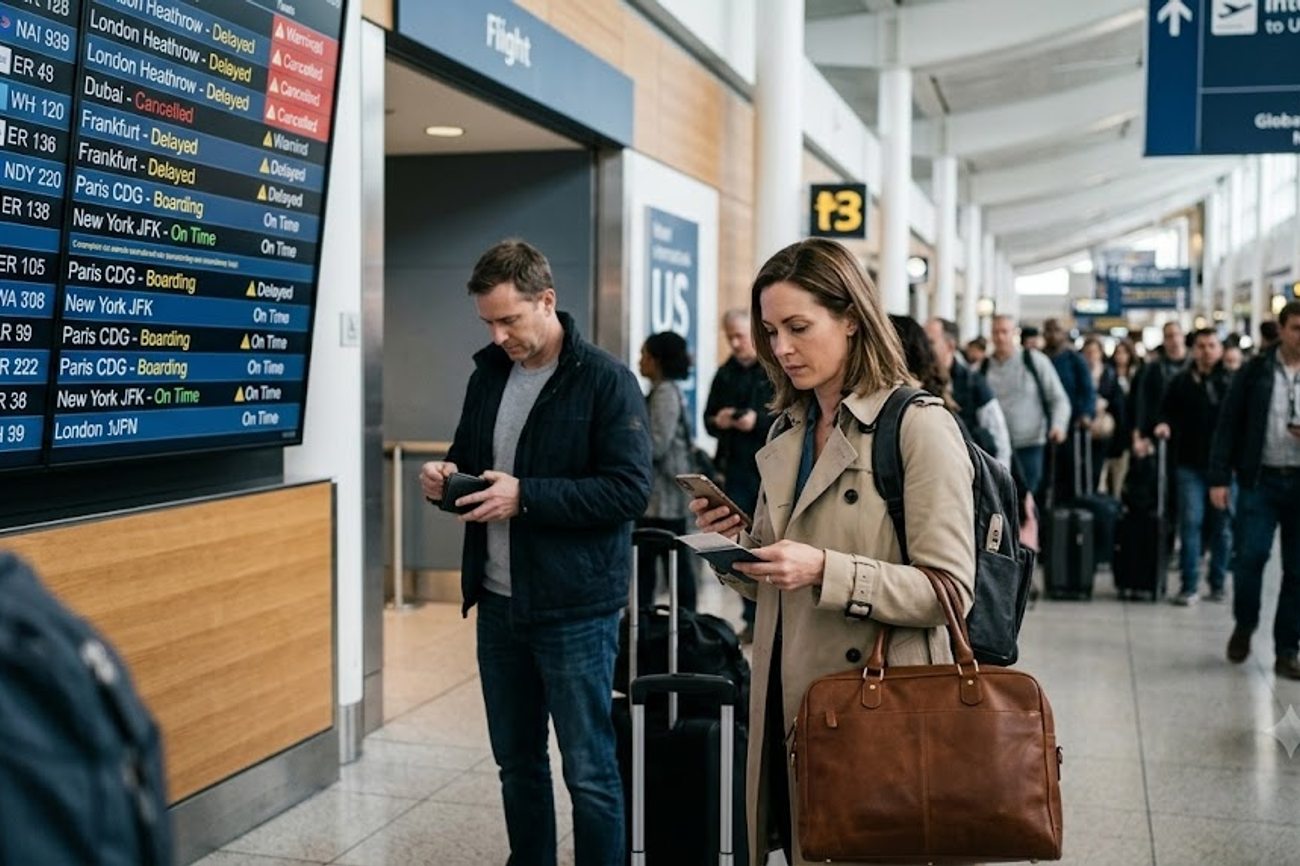
Image generated by AI
The global travel appetite has hit a sudden wall, with international visitor growth plummeting to a mere 0.4% in the first half of 2026. This stagnation comes after a year of aggressive expansion, signaling a pivot where travelers are no longer chasing "revenge travel" but are instead weighing geopolitical risks against their shrinking bank accounts.
The Great Calibration of 2026
We are witnessing a fundamental shift in how the world moves. After 2025 saw a robust 4% increase in arrivals—totaling 1.52 billion people—the momentum has evaporated. Between January and June 2026, approximately 690 million people crossed international borders. While that is technically three million more visitors than the same window in 2025, the growth is anemic.
The volatility is most evident when you look at the quarterly breakdown. The first quarter of 2026 started with a hopeful 2% increase, only to crash into a 1% decline during the second quarter. April was particularly brutal, seeing a 3% year-on-year drop, and June followed suit with another 3% global decline. This isn't just a dip; it is a reaction to a perfect storm of rising fuel costs, persistent inflation, and a Middle East conflict that has rewritten the rules of aviation and safety.
For those of us who track these rhythms, the "Revised 2026 growth forecast" of 1% to 2% tells the real story. The industry is no longer predicting a boom; it is managing a slowdown. Travelers are becoming hyper-sensitive to external disruptions, opting for shorter trips or destinations where their currency holds more weight.
Regional Divergence: Winners and Losers
The map of global tourism is fracturing. The Middle East, which was a powerhouse in 2025—welcoming nearly 100 million visitors and exceeding 2019 levels by roughly 39%—has suffered a catastrophic 22% drop in arrivals. This is the most significant regional decline globally, driven by a collapse in visitor confidence and the logistical nightmare of disrupted airspace.
Meanwhile, other regions are absorbing the overflow. Africa has emerged as a surprisingly resilient spot with a 4% increase in arrivals. Europe followed with 3% growth, and the Americas saw a 2% uptick. Europe’s success is largely due to its dense infrastructure and the ability for travelers to pivot quickly to cheaper neighboring countries via rail or short-haul flights. However, even Europe isn't immune; Western Europe saw a 6% decline in arrivals during June, hammered by extreme heatwaves and operational chaos.
The Asia Pacific region remains a puzzle. While it grew by roughly 1% in the first half of 2026, it is still operating 11% below its 2019 benchmarks. The recovery is fragmented: North-East Asia is climbing with 3% growth, but South Asia has plummeted by 5%, and South-East Asia has dipped by 1%. The era of cheap, long-haul flights to Bali or Bangkok is facing a reality check as airfares climb and source markets within Asia tighten their belts.
Visitor Insider Tips
Navigating this volatile environment requires a different strategy than it did two years ago. To travel effectively in 2026, you need to move away from the "bucket list" mentality and toward "value-based" exploration.
Timing and Crowds Avoid the traditional "shoulder seasons," which are now becoming the new peak as people flee the extreme heat of July and August. In Europe, target late September or October. To avoid the June slump seen in Western Europe, look toward the Balkans or the Baltics, where prices remain competitive and the crowds are thinner.
Transport Hacks With fuel prices driving up airfares, the most savvy travelers are utilizing regional rail networks. In Europe, prioritize Eurail or national rail services over budget airlines to avoid the volatility of airport surcharges and flight cancellations. In Asia, look for "secondary city" airports; flying into a smaller hub and taking a domestic train often costs 20% less than flying directly into a capital city.
Local Etiquette and Spending In regions like Africa and South-East Asia, where tourism is a lifeline but growth is uneven, avoid the "tourist bubbles." Spend your money in locally-owned guesthouses rather than international chains. In the current economic climate, small-scale entrepreneurs are the ones feeling the 2026 slowdown most acutely.
Where to Base Yourself Instead of the primary hubs, choose "gateway cities." Instead of staying in Paris or London, base yourself in cities like Lyon or Manchester. You get the same cultural access with significantly lower accommodation costs and easier access to regional hidden spots.
Cultural and Environmental Context
The current slowdown is exposing the fragility of "over-tourism" dependent economies. When a region like the Middle East sees a 22% drop, it isn't just a statistic—it's a loss of livelihoods for thousands of hotel staff, drivers, and artisans. This volatility is forcing a necessary conversation about diversification. Governments are realizing that relying on a few high-spending source markets is a dangerous gamble.
Environmentally, the 2026 heatwaves in Western Europe are no longer "anomalies"—they are the new baseline. This is pushing tourism toward "cool-cationing," where travelers seek northern latitudes to escape lethal temperatures. This shift puts new pressure on the infrastructure of places like Scandinavia and Canada, which aren't always equipped for massive summer surges.
Furthermore, the shift toward more affordable, local travel is a win for sustainability. As long-haul flights become prohibitively expensive due to oil prices, we are seeing a return to regionalism. This reduces the carbon footprint per traveler and encourages a deeper, slower engagement with one's own continent. To understand the global standards for preserving these sites amid shifting visitor patterns, the UNESCO World Heritage Centre provides essential context on how heritage sites are balancing accessibility with conservation.
For those planning a trip to the Americas or Europe, checking the official guidelines of Visit Europe or similar national boards is now essential, as visa requirements and entry costs are fluctuating in response to geopolitical tensions.
FAQ: Visiting Global Destinations 2026
What is the best time to visit Europe in 2026? Avoid June and July due to extreme heatwaves and travel disruptions. The best windows are now late September through November, offering stable weather and lower prices as the summer rush fades.
Is it safe to travel to the Middle East right now? Arrivals have dropped 22% due to conflict and instability. Check your national government's travel advisories and the UN Tourism updates before booking, as airspace and connections remain volatile.
How do I handle rising travel costs in Asia? Focus on North-East Asia, which is showing 3% growth and better stability. Use regional rail and avoid peak-season long-haul flights; instead, fly into secondary hubs to reduce airfare expenses.
Do I need a visa for most international destinations in 2026? Visa policies are shifting rapidly due to geopolitical tensions. Always verify current requirements via official government portals or the destination's official tourism board at least six weeks before departure.
The era of effortless global movement has ended; the era of the intentional traveler has begun.
#GlobalTourism2026 #TravelEconomics #AsiaPacificTravel #EuropeSummer2026 #MiddleEastTravelTrends #UNTourismData
Related Travel Guides
- Japan Advances With South Korea and Others as Cherry Blossom Tourism Shapes Spring Travel
- Brazil Travel Soars As National Survey Tracks 22500 Visitors Across 50 Destinations To Shape Tourism Future
- Georgia Moves With Cambodia To Accelerate Tourism Trade And Investment Cooperation Across New Economic Frontiers
Disclaimer
This article is for informational and educational purposes only. It does not constitute legal, financial, or professional advice. While we strive to provide accurate and up-to-date information, travel policies, regulations, and conditions change rapidly. Always verify information with official sources before making travel decisions. Nomad Lawyer makes no representations about the accuracy, reliability, completeness, or suitability of the information provided. Readers should consult qualified professionals for advice specific to their circumstances. The views expressed in this article are those of the author and do not necessarily reflect the views of Nomad Lawyer.
Preeti Gunjan
Contributor & Community Manager
A passionate traveller and community builder. Preeti helps grow the Nomad Lawyer community, fostering engagement and bringing the reader experience to life.
Learn more about our team →