
United Express Flight UA6064 Diverts to Des Moines After Emergency Squawk 7700 Declaration: CRJ-200 N904EV Makes Safe Landing Following Chicago Departure
United Express UA6064 declared emergency en route from Chicago O'Hare, triggering Squawk 7700. The Bombardier CRJ-200 diverted to Des Moines International Airport, landing safely after 51 minutes airborne.

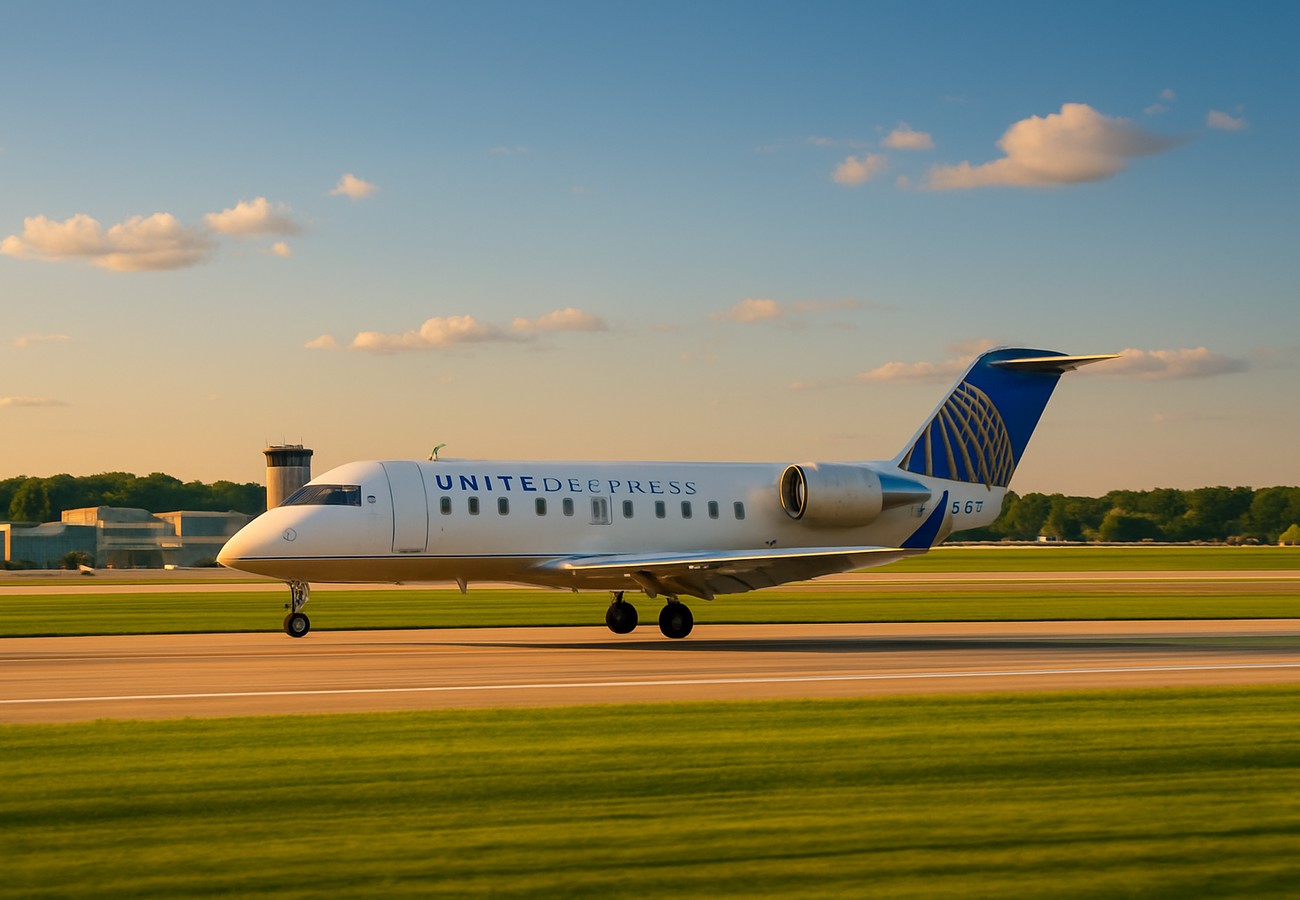
Image generated by AI
Breaking: United Express Flight Declares Emergency Mid-Flight, Diverts to Des Moines in Dramatic Safety Response
A United Express regional flight operating between Chicago and Iowa triggered an emergency alert Wednesday afternoon, forcing a dramatic mid-flight diversion that showcased the critical importance of rapid decision-making in commercial aviation. United Express flight UA6064, a Bombardier CRJ-200 aircraft registered as N904EV, departed Chicago O'Hare International Airport at 4:05 PM Central Daylight Time before the flight crew initiated an emergency declaration shortly after takeoff, ultimately landing safely at Des Moines International Airport at 5:56 PM CDT.
The incident marks another significant moment in regional aviation operations, where split-second decisions by experienced pilots and ground crews can mean the difference between routine operations and potential catastrophe. While the exact nature of the emergency remains unconfirmed by United Airlines and the Federal Aviation Administration, the swift response and successful diversion underscore the robust safety protocols embedded within modern commercial aviation infrastructure.
Flight UA6064: Timeline and Critical Details of the Diversion
United Express flight UA6064 was originally scheduled to operate from Chicago O'Hare International Airport to Sioux Gateway Airport in Iowa, a regional route typical of United Express's extensive network serving smaller metropolitan areas across the Midwest. The Bombardier CRJ-200 twin-engine regional jet, bearing the registration number N904EV, pushed back from its gate and departed Chicago at precisely 16:05 CDT on Wednesday afternoon.
The flight remained airborne for approximately 51 minutes before landing safely at Des Moines International Airport at 17:56 CDT. This compressed flight duration—significantly shorter than the scheduled routing to Sioux City—reflects the immediate nature of the emergency response and the decision to divert to the nearest suitable airport equipped to handle the situation.
According to aviation tracking data and preliminary reports, the flight crew declared an emergency shortly after takeoff, triggering what aviation professionals refer to as a Squawk 7700 transponder code. This universal distress signal immediately alerted air traffic control facilities across the region that the aircraft was experiencing a serious situation requiring priority handling and expedited landing clearance.
The aircraft touched down without incident at Des Moines International Airport, where emergency response teams were standing by. All passengers and crew members disembarked safely, and there were no reported injuries associated with the diversion or landing procedures. The incident was handled with textbook precision by both the flight crew and ground personnel at Des Moines International Airport.
Understanding Squawk 7700: The Universal Emergency Transponder Code
For travelers and aviation enthusiasts unfamiliar with the technical language of commercial aviation, understanding what a Squawk 7700 declaration means is essential context for comprehending the severity and significance of incidents like United Express UA6064's diversion.
Squawk codes are four-digit transponder codes that aircraft transmit to air traffic control radar systems, allowing controllers to identify and track specific aircraft within their airspace. These codes serve as the primary identification mechanism for aircraft operating under instrument flight rules, particularly in controlled airspace near major metropolitan airports like Chicago O'Hare.
The code 7700 holds special significance in aviation operations. It is the universal emergency transponder code designated by the International Civil Aviation Organization (ICAO) and recognized globally by all air traffic control facilities. When a pilot selects 7700 on their transponder, they are broadcasting to every radar facility monitoring their flight that the aircraft is experiencing a serious emergency requiring immediate priority handling.
The declaration of Squawk 7700 automatically triggers several critical responses within the air traffic control system. Controllers immediately prioritize the affected aircraft for landing clearance, clear other traffic from the vicinity, alert emergency response teams at nearby airports, and coordinate with emergency services. The code essentially cuts through normal traffic sequencing and places the aircraft at the front of the queue for landing clearance.
Squawk 7700 declarations can be triggered by various situations ranging from medical emergencies aboard the aircraft, to mechanical or structural issues, to cabin pressurization problems, to fuel emergencies, to navigation system failures, or other serious technical malfunctions. The code itself does not specify the nature of the emergency—it simply communicates that an emergency exists and that the aircraft requires priority handling.
In the case of United Express UA6064, the specific cause of the emergency declaration has not been officially confirmed by United Airlines, the FAA, or the National Transportation Safety Board. However, preliminary assessments suggest the emergency was likely related to technical systems, cabin pressurization concerns, or a medical situation requiring expedited landing. The exact nature of the incident will likely be detailed in official statements from United Airlines and FAA investigations in the coming days.
The Strategic Decision: Why Des Moines Over Sioux City
One of the most critical decisions made during any in-flight emergency is the selection of the diversion airport. Flight crews and air traffic controllers must rapidly evaluate multiple factors including distance, runway length and condition, available emergency services, medical facilities, maintenance capabilities, and weather conditions. The decision to divert United Express UA6064 to Des Moines International Airport rather than continuing to the originally scheduled Sioux Gateway Airport in Sioux City reflects these operational considerations.
Des Moines International Airport, officially designated as Des Moines International Airport (DSM), is a significantly larger facility than Sioux Gateway Airport (SUX). The airport serves as a major hub for regional operations and commercial aviation throughout central Iowa, with substantially more infrastructure, longer runways, and enhanced emergency response capabilities.
Runway infrastructure represents a critical consideration in emergency diversion decisions. Des Moines International Airport features multiple runways with lengths exceeding 11,000 feet, providing ample space for the Bombardier CRJ-200 to execute safe landing procedures even under emergency conditions. The CRJ-200, while a relatively compact regional jet, still requires adequate runway length to ensure safe landing performance, particularly if the aircraft was experiencing mechanical issues affecting braking systems or other landing-related equipment.
Beyond runway considerations, Des Moines International Airport maintains comprehensive emergency response infrastructure including dedicated fire and rescue equipment, trained emergency personnel, and established protocols for handling aircraft emergencies. The airport's emergency services are equipped to respond to various scenarios including medical emergencies, structural damage, fuel system issues, and other aviation emergencies.
Medical facilities represent another crucial factor in diversion decisions. Des Moines International Airport is located in close proximity to multiple hospitals and medical centers, including University of Iowa Hospitals and Clinics and Mercy Medical Center Des Moines. If the emergency involved a medical situation requiring immediate hospitalization, Des Moines provides superior access to advanced medical care compared to Sioux City.
Additionally, Des Moines International Airport maintains more extensive maintenance and technical support capabilities. If the emergency involved mechanical or technical systems requiring inspection or repair before the aircraft could continue operations, Des Moines offers superior resources and expertise compared to the smaller Sioux Gateway Airport facility.
The decision to divert to Des Moines rather than continuing to Sioux City represents sound aeronautical decision-making based on operational safety considerations. While Sioux Gateway Airport is a functional regional facility, Des Moines International Airport's superior infrastructure, emergency services, medical access, and technical capabilities made it the optimal choice for handling an aircraft emergency.
Regional Aviation Safety and the Importance of Rapid Response Protocols
The United Express UA6064 incident highlights the critical importance of safety protocols within regional aviation operations. Regional airlines operating aircraft like the Bombardier CRJ-200 serve essential transportation functions, connecting smaller metropolitan areas to major hubs and enabling economic activity across rural and semi-rural regions.
However, regional aviation operations present unique challenges compared to larger carrier operations. Regional aircraft typically operate with smaller crews, often consisting of two pilots and a flight attendant or two. These crews must be trained to handle emergencies with the same professionalism and precision as crews operating larger aircraft, despite having fewer resources available.
The Bombardier CRJ-200, the aircraft type involved in the United Express UA6064 incident, has established a strong safety record throughout its operational history. The aircraft type has been in service since the 1990s and has accumulated millions of flight hours across numerous operators worldwide. While any aircraft can experience technical issues or emergencies, the CRJ-200 platform has demonstrated reliability and safety characteristics that have made it a popular choice for regional carriers.
United Express, the regional carrier operating flight UA6064, maintains rigorous safety standards and training protocols. United Express pilots undergo extensive training in emergency procedures, including scenarios involving technical failures, medical emergencies, and other serious situations. The professional response demonstrated by the flight crew in declaring the emergency and executing the diversion reflects the quality of training and professionalism within United Express operations.
The air traffic control system's response to the Squawk 7700 declaration also deserves recognition. Controllers at Chicago O'Hare and subsequent facilities handled the emergency with appropriate urgency and professionalism, coordinating the diversion, clearing airspace, and ensuring that emergency services were positioned at Des Moines International Airport before the aircraft's arrival.
Passenger Impact and Travel Disruptions
While the safe landing of United Express UA6064 at Des Moines International Airport prevented what could have been a catastrophic incident, the diversion created significant disruptions for the 50-plus passengers and crew members aboard the flight. Passengers who were expecting to arrive in Sioux City found themselves landing in Des Moines instead, requiring alternative ground transportation arrangements to reach their final destinations.
United Airlines has not released detailed statements regarding passenger accommodations, rebooking procedures, or compensation related to the diversion. Typically, when flights are diverted due to emergency situations, airlines work to rebook passengers on subsequent flights or arrange ground transportation to their intended destinations. The specific accommodations provided to United Express UA6064 passengers will likely be detailed in official statements from United Airlines.
The incident also created ripple effects throughout the regional aviation network. Flights scheduled to operate from Sioux Gateway Airport may have experienced delays or cancellations due to the diversion of United Express UA6064, which was originally scheduled to arrive in Sioux City. The Bombardier CRJ-200 aircraft involved in the incident remained at Des Moines International Airport for inspection and maintenance, removing it from service for subsequent scheduled flights.
For travelers using regional airlines like United Express, incidents such as the UA6064 diversion serve as reminders of the importance of travel insurance and flexible booking arrangements. While commercial aviation remains extraordinarily safe, diversions and unexpected disruptions do occur, and travelers benefit from maintaining flexibility in their itineraries and understanding airline policies regarding rebooking and compensation.
Industry Analysis: Emergency Diversions and Aviation Safety Standards
The United Express UA6064 diversion represents one of thousands of emergency diversions that occur annually throughout the global aviation system. According to FAA data, emergency diversions occur regularly across all segments of commercial aviation, from regional carriers operating small aircraft to major carriers operating large widebody jets.
Emergency diversions are not inherently indicative of systemic safety problems. Rather, they represent the aviation system functioning as designed—when situations arise that require expedited landing, the system provides mechanisms (such as Squawk 7700) to prioritize affected aircraft and ensure safe resolution of the emergency.
The vast majority of emergency diversions result in safe landings without incident. Pilots are extensively trained to handle emergency situations, and modern aircraft are equipped with redundant systems designed to maintain safe flight characteristics even when primary systems fail. The combination of pilot training, aircraft design, and air traffic control coordination creates a safety system that successfully resolves emergencies thousands of times annually.
The specific cause of the United Express UA6064 emergency remains unconfirmed, but preliminary assessments suggest the emergency was likely related to technical systems, cabin pressurization concerns, or a medical situation. Each of these categories of emergencies is addressed through established procedures and protocols that have been refined through decades of aviation experience.
Technical emergencies might involve engine issues, hydraulic system failures, electrical system problems, or other mechanical concerns. Modern aircraft are designed with redundancy—if one system fails, backup systems maintain aircraft functionality. Pilots are trained to identify technical failures and execute appropriate procedures to maintain safe flight.
Cabin pressurization emergencies occur when the aircraft's pressurization system fails to maintain proper cabin altitude. At cruise altitudes above 10,000 feet, the cabin must be pressurized to maintain adequate oxygen levels for passengers and crew. If pressurization is lost, the aircraft must descend to lower altitudes where the atmosphere provides sufficient oxygen. Pressurization failures are serious situations requiring immediate descent and landing.
Medical emergencies aboard aircraft can range from minor health issues to serious conditions requiring immediate medical intervention. When medical emergencies occur, flight crews coordinate with ground medical personnel and divert to the nearest suitable airport where the patient can receive medical care.
Looking Forward: Safety Improvements and Operational Lessons
The United Express UA6064 incident will likely be thoroughly investigated by the FAA and potentially the National Transportation Safety Board (NTSB), depending on the severity of the underlying cause. These investigations serve important functions in identifying any systemic issues, equipment defects, or procedural gaps that might require correction.
The FAA maintains a robust accident and incident investigation program designed to identify safety trends and implement corrective measures. When patterns emerge from multiple incidents, the FAA issues airworthiness directives, operational bulletins, or other guidance to address identified safety concerns.
For United Express and other regional carriers, incidents like the UA6064 diversion provide opportunities to review procedures, training programs, and operational protocols. Even when emergencies are handled successfully, carriers often identify opportunities for improvement in crew training, communication procedures, or emergency response coordination.
For passengers and the traveling public, the United Express UA6064 incident reinforces the fundamental safety of commercial aviation. Despite the dramatic nature of emergency diversions, the aviation system successfully resolves thousands of emergency situations annually without loss of life. The professional response demonstrated by the flight crew, air traffic controllers, and emergency responders at Des Moines underscores why air travel remains the safest mode of long-distance transportation.
Key Takeaways
- The Incident: United Express Flight UA6064 (Bombardier CRJ-200, N904EV) diverted to Des Moines shortly after departing Chicago to Sioux City.
- Squawk 7700: The crew triggered the universal code signaling a serious general emergency requiring priority ATC handling.
- Rapid Resolution: The aircraft was airborne for less than one hour, departing at 16:05 CDT and landing safely under emergency protocols at 17:56 CDT.
- Why Des Moines: Diverting to Des Moines provided immediate access to longer runways, superior infrastructure, and comprehensive emergency medical and technical services.
- Unconfirmed Cause: While the exact nature of the emergency has not been officially stated, rapid regional diversions typify responses to cabin pressure, technical faults, or onboard medical warnings.
- Aviation Safety Priority: The incident is a textbook example of modern aviation prioritizing absolute precaution and rapid response over maintaining schedule continuity.
Related Travel Guides
Disclaimer
This article is for informational and educational purposes only. It does not constitute legal, financial, or professional advice. While we strive to provide accurate and up-to-date information, travel policies, regulations, and conditions change rapidly. Always verify information with official sources before making travel decisions. Nomad Lawyer makes no representations about the accuracy, reliability, completeness, or suitability of the information provided. Readers should consult qualified professionals for advice specific to their circumstances. The views expressed in this article are those of the author and do not necessarily reflect the views of Nomad Lawyer.
Kunal K Choudhary
Co-Founder & Contributor
A passionate traveller and tech enthusiast. Kunal contributes to the vision and growth of Nomad Lawyer, bringing fresh perspectives and driving the community forward.
Learn more about our team →