
US Airfares Climb 23.4% as United and Delta Absorb Nearly $12B in Cumulative Fuel Inflation
A 23.4% year-over-year rise in US airfares, nearly $12 billion in combined fuel cost shocks at Delta and United, and the closure of Spirit Airlines reshape travel affordability in 2026.

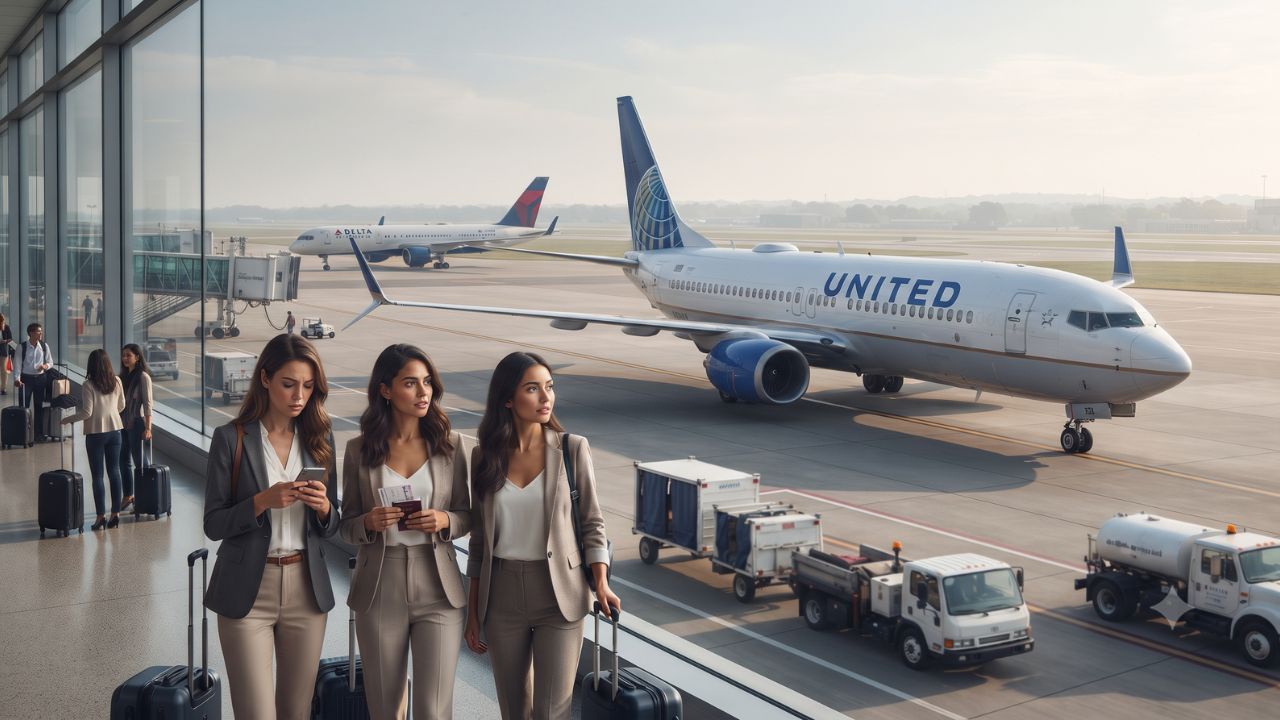
A 23.4% annual surge in consumer airfares across the United States has upended domestic travel budgets, driven by a global jet fuel price shock and the collapse of low-cost carrier capacity. Official price indices released by the U.S. Bureau of Labor Statistics (BLS) confirm that while the seasonally adjusted airline fare index recorded a marginal 0.5% decrease during August 2026, airfares over the trailing twelve-month period remain drastically higher. Compounding the consumer impact, legacy giants Delta Air Lines and United Airlines are contending with nearly $6 billion each in unanticipated fuel expenses, accelerating airline capacity management and prompting carriers to transfer elevated operational costs onto ticket prices.
The sudden shift shatters initial expectations that airline pricing would moderate heading into the autumn and winter holidays. Instead, American travelers confront an altered commercial market defined by rising operational input costs, the market exit of low-cost competitor Spirit Airlines, and legacy carriers reconfiguring their passenger cabins toward premium seating. Together, these factors have systematically eroded entry-level budget fares, giving commercial airlines greater pricing leverage across domestic and international networks.
Energy Volatility and the Collapse of Budget Fare Baselines
The underlying catalyst behind escalating ticket prices begins in global energy refining hubs. Industry calculations published by the International Air Transport Association (IATA) outline an unprecedented surge in aviation operating costs. Global airline fuel expenditure is projected to increase from $252 billion in 2025 to $350 billion in 2026—an increase of approximately 39%. During this period, the benchmark price of Jet A-1 aviation kerosene escalated from an average of $90 per barrel in 2025 to $152 per barrel in 2026, representing a 69% jump.
This price escalation is not merely a reflection of crude oil volatility. Supply disruptions across Middle Eastern energy production centers, coupled with constrained refinery throughput and elevated logistical transport tariffs, have dramatically widened the crack spread—the price differential between unrefined crude oil and specialized aviation jet fuel. Because commercial airlines globally have hedged only roughly one-third of their anticipated 2026 fuel requirements, two-thirds of industry consumption remains exposed to immediate spot-market price spikes. Consequently, fuel now claims 31.4% of total airline operating expenses, up six percentage points from 25.4% in 2025, slashing collective airline net profits by 49% from $45 billion to $23 billion.
| Global Airline Industry Metric | Calendar Year 2025 | Projected Calendar Year 2026 | Net Operational Variance |
|---|---|---|---|
| Total Global Airline Fuel Expenditure | $252 billion | $350 billion | +38.9% increase |
| Average Benchmark Jet Fuel Price (Per Barrel) | $90 | $152 | +68.9% increase |
| Fuel Proportion of Total Operating Expenses | 25.4% | 31.4% | +6.0 percentage points |
| Global Commercial Airline Net Profit | $45 billion | $23 billion | -48.9% decrease |
| Industry Fuel Consumption Hedge Ratio | ~35% | ~33% | Two-thirds unhedged exposure |
Simultaneously, the competitive baseline of American domestic aviation underwent a structural contraction with the operational shutdown of Spirit Airlines. As an ultra-low-cost carrier (ULCC), Spirit historically functioned as a price-disciplining force across major leisure and secondary trunk corridors. When ultra-low-cost operators introduce low unbundled baseline fares on a route, legacy carriers are compelled to maintain competitive Basic Economy fare tiers to defend passenger volume.
With Spirit ceasing flight operations, that pricing floor evaporated across more than 100 overlapping routes previously contested alongside Frontier Airlines and legacy network operators. While niche budget carriers including Frontier Airlines, Allegiant Air, Breeze Airways, and Avelo Airlines continue to offer low fares, their fragmented point-to-point networks and limited flight frequencies cannot immediately replace Spirit's high-density capacity. In regional markets with fewer remaining carrier alternatives, major airlines face diminished competitive pressure to preserve discount inventory.
Airline Financial Disclosures and Capacity Allocations
The operational strain of elevated fuel expenses is visible across the quarterly financial filings of the three largest US network airlines. Delta Air Lines, United Airlines, and American Airlines have each adopted distinct financial and cabin configurations to protect profit margins against severe cost inflation.
| Airline Carrier | Disclosed 2026 Fuel Expense Impact | Adjusted Full-Year Earnings Forecast | Primary Commercial & Fleet Response |
|---|---|---|---|
| Delta Air Lines | Lowered on Oct 9 to $5.10–$5.60 per share (down from $6.50–$7.50) | Implemented ~20% fare increases on select routes; restrained capacity growth | |
| United Airlines | Nearly $6 billion increase against baseline 2026 expectations (July disclosure) | Raised to $9.00–$11.00 per share | Q2 fuel costs rose 84% (+$2.3B YoY); prepared to cut flight capacity |
| American Airlines | Absorbing industry-wide fuel price inflation across mainline operations | Subject to fleet and network restructuring | Reconfiguring narrowbody fleet to expand premium seats from 25% to 40% |
Delta Air Lines issued a revised full-year financial outlook on October 9, illustrating how rising fuel expenses erode passenger revenue gains. Despite generating record revenue during the September quarter, Delta lowered its full-year adjusted diluted earnings forecast from $6.50–$7.50 down to $5.10–$5.60 per share. The carrier reported that its full-year fuel bill had expanded by roughly $6 billion, exceeding previous baseline estimates by approximately $2 billion. To defend operating margins, Delta enacted ticket price increases of approximately 20% across key corridors without triggering notable passenger booking cancellations.
United Airlines disclosed a comparable cost shock in July during its second-quarter earnings presentation. The Chicago-based carrier projected nearly $6 billion in additional 2026 fuel expenditures compared to its initial start-of-year budget. During the second quarter alone, United's fuel expense surged by $2.3 billion, representing an 84% year-over-year jump. Although strong premium passenger demand enabled United to elevate its adjusted annual earnings guidance to $9–$11 per share, management affirmed readiness to curtail seat capacity should jet fuel prices remain sustained at peak levels.
American Airlines is responding through a structural reconfiguration of its domestic aircraft cabins. The carrier announced a fleet-wide retrofit program targeting its narrowbody fleet, expanding premium seating from approximately 25% of total cabin space to 40% over the coming years. By increasing dedicated First Class rows and expanding Main Cabin Extra legroom seating, American is systematically reducing the proportion of standard coach seats aboard each aircraft.
Expert Analysis: Revenue Management, Premium Densification, and the Vanishing Economy Seat
For travelers booking domestic flights, the direct consequence is not merely higher advertised base fares, but a rapid depletion of lower fare booking classes across reservation engines. Modern airline revenue management systems rely on dynamic inventory allocation algorithms. When airlines face rising break-even thresholds per available seat mile, these algorithms automatically restrict the release of discounted inventory buckets, forcing travelers into higher booking tiers even weeks ahead of travel.
The pricing pressure this creates means airlines no longer need to match rock-bottom basic economy fares now that Spirit's low-fare discipline is gone. On routes where Spirit once operated multiple daily flights, network carriers previously released discounted seats to capture price-sensitive leisure demand. In the absence of that competition, carriers can restrict seat inventory and capture equal or higher aggregate passenger revenue from a smaller pool of travelers paying premium prices.
Furthermore, American Airlines' strategy to convert 15% of its narrowbody cabin footprint into premium seating permanently alters available capacity. When an airline removes standard economy rows to accommodate First Class recliners and extra-legroom seats, the absolute seat count of each aircraft decreases. This reduction in standard economy seats creates an artificial constraint on supply. Because economy seats represent the lowest entry point for leisure travelers, reducing standard coach capacity naturally pushes average ticket prices higher.
For traveling families and holidaymakers, this dynamic translates into substantial budget increases:
- Compounding Group Expenses: A typical family of four purchasing return domestic flights previously priced at $250 per ticket faced a $1,000 baseline airfare. A 20% price increase raises each ticket to $300, adding $200 in direct flight costs before factoring in baggage, seat assignment, or onboard fees.
- Peak Period Premiumization: Because legacy carriers are actively capping flight frequencies to protect yields, flights during Thanksgiving, Christmas, and spring breaks fill quickly. When remaining seats are concentrated in premium economy or First Class, travelers without schedule flexibility face steep price premiums.
- Modal Substitution for Regional Trips: As short-haul airfares climb, travelers flying journeys under 500 miles increasingly turn to rail, personal vehicles, or express bus services to avoid elevated airport costs.
Key Takeaways
- Inflationary Fare Spike: U.S. airfares rose 23.4% year-over-year through August 2026 according to the Bureau of Labor Statistics, despite a slight 0.5% monthly drop in August.
- $12 Billion Fuel Burden: Delta Air Lines and United Airlines each face approximately $6 billion in unexpected annual fuel expenses, driving capacity restraint and fare hikes.
- Loss of Budget Price Floor: The shutdown of Spirit Airlines eliminated discount competition on over 100 routes, enabling legacy carriers to raise economy fares.
- Cabin Reconfiguration Strategy: American Airlines plans to increase premium seating from 25% to 40% across its narrowbody fleet, shrinking standard economy seat inventory.
- Global Energy Headwinds: Global jet fuel prices reached $152 per barrel in 2026, pushing fuel to 31.4% of total airline operating expenses worldwide.
FAQ: US Airfare Inflation and Airline Pricing 2026
Why did US airfares increase 23.4% year-over-year in 2026?
The increase stems from soaring jet fuel prices averaging $152 per barrel, the market exit of Spirit Airlines reducing budget competition, and legacy carriers restricting seat capacity to protect profit margins.
How are Delta and United responding to higher fuel costs?
Both airlines are managing capacity carefully and raising ticket prices by up to 20% on selected routes to offset approximately $6 billion each in additional annual fuel expenditures.
How does the closure of Spirit Airlines affect travelers?
Spirit's exit removes low base fares on over 100 domestic routes, eliminating the competitive pressure that previously forced legacy airlines to offer discounted basic economy tickets.
Why is American Airlines increasing premium seating to 40%?
American Airlines is reconfiguring its narrowbody cabins to generate higher revenue from premium travelers, replacing standard economy seats with First Class and Main Cabin Extra seating.
As major US airlines trade volume for premium yields, domestic travelers must plan departures well in advance or look beyond legacy carriers to maintain reasonable vacation budgets.
Related Travel Guides
Disclaimer
This article is for informational and educational purposes only. It does not constitute legal, financial, or professional advice. While we strive to provide accurate and up-to-date information, travel policies, regulations, and conditions change rapidly. Always verify information with official sources before making travel decisions. Nomad Lawyer makes no representations about the accuracy, reliability, completeness, or suitability of the information provided. Readers should consult qualified professionals for advice specific to their circumstances. The views expressed in this article are those of the author and do not necessarily reflect the views of Nomad Lawyer.
Raushan Kumar
Founder & Lead Developer
Full-stack developer with 11+ years of experience and a passionate traveller. Raushan built Nomad Lawyer from the ground up with a vision to create the best travel and law experience on the web.
Learn more about our team →