
UK-US Aviation Crisis 2026: FAA Operational Collapse at Chicago O'Hare Triggers Global Transport Analysis
A massive FAA operational collapse at Chicago O'Hare (ORD) on July 4, 2026, exposes critical gaps in international passenger protections and the high cost of aviation network resilience.

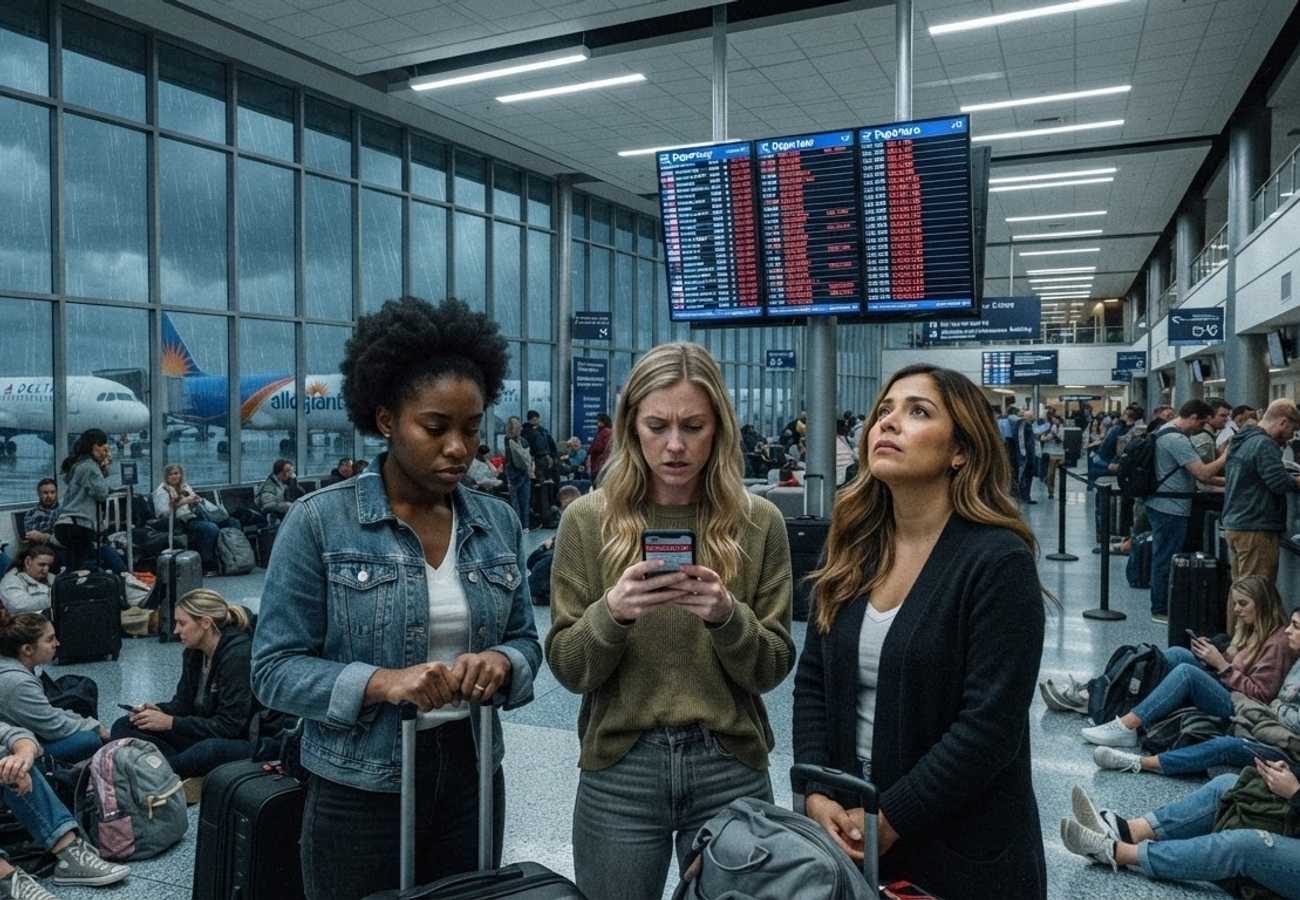
Image generated by AI
The fragility of global aviation infrastructure was starkly revealed on July 4, 2026, when severe meteorological anomalies triggered a systemic operational collapse at Chicago O’Hare International Airport (ORD). A Federal Aviation Administration (FAA) ground stop, prompted by violent thunderstorms, resulted in over 1,000 delays and more than 400 cancellations, making ORD the most disrupted airport worldwide on that date.
Beyond the immediate travel chaos, this event highlights a significant asymmetry in regulatory enforcement and the legal vulnerabilities facing international travelers. The crisis underscores how "extraordinary circumstances" clauses allow legacy carriers to distance themselves from customer care mandates, shifting the burden of recovery onto passengers and domestic operators.
Transatlantic Disruptions and the Cincinnati Diversions
The collapse at O'Hare created a logistical ripple effect that severely impacted flights originating from the United Kingdom. British Airways (BA) experienced significant network instability, with multiple aircraft forced to divert to Cincinnati/Northern Kentucky International Airport (CVG).
Flight BA299, traveling from London Heathrow (LHR) to Chicago, touched down at CVG at approximately 18:00 local time. Tracking data confirms that BA295 and at least one other flight were similarly rerouted as weather conditions in the Midwest deteriorated.
These diversions forced passengers into a regulatory grey area. While airlines are required to maintain a duty of care, the breakdown in communication between British Airways and its partner, American Airlines, left some travelers to arrange their own onward transport to reach their final destination.
The "Ghost Flight" Phenomenon: Network Integrity vs. Profit
The most striking outcome of the ORD collapse was the operation of a "ghost flight"—a commercial jet flying with a near-zero payload to satisfy regulatory repositioning requirements.
One passenger, after failing to secure assistance from BA, booked a seat on United Airlines Flight UA1813 from Cincinnati to Chicago. Due to the ongoing weather systems, the flight was grounded for over seven hours. During this window, all other passengers on the manifest either canceled their trips or found ground transportation.
Despite having only one paying passenger in seat 1B of the United First cabin, United Airlines flew the Boeing 737-900. This decision was not commercial, but regulatory. Under US Department of Transportation (DOT) guidelines, aircraft must be repositioned to their designated hubs to ensure the following day's schedule remains intact.
Flight UA1813 Operational Timeline (July 4-5, 2026)
| Operational Phase | Scheduled Time | Actual Time | Official Log Source |
|---|---|---|---|
| Scheduled Departure (CVG) | 18:12 EST (4 July) | 01:28 EST (5 July) | FAA Departure Logs |
| En Route Duration | 55 Minutes | 47 Minutes | Air Traffic Control |
| Arrival (ORD) | 18:07 CST (4 July) | 01:15 CST (5 July) | FAA Arrival Logs |
Legal Gaps in Passenger Protection: UK261 and Beyond
From a legal perspective, this incident exposes a critical loophole in cross-border consumer liability. Under the UK261 and EU passenger rights frameworks, severe weather is classified as "extraordinary circumstances."
This designation exempts airlines from paying direct financial compensation for delays. When international passengers are forced to navigate domestic recovery legs independently—as seen with the diversion to Cincinnati—they often find themselves without the legal leverage to compel carriers to provide immediate, seamless rebooking.
Global Comparisons in Transport Resilience
The operational rigidity seen in the US is not unique; it is a strategy employed by nations with vast geographies or high meteorological volatility to prevent total network collapse.
- Japan: The Japan Civil Aviation Bureau (JCAB) employs similar repositioning strategies during typhoon seasons. Flights diverted from Tokyo (HND/NRT) to regional hubs like Kansai (KIX) are routinely flown back empty to ensure the national air freight and economic supply chain remains unbroken.
- Australia: The Civil Aviation Safety Authority (CASA) mandates similar protocols. When cyclones hit Brisbane or Darwin, aircraft are diverted to Sydney or Melbourne and repositioned regardless of payload to maintain schedule integrity.
In contrast, the United Arab Emirates (UAE) utilizes a different model. The General Civil Aviation Authority (GCAA) manages a hyper-centralized hub system (DXB and AUH). Because the UAE lacks a vast network of regional domestic aerodromes and faces different weather patterns, the GCAA prefers "ground-holding" aircraft at their point of origin rather than launching them and diverting them. This eliminates the need for the "ghost flights" seen in the US and Japan.
The Macroeconomic Threat of Climate Instability
The July 2026 O'Hare collapse serves as a micro-indicator of a larger trend. World Meteorological Organization (WMO) data shows a rise in localized, severe weather events capable of paralyzing critical infrastructure.
As these events become more frequent, the aviation industry faces a mounting economic burden. The reliance on inefficient repositioning flights to maintain schedule integrity represents a significant hidden cost that may eventually lead to higher ticket prices or a fundamental shift in how global flight networks are structured.
The O'Hare collapse proves that while aviation technology has advanced, the regulatory and legal frameworks governing passenger rights in a climate-unstable world remain dangerously outdated.
Related Travel Guides
Disclaimer
This article is for informational and educational purposes only. It does not constitute legal, financial, or professional advice. While we strive to provide accurate and up-to-date information, travel policies, regulations, and conditions change rapidly. Always verify information with official sources before making travel decisions. Nomad Lawyer makes no representations about the accuracy, reliability, completeness, or suitability of the information provided. Readers should consult qualified professionals for advice specific to their circumstances. The views expressed in this article are those of the author and do not necessarily reflect the views of Nomad Lawyer.
Raushan Kumar
Founder & Lead Developer
Full-stack developer with 11+ years of experience and a passionate traveller. Raushan built Nomad Lawyer from the ground up with a vision to create the best travel and law experience on the web.
Learn more about our team →