
Miami Beach Travel Collapse: Record-Breaking Airport Chaos as 265 Flight Delays and 67 Cancellations Strand Thousands Across Miami, New York, Chicago, Los Angeles and Caribbean Routes
Miami International Airport descends into unprecedented travel chaos as 265 flight delays and 67 cancellations create a domino effect across North American aviation. Peak spring travel season triggers massive disruptions affecting...

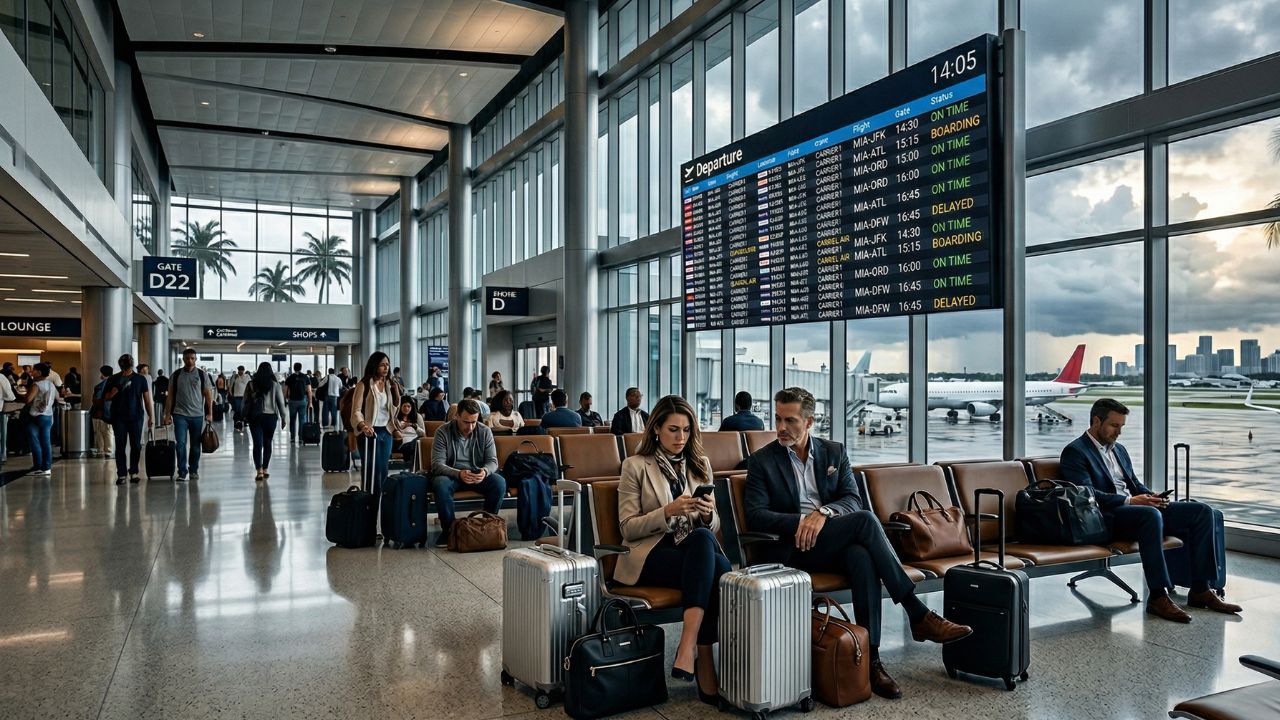
Stranded passengers at Miami International Airport during record travel disruptions
Miami International Airport has descended into unprecedented chaos as a perfect storm of spring travel demand, capacity constraints, and operational failures creates what travel experts are calling a "complete travel collapse." 265 flight delays and 67 flight cancellations have erupted across one of North America's busiest aviation gateways, stranding thousands of desperate passengers and triggering a devastating domino effect that now reverberates across major cities including New York, Chicago, Dallas, Los Angeles, and throughout Caribbean resort destinations. Peak spring break and Easter season arrivals have overwhelmed the already-strained airport infrastructure, exposing critical vulnerabilities in global aviation systems and leaving families separated, business travelers grounded, and the entire travel industry scrambling to manage an unfolding crisis.
The scale of disruption at Miami International Airport defies comprehension. Over 265 flights experiencing delays means tens of thousands of passengers facing uncertainty about when they'll reach their destinations. The 67 cancellations have created a cascading crisis that extends far beyond South Florida's airport terminals. Major metropolitan areas across North America are feeling the impact acutely. Travelers heading to or connecting through New York's JFK and LaGuardia airports face increased congestion. Passengers destined for Chicago O'Hare, Dallas-Fort Worth, and Los Angeles International are experiencing compounding delays as the Miami disruption creates ripple effects throughout the national aviation network. The situation has become so dire that airport officials admit they've lost operational control, with flight schedules becoming essentially meaningless as aircraft rotations collapse and crew scheduling falls into complete disarray.
The severity of capacity constraints at Miami cannot be overstated. During peak travel seasons—when spring break travelers return home and Easter passengers prepare their journeys—Miami International Airport operates at near-maximum capacity with virtually zero buffer for disruptions. When even minor operational issues emerge, the entire system fractures. According to IATA (International Air Transport Association) data, Miami airport was already operating at 95%+ capacity utilization before this crisis, meaning there was essentially no flexibility to absorb unexpected delays. The proximity of Fort Lauderdale-Hollywood International Airport compounds the problem, as both facilities share airspace, creating an environment where heavy congestion in South Florida skies forces aircraft to stack and wait for landing clearances. One delayed flight doesn't simply lose 30 minutes—it cascades through the entire day's schedule, with each successive aircraft arriving progressively later, boarding later, and departing late into a domino effect of deteriorating operations.
Caribbean-bound travelers face particularly acute suffering. The region depends heavily on Miami as the primary gateway, with flights from Miami serving Puerto Rico, US Virgin Islands, Aruba, Cancun, Jamaica, Cayman Islands, and dozens of resort destinations. Walk into Miami's terminals and the human cost becomes undeniable. Families sitting on airport floors, some with young children crying from exhaustion; seniors waiting for clarity about when rebooked flights might depart; honeymoon couples watching dream vacations collapse as they miss scheduled resort arrivals; business travelers missing critical corporate meetings with every hour compounding financial losses. The airport's limited seating means thousands of passengers stand in desperation, refreshing flight tracking apps obsessively, hoping for any clarity about their uncertain journeys.
The breakdown of coordination between major carriers—American Airlines, Delta Air Lines, United Airlines, Southwest Airlines—reveals systemic weaknesses in aviation network management. American Airlines alone has been forced to cancel 34 flights from its Miami hub, and Delta has axed 22 flights, according to latest reports. When hub carriers face disruptions at their primary bases, their entire routes—connecting flights to secondary destinations, international services, regional operations—all collapse. A passenger scheduled to fly American from Miami to Chicago connects to another flight to Houston, but the initial delay means missing the connection, requiring rebooking on flights 3-4 days later. Multiply this by thousands of passengers and the scale of the crisis becomes quantifiable: hundreds of thousands of person-hours lost, millions in ticket rebooking costs, immeasurable damage to airline customer loyalty and trust.
Weather conditions in South Florida have exacerbated the operational nightmare. Afternoon thunderstorms—common in April across the southeastern United States—have reduced runway capacity, forcing wider spacing between departing and arriving aircraft. Visibility restrictions during storm activity mean fewer arrivals can be processed per hour. When weather clears, the backlog of waiting aircraft requires hours to clear, even after conditions improve. This weather-delay pattern is compounded by the already-constrained capacity, creating a situation where normal weather that a properly-resourced airport could handle becomes catastrophic when operational margins are essentially zero.
What Travelers Should Do: If you're booked on flights from or through Miami International Airport, contact your airline immediately using official carrier websites rather than waiting for phone lines to clear. Request rebooking on alternative routings that avoid Miami connections entirely—consider routing through Atlanta (Hartsfield-Jackson), Chicago O'Hare, or Dallas-Fort Worth as alternative hubs. For Caribbean destinations, explore alternative gateways like Fort Lauderdale Airport or flying into San Juan, Puerto Rico and connecting regionally. Purchase travel insurance coverage immediately to protect against future disruptions. Avoid this airport system during April 7-10 and April 13-16 (peak Easter travel windows). For essential travel to South Florida, arrive 4-5 hours early for domestic flights and 5-6 hours for international flights. Monitor real-time flight information constantly and maintain direct contact with your airline's customer service. Consider ground transportation alternatives—rental cars, trains, or buses—for destinations within driving distance to avoid air travel exposure during this crisis period.
Related News & Updates
-
Maldivian Airlines Expands India-Maldives Connectivity: Unprecedented Flight Expansion Creates Travel Boom — Positive contrast: successful airport capacity expansion
-
Emirates Joins Air India, Virgin Atlantic, Lufthansa, Qatar Airways in Massive Middle East Flight Disruptions — Global flight disruption patterns affecting international aviation
-
Washington DC Travel Surge: Cherry Blossom Festival Drives Record Tourism Numbers — Peak season travel demand across North America
-
Latest Travel Disruption News and Airport Updates — Stay updated on airport chaos and travel disruptions
-
Airline News and Flight Information — Real-time airline updates and travel alerts
Disclaimer
This article is for informational and educational purposes only. It does not constitute legal, financial, or professional advice. While we strive to provide accurate and up-to-date information, travel policies, regulations, and conditions change rapidly. Always verify information with official sources before making travel decisions. Nomad Lawyer makes no representations about the accuracy, reliability, completeness, or suitability of the information provided. Readers should consult qualified professionals for advice specific to their circumstances. The views expressed in this article are those of the author and do not necessarily reflect the views of Nomad Lawyer.
Raushan Kumar
Founder & Lead Developer
Full-stack developer with 11+ years of experience and a passionate traveller. Raushan built Nomad Lawyer from the ground up with a vision to create the best travel and law experience on the web.
Learn more about our team →