
UK Travel Trends 2026: 38% of International Travelers Cite Overpacking as Primary Journey Failure
New data from Global Rescue reveals a shift in traveler behavior for 2026, with overpacking and tight layovers remaining the top logistical failures for UK and international passengers.

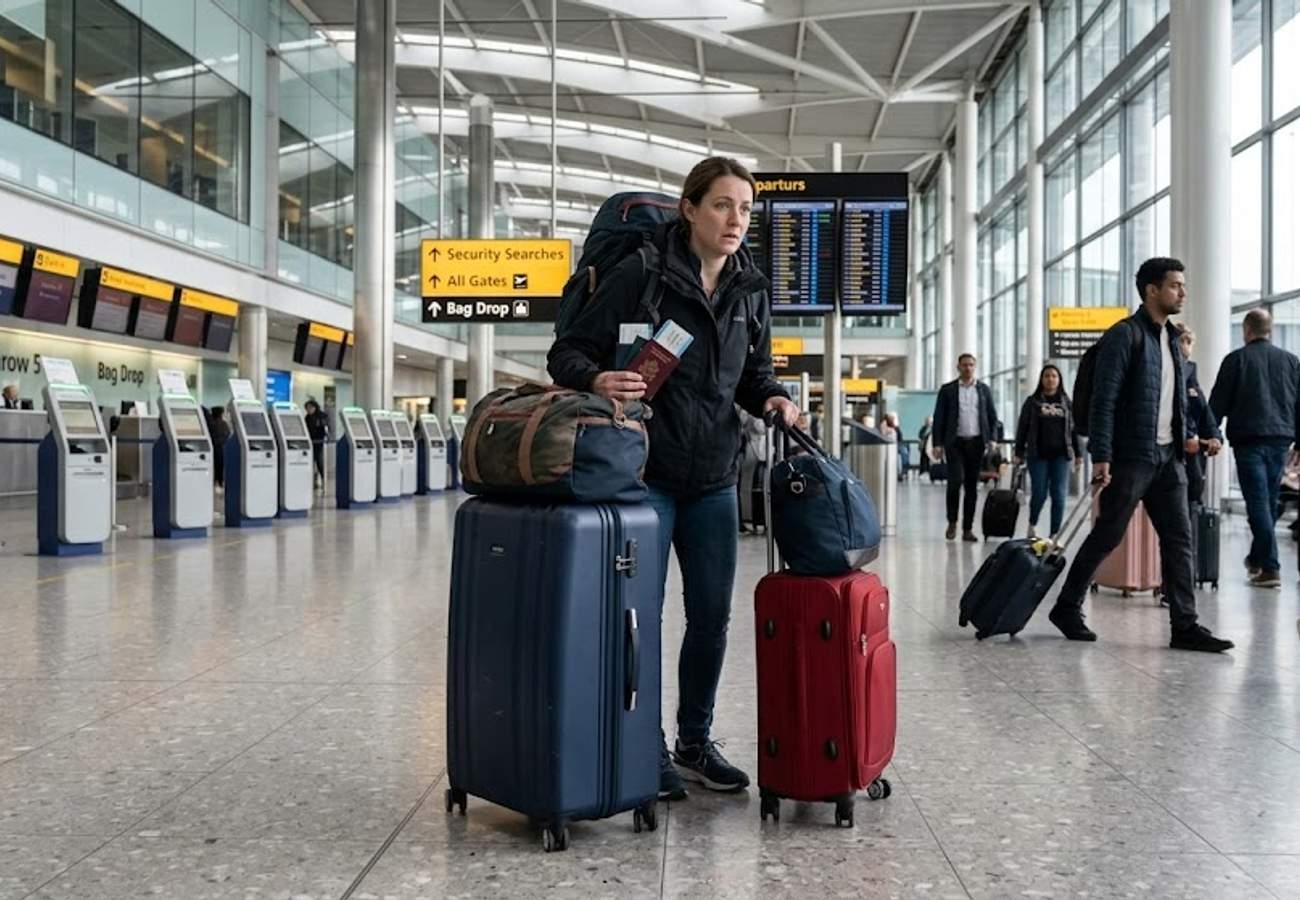
Image generated by AI
Overpacking has surged to the top travel mistake for 2026, with 38% of international passengers reporting it as their primary journey failure. As global hubs like Heathrow and Gatwick grow in complexity, mobility is now a critical strategic advantage for the modern traveler.
The Logistics of Overpacking: A Mobility Crisis
Recent data from the Traveller Sentiment and Safety Survey, conducted by risk and crisis response provider Global Rescue, indicates that preparation is now as critical as the destination. While the percentage of travelers citing overpacking as their biggest error is significantly lower than the 74% reported in February 2020, the figure has risen from 32% in 2025 to 38% in 2026.
This trend suggests a psychological gap in travel preparation: passengers continue to pack for imagined scenarios rather than actual requirements. In the current transit environment, excessive luggage is no longer a mere inconvenience; it is a mobility liability. Heavier bags result in slower transit through security, increased airline baggage fees, and reduced flexibility during emergency evacuations or sudden flight cancellations.
Common Transit Failures and Error Rates
Beyond luggage volume, the 2026 data highlights systemic failures in time management and digital readiness. International airports have expanded in scale and complexity, making "on-paper" connection times increasingly unreliable.
Primary Travel Mistakes by Percentage
| Travel Error | Percentage of Respondents | Primary Impact |
|---|---|---|
| Overpacking Luggage | 38% | Reduced mobility, higher fees, slower transit |
| Tight Layover Connections | 19% | Missed flights, immigration delays |
| Overly Ambitious Itineraries | 10% | Burnout, lack of flexibility |
| Lack of Offline Digital Docs | 8% | Connectivity failures, boarding delays |
| Poor Currency Planning | 8% | High fees at airport exchange kiosks |
Traveler Logistics Guide: Navigating 2026 Transit
From a ground-level perspective, the best way to navigate the increasing complexity of global hubs is to transition from a "traditional" traveler mindset to a "project manager" approach.
Optimizing Connections and Layovers
Avoid the 19% failure rate regarding tight connections by auditing your transit time. When booking through major hubs (e.g., LHR, DXB, SIN), ensure a minimum of 3 hours for international-to-international transfers. This accounts for terminal changes, security re-screening, and unpredictable immigration queues.
Digital Transit Policies
To avoid the 8% of errors related to digital preparation, implement a "Zero-Connectivity" backup plan:
- Document Redundancy: Email digital copies of passports and visas to yourself and store them in an encrypted offline folder.
- Offline Navigation: Download city-specific maps via Google Maps or Organic Maps before departure to avoid reliance on local SIM activation.
- Digital IDs: Utilize biometric transit systems (such as Digi Yatra in India or similar E-gates in the UK/EU) to bypass manual queues.
Smart Packing Execution
To mitigate the 38% overpacking risk, adopt the "Carry Better, Not More" philosophy:
- Compression Systems: Use compression packing cubes to reduce volume by up to 30%.
- Multi-Port Hardware: Replace multiple individual chargers with a single high-wattage GaN (Gallium Nitride) multi-port wall charger.
- The 5-4-3-2-1 Rule: Pack 5 sets of socks/underwear, 4 tops, 3 bottoms, 2 pairs of shoes, and 1 accessory/hat for a week-long trip.
Infrastructure Impact Assessment
The shift toward "digital-first" exploration is fundamentally changing how regional connectivity is utilized. Travelers are increasingly relying on smart tags (adopted by 31% of survey respondents) to track luggage independently of airline systems. This reduces the burden on airport "Lost and Found" infrastructure and empowers the passenger.
Furthermore, the rise of lightweight travel strategies is decreasing the average weight per passenger, which potentially lowers fuel consumption for carriers and speeds up the boarding process. However, the disconnect remains for the 38% who still struggle with luggage volume, creating a "travel divide" between high-mobility explorers and those hindered by traditional packing habits.
The difference between a seamless journey and a logistical nightmare is now decided long before the passenger reaches the terminal.
Related Travel Guides
Disclaimer
This article is for informational and educational purposes only. It does not constitute legal, financial, or professional advice. While we strive to provide accurate and up-to-date information, travel policies, regulations, and conditions change rapidly. Always verify information with official sources before making travel decisions. Nomad Lawyer makes no representations about the accuracy, reliability, completeness, or suitability of the information provided. Readers should consult qualified professionals for advice specific to their circumstances. The views expressed in this article are those of the author and do not necessarily reflect the views of Nomad Lawyer.
Preeti Gunjan
Contributor & Community Manager
A passionate traveller and community builder. Preeti helps grow the Nomad Lawyer community, fostering engagement and bringing the reader experience to life.
Learn more about our team →