
UK Government Slaps Harsh Travel Advisories on Qatar, UAE, and Egypt Amid Regional Turmoil
Facing expanding military escalation, the UK Foreign Office has shattered regional tourism plans by issuing strict, high-level travel warnings against visiting Qatar, the UAE, Saudi Arabia, and Egypt.

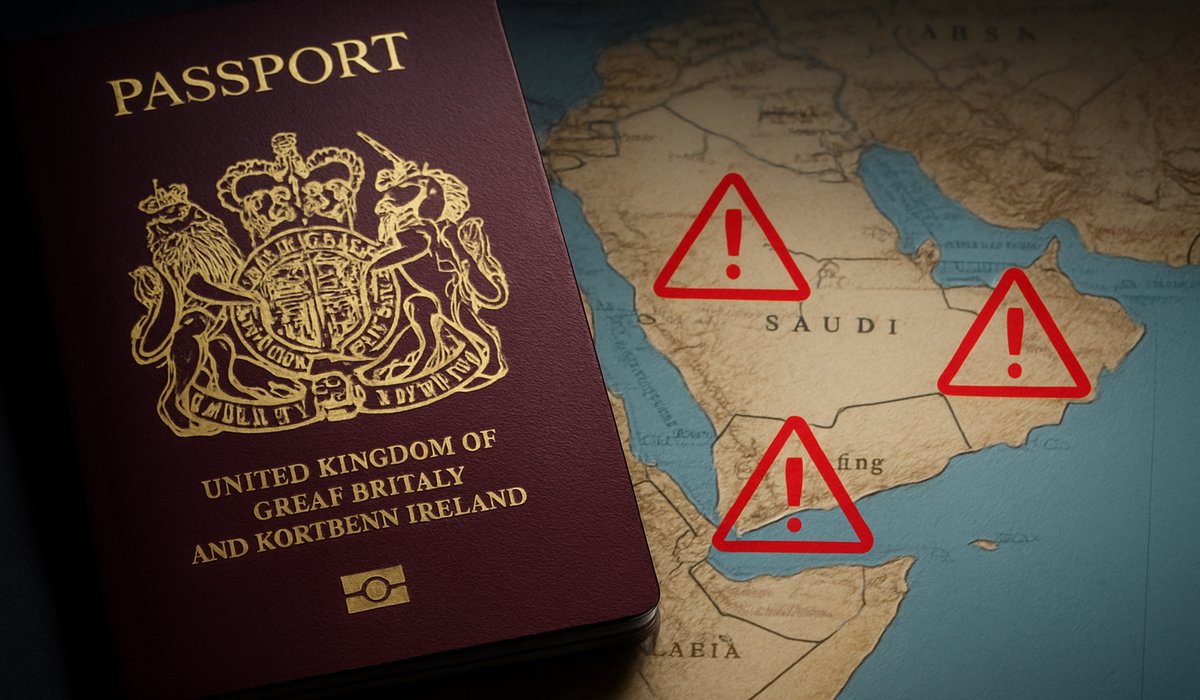
Image generated by AI
Mass Disruptions Expected as Britain Issues Categorical Travel Rejections
In a massively disruptive diplomatic maneuver that threatens to vaporize billion-dollar tourism economies across the Middle East, the UK Foreign, Commonwealth & Development Office (FCDO) has officially issued strict, high-level travel advisories warning British nationals against travel to Qatar, the UAE, Egypt, Saudi Arabia, and Kuwait. Driven by rapidly escalating regional conflicts and highly volatile airspace restrictions across the Persian Gulf, the sweeping governmental decree immediately and legally alters the landscape for thousands of expatriates and Easter holidaymakers caught in the crossfire.
When a Tier-1 western government like the United Kingdom elevates a travel advisory to "Advise against all but essential travel" (or worse, "Advise against all travel"), the economic fallout is instantaneous. The most catastrophic civilian consequence is the immediate, automatic invalidation of standard travel insurance policies. Because traditional underwriters categorically refuse to cover claims arising within declared conflict hazard zones, British tourists flying into Dubai or Doha this week are theoretically landing without any legal medical cover or repatriation protection.
The Threat of Trapped Expatriates
The Gulf states are functionally dependent on massive populations of western expatriates driving their finance, engineering, and service sectors. The inclusion of heavily stabilized nations like Qatar and the UAE on the FCDO watchlist specifically highlights the extreme geographical fragility of the region.
If the conflict violently expands and active airspace is completely shuttered over the Arabian Peninsula, millions of foreign nationals theoretically face being trapped. The British government has made it historically clear in recent years that state-sponsored evacuation flights are a last resort, brutally reminding citizens that if they choose to remain in heavily advised zones, they do so entirely at their own physical risk.
Breakdown of the FCDO Advisory Impact
| Affected Nation | Primary Tourism Impact | Insurance Ramification |
|---|---|---|
| United Arab Emirates (UAE) | Immediate threat to Dubail/Abu Dhabi hotel bookings | Standard travel policies entirely voided |
| Qatar | Doha transit hub severely compromised | Medical evacuation coverage suspended |
| Egypt | Red Sea resorts (Sharm El-Sheikh) face mass cancellations | Excursion and injury warranties revoked |
What Guests Get
- A stark reminder regarding insurance clauses — understanding that travel insurance is instantly terminated the minute a home government flashes a "Do Not Travel" red light.
- Insight into diplomatic threat assessment — realizing that while local governments in the UAE insist everything is safe, foreign intelligence services frequently disagree.
- Expatriate logistical panic — understanding the extreme difficulty of living and working in a region that the home government suddenly classifies as hostile.
What This Means for Travelers
If you are holding upcoming tickets to Dubai, Doha, or Cairo: You must immediately contact your travel insurance provider. Ask them point-blank if your policy will still pay out for a broken leg or a canceled hotel room given the new FCDO warnings. If they say no, you must explicitly seek out highly specialized "High-Risk" or "War Zone" insurance brokers, which cost exponentially more.
Furthermore, because the government issued a formal advisory, you are now legally empowered to demand a full cash refund from your UK-based airline or tour operator (such as British Airways, EasyJet, or TUI) under the Package Travel Regulations, as it is legally deemed unsafe to fulfill the holiday contract.
FAQ: FCDO Travel Warnings
Does an FCDO warning physically stop me from boarding the plane? No. It is not illegal to board a commercial flight into a high-risk zone as a private citizen. However, doing so means you voluntarily surrender the safety net of standard government consular assistance and private insurance.
Will airlines cancel flights because of this warning? Often, yes. UK airlines constantly calibrate their flight schedules against FCDO advice. If the government determines the airspace is unsafe, British Airways and Virgin Atlantic will preemptively ground flights, triggering massive rerouting chaos.
What if I am already in Dubai on holiday? The FCDO typically advises citizens perfectly safe in a resort to prepare for logistical disruptions, contact their airline, and monitor the news constantly. Do not assume your return flight will operate as normally scheduled.
Related Travel Guides
How to Buy High-Risk Travel Insurance for Conflict Zones
Understanding Package Travel Regulations and Government Refunds
The US Global Travel Alert: Exploring the Differences With UK Directives
Disclaimer
This article is for informational and educational purposes only. It does not constitute legal, financial, or professional advice. While we strive to provide accurate and up-to-date information, travel policies, regulations, and conditions change rapidly. Always verify information with official sources before making travel decisions. Nomad Lawyer makes no representations about the accuracy, reliability, completeness, or suitability of the information provided. Readers should consult qualified professionals for advice specific to their circumstances. The views expressed in this article are those of the author and do not necessarily reflect the views of Nomad Lawyer.
Raushan Kumar
Founder & Lead Developer
Full-stack developer with 11+ years of experience and a passionate traveller. Raushan built Nomad Lawyer from the ground up with a vision to create the best travel and law experience on the web.
Learn more about our team →