
US Issues Global Travel Alert: Iran Conflict Forces Airspace Closures and Reshapes International Security Map
The US State Department has issued a rare Worldwide Caution as the Iran conflict triggers widespread airspace closures over Iraq, Syria, and Turkey, forces major flight rerouting, and raises security threats to tourist destinations across Egypt, Jordan, and Lebanon. Travelers must recalibrate their 2026 international plans immediately.

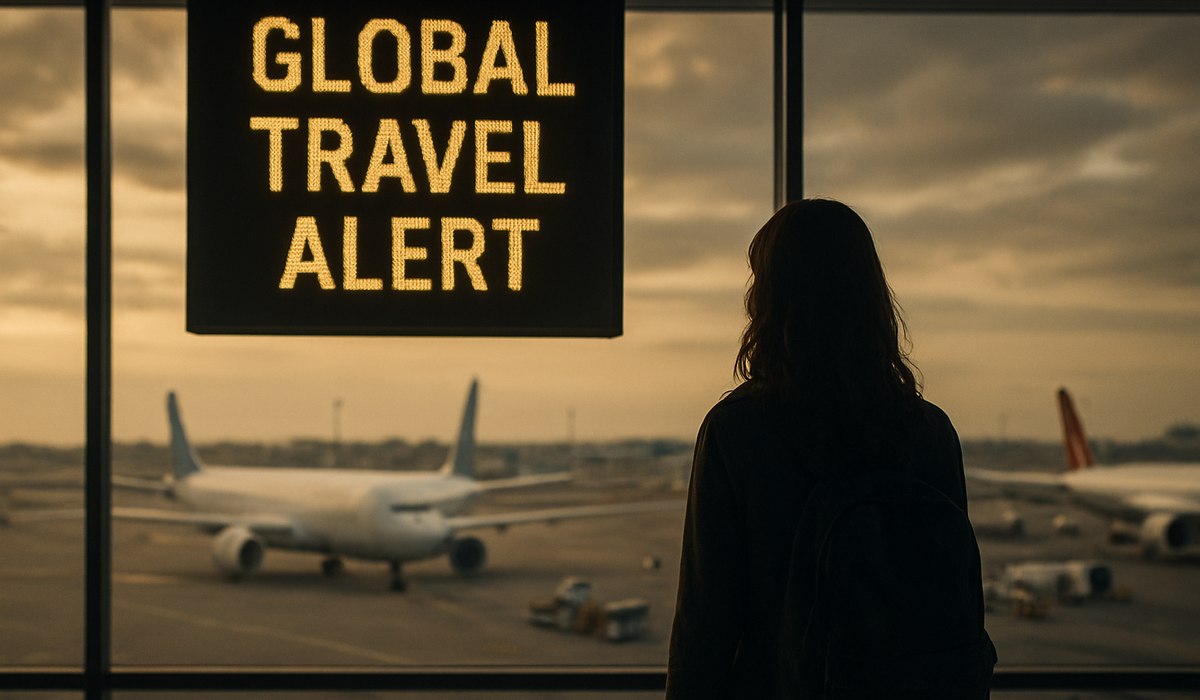
Image generated by AI
The US State Department Has Issued a Rare Worldwide Caution
In a measure reserved for only the most severe and globally pervasive security deteriorations, the US State Department has issued an expansive "Worldwide Caution" advisory, warning American citizens to exercise heightened vigilance and elevated situational awareness across all international destinations. The trigger: a rapidly escalating Iran conflict is reshaping the global security architecture with a speed that is leaving both travelers and airlines scrambling to adapt.
The advisory is not a standard country-specific alert. A Worldwide Caution is the State Department's broadest possible warning — a signal that geopolitical escalation has reached a threshold where no international destination can be automatically assumed free from spillover risk. For American travelers, this means the fundamental calculus of international travel has shifted, regardless of your destination.
Airspace Closures: The Aviation Emergency Already Unfolding
The most immediate operational consequence of the Iran conflict on international travel is the closure of critical Middle Eastern airspace. Major commercial air corridors traversing the region — connecting Europe, Asia, and North America — have been directly disrupted:
- Iran: Airspace restrictions on commercial overflights, forcing rerouting across trans-Asian corridors
- Iraq: Precautionary airspace restrictions limiting civilian traffic over conflict-adjacent zones
- Syria: Extended no-fly restrictions for commercial carriers already in effect from prior conflicts, now amplified
- Parts of Turkey: Certain eastern sectors implementing caution-driven traffic management
Airlines affected by these closures face a brutal operational reality: rerouted flights consume significantly more fuel, extend flight times by 2-4 hours on affected corridors, and compress aircraft utilization schedules—driving both cost increases and capacity constraints.
Tourist Destinations Facing Heightened Risk
The State Department has specifically flagged elevated concern for several historically popular tourism destinations in the regional orbit of the conflict:
- Egypt — A major tourism draw facing threat perception pressure despite relatively removed geography
- Lebanon — Currently operating under the highest risk classifications
- Jordan — High-volume American tourism market now requiring heightened security awareness
- UAE and Saudi Arabia — Both nations facing reputational risk despite strong domestic security infrastructure
- Cyprus and Eastern Mediterranean — Tourism economies facing visitor hesitation driven by proximity optics
Iran's military rhetoric has specifically included threats against tourist sites worldwide, meaning locations with significant international visitor volumes — cultural heritage sites, beach resorts, archaeological attractions — face an elevated threat profile.
What Guests Get
- STEP enrollment — Register with the Smart Traveler Enrollment Program to receive automatic embassy alerts and emergency notifications
- Real-time State Department country alerts — Available for every nation with continuously updated risk ratings
- Emergency consular services — US embassies in all affected regions are operating emergency assistance lines
- Airline itinerary flexibility — Most carriers have issued Middle East flight waivers permitting free rebooking
- Travel insurance crisis coverage — Many comprehensive travel policies now cover cancellations tied to State Department Level 3-4 advisories
Iran Conflict Travel Impact: Risk Assessment by Region
| Destination | Risk Level | Primary Concern | US Advisory Level |
|---|---|---|---|
| Iran | Do Not Travel | Active conflict zone | Level 4 |
| Lebanon | Do Not Travel | Regional instability, militia activity | Level 4 |
| Iraq | Reconsider Travel | Military activity, terrorism | Level 3 |
| Syria | Do Not Travel | Active conflict, all sectors | Level 4 |
| Jordan | Exercise Increased Caution | Proximity spillover risk | Level 2 |
| Egypt | Exercise Increased Caution | Terrorist threat perception | Level 2 |
| UAE / Saudi Arabia | Exercise Increased Caution | Geopolitical threat environment | Level 2 |
| Europe (all) | Exercise Normal Precautions | Terrorism baseline risk | Level 1 |
What This Means for Travelers
If you have international travel booked in the next 60-90 days — especially any Middle East destinations, Eastern Mediterranean itineraries, or journeys involving overflights of the affected airspace — take the following actions immediately:
Register with STEP. The Smart Traveler Enrollment Program is your direct lifeline to the US Embassy network. Registration is free, takes under five minutes, and ensures you receive targeted alerts and can be located during a crisis.
Check your flight's routing. Airlines routinely reroute flights without informing passengers about the specific airspace changes. Use your booking reference to confirm whether your itinerary transits conflict-adjacent airspace, and ask your airline directly if they have rerouting waivers available.
Review your travel insurance immediately. Standard trip cancellation policies often do NOT cover government advisory-driven cancellations unless you purchased "Cancel for Any Reason" coverage. If you didn't, contact your insurer now to understand your actual coverage ceiling.
FAQ: US Global Travel Alert and Iran Conflict
What is a "Worldwide Caution" and how serious is it? The Worldwide Caution is the highest-scope advisory the State Department issues. Unlike country-specific alerts, it signals that terrorism, geopolitical instability, or security incidents could occur globally, not just in a specific region. It does not mean every country is unsafe, but it raises the baseline vigilance level for all international travel.
Can I get a refund if the State Department advises against my destination? It depends on your ticket type and insurance. Most airlines offer fee waivers for rebooking to Level 3 (Reconsider Travel) and Level 4 (Do Not Travel) destinations. However, cash refunds require specific fare class eligibility. Travel insurance with "Cancel for Any Reason" is the only guaranteed protection.
Should I avoid all Middle East travel in 2026? Not necessarily. The risk profile varies dramatically by country. Jordan, UAE, and Israel's tourism infrastructure remains operational, though with heightened security. Lebanon and Iraq have the highest risk ratings and should be avoided for non-essential travel. Always consult the specific country advisory at travel.state.gov for current ratings and guidance.
Related Travel Guides
STEP Enrollment Guide: How to Register with the US Embassy Network Before You Travel
Travel Insurance in a Crisis: What's Actually Covered When Governments Issue Warnings
The Safest Countries to Visit in 2026 Despite Global Tensions
Disclaimer
This article is for informational and educational purposes only. It does not constitute legal, financial, or professional advice. While we strive to provide accurate and up-to-date information, travel policies, regulations, and conditions change rapidly. Always verify information with official sources before making travel decisions. Nomad Lawyer makes no representations about the accuracy, reliability, completeness, or suitability of the information provided. Readers should consult qualified professionals for advice specific to their circumstances. The views expressed in this article are those of the author and do not necessarily reflect the views of Nomad Lawyer.
Raushan Kumar
Founder & Lead Developer
Full-stack developer with 11+ years of experience and a passionate traveller. Raushan built Nomad Lawyer from the ground up with a vision to create the best travel and law experience on the web.
Learn more about our team →