
Travel Iran Europe: March 2026 Flight Disruptions and Airfare Surge
Middle East geopolitical tensions trigger widespread flight disruptions and soaring fares for travel Iran Europe routes in March 2026. Airlines reroute aircraft as passengers rush to secure bookings.

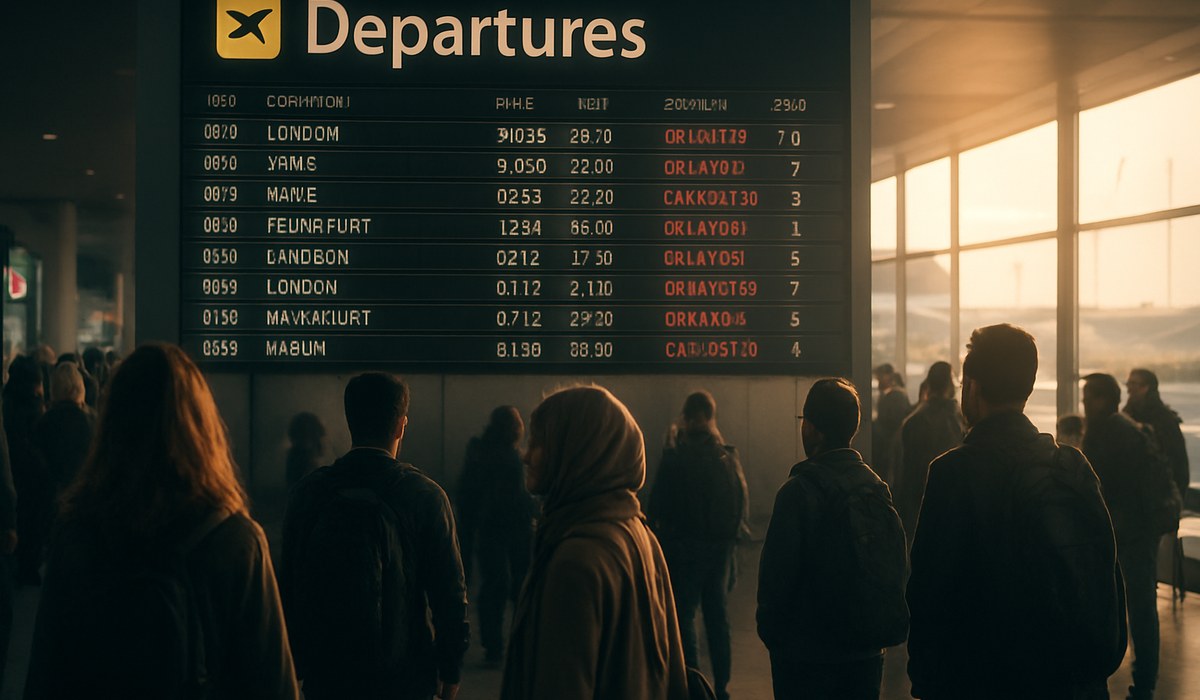
Image generated by AI
Global Aviation Faces Pressure as Middle East Tensions Escalate
Regional geopolitical escalation is forcing airlines to reroute flights and implement emergency protocols across transcontinental corridors. Major carriers serving travel Iran Europe routes have suspended operations through contested airspace. Passenger volumes on alternative routing through Turkey, the Caucasus, and Southern Europe have surged. Airlines report booking spikes exceeding 40% on secondary corridors. The global tourism sector confronts unprecedented operational challenges and cost pressures.
Airspace Closures Disrupt Major East-West Corridors
Authorities in the Middle East have implemented temporary airspace restrictions affecting primary flight corridors between Tehran Imam Khomeini International Airport (IKA) and European hubs. Airlines including major European carriers have diverted aircraft away from Iranian airspace entirely. The rerouting adds 90–120 minutes to typical flight durations and increases fuel consumption substantially. FlightAware data shows real-time tracking of diversions. Alternate routing through Central Asian airspace has created bottlenecks at hubs in Istanbul, Baku, and Doha. Carriers confirm that navigation delays propagate through downstream connections across the continent.
Airlines Announce Temporary Service Adjustments
Major international carriers serving the Middle East and European markets have issued updated schedules and operational bulletins. Flag carriers based in London, Paris, Frankfurt, and Amsterdam have suspended or consolidated routes. Airlines reduce seat capacity on viable routes to manage operational costs. Premium cabin bookings for travel Iran Europe remain strong despite base fare increases. Budget carriers have withdrawn from certain markets temporarily. IATA issued guidance for member airlines on emergency procedures and passenger communication protocols on March 24, 2026.
Airfare Volatility Reaches Multi-Year Highs
Ticket prices for transatlantic and Europe-bound flights have climbed 35–65% above baseline March averages. One-way fares from U.S. gateways to London, Paris, and Amsterdam reflect premium pricing. Travel Iran Europe bookings surge as passengers accelerate departure dates. Business travelers face restricted inventory on premium routes. Economy seats on viable alternatives command 40–50% premiums. Tourism pricing for European destinations rises across hotel, ground transport, and attraction sectors. Data from global distribution systems confirms sustained upward pressure through early April 2026.
Passenger Rights and Compensation Options
Affected travelers qualify for compensation under U.S. Department of Transportation regulations and European Union Regulation 261/2004. Airlines must rebook passengers on alternative flights at no additional charge or provide full refunds. Hotel accommodations fall under airline responsibility for overnight delays exceeding 12 hours. Travelers holding non-refundable advance purchases retain change privileges without penalty. Travel insurance policies covering geopolitical events activate under specific carrier conditions. Documentation of flight cancellations and delays creates records for future compensation claims. Passengers should retain boarding passes and confirmation emails.
Recovery Timeline and Operational Outlook
Airlines expect gradual service normalization over 7–14 days pending airspace reopening. Ground crews continue enhanced inspections on aircraft returning to service. Scheduling systems incorporate buffer time for alternative routing through mid-April. Cargo operations remain restricted on certain carriers. Tourism authorities across Europe anticipate surge capacity demands starting March 25–26. Hotels and ground transportation providers activate contingency staffing. Airlines coordinate with FAA and EUROCONTROL on airspace utilization protocols. Route capacity returns incrementally as flight paths stabilize.
Traveler Action Checklist
- Contact your airline immediately. Verify your flight status using your confirmation number on the airline's official website or mobile app.
- Document all expenses. Keep receipts for hotels, meals, transportation, and rebooking fees—these support compensation claims.
- Request rebooking options. Ask agents explicitly for alternative flights, preferred routes through Europe or Asia, and any available upgrades.
- Activate travel insurance. File claims with your provider if your policy covers geopolitical disruptions or cancellations.
- Monitor flight tracking. Use FlightAware to track your rebooked flight and receive real-time delay notifications.
- Save government guidance. Bookmark U.S. DOT and EU261 resources for reference during disputes.
- Photograph your boarding pass. Create digital and email backups of all travel documents before departure.
- Set phone alerts. Enable notifications on airline apps for gate changes, boarding delays, and schedule modifications.
What This Means for Travelers
Passengers planning travel Iran Europe routes must expect extended journey times, higher fares, and tight connections. Airlines confirm that alternative routing through Central Asian and Southern European hubs adds 1.5–2 hours to total flight duration. Travelers should book flights 24–48 hours earlier than normal to allow for ground delays. Budget an extra $200–400 USD per ticket for premium routing or last-minute availability. Accommodation bookings near connecting airports protect against missed connections. Flexible travel dates unlock lower fares on less-congested departure windows. Tourism to Europe remains feasible with advance planning and buffer time between segments. Ground transport booking through regional platforms reduces dependency on airline ground operations.
Frequently Asked Questions
How does the Middle East conflict impact travel Iran Europe bookings in 2026? Geopolitical escalation forces airlines to reroute flights away from Iranian and disputed airspace. Travel Iran Europe journeys now require 1.5–2 additional hours via alternate corridors. Fares increase 35–65% due to fuel surcharges, reduced aircraft utilization, and demand compression. Rebooking remains available but seats are constrained. Most travelers still complete their journeys, though schedules shift significantly.
What compensation am I entitled to if my flight is cancelled due to Middle East tensions? U.S. carriers must rebook you on the next available flight or provide full refunds under DOT rules. EU-based airlines comply with Regulation 261/2004, offering €250–€600 per passenger for cancellations. Hotels and meals become the airline's responsibility if overnight delay occurs. Retain all receipts and filing deadlines extend 2–3 years from incident date in most jurisdictions.
Are European tourism destinations still safe and accessible for travel Iran Europe travelers? Yes. European cities including London, Paris, Berlin, and Barcelona operate normally. Tourism infrastructure remains fully operational. Security screening at airports increases but doesn't prevent travel. Regional authorities confirm no direct impact on European ground operations. Tourism bookings for hotels, attractions, and restaurants continue uninterrupted through March and April 2026.
When will flight operations return to normal for Middle East routes? Airlines anticipate gradual capacity recovery within 7–14 days pending airspace authorization. Full schedule normalization takes 21–30 days as buffer time decreases and aircraft position returns to baseline. Business travel recovers faster than leisure travel. Some carriers may maintain modified schedules through April as a precaution. Check your airline's official schedule pages weekly for updates.
Related Travel Guides
Complete Guide to Booking Refundable Tickets During Geopolitical Events
Europe Spring 2026: Best Budget Destinations When Airfares Peak
Traveler Rights Under EU261 and DOT: Know Your Compensation
Central Asian Flight Hubs: Navigating Istanbul, Baku, and Doha Connections
Disclaimer
Disclaimer
This article is for informational and educational purposes only. It does not constitute legal, financial, or professional advice. While we strive to provide accurate and up-to-date information, travel policies, regulations, and conditions change rapidly. Always verify information with official sources before making travel decisions. Nomad Lawyer makes no representations about the accuracy, reliability, completeness, or suitability of the information provided. Readers should consult qualified professionals for advice specific to their circumstances. The views expressed in this article are those of the author and do not necessarily reflect the views of Nomad Lawyer.
Preeti Gunjan
Contributor & Community Manager
A passionate traveller and community builder. Preeti helps grow the Nomad Lawyer community, fostering engagement and bringing the reader experience to life.
Learn more about our team →