
UK Rail Faces Asset Renewal Challenge as Smarter Decisions Shape Future Passenger Reliability in 2026
UK Rail Faces Asset Renewal Challenge as Smarter Decisions Shape Future Passenger Reliability in 2026

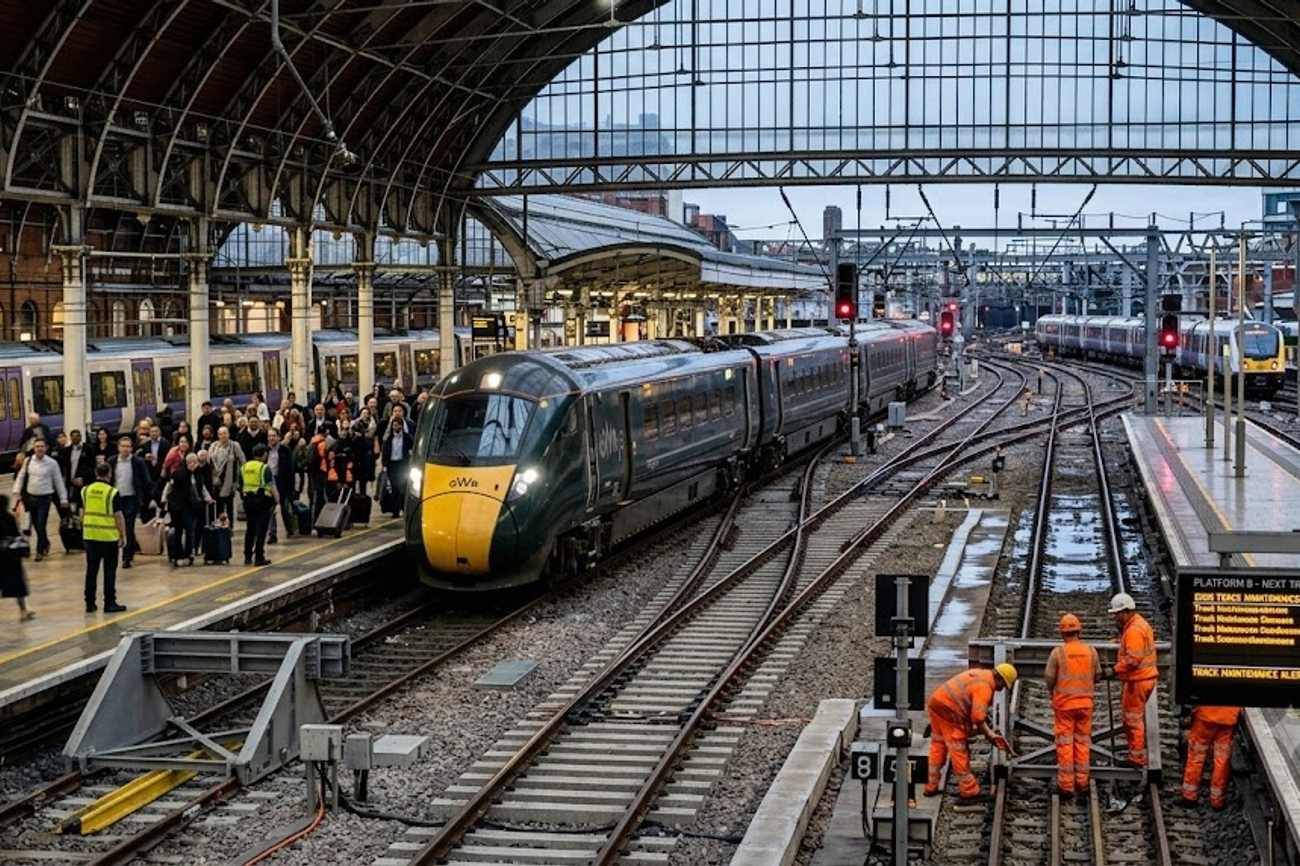
Image generated by AI
The UK rail infrastructure sector is currently facing a delivery deficit where England and Wales are projected to complete only 83% of their planned renewals by the end of Control Period 7 (CP7) in 2029. This represents a stark decline from the original 100% target established in the regulatory framework, signaling a systemic shift from proactive asset replacement to a strategy of "controlled deferral." When contrasted with Scotland’s stronger performance—which contributes to a higher overall Great Britain forecast of 88%—the data reveals a widening regional disparity in infrastructure resilience and investment execution.
The CP7 Financial Framework in Numbers
The financial architecture of the British railway is governed by Control Period 7 (CP7), spanning from 1 April 2024 to 31 March 2029. The Office of Rail and Road (ORR) approved a total expenditure plan of £43.1 billion. This budget is partitioned geographically, with £38.5 billion allocated to England and Wales and £4.6 billion designated for Scotland.
While these figures appear substantial, they must be measured against the sheer scale of the physical network. Network Rail manages a portfolio consisting of approximately 20,000 miles of track, 30,000 tunnels, bridges, and viaducts, and nearly 6,000 level crossings. The data indicates that the £43.1 billion is not a discretionary fund for total renewal but a constrained resource that must be prioritized across thousands of competing signals and assets.
The most volatile variable in this equation has been inflation. By July 2026, the ORR reported that forecast inflation had increased financial pressure by more than £2 billion relative to the 2023 final determination. In the first two years of CP7 alone, cost pressures and inflation added roughly £978 million to the delivery costs. This erosion of purchasing power has forced Network Rail to revise its operational plans, primarily by slashing planned renewals in England and Wales to close the funding gap.
Comparative Regional Performance and Sustainability
The shift in spending power has led to a measurable decline in the expected health of the network. The Composite Sustainability Index (CSI) serves as the primary benchmark for tracking asset condition. Current projections show that England and Wales will experience a 2.7% deterioration in this index during CP7, overshooting the regulatory deterioration target of 2.5%. In contrast, Scotland is forecast to outperform its target, highlighting a divergence in how regional budgets are absorbing inflationary shocks.
The following table illustrates the gap between planned and projected outcomes for the CP7 period:
| Metric | England & Wales (Projected) | Scotland (Projected) | Great Britain (Aggregate) |
|---|---|---|---|
| Renewal Volume Delivery | 83% | Higher than 83% | 88% |
| Composite Sustainability Index (CSI) | 2.7% Deterioration | Outperforming Target | Mixed |
| Budget Allocation | £38.5 Billion | £4.6 Billion | £43.1 Billion |
| Regulatory Target (CSI) | 2.5% Deterioration | N/A | 2.5% (Avg) |
This data suggests that the "funding gap" is not merely a financial shortfall but a physical risk. According to IATA and other transport bodies, infrastructure stability is the bedrock of passenger reliability. When 17% of planned renewals are removed from the schedule in the most heavily used regions, the probability of "unmanaged deferral" increases, which the ORR warns could lead to accelerated asset decay and higher future costs.
What This Means for Travelers
For the individual traveler, these industry figures translate directly into service reliability and ticket pricing. The move toward "controlled deferral" means that instead of replacing an asset entirely, Network Rail may rely on increased minor maintenance and risk monitoring.
1. Anticipate Higher Frequency of Short-Notice Disruptions Because England and Wales are missing 17% of their renewal targets, the likelihood of "failure-based" maintenance increases. Travelers should expect more unplanned closures and speed restrictions as assets are pushed beyond their nominal renewal dates. If you are booking travel for 2026-2028, build in more buffer time for connections.
2. Shift in Engineering Work Windows To maximize the remaining budget, Network Rail is increasingly "packaging" projects—combining multiple upgrades into a single access window to share mobilization costs. For the traveler, this means fewer, but much more intensive, blockade periods. Expect longer total closures of specific lines rather than frequent short-term disruptions.
3. Potential for Fare Volatility As the ORR notes that reduced renewals may lead to "greater future investment requirements," the cost of maintaining the railway will likely spike in the next control period. To fund these deferred costs, there will be significant pressure to increase passenger revenue or seek higher government subsidies, potentially impacting long-term fare structures.
Projection: The Transition to Digital Asset Management
The industry is moving away from fixed engineering timetables toward a "moving financial calculation." This is evidenced by the integration of platforms like Rail BI, which allow managers to simulate intervention scenarios—deciding whether to renew, upgrade, defer, or integrate.
The trajectory suggests that by 2026, the "workbank" will be entirely dynamic. Rather than following a calendar, renewals will be triggered by a combination of real-time condition reporting and current inflation indices. We are seeing a shift toward "Predictive Maintenance" as a survival strategy. By using data to identify exactly when an asset will fail, the industry hopes to offset the 17% delivery gap in England and Wales without compromising safety.
However, the risk remains that "controlled deferral" becomes a euphemism for budget-driven neglect. If the CSI deterioration continues to exceed the 2.5% target, the UK may face a "maintenance cliff" where the cost of emergency repairs far exceeds the original £43.1 billion CP7 allocation. For more on global infrastructure spending trends, refer to the World Travel & Tourism Council (WTTC) reports on transport resilience.
FAQ: UK Rail Infrastructure 2026-2029
Will train delays increase due to these renewal cuts? Statistically, yes. With England and Wales delivering only 83% of planned renewals, the risk of asset failure rises. While the network remains safe, the probability of reliability-related delays increases as assets age beyond their intended lifecycle.
Is the railway becoming unsafe? No. The ORR and Network Rail emphasize that "controlled deferral" involves active risk monitoring. Assets are only postponed if evidence shows they can remain safely operational, though this does increase the burden on maintenance teams.
Why is Scotland performing better than England and Wales? The data indicates Scotland is outperforming its CSI targets and has a higher renewal delivery forecast. This is likely due to a different scale of infrastructure and a more aligned budget-to-asset ratio within its £4.6 billion allocation.
How does inflation affect my train ticket? While inflation directly impacts the £43.1 billion infrastructure budget, it also affects operational costs. The £2 billion increase in financial pressure on CP7 may eventually lead to higher fares to cover the resulting funding gaps.
The British railway is no longer being managed by a calendar, but by a calculator.
#UKRailInfrastructure #CP7Budget #NetworkRailData #InfrastructureDeferral #ORRStatistics #RailSustainabilityIndex
Related Travel Guides
- London Is Now On Alert As Rail Disruption And Elizabeth Line Heathrow Disruption See Better Travel Options
- Australia Advances Brisbane Rail Modernisation As ETCS Level 2 Enters Passenger Service
- Uzbekistan Travel Revolution Begins As First China To Iran Block Train Opens Historic Eurasian Rail Gateway
Disclaimer
This article is for informational and educational purposes only. It does not constitute legal, financial, or professional advice. While we strive to provide accurate and up-to-date information, travel policies, regulations, and conditions change rapidly. Always verify information with official sources before making travel decisions. Nomad Lawyer makes no representations about the accuracy, reliability, completeness, or suitability of the information provided. Readers should consult qualified professionals for advice specific to their circumstances. The views expressed in this article are those of the author and do not necessarily reflect the views of Nomad Lawyer.
Naina Thakur
Contributor & Travel Specialist
Travel enthusiast and legal writer covering visa regulations, responsible tourism, and cultural journeys across global destinations.
Learn more about our team →