
UK Family Stranded in Rhodes After Jet2 Flight Chaos and Peak Season Disruptions in 2026
A British family faces an indefinite stay on the Greek island of Rhodes following severe Jet2 flight disruptions and capacity constraints during the 2026 peak summer travel window.
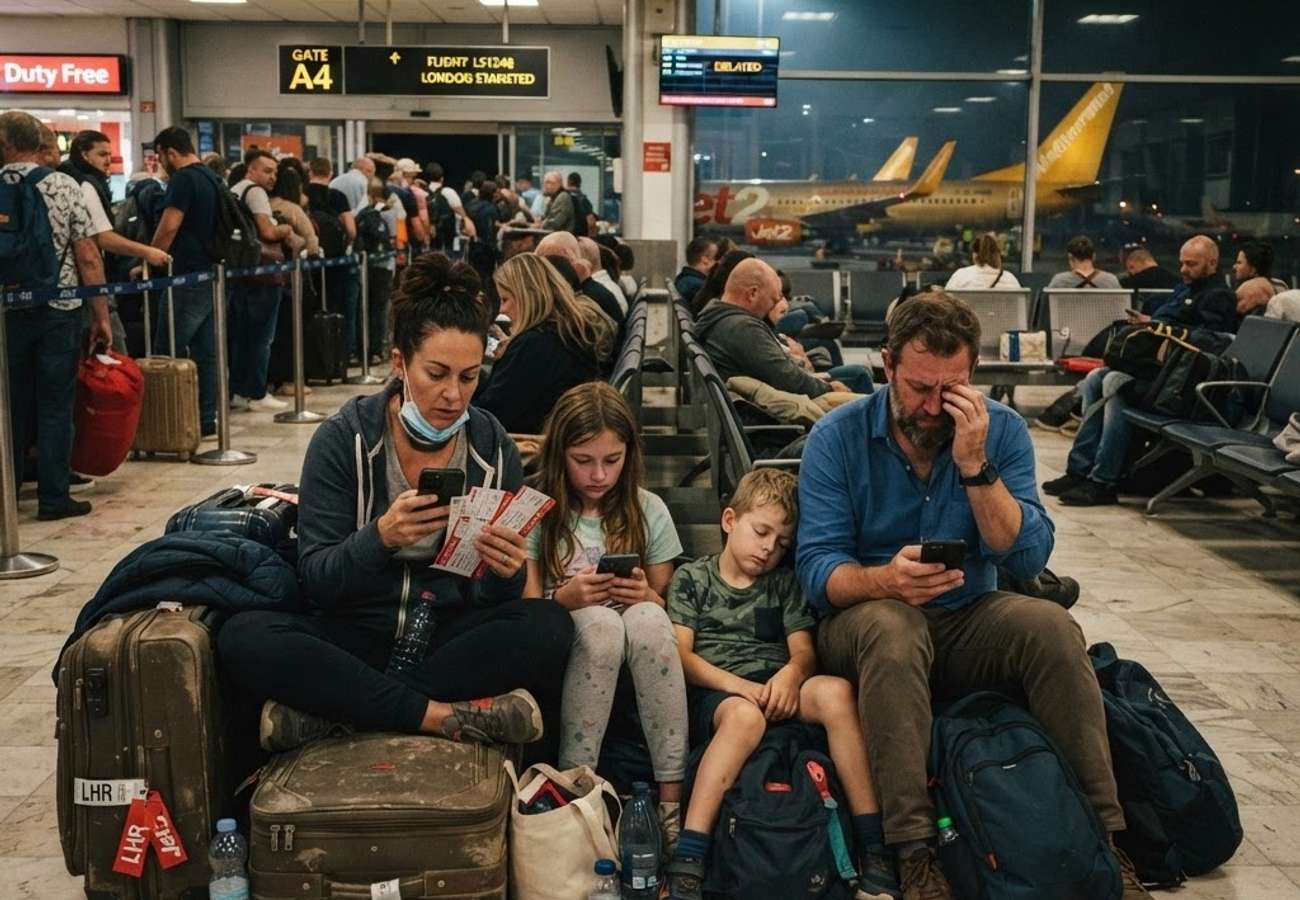
Image generated by AI
A British family's return from a package holiday in Rhodes has devolved into an indefinite stay after severe operational failures on a Jet2 service left them stranded during the 2026 summer peak.
The incident, which occurred at Rhodes Diagoras Airport, highlights the fragile state of aviation capacity between Greece and the United Kingdom. What began as a delayed departure escalated into a multi-day ordeal, leaving the family without immediate return options and facing mounting costs for unplanned accommodation and sustenance.
Late-Night Chaos at Rhodes Diagoras Airport
The disruption began when the family's scheduled Jet2 flight home suffered significant delays, pushing boarding times into the early hours of the morning. Reports indicate that the terminal was heavily congested, with passengers enduring high temperatures and overcrowded waiting areas—a common occurrence during the late-August travel surge.
While some passengers on the disrupted service were successfully rerouted to alternative flights, this specific family found themselves unable to secure same-day rebooking. As the delay persisted, local accommodation options in Rhodes became scarce and prices spiked, reflecting the broader pressure on the island's tourism infrastructure during the height of the season.
Industry data suggests that this is not an isolated event. Aviation trackers have noted a pattern of rolling delays and sporadic cancellations on routes connecting the UK to the Greek islands throughout late August, often leaving travelers in a state of limbo for several days before replacement seats become available.
Systemic Capacity Failures and UK Airport Ripple Effects
The crisis facing the stranded family is symptomatic of wider systemic issues within the UK's aviation network. Reports indicate that operational bottlenecks at major British airports—including temporary runway malfunctions—triggered a domino effect of diversions and schedule shifts. These disruptions squeezed available seat capacity on high-demand routes, specifically those serving Greek holiday destinations.
The volatility of the current travel climate is further illustrated by another recent Jet2 case in Rhodes. In that instance, a family was unable to board their flight after a six-year-old child became ill at the gate following a lengthy delay. While other passengers departed, the family was left behind and subsequently advised by the airline to seek reimbursement through private travel insurance rather than direct carrier compensation.
These combined incidents demonstrate a critical vulnerability: when aircraft and crew schedules are stretched to their absolute limit, a single disruption can leave families stranded for days. For groups requiring multiple adjacent seats, the challenge of rebooking is magnified, as fragmented seat availability often makes it impossible to move a whole family on a single replacement flight.
The Financial Burden of Unplanned Extensions
For travelers stranded abroad, the financial implications are immediate and severe. Reports from the Rhodes disruptions indicate that unexpected hotel stays, meals, and emergency transport can quickly add hundreds, or even thousands, of pounds to a holiday budget. In the case of the family denied boarding due to a medical emergency, estimated out-of-pocket expenses were reported to reach four figures.
From a legal standpoint, passenger rights are governed by UK and European air passenger regulations (often referred to as EU261). These rules generally mandate that airlines provide "duty of care"—including hotel rooms and refreshments—when delays or cancellations occur. However, the application of these rules is often contested. If an airline deems a disruption to be caused by "extraordinary circumstances" or if a passenger is unable to board for health reasons, the carrier may deny direct liability, pushing the financial burden onto the traveler's insurance provider.
Legal experts advise that passengers in these situations must maintain a rigorous paper trail. This includes saving every receipt for food and lodging, capturing photos of airport departure boards, and archiving all written correspondence with the airline. Such documentation is essential for any subsequent claims for reimbursement or statutory compensation.
Operational Strain at Rhodes Diagoras Airport
Rhodes Diagoras Airport is currently operating under extreme pressure. Airport officials have urged travelers to maintain constant communication with their travel agents and monitor flight statuses in real-time, as schedule changes are occurring with little notice. The facility has also cited the implementation of new EU border-control systems and sheer seasonal volume as primary drivers for increased processing times and longer queues.
The instability of the region's aviation environment is further evidenced by other recent operational hiccups. Earlier this summer, fuel allocation issues forced some operators to "tanker" fuel (carrying extra fuel from their origin) to avoid shortages in Rhodes. Additionally, a domestic Olympic Air flight recently suffered a technical alert shortly after takeoff, forcing an immediate return to the airport. While these events are unrelated to Jet2, they underscore the compounding stressors affecting the island's air traffic management.
Strategic Steps for Stranded Travelers
When a homecoming unravels, passenger rights organizations recommend a proactive approach to secure a return. First, travelers must determine if their situation is classified as a "cancellation," "delay," or "denied boarding," as each category carries different legal entitlements under UK and EU law.
Strategic recommendations for those currently stuck include:
- Multi-Channel Communication: Contacting the airline via mobile apps, social media, and airport staff simultaneously to increase the chance of a response.
- Alternative Hubs: Being open to flights from other Greek airports if the primary hub is blocked.
- Flexible Grouping: While splitting families is rarely an option for those with children, some travelers find it faster to book individual seats and attempt to move together later.
- Evidence Collection: Taking screenshots of all communication and keeping physical receipts for every expense incurred.
For the family currently stranded in Rhodes, these steps are the only viable path toward recovering the significant costs associated with their disrupted Jet2 journey.
The gap between airline capacity and peak-season demand continues to leave holidaymakers vulnerable to systemic failures.
Related Travel Guides
Disclaimer
This article is for informational and educational purposes only. It does not constitute legal, financial, or professional advice. While we strive to provide accurate and up-to-date information, travel policies, regulations, and conditions change rapidly. Always verify information with official sources before making travel decisions. Nomad Lawyer makes no representations about the accuracy, reliability, completeness, or suitability of the information provided. Readers should consult qualified professionals for advice specific to their circumstances. The views expressed in this article are those of the author and do not necessarily reflect the views of Nomad Lawyer.