
Uganda and Mozambique Form Tourism Alliance to Link Mountain Gorillas and Indian Ocean Safaris
AUTO and AVITUM forge a bilateral tourism pact in Maputo, linking Bwindi gorilla trekking with Bazaruto marine safaris as Uganda's international receipts reach $1.62B.

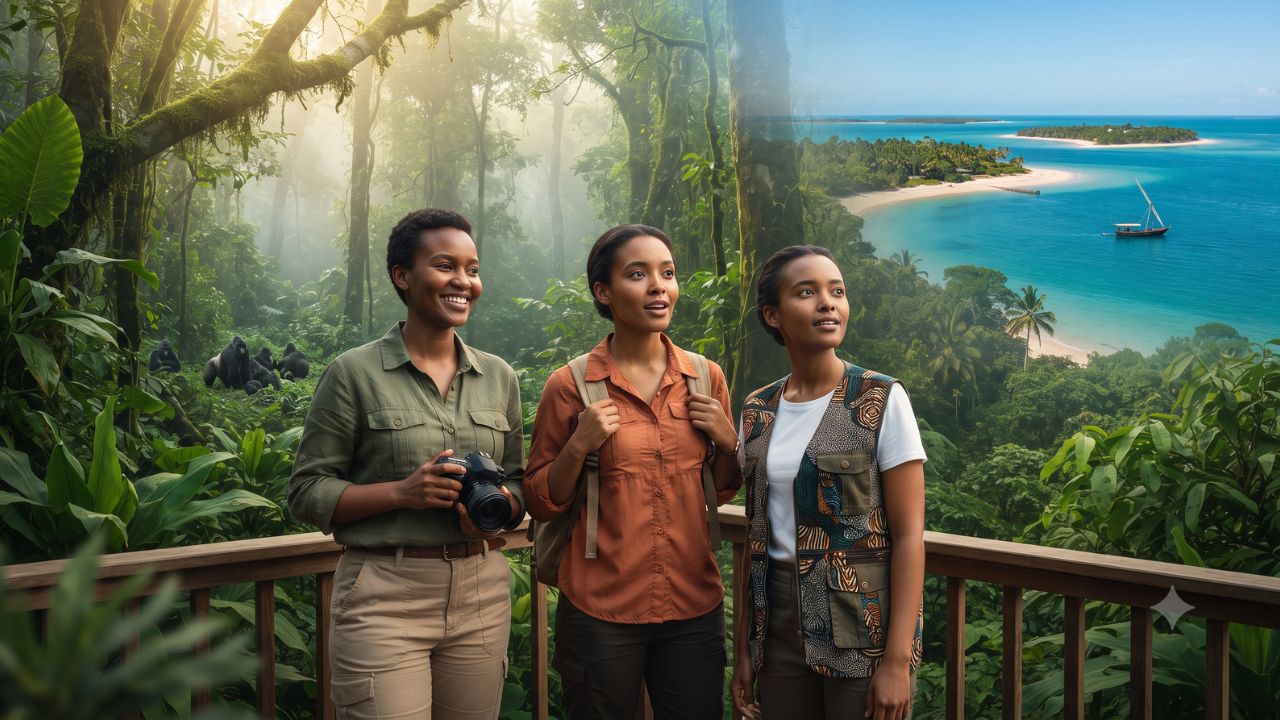
A 19.7% annual surge in Uganda's international visitor arrivals to 1,642,215—generating UGX 5,829.2 billion (approximately US$ 1.62 billion) in tourism receipts—anchors a formal bilateral campaign with Mozambique to establish unified multi-country travel corridors. Formalized during a dedicated tourism roadshow in Maputo on 8 October 2026, the partnership connects East African highland wildlife expeditions with Southern African coastal marine sanctuaries. By pairing Bwindi Impenetrable National Park's rare mountain gorilla trekking with the Bazaruto Archipelago's protected coral reefs, commercial operators seek to capture high-spending international travelers through synchronized "bush-and-beach" itineraries.
The initiative marks a structural transition toward cross-regional private-sector packaging. Organized by the Uganda High Commission in Dar es Salaam, the summit culminated in a formal Memorandum of Understanding (MoU) signed between the Association of Uganda Tour Operators (AUTO) and Mozambique's Association of Travel Agents and Tour Operators (AVITUM). Supported by 100 virtual business-to-business (B2B) operational meetings, the accord creates an enterprise framework designed to cross-sell diverse African ecosystems while navigating complex intra-continental flight networks and visa formalities.
Commercial Bilateral Architecture and the Maputo Accord
The commercial foundation of the alliance reflects an evolving international travel market that favors combined, multi-destination African journeys over single-country trips. International long-haul visitors from North America, Western Europe, and East Asia, who invest significant transit time reaching the continent, increasingly seek combined itineraries that blend terrestrial big-game tracking with tropical coastal leisure. Historically, regional combinations paired Kenyan or Tanzanian savannah safaris with Zanzibar or the Seychelles. The Uganda–Mozambique alliance disrupts this pattern by introducing an unconventional pairing: primal montane rainforests and remote Indian Ocean marine reserves.
Under the leadership of the Ministry of Tourism, Wildlife and Antiquities (Uganda), Uganda entered the partnership from a position of verified growth. International visitor numbers expanded from 1,371,895 arrivals in 2024 to 1,642,215 in 2025. This momentum continued into 2026, with the country receiving 739,815 international visitors across the first six months (January through June), representing a 3.7% year-over-year increase. However, because gorilla trekking represents a highly regulated, capacity-capped tourism segment, expanding overall economic yield requires encouraging visitors to book extended regional extensions.
Mozambique provides the maritime counterpart through the National Tourism Institute of Mozambique (INATUR). The country's 2,500-kilometer coastline features pristine barrier islands, megafauna dive sites, and historic Swahili-Portuguese trading architecture. The central attraction of the partnership is the Bazaruto Archipelago National Park in Inhambane Province. Established in 1971 and spanning approximately 1,583 square kilometers, the marine reserve protects five islands—Bazaruto, Benguerra, Magaruque, Santa Carolina, and Bangué—that shelter the Western Indian Ocean's last viable population of dugongs alongside endangered sea turtles and undisturbed coral gardens.
Comparative National Tourism Profiles and Complementary Product Ecosystems
The operational success of this cross-border alliance depends on integrating two distinct ecological assets and regulatory frameworks.
| Geographic Jurisdiction & Agency | Primary Tourism Asset & Conservation Focus | Verified Volume / Economic Indicator | Key Regulatory & Operational Requirements |
|---|---|---|---|
| Uganda (Uganda Wildlife Authority) | Bwindi & Mgahinga Mountain Gorillas; savannah safaris in Queen Elizabeth & Murchison Falls | 1,642,215 arrivals in 2025 (+19.7% YoY); UGX 5,829.2B ($1.62B) receipts | Strict advance permits required; treks last 2–7 hours; 1-hour direct observation limit |
| Uganda H1 2026 Performance (MTWA Uganda) | Sustained wildlife and adventure tourism | 739,815 international visitors (Jan–Jun 2026, +3.7% YoY) | Primate tracking in Kibale; alpine mountaineering in Rwenzori Mountains |
| Mozambique (INATUR Mozambique) | Bazaruto Archipelago National Park (Inhambane Province); coastal adventure | Marine park created in 1971; covers 1,583 square kilometers | Access via Vilankulo and Inhassoro; strictly regulated marine wildlife zoning |
| Mozambique Marine Megafauna | Dugong protection, sea turtle nesting, coral diving, and deep-sea game fishing | Five principal islands: Bazaruto, Benguerra, Magaruque, Santa Carolina, Bangué | Conservation zoning managed through maritime environmental enforcement |
| Bilateral Accord (Maputo) | Private-sector commercial distribution pact | 8 October 2026 signing; 100 virtual B2B business meetings | AUTO and AVITUM joint marketing, packaging, and operator contract protocols |
| Aviation Gateways | International entry hubs | Entebbe (EBB) and Maputo (MPM) / Vilankulo (VNX) | No direct nonstop flights; requires regional connections via Nairobi or Johannesburg |
In Uganda, wildlife operations are managed under the strict supervision of the Uganda Wildlife Authority (UWA). Gorilla trekking takes place across two protected enclaves: Bwindi Impenetrable National Park, divided into four tracking sectors (Buhoma, Ruhija, Rushaga, and Nkuringo), and Mgahinga Gorilla National Park in the Virunga volcanic range. To prevent pathogen transmission and habitat degradation, UWA restricts encounters to exactly one hour once a habituated family group is located, with daily permit allocations strictly capped. These rules make gorilla tracking an exclusive travel product that requires booking six to twelve months in advance.
Complementary wilderness destinations enrich the inland circuit. Queen Elizabeth National Park provides classic big-game viewing, famed for the Ishasha sector's tree-climbing lions. Murchison Falls National Park merges terrestrial wildlife viewing with river cruises along the Victoria Nile, while Kibale National Park anchors chimpanzee tracking, and the Rwenzori Mountains provide glaciated high-altitude trekking.
In Mozambique, coastal tourism centers on Vilankulo, the mainland gateway to Bazaruto. Farther north, the Quirimbas archipelago combines mangrove ecosystems with diving, while Gorongosa National Park represents a historic inland wildlife restoration project. Pairing these marine and terrestrial assets allows operators to offer a complete spectrum of African natural environments in a single itinerary.
Expert Analysis: The Logistical and Aviation Realities of Multi-Regional African Packaging
For travelers booking multi-destination African itineraries, the direct consequence of the Uganda–Mozambique agreement is the emergence of pre-coordinated itineraries that bundle gorilla permits with beach lodges. However, execution faces operational hurdles in air connectivity. At present, there are no direct scheduled flights linking Entebbe International Airport (EBB) with Maputo International Airport (MPM) or the coastal airport at Vilankulo (VNX).
The pricing pressure this creates means that travelers must route through third-country hub airports, primarily connecting via Jomo Kenyatta International Airport in Nairobi on Kenya Airways or O.R. Tambo International Airport in Johannesburg on regional carriers like Airlink. These multi-leg transfers add travel time, overnight airport hotel expenses, and baggage transfer risks, especially when transferring between full-service international carriers and regional bush planes with strict 15-kilogram soft-baggage weight restrictions.
Furthermore, immigration and health regulations require careful coordination. While Kenya, Uganda, and Rwanda offer the unified East Africa Tourist Visa, Mozambique operates under a separate national immigration system, requiring travelers to obtain a separate electronic visa before arrival. Health protocols also differ: yellow fever vaccination certificates are mandatory for entry into Uganda, while anti-malarial prophylaxis and coastal marine protection guidelines apply throughout Mozambique. Tour operators who successfully manage these border transfers, flight connections, and seasonal weather patterns will capture high-yield leisure bookings from discerning global travelers.
Key Takeaways
- Uganda recorded 1,642,215 international arrivals in 2025 (+19.7% YoY), generating UGX 5,829.2 billion (US$ 1.62 billion) in tourism receipts, followed by 739,815 arrivals in the first half of 2026.
- AUTO and AVITUM signed an MoU in Maputo on 8 October 2026, supported by 100 B2B commercial meetings to create combined wildlife and coastal itineraries.
- Uganda's core wildlife offering centers on Bwindi's four gorilla tracking sectors and Mgahinga, managed under strict one-hour encounter limits by UWA.
- Mozambique's coastal pillar features the 1,583-square-kilometer Bazaruto Archipelago National Park, protecting dugongs, sea turtles, and five primary barrier islands.
- Multi-country itineraries require travelers to navigate connecting flight routes via Nairobi or Johannesburg, as direct air links between Entebbe and Maputo remain unestablished.
FAQ: Uganda and Mozambique Tourism Partnership 2026
What is the purpose of the Uganda–Mozambique tourism agreement?
Signed on 8 October 2026 between AUTO and AVITUM, the partnership enables tour operators to create joint travel packages combining Uganda's mountain gorilla safaris with Mozambique's beach and diving destinations.
Are there direct flights between Uganda and Mozambique?
No direct commercial flights currently connect Entebbe with Maputo or Vilankulo. Travelers must book connecting flights through regional aviation hubs such as Nairobi or Johannesburg.
What are the rules for gorilla trekking in Uganda?
Permits must be purchased in advance through the Uganda Wildlife Authority. Treks take between two and seven hours, and direct observation of habituated gorillas is strictly limited to one hour.
What unique marine wildlife can travelers see in Mozambique's Bazaruto Archipelago?
Established in 1971 across 1,583 square kilometers, Bazaruto Archipelago National Park protects five barrier islands, endangered dugongs, marine turtles, and pristine coral reef ecosystems.
By bridging equatorial cloud forests and Indian Ocean coral reefs, African tourism operators are proving that regional collaboration can unlock unprecedented travel experiences.
Related Travel Guides
Disclaimer
This article is for informational and educational purposes only. It does not constitute legal, financial, or professional advice. While we strive to provide accurate and up-to-date information, travel policies, regulations, and conditions change rapidly. Always verify information with official sources before making travel decisions. Nomad Lawyer makes no representations about the accuracy, reliability, completeness, or suitability of the information provided. Readers should consult qualified professionals for advice specific to their circumstances. The views expressed in this article are those of the author and do not necessarily reflect the views of Nomad Lawyer.
Kunal K Choudhary
Co-Founder & Contributor
A passionate traveller and tech enthusiast. Kunal contributes to the vision and growth of Nomad Lawyer, bringing fresh perspectives and driving the community forward.
Learn more about our team →