
Germany and EU Launch €16.5M StawiBluu Initiative to Transform Tanzania Coastal Tourism and Blue Economy
The EU and Germany commit €16.5M through GIZ to launch StawiBluu in Tanzania, restructuring coastal tourism and mariculture across Zanzibar, Mafia, and Dar es Salaam.

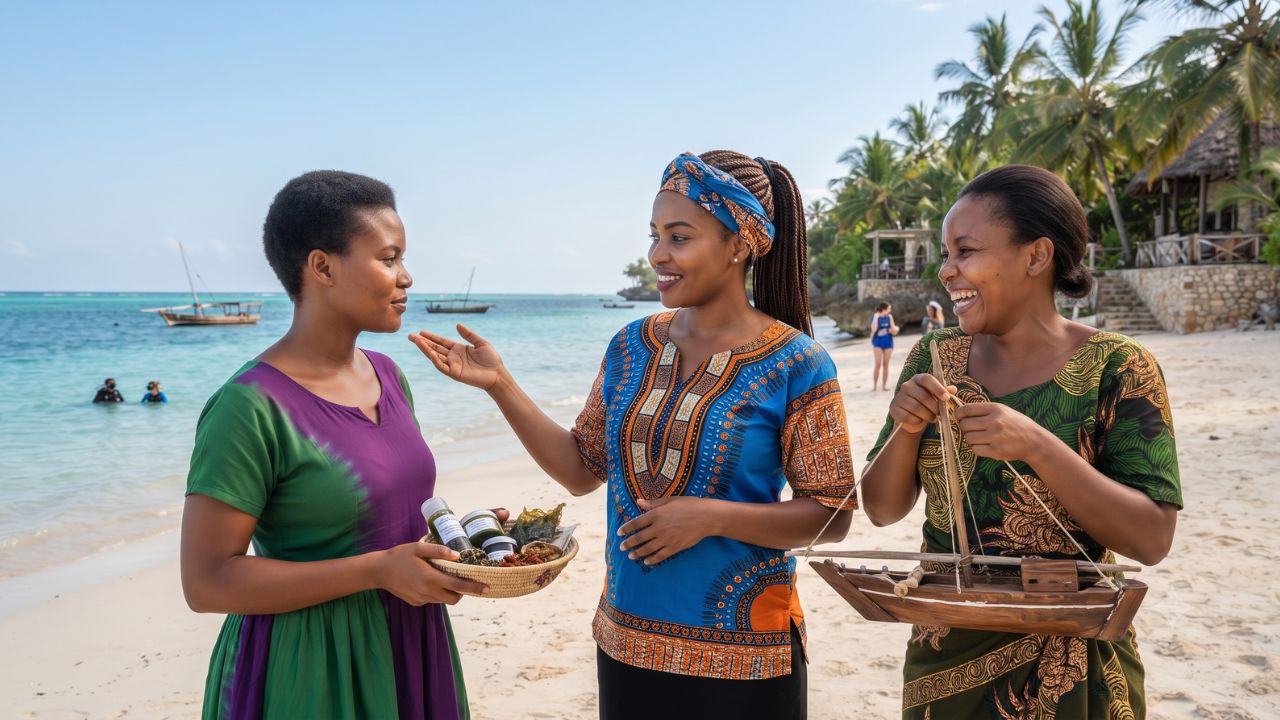
A €16.5 million multilateral funding package led by the European Union and the German Federal Government has established the StawiBluu initiative in Tanzania, creating an enterprise finance mechanism to restructure the nation's coastal tourism and marine economy. Formally inaugurated in Dar es Salaam on 8 October 2026 and detailed in an official announcement by the European External Action Service (EEAS) on 12 October, the program channels €15 million from the European Union alongside €1.5 million in German co-financing through the Federal Ministry for Economic Cooperation and Development (BMZ). Implemented on the ground by Germany's technical development agency, Deutsche Gesellschaft für Internationale Zusammenarbeit (GIZ), the initiative focuses on building climate-resilient enterprise infrastructure across five key Indian Ocean hubs.
Rather than financing speculative real estate developments or subsidizing foreign hotel chains, StawiBluu targets the commercial bottlenecks that prevent local Tanzanian enterprises from capturing international visitor spending. By coupling sustainable coastal tourism services with commercial aquaculture and mariculture value chains, the program addresses systemic economic leakages across mainland ports and the Zanzibar archipelago. This strategy reflects a broader realignment in European overseas development assistance, deploying structured grants to cultivate bankable, community-anchored maritime suppliers capable of meeting international hospitality benchmarks.
Multilateral Architecture: The Mechanics of the StawiBluu Compact
The operational structure of StawiBluu places business readiness, credit accessibility, and environmental standards at the core of coastal destination development. With the European Union supplying approximately 90.9% of the direct €16.5 million project capital and Germany providing targeted technical delivery through GIZ, the program operates as a core component of the broader €110 million Team Europe Initiative on Blue Economy for Jobs and Climate Action in Tanzania.
This sectoral focus is integrated into the European Commission's Global Gateway strategy, which has earmarked €585 million in total grant commitments for bilateral Tanzanian development priorities spanning 2021 through 2027. While that comprehensive capital envelope covers broad digital, governance, and energy infrastructure, StawiBluu functions as its commercial maritime spearhead. GIZ's mandate centers on formalizing informal micro, small, and medium-sized enterprises (MSMEs), with strict operational quotas directing mentorship, vocational upskilling, and financing opportunities toward female entrepreneurs and young commercial operators.
The geographic footprint encompasses five distinct coastal and island districts: Dar es Salaam, Bagamoyo, Unguja, Pemba, and Mafia Island. In each zone, tourism operators work in close proximity to artisanal fishing communities. By expanding mariculture—the controlled cultivation of marine organisms such as seaweed, sea cucumbers, and commercial finfish—the initiative provides coastal households with income alternatives that reduce overfishing pressure on coral reefs, which form the primary visual attraction for international dive travelers promoted by the Tanzania Tourist Board (TTB).
Targeted Destinations and Funding Breakdown Across the Tanzanian Littoral
The execution of the StawiBluu framework coordinates multiple capital streams across distinct mainland and island jurisdictions.
| Jurisdictional Zone / Focus | Implementing Body & Donor Share | Primary Coastal & Tourism Profile | Enterprise & Economic Focus | Target Demographics & Capacity Goals |
|---|---|---|---|---|
| Dar es Salaam (Mainland Hub) | GIZ / EU (€15M) & BMZ (€1.5M) | Commercial aviation gateway, urban waterfront, transit port | Marine excursion operators, local culinary supply chains | MSME banking readiness, digital booking systems |
| Bagamoyo (Pwani Region) | GIZ / StawiBluu Portfolio | UNESCO tentative heritage site, historic Swahili-German architecture | Cultural walking tours, dhow sailing, heritage hospitality | Youth vocational guides, community heritage preservation |
| Unguja Island (Zanzibar) | GIZ / Revolutionary Govt of Zanzibar | Established beach resorts, historic Stone Town, spice circuits | Premium excursion diversification, local seafood procurement | Women-led artisanal mariculture cooperatives |
| Pemba Island (Zanzibar) | GIZ / Team Europe Framework | Pristine coral walls, deep-channel diving, mangrove estuaries | Nature-based ecotourism, low-density diving basecamps | Conservation guiding, certified marine sanctuary wardens |
| Mafia Island (Pwani Marine Park) | GIZ / Marine Park Authorities | Whale shark aggregation zones, protected marine reserves | Regulated wildlife diving, eco-lodge supply integration | Local boat captain certification, anti-poaching co-management |
| Wider Macro Framework | Team Europe Blue Economy (€110M) | Consolidated Indian Ocean coastline | Broader coastal climate resilience, regional transport links | National policy coordination, blue carbon credits |
To prepare the commercial pipeline for these coastal enterprises, European trade officials conducted targeted investment roadshows across major European financial centers immediately prior to the Dar es Salaam launch. Bilateral matchmaking summits took place in Helsinki, Finland (28–29 September 2026), Emilia-Romagna, Italy (1–2 October 2026), and The Hague, Netherlands (5–6 October 2026). These gatherings introduced Tanzanian maritime and tourism enterprises to European institutional investors, establishing distribution channels for responsibly sourced marine goods and community-based travel packages.
Expert Analysis: The Shift from Mass Resort Construction to Supply-Chain Sovereign Yield
The launch of StawiBluu exposes a fundamental structural reality in East African tourism economics: raw visitor growth does not automatically generate local prosperity. For decades, destinations like Zanzibar have welcomed rising charter arrivals from Western and Central Europe, yet the economic surplus has historically leaked out of the domestic economy through foreign-owned resort operators, imported provisions, and overseas booking aggregators.
For travelers booking this route, the direct consequence is a marked elevation in on-the-ground service quality coupled with authentic community immersion. Currently, luxury safari-and-beach travelers arriving in Unguja or Mafia frequently discover that high-end lodges import premium seafood from South Africa or the Middle East due to sanitary and volume inconsistencies in local artisanal fisheries. By training coastal cooperatives in commercial mariculture techniques and food-safety cold chains, StawiBluu enables boutique lodges to source premium catches directly from local waters. This stabilizes hotel operating budgets while providing travelers with traceable culinary experiences.
The pricing pressure this creates means that Tanzania's coastal destinations are actively pivoting away from high-volume, discount-charter models. In fragile ecosystems like Pemba and Mafia Island, unchecked mass tourism directly threatens the dugong habitats, turtle nesting beaches, and pristine coral atolls that justify long-haul airfares. Because StawiBluu ties commercial financing to verifiable environmental stewardship and climate adaptation benchmarks, participating operators are incentivized to maintain low-density, high-yield booking structures.
From an aviation and distribution perspective, the project will not alter flight schedules overnight. The agreement contains no provisions for new bilateral air traffic rights, airport runway expansions, or subsidized passenger airfares. Travelers must still navigate standard scheduled links through Julius Nyerere International Airport (DAR) in Dar es Salaam or Abeid Amani Karume International Airport (ZNZ) in Zanzibar, relying on domestic regional carriers like Precision Air or Auric Air for onward connections to Mafia and Pemba. The true value for international travelers lies in destination stability: ensuring that the coastal environments, marine biodiversity, and coastal settlements that define the Swahili Coast remain ecologically viable for decades to come.
Key Takeaways
- €16.5M Total Project Envelope: The StawiBluu initiative commits €15 million from the European Union and €1.5 million from Germany's BMZ to upgrade Tanzania's coastal visitor economy.
- Five Designated Coastal Corridors: Implementation covers Dar es Salaam, Bagamoyo, Unguja, Pemba, and Mafia Island, pairing marine ecotourism with commercial mariculture.
- GIZ Field Execution: Germany's technical cooperation agency leads operational delivery, focusing on small business credit readiness, vocational skills, and female entrepreneurship.
- Tied to €110M Team Europe Program: StawiBluu forms the commercial core of Europe's wider blue economy and climate adaptation strategy across the Western Indian Ocean.
- No Direct Airline or Infrastructure Expansion: The accord focuses exclusively on private-sector supply chains and conservation protocols rather than airport construction or airline routes.
FAQ: Tanzania StawiBluu Coastal Tourism Initiative 2026
What is the StawiBluu initiative in Tanzania?
StawiBluu is a €16.5 million joint European Union and German program implemented by GIZ. It supports sustainable coastal tourism and mariculture businesses across mainland Tanzania and Zanzibar.
Which destinations in Tanzania are included in the program?
The initiative covers five coastal and island destinations: Dar es Salaam, Bagamoyo, Unguja (Zanzibar), Pemba, and Mafia Island.
Does the StawiBluu program finance new hotels or airline routes?
No. The program does not finance hotel construction or commercial flight routes. It focuses on enterprise development, vocational skills, access to capital, and sustainable marine supply chains.
Who are the primary beneficiaries of the initiative?
The primary beneficiaries are coastal small and medium-sized enterprises (MSMEs), with dedicated programs supporting female entrepreneurs, young business operators, and community-led conservation cooperatives.
As European capital redirects East African tourism away from unchecked beachfront expansion, Tanzania's blue economy demonstrates that the future of Indian Ocean travel belongs to regenerative coastal stewardship.
Related Travel Guides
Disclaimer
This article is for informational and educational purposes only. It does not constitute legal, financial, or professional advice. While we strive to provide accurate and up-to-date information, travel policies, regulations, and conditions change rapidly. Always verify information with official sources before making travel decisions. Nomad Lawyer makes no representations about the accuracy, reliability, completeness, or suitability of the information provided. Readers should consult qualified professionals for advice specific to their circumstances. The views expressed in this article are those of the author and do not necessarily reflect the views of Nomad Lawyer.
Raushan Kumar
Founder & Lead Developer
Full-stack developer with 11+ years of experience and a passionate traveller. Raushan built Nomad Lawyer from the ground up with a vision to create the best travel and law experience on the web.
Learn more about our team →