Uganda Upgrades Southwestern Virunga Transit Network with One-Hour Air Connections and $800 Gorilla Permit Logistics for 2026

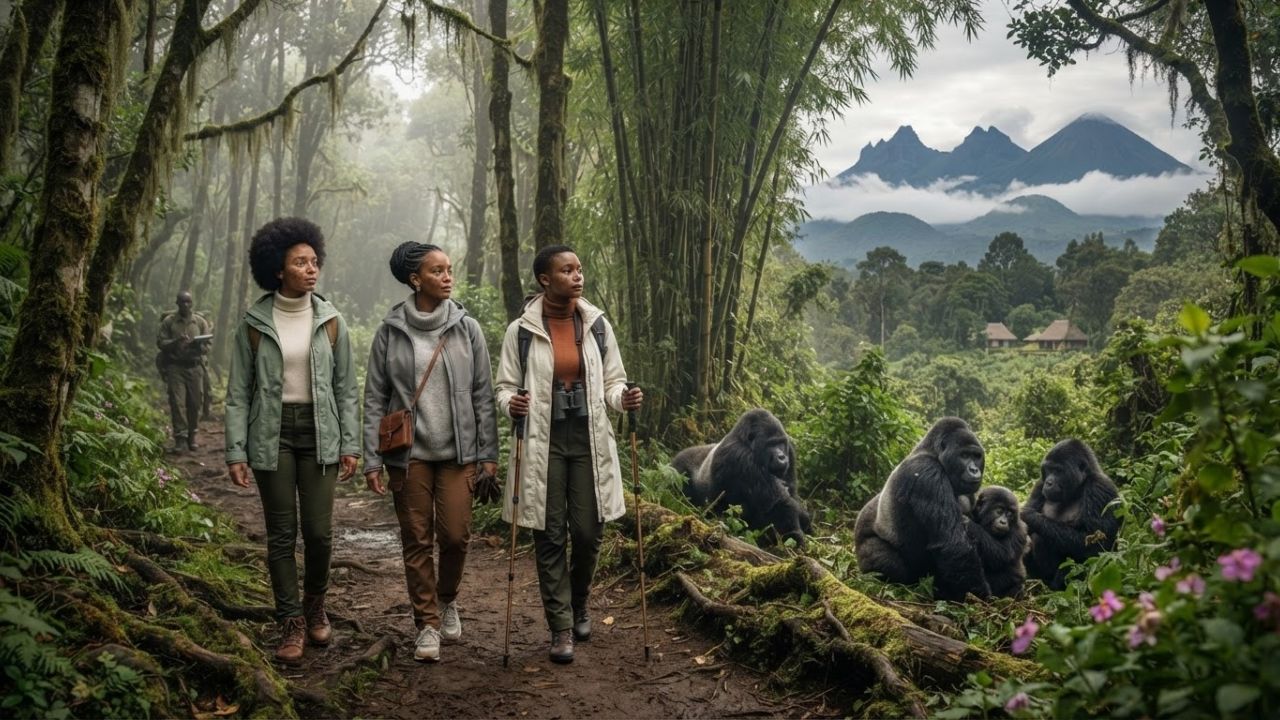
Southwestern Uganda has modernized its multi-modal transport network and conservation logistics, reducing transit times between Entebbe International Airport and Mgahinga Gorilla National Park from over 10 hours by road to a 1-hour domestic flight into Kisoro Airstrip. Operating alongside a regulated $800 USD primate tracking permit structure and a legally mandated 20% community revenue redistribution system, the regional transit framework supports high-yield, low-footprint travel across the volcanic cloud forests of the Virunga Massif.
[KISORO, Uganda] — Infrastructure enhancements and aviation route optimization across Southwestern Uganda have established direct air-to-land transit links for international travelers visiting Mgahinga Gorilla National Park.
Spanning 33.7 square kilometers (13 square miles) along the international borders of Rwanda and the Democratic Republic of Congo, the park encompasses three volcanic summits: Mount Sabinyo, Mount Gahinga, and Mount Muhavura (rising to 4,127 meters / 13,540 feet). By integrating 1-hour domestic scheduled flights with paved feeder roads, strict 8-person daily tracking caps per gorilla family, and biosafety protocols, Uganda offers an accessible, ethically managed gateway into the Albertine Rift.
| Parameter / Logistics Metric | Official Benchmark & Operational Data |
|---|---|
| Long-Haul Air Hub Gateway | Entebbe International Airport (EBB) |
| Domestic Regional Airstrip | Kisoro Airstrip (KOB) |
| Flight Transit Duration | 1 Hour Domestic Flight (vs 10+ Hours Road) |
| Park Geographic Area | 33.7 sq km (13 sq miles) |
| Elevation Range | 2,227m (7,306ft) to 4,127m (13,540ft) |
| Primate Permit Tariff | $800 USD per Permit (vs $1,500 USD Rwanda) |
| Mandatory Revenue Redistribution | 20% of Park Entry Fees to Local Communities |
| 10-Year Kisoro Community Redistribution | >$2.5 Million USD Allocated to Feeder Roads & Clinics |
| Daily Gorilla Visitor Limit | 8 Visitors per Family (Max 60 Minutes Stay) |
| Biosafety Distance Requirement | 7 to 10 Meters (23 to 33 Feet) Mask Mandated |
| Off-Grid Eco-Lodge Target | 100% Solar Power, >50,000L Rainwater Storage |
| Regional Economic Impact | >1,500 Direct and Indirect Jobs Created |
Transit Schedule & Route Specifications
Travelers accessing Mgahinga Gorilla National Park can choose between scheduled domestic flights, private air charters, or overland road transfers from Entebbe/Kampala or Kigali, Rwanda.
| Route Sector | Transport Mode | Travel Duration | Target Segment |
|---|---|---|---|
| Entebbe (EBB) to Kisoro | Scheduled Flight | 1 Hour | Express / High- |
| Airstrip (KOB) | (Cessna Caravan) | Non-Stop | Value Travelers |
| Kampala / Entebbe to | Paved Highway | 9 to 10+ Hours | Overland Tour |
| Kisoro via Masaka | (4x4 Vehicle) | (510 km) | Groups |
| Kigali, Rwanda (KGL) to | Cross-Border Road | 3.5 to 4 Hours | Regional Multi- |
| Mgahinga via Cyanika | Transfer | (135 km) | Country Itinerary |
| Origin Gateway | Destination | Transport Mode | Travel Duration | Distance | Operational Notes |
|---|---|---|---|---|---|
| Entebbe (EBB) | Kisoro (KOB) | Scheduled Domestic Flight | 1 Hour | ~350 km | Morning departures match gorilla tracking schedules |
| Entebbe (EBB) | Mgahinga Park Gate | Overland 4x4 Highway | 10+ Hours | ~510 km | Scenic route via Equator & Mbarara |
| Kigali (KGL) | Mgahinga via Cyanika | Cross-Border Land Transfer | 3.5 to 4 Hours | ~135 km | East Africa Tourist Visa valid across border |
Traveler Logistics Guide (Information Gain)
Navigating Southwestern Uganda requires advance planning around flight connections, permit acquisition, customs clearances, and weather-dependent mountain terrain.
1. Flight Connections & Layover Window Requirements
- Domestic Flight Booking: Scheduled regional flights depart Entebbe International Airport (EBB) daily during early morning hours (typically 07:00–07:45 AM). Travelers arriving on long-haul international flights should schedule an overnight layover in Entebbe or arrive at least 3 hours prior to domestic boarding.
- Baggage Allowance: Regional feeder aircraft (such as AeroLink Uganda’s Cessna 208B Grand Caravans) enforce a strict 15 kg (33 lbs) soft-baggage limit per passenger. Hard-shell suitcases are restricted due to aircraft hold dimensions.
2. Primate Tracking Permit Booking Rules
- Pricing: Uganda Wildlife Authority (UWA) tracking permits cost $800 USD per person, offering a cost-effective choice compared to neighboring Rwanda’s $1,500 USD tariff.
- Lead Time: Permits for Mgahinga Gorilla National Park (which hosts the habituated Nyakagezi gorilla group) are strictly capped and should be secured 4 to 6 months in advance through registered tour operators or UWA portals.
- Golden Monkey Tracking: Golden monkey permits cost $100 USD, requiring 1 to 2 months advance booking lead time.
| Activity Category | Official Tariff | Daily Visitor Cap | Recommended Lead |
|---|---|---|---|
| Mountain Gorilla Trek | $800 USD | 8 per Family | 4 to 6 Months |
| Golden Monkey Trek | $100 USD | Restricted Cap | 1 to 2 Months |
| Batwa Cultural Trail | $80 USD | Community Group | 2 to 4 Weeks |
| Birdwatching Day Pass | $40 USD | Specialist Guide | 2 to 4 Weeks |
3. Cross-Border & Customs Digital Clearance
- East Africa Tourist Visa (EATV): Travelers entering via Kigali Airport (Rwanda) and transferring overland to Kisoro via the Cyanika border post should apply for the $100 USD joint East Africa Tourist Visa, allowing multiple entry across Uganda, Rwanda, and Kenya.
- Digital Health & Customs Declarations: Uganda requires online visa approval via
visas.immigration.go.ugprior to boarding inbound flights. A valid Yellow Fever vaccination certificate is mandatory at border inspection checkpoints.
4. Biosafety Protocols during Primate Encounters
- Distance Limit: Visitors must maintain a mandatory physical distance of 7 to 10 meters (23 to 33 feet) from wild primates.
- Mask Requirement: Medical-grade N95 or FFP2 face masks are required during all gorilla and golden monkey tracking encounters to protect animals sharing 98% of human DNA from respiratory pathogens.
- Duration Limit: Direct human interaction with gorilla groups is limited to a strict maximum of 60 minutes (1 hour) per day.
| Safety Standard | Mandated Operational Requirement |
|---|---|
| Minimum Physical Distance | 7 to 10 Meters (23 to 33 Feet) |
| Maximum Daily Interaction Time | 60 Minutes (1 Hour) per Gorilla Group |
| Mandatory Medical Equipment | N95 or FFP2 Medical-Grade Masks |
| Pre-Trek Health Screening | Temperature checks & symptoms verification |
Infrastructure Impact Assessment
Upgrading transportation corridors and enforcing community revenue redistribution has transformed the local economy across the Kisoro District:
1. Revenue Redistribution and Civic Infrastructure
Under national law, 20% of all official park entry fees are channeled directly into border communities surrounding Mgahinga. Over the past decade, this mechanism has redistributed more than $2.5 million USD to local parish development funds. These funds directly finance:
- Construction of primary schools and health clinics.
- Development of gravity-flow clean water supply systems.
- Maintenance of rural feeder roads connecting farming villages to regional markets.
COMMUNITY REVENUE REDISTRIBUTION SYSTEM
| Column 1 |
|---|
| Uganda Wildlife Authority (UWA) ---> 20% Entry Fee Revenue Redistribution |
| Kisoro District Border Parishes <--- >$2.5M USD Allocated for Roads & Health |
2. Sustainable Eco-Lodge Construction & Local Supply Chains
Luxury wilderness accommodations operating around Mgahinga adhere to strict low-footprint architectural standards:
- Off-Grid Solar Power: Lodges target 100% off-grid solar power generation with battery storage systems.
- Water Self-Sufficiency: Properties utilize rainwater harvesting systems exceeding 50,000 liters in capacity, eliminating pressure on municipal water supplies.
- Plastic Reduction: Supply chains achieve over a 90% reduction in single-use plastics.
- Regional Materials: Structural timber, volcanic stone, and thatch are sourced within a 50-kilometer radius.
- Agricultural Integration: Eco-lodges source over 85% of fresh produce directly from local smallholder cooperatives, creating stable commercial demand.
| Infrastructure Dimension | Operational Standard | Environmental Benefit |
|---|---|---|
| Power Generation | 100% Off-Grid Solar | Zero silent emissions |
| Rainwater Storage | >50,000 Liters Capacity | Preserves local water |
| Sourced Produce | >85% from Local Cooperatives | Supports smallholders |
| Single-Use Plastics | >90% Reduction Level | Waste diversion target |
3. Indigenous Batwa Cultural Integration
Initiatives like the Batwa Cultural Trail provide direct employment for more than 30 indigenous Batwa cultural guides. Demonstrating ethnobotanical knowledge—including over 100 traditional medicinal plant species historically harvested in the forest—the trail ensures 100% of cultural tour revenue is community-managed.
4. Endangered Species Recovery Metrics
Regulated high-value, low-density tourism directly funds daily ranger patrols, snare removal operations, and veterinary interventions by groups such as the Gorilla Doctors:
- Mountain Gorillas: Population recovered from under 250 individuals in the 1980s to over 1,063 individuals across the Virunga Massif and Bwindi. The International Union for Conservation of Nature (IUCN) updated the species status from "Critically Endangered" to "Endangered."
- Golden Monkeys: Protected habitats support a stable population of over 2,000 golden monkeys restricted to the Albertine Rift.
- Avian Endemism: The park protects over 180 recorded bird species, including 12 to 14 species endemic to the Albertine Rift (such as the Rwenzori Turaco and Golden-winged Sunbird). Specialist birding itineraries generate $400 USD to $700 USD per day in local guide and transport spend, extending stay durations by 3 to 5 days.
| Species Category | Historical Baseline | Current Metric (2026) |
|---|---|---|
| Mountain Gorillas | <250 (1980s Critically End.) | >1,063 (IUCN Endangered) |
| Golden Monkeys | Declining habitat | >2,000 Protected |
| Albertine Rift Endemic | Niche avian observation | 12-14 Endemic Species |
| Birds (180 Total) | ($400-$700/day spend) |
| Conservation Target | Historical Status | 2026 Outcome | Operational Funding Source |
|---|---|---|---|
| Mountain Gorilla Population | <250 (1980s) | >1,063 Individuals | $800 permit revenues & ranger patrols |
| Golden Monkey Population | Vulnerable | >2,000 Individuals | Dedicated tracking permit tariffs |
| Community Infrastructure | Limited access | >$2.5M USD Allocated | 20% revenue redistribution mandate |
| Regional Employment | Subsistence farming | >1,500 Direct/Indirect Jobs | Eco-lodges, transport, & guiding |
Why This Matters (Information Gain & Experience)
Southwestern Uganda’s integrated transit framework proves that remote wilderness destinations can deliver high-end, low-impact travel while financing habitat recovery and community development. The combination of a 1-hour flight connection from Entebbe to Kisoro, an $800 permit price point, and strict 8-person daily tracking limits makes Mgahinga Gorilla National Park one of the world's most efficiently managed primate destinations.
For travelers and tour operators, the multi-activity circuit—combining gorilla tracking, golden monkey treks, Batwa cultural walks, and high-altitude birdwatching—offers exceptional value while ensuring 20% of permit fees directly improve local schools, roads, and healthcare.
Frequently Asked Questions
How do travelers reach Mgahinga Gorilla National Park from Entebbe?
Travelers can take a 1-hour domestic scheduled flight from Entebbe International Airport (EBB) to Kisoro Airstrip (KOB), followed by a short 45-minute 4x4 transfer to the park. Alternatively, the drive takes 9 to 10+ hours by road.
How much does a gorilla tracking permit cost in Uganda versus Rwanda?
Gorilla tracking permits in Uganda cost $800 USD per person, compared to $1,500 USD per person in neighboring Rwanda.
What are the main biosafety rules during gorilla tracking?
Visitors must maintain a distance of 7 to 10 meters (23 to 33 feet), wear N95 or FFP2 face masks, and limit direct interaction time with gorilla families to a maximum of 60 minutes (1 hour).
How does park entry revenue benefit local communities in Kisoro?
By law, 20% of all official park entry fees are redistributed to local border parishes. Over $2.5 million USD has been allocated over the past decade for schools, health clinics, clean water systems, and feeder roads.
What is the luggage allowance for domestic flights to Kisoro?
Domestic regional flights enforce a strict 15 kg (33 lbs) soft-baggage limit per passenger due to aircraft hold dimensions.
Related Travel Guides
This article is for informational purposes. Flight routes, passenger regulations, visa rules, and transit advisories are subject to change by airlines and aviation authorities. Readers are advised to verify schedules and travel documentation with relevant carriers and border agencies before departure.
Related Stories
Café Gran Batey Utuado 2026: Analyzing the Economics of Puerto Rico's Family-Run Coffee Farms
10 Best New Mexico Desert Road Trips Reddit Travelers Recommend in 2027