
Udon Thani, Thailand Strengthens Its Position as Northeast Asia’s Emerging Aviation and Tourism Gateway as Thai Vietjet Boosts Domestic Flights by Fifty Percent and Plans New Links to Vietnam, Japan, Malaysia and Taiwan: Here’s Everything Travellers Should Know
Thailand transforms Udon Thani into a Northeast Asia aviation hub as Thai Vietjet boosts domestic flights by 50% and pla

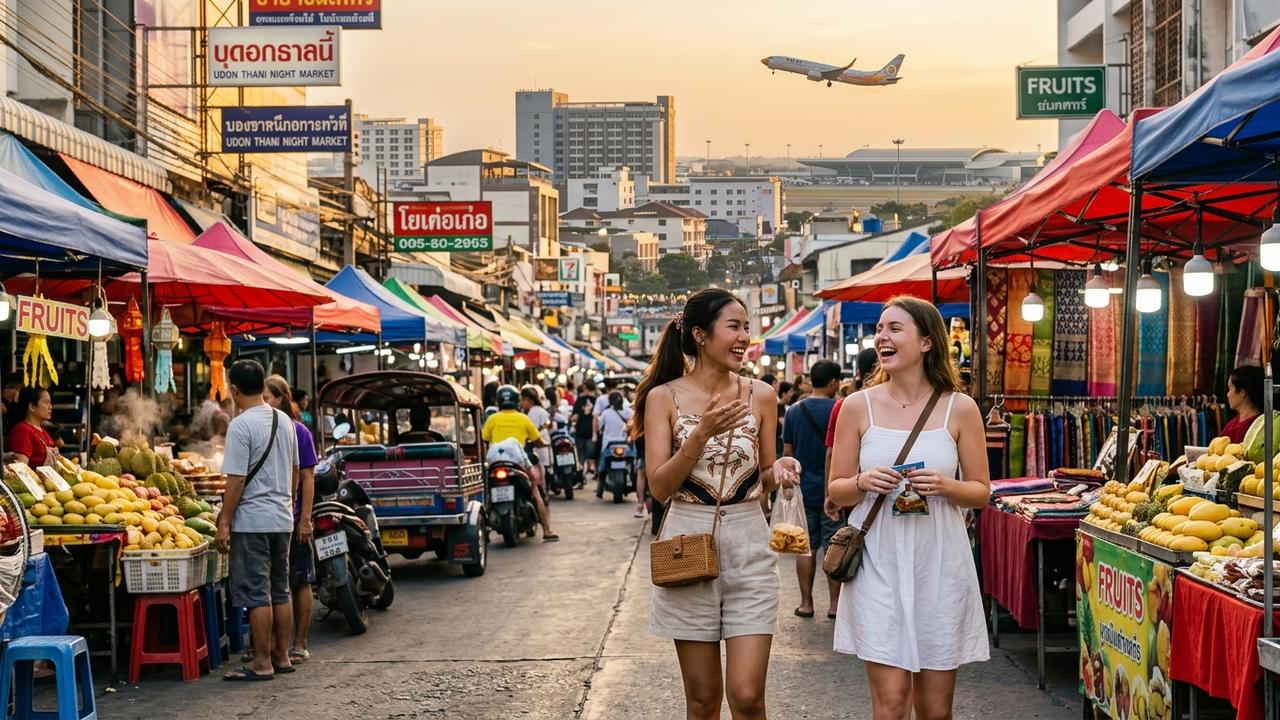
Image generated by AI
[Bangkok, June 26, 2026] — Thailand is aggressively transforming Udon Thani into a primary aviation hub for Northeast Asia, utilizing a massive 50% increase in domestic flight capacity by Thai Vietjet and the introduction of new international corridors. The Ministry of Transport is coordinating this infrastructure push to pivot the country’s tourism model away from a Bangkok-centric approach, establishing the northeastern province as a critical gateway for travelers entering the Greater Mekong Subregion.
Strategic Pivot Toward Regional Aviation Hubs
The Thai government has shifted its aviation development focus to empower regional airports, viewing them as essential catalysts for economic diversification. By reducing the reliance on Bangkok’s primary gateways, officials aim to stimulate growth in provinces characterized by expanding manufacturing sectors and strategic cross-border locations.
Udon Thani, situated approximately 560 kilometers northeast of the capital, is central to this vision. As one of the nation's largest provincial cities, it serves as a commercial bridge between Thailand and Laos. Industry observers note that the city's geography makes it an ideal nexus for integrating road, rail, and air networks to facilitate seamless movement across mainland Southeast Asia.
Thai Vietjet Expands Domestic Network Capacity
In a significant move to boost accessibility, Thai Vietjet is scaling its domestic operations by 50%. The airline is increasing its weekly flight frequency from 98 to 147 services. This expansion is designed to tighten the connection between Bangkok and several high-growth regional centers, providing greater flexibility for both corporate and leisure travelers.
The expanded flight schedule focuses on several key destinations:
| Destination | Current Role | Tourism & Economic Importance |
|---|---|---|
| Udon Thani | Northeastern gateway | Cross-border tourism, trade, logistics |
| Khon Kaen | Regional commercial centre | Business travel, education, healthcare |
| Nakhon Si Thammarat | Southern cultural destination | Domestic tourism, heritage travel |
| Krabi | International beach destination | Leisure tourism |
| Surat Thani | Gateway to Gulf islands | Koh Samui, Koh Phangan, Koh Tao access |
| Ubon Ratchathani | Eastern regional hub | Border trade and domestic connectivity |
According to aviation analysts, these increased frequencies are expected to directly correlate with higher hotel occupancy rates and increased visitor spending in these secondary cities.
International Connectivity and New Global Corridors
The long-term blueprint for Udon Thani involves its transition into a full-scale international gateway. The strategy involves the introduction of direct flights to high-value markets in East Asia and ASEAN, effectively bypassing the need for passengers to transit through Bangkok.
Proposed international links include:
| Proposed Destination | Country | Strategic Importance |
|---|---|---|
| Hanoi | Vietnam | Government, business and tourism |
| Ho Chi Minh City | Vietnam | Commercial and leisure demand |
| Taipei | Taiwan | Business, leisure and VFR travel |
| Kuala Lumpur | Malaysia | ASEAN connectivity |
| Tokyo | Japan | High-value tourism |
| Osaka | Japan | Leisure and business travel |
By diversifying arrival points, Thailand intends to distribute tourist traffic more evenly across the country, reducing the congestion typical of Phuket, Chiang Mai, and Bangkok.
Cross-Border Aviation and Strategic Alliances
A critical component of this regional growth is the development of point-to-point cross-border services. Reports indicate that Thai Vietjet is currently conducting feasibility studies for direct routes between Udon Thani and Ho Chi Minh City, as well as Krabi and Ho Chi Minh City, with both targeted for launch in 2027.
To accelerate this growth, Thai Vietjet has entered into a strategic partnership with EZY Airlines. This collaboration is specifically aimed at strengthening the links between Udon Thani and major Vietnamese urban centers. The partnership is expected to operationalize services to Hanoi, Da Nang, and Ho Chi Minh City by the fourth quarter of 2026.
Ministry of Transport Focuses on Secondary City Growth
Beyond Udon Thani, the Ministry of Transport is urging carriers to explore underdeveloped routes to further decentralize tourism. New proposals include domestic links between Khon Kaen and Hua Hin, as well as Chiang Mai and Hua Hin. Additionally, the government is eyeing increased connectivity for Ranong and Trang.
Officials are also exploring the possibility of attracting direct international arrivals from Singapore, Hong Kong, and Malaysia into Hua Hin, further diversifying the entry points for global travelers.
Economic Implications for the Northeastern Region
The elevation of Udon Thani's aviation status is expected to have a ripple effect across the local economy. The province provides a vital entry point for travelers visiting Nong Khai, the Mekong River attractions, and various UNESCO archaeological sites.
Industry data suggests that improved air connectivity will lead to measurable gains across multiple sectors:
- Hospitality: Higher visitor arrivals leading to increased hotel occupancy.
- Retail and Dining: Greater spending from international and domestic tourists.
- Logistics: Accelerated cargo movement and improved supply chain efficiency.
- Investment: Enhanced confidence for foreign investors due to better accessibility.
Infrastructure Integration and Regional Competition
The Thai government recognizes that increased flight frequency must be matched by infrastructure upgrades. Investment is currently being channeled into passenger processing systems, digital aviation services, and ground transportation to ensure that regional airports can handle increased volumes without degrading the traveler experience.
This move is also a response to intensifying competition within Southeast Asia. With Vietnam, Indonesia, and Malaysia investing heavily in secondary airport hubs to decentralize their own tourism, Thailand is positioning its provincial gateways to remain competitive on a regional scale.
Summary of Aviation Expansion Metrics
| Metric | Figure |
|---|---|
| Current Domestic Weekly Flights | 98 |
| Planned Domestic Weekly Flights | 147 |
| Percentage Increase | 50% |
| Proposed International Destinations | 6 |
| New Cross-Border Routes under Study | 2 |
| EZY Airlines Partnership Launch | Q4 2026 |
| Feasibility Route Target Date | 2027 |
The successful execution of the Udon Thani hub initiative would represent a paradigm shift in Thai aviation. By integrating infrastructure development with strategic airline partnerships, Thailand is moving toward a future where regional cities serve as primary economic engines, fostering sustainable growth and international connectivity far beyond the capital.
Related Travel Guides
Disclaimer
This article is for informational and educational purposes only. It does not constitute legal, financial, or professional advice. While we strive to provide accurate and up-to-date information, travel policies, regulations, and conditions change rapidly. Always verify information with official sources before making travel decisions. Nomad Lawyer makes no representations about the accuracy, reliability, completeness, or suitability of the information provided. Readers should consult qualified professionals for advice specific to their circumstances. The views expressed in this article are those of the author and do not necessarily reflect the views of Nomad Lawyer.
Preeti Gunjan
Contributor & Community Manager
A passionate traveller and community builder. Preeti helps grow the Nomad Lawyer community, fostering engagement and bringing the reader experience to life.
Learn more about our team →