
UAE Expands Visa-Free Access as European Travel Sentiment Shifts Toward Middle East Hubs
To counter a cautious trend in European outbound travel driven by geopolitical risk perceptions and updated advisories,

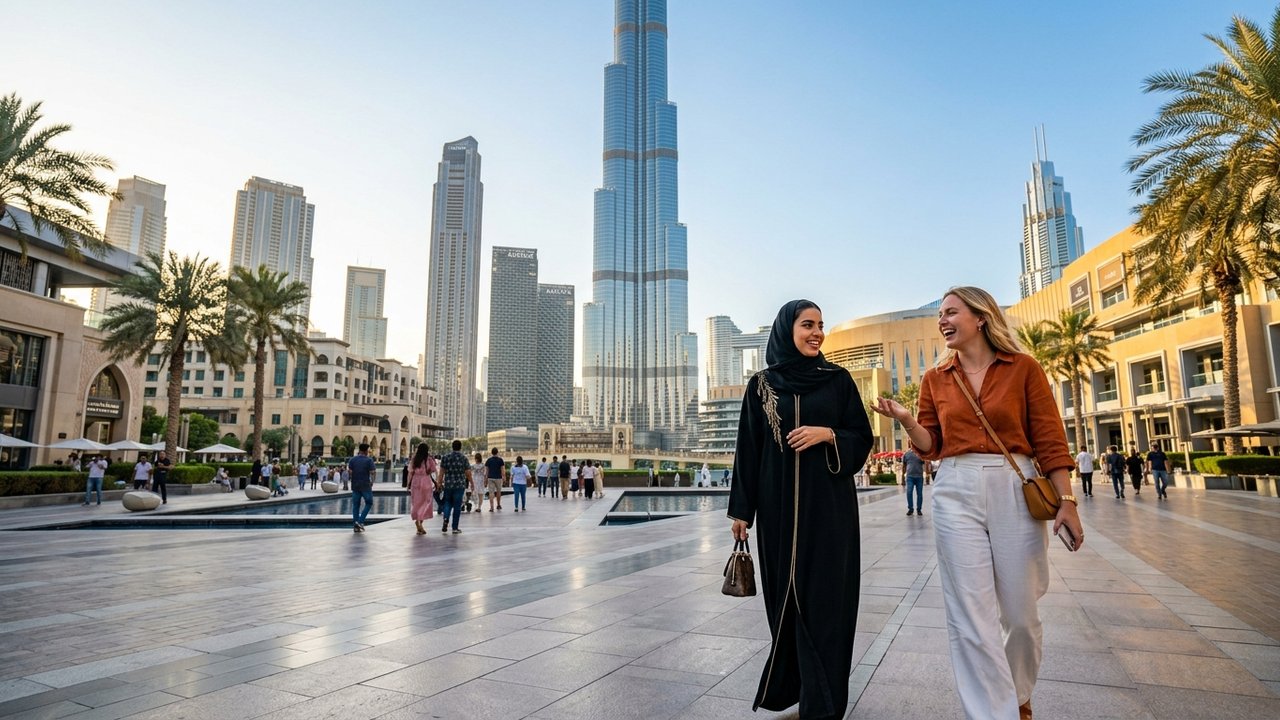
Image generated by AI
UAE Counters European Travel Caution with Strategic Visa Expansion
A noticeable shift in outbound travel sentiment is emerging across Europe, impacting tourism flows into the United Arab Emirates. Travelers from Ireland, Luxembourg, Finland, Italy, France, Poland, Cyprus, and over twenty-three other European nations are increasingly weighing geopolitical risk perceptions and government travel advisories before booking long-haul trips to Dubai, Abu Dhabi, and Sharjah.
While the UAE remains one of the world's most stable and operationally secure aviation hubs, 2026 data indicates that European travelers are adopting a more selective approach. This behavioral change is manifesting in longer booking cycles, a preference for flexible cancellation policies, and a heightened reliance on travel insurance risk scoring.
In a proactive move to stabilize these flows and restore visitor confidence, the UAE government has accelerated a comprehensive visa-free and visa-on-arrival expansion strategy. By removing entry barriers and streamlining digital immigration, the UAE aims to reinforce its competitive position and sustain tourism revenue growth.
Regional Risk Perceptions and Aviation Impacts
The recalibration of travel behavior is not a result of formal restrictions, but rather a response to the evolving security environment in the broader Middle East. Several key factors are currently influencing European decision-making:
- Government Advisories: Updated guidance from EU member states urging caution or the reconsideration of non-essential travel to certain regional zones.
- Insurance Adjustments: Underwriting models and risk scoring systems are influencing the cost and availability of coverage for leisure travel.
- Airspace Monitoring: Occasional aviation security alerts and rerouting during periods of tension have heightened traveler awareness.
- Planning Cycles: A transition from spontaneous short-break bookings to more structured, risk-assessed long-term planning.
Market-Specific Trends Across Europe
The impact of this sentiment shift varies significantly by country, with luxury and business segments showing more resilience than mid-tier leisure travel.
Western and Southern Europe
In France and Italy, luxury tourism remains robust, with high-net-worth individuals continuing to frequent UAE hospitality and retail sectors. However, France has seen a moderation in short-duration leisure trips. Spain continues to show resilience in long-haul demand, though booking cycles have extended as travelers monitor regional stability.
Northern and Central Europe
Finland and Germany maintain strong aviation links to the UAE, particularly for business and transit. While discretionary leisure travel has slowed, Germany remains a critical contributor to transit flows through Dubai and Abu Dhabi airports. In Luxembourg, the shift is driven largely by insurance risk models, leading to deferred planning rather than outright cancellations.
Eastern Europe and the Mediterranean
Poland has exhibited a more conservative approach to leisure travel, prioritizing perceived stability. Cyprus, due to its geographic proximity to the Middle East, shows a unique sensitivity to regional dynamics, resulting in a mild slowdown of spontaneous tourism.
High-Value Markets
Switzerland and Austria continue to drive high-value tourism. Switzerland, in particular, maintains strong premium demand, ensuring that the luxury segment remains a stabilizing force for the UAE's tourism economy.
Strategic Response: Enhancing Global Accessibility
The UAE's response focuses on "policy simplicity" and "seamless mobility." By expanding visa-free entry and enhancing fast-track immigration systems, the UAE is reducing the friction associated with international travel.
Tourism authorities are complementing these policy changes with global outreach campaigns emphasizing the safety, luxury, and experiential value of Dubai, Abu Dhabi, and Sharjah. This dual approach of operational ease and strategic marketing is designed to decouple the UAE's image from broader regional instability.
European Travel Sentiment and Risk Drivers
| Country | Travel Advisory Position | Key Risk Drivers | Tourism Behaviour Impact |
|---|---|---|---|
| Ireland | Avoid non-essential travel | Regional security concerns | Reduced short-term bookings |
| Luxembourg | Heightened caution | Insurance risk recalibration | Delayed leisure travel |
| Finland | Strong caution guidance | Aviation risk monitoring | Stable business travel |
| Italy | Mixed advisory tone | Geopolitical sensitivity | Luxury travel remains active |
| France | Restricted travel recommendation | Regional instability perception | Decline in short breaks |
| Poland | Conservative travel guidance | Security awareness alerts | Lower seasonal tourism |
| Cyprus | Cautious advisory stance | Regional proximity concerns | Moderate slowdown |
| Germany | Strongly discouraged (some cases) | Airline risk assessment | Controlled demand |
| Spain | Conditional travel guidance | Insurance limitations | Stable long-haul travel |
| Netherlands | Balanced advisory | Aviation safety updates | Minimal disruption |
| Belgium | Risk-sensitive guidance | Government caution alerts | Slight demand drop |
| Sweden | Elevated caution advisory | Regional instability alerts | Reduced tourism flow |
| Norway | Conservative travel stance | Geopolitical monitoring | Stable premium travel |
| Austria | Moderate caution | Insurance adjustments | Controlled visitor flow |
| Switzerland | Stable advisory with caution | Risk-managed travel preference | Luxury tourism sustained |
Key Takeaways
- Behavioral Shift: European travelers are becoming more cautious due to regional geopolitical tensions, not because of UAE-specific instability.
- Sector Resilience: Business and luxury tourism remain strong, while mid-tier and spontaneous leisure travel have seen a decline.
- Policy Pivot: The UAE is countering this trend by aggressively expanding visa-free and visa-on-arrival access.
- Infrastructure Strength: Despite sentiment shifts, the UAE's aviation hubs remain critical global transit points for European carriers.
FAQ
Is it currently safe to travel to the UAE? Yes. The UAE remains operationally stable and continues to function as one of the world's most advanced and secure tourism and aviation hubs.
Why are European travel advisories changing? Advisories are generally influenced by broader regional geopolitical tensions in the Middle East rather than specific security failures within the UAE.
How is the UAE making it easier for tourists to visit? The UAE is accelerating the implementation of visa-free entry and expanding visa-on-arrival eligibility to reduce barriers for international visitors.
Related Travel Guides
Disclaimer
This article is for informational and educational purposes only. It does not constitute legal, financial, or professional advice. While we strive to provide accurate and up-to-date information, travel policies, regulations, and conditions change rapidly. Always verify information with official sources before making travel decisions. Nomad Lawyer makes no representations about the accuracy, reliability, completeness, or suitability of the information provided. Readers should consult qualified professionals for advice specific to their circumstances. The views expressed in this article are those of the author and do not necessarily reflect the views of Nomad Lawyer.
Preeti Gunjan
Contributor & Community Manager
A passionate traveller and community builder. Preeti helps grow the Nomad Lawyer community, fostering engagement and bringing the reader experience to life.
Learn more about our team →