
Cape Town Tourism Divergence: Foreign Travelers Extend Stays to 9.5 Nights as Domestic Spending Contracts by R2.5 Billion

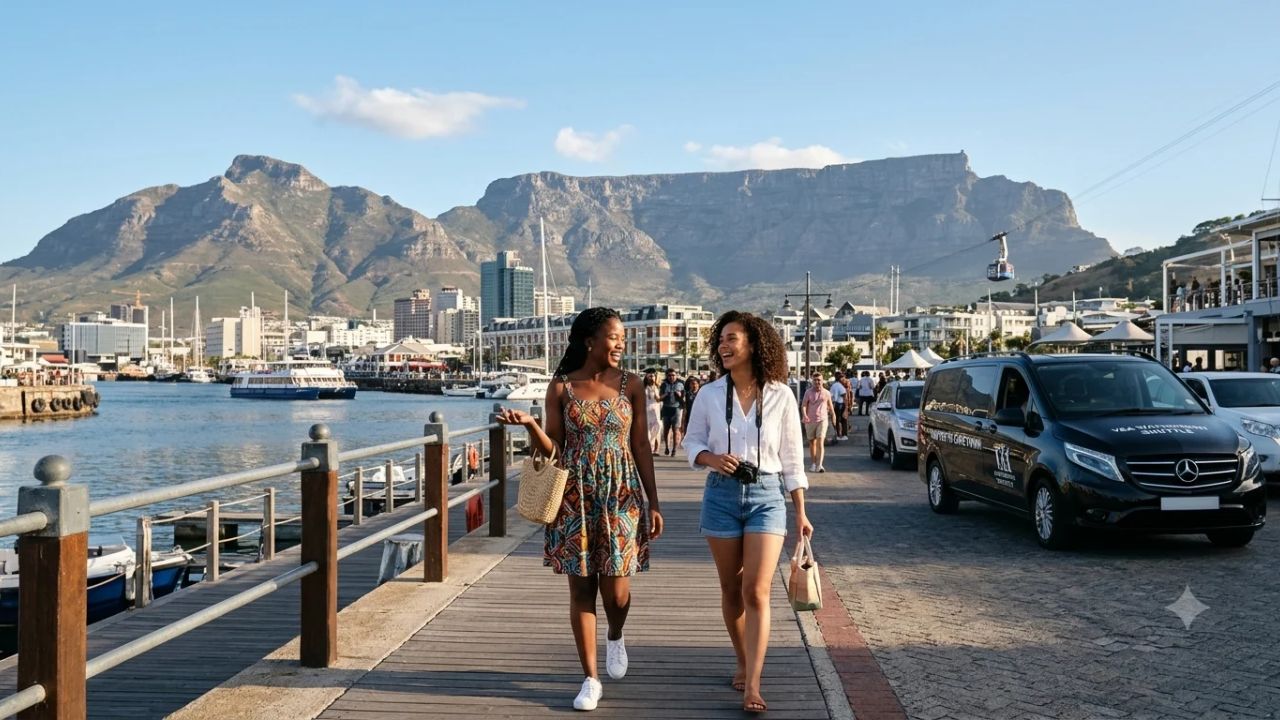
[CAPE TOWN, Oct 22, 2026] — Fresh empirical travel data from Cape Town reveals a pronounced structural divergence in the Western Cape’s visitor economy: while long-haul foreign tourists are staying an average of 9.5 nights and driving R25.9 billion in provincial spend, domestic South African holidaymakers have cut direct expenditure by R2.5 billion amid persistent macroeconomic headwinds.
[!NOTE]
Cape Town Visitor Economy: Key Benchmarks & Divergence Data
- 11.1 Million Airport Passenger Movements: Cape Town International Airport (CPT) processed 11.1 million two-way movements in 2025 (+7% YoY), including 3.3 million dedicated international passenger transits.
- Aviation Fueling Inflow: More than 30 direct weekly long-haul flights link Cape Town to primary gateways in Europe and North America, drawing high-spending travelers from the US, UK, and Germany.
- Length of Stay Polarization: Overseas visitors average 9.5 nights in luxury commercial lodgings, while domestic stays contracted from 5.2 nights down to 4.4 nights, pivoting to staying with friends and relatives (VFR).
- Daily Spending Disparity: Foreign visitors spent an average of R1,390 per day, fueling R25.9 billion in total direct foreign spend across the Western Cape; domestic daily spend fell to R882.
- Domestic Spend Contraction: While domestic trip volume remained stable at 1.42 million visits (98% of 2019 levels), total domestic expenditure contracted from R8 billion to R5.5 billion—a R2.5 billion shortfall.
- Macroeconomic Footprint: Cape Town tourism supported 106,358 jobs, generated R23 billion in Gross Value Added (GVA), and accounted for 6.3% of the city’s total Gross Domestic Product (GDP).
- Regional African Travel Growth: Intra-African visitor arrivals expanded by 17%, supported by commercial and leisure partnerships with Namibia and Zimbabwe.
The dual nature of Cape Town's visitor economy highlights how international exchange rate advantages and domestic inflation create two distinct operational realities under the same sky. For luxury operators along the Atlantic Seaboard and the Cape Winelands, high-yield overseas travelers are extending their vacations into multi-week regional tours. Concurrently, regional hospitality providers are adapting their pricing architectures to preserve accessible options for local South Africans navigating tightened discretionary budgets.
          CAPE TOWN VISITOR ECONOMY: THE TWO-TIER TRAVEL DIVIDE

  LONG-HAUL INTERNATIONAL INFLOW         DOMESTIC SOUTH AFRICAN MARKET
  • 3.3M Dedicated International Transits • 1.42M Trips (98% of 2019 Baseline)
  • Extended Stay: 9.5 Nights Average    • Contracted Stay: 4.4 Nights (from 5.2)
  • High Daily Spend: R1,390 per Day     • Tightened Daily Spend: R882 per Day
  • R25.9 Billion Western Cape Output    • Expenditure Down: R8.0B to R5.5B (-R2.5B)
  +------------------+                   +------------------+
                     \                                     /
                      \                                   /
                       v                                 v
          +-------------------------------------------------------------+
          |             CAPE TOWN METROPOLITAN TOURISM SYSTEM           |
          |       • Cape Town Int'l Airport: 11.1M Movements (+7%)      |
          |       • Hotel Occupancy Stabilized at 56.2%                 |
          |       • 106,358 Jobs Supported | R23B GVA (6.3% City GDP)   |
          +-------------------------------------------------------------+
                       /                                 \
                      /                                   \
                     v                                     v
  HIGH-END REGIONAL EXPANSION            TACTICAL DOMESTIC BALANCING
  • Cape Winelands (Stellenbosch/Frans.) • "You Don't Need a Holiday" Push
  • Cape Peninsula & Kirstenbosch Peaks  • Off-Peak Discounts & Resident Rates
  • Luxury Fleets (Hyundai Staria)       • Non-Commercial VFR Absorption
Aviation Infrastructure: Expanding Direct Access to Global Gateways
A foundational catalyst behind foreign long-stay tourism is the expansion of direct long-haul aviation links into Cape Town International Airport (CPT). During 2025, the facility recorded 11.1 million two-way passenger movements, representing a 7% year-on-year increase.
Dedicated international transit movements reached 3.3 million passengers, supported by more than 30 direct weekly flights connecting Cape Town directly to premier intercontinental aviation hubs across Europe, the United Kingdom, and North America.
Key operational impacts include:
- Bypassing Domestic Layovers: Direct flights operated by carriers like United Airlines, Delta Air Lines, British Airways, Virgin Atlantic, and Lufthansa allow high-yielding travelers to bypass congested transfers at Johannesburg’s O.R. Tambo International Airport, reducing total travel friction.
- Attracting High-Discretionary Wealth: Travelers from the United States, the UK, and Germany capitalize on favorable currency conversions against the South African Rand (ZAR), allowing them to book premium suites, private wine tours, and bespoke helicopter transfers.
- Regional Launchpad Function: Corporate executives and international leisure travelers increasingly establish Cape Town as their primary base before embarking on regional safaris in the Greater Kruger or neighboring Southern African nations.
| Aviation / Mobility Metric | 2025 Performance Total | Annual Growth / Shift | Strategic Operational Relevance |
|---|---|---|---|
| Total Airport Passenger Volume | 11.1 Million Movements | +7% Year-on-Year | Western Cape Connectivity Core |
| Dedicated International Transit | 3.3 Million Movements | Robust Inflow | Long-Haul Feeder Corridors |
| Direct Long-Haul Frequencies | 30+ Weekly Flights | Steady Expansion | Direct North American & European Links |
| Intra-African Regional Inbound | Regional Arrivals | +17% Growth | Resilient Cross-Border Mobility |
| Average Commercial Occupancy | 56.2% Citywide | Stabilized Base | Premium Luxury Offset by Local Softness |
The Length-of-Stay Divergence: 9.5 Nights vs. 4.4 Nights
The most striking revelation from the recent tourism dataset is the widening gap in accommodation habits between overseas guests and domestic holidaymakers.
       ACCOMMODATION LENGTH OF STAY & BUDGET RECONFIGURATION

  INTERNATIONAL OVERSEAS GUESTS
  [███████████████████████████████████████ 9.5 Nights Average ]
  • High-End Commercial Hotels & Luxury Guesthouses
  • Average Daily Spend: R1,390
  • Multi-Destination Itineraries Across Western Cape

  DOMESTIC SOUTH AFRICAN TRAVELERS
  [██████████████████ 4.4 Nights Average ] (Contracted from 5.2 Nights)
  • Pivot to Non-Commercial VFR (Visiting Friends & Relatives)
  • Average Daily Spend: R882
  • Budget-Conscious Self-Catering & Micro-Getaways
Overseas Visitors: 9.5 Nights of Immersive Travel
International visitors recorded an extended average stay of 9.5 nights in commercial lodging establishments. Because long-distance intercontinental flights represent a substantial upfront financial and time investment, international travelers seek to maximize their journey by combining:
- Urban luxury stays along the Atlantic Seaboard (Camps Bay, Clifton, Waterfront),
- Extended culinary retreats in the Cape Winelands (Stellenbosch, Franschhoek, and Paarl),
- Nature-based excursions along the Cape Peninsula (Cape Point, Boulders Beach penguin colony), and
- Coastal whale-watching and marine adventures in Hermanus and Walker Bay.
With an average daily expenditure of R1,390, foreign tourists contributed R25.9 billion in direct spending across the Western Cape in 2025.
Domestic Travelers: Contraction and the VFR Pivot
In stark contrast, South African domestic holidaymakers faced acute macroeconomic pressures. While domestic trip volume remained resilient at 1.42 million visits (representing 98% of 2019 pre-pandemic levels), household budget constraints forced travelers to re-engineer their trips:
- Dwell Time Shortened: Domestic trip durations shrank from an average of 5.2 nights down to 4.4 nights.
- Daily Spending Squeezed: Average daily domestic spend fell to R882, leading to an overall contraction of R2.5 billion in direct domestic spending (falling from R8 billion to R5.5 billion).
- The Non-Commercial Shift: To avoid commercial room rates, local travelers increasingly bypassed traditional hotels in favor of staying with friends and relatives (VFR) or booking budget self-catering holiday chalets.
Macroeconomic Footprint: Employment and Gross Value Added
Despite domestic spending contractions, the tourism sector remains an indispensable pillar of metropolitan economic vitality, providing extensive labor absorption across skilled, semi-skilled, and artisanal trades.
          CAPE TOWN TOURISM MACROECONOMIC CONTRIBUTION (2025)

  DIRECT TOURISM EMPLOYMENT               GROSS VALUE ADDED (GVA)
  +-------------------------------+       +-------------------------------+
  | 106,358 Direct Jobs Supported |       | R23 Billion Generated GVA     |
  | Hospitality, Transit, Food,   | ====> | Contributing 6.3% of Total    |
  | Retail, and Guided Excursions |       | Cape Town Metropolitan GDP    |
  +---------------+---------------+       +---------------+---------------+
                  |                                       |
                  +-------------------+-------------------+
                                      |
                                      v
                  +---------------------------------------+
                  |         OVERALL DIRECT EXPENDITURE    |
                  | R24.5 Billion Direct Metropolitan     |
                  | Tourism Spend Circulating Locally     |
                  +---------------------------------------+
Data from 2025 confirms that the visitor economy:
- Directly supported 106,358 jobs across the Cape Town metropolitan area.
- Generated R23 billion in Gross Value Added (GVA), accounting for 6.3% of Cape Town's total Gross Domestic Product (GDP).
- Circulated R24.5 billion in direct tourism expenditure throughout metropolitan supply chains.
The multi-sector nature of tourism—spanning commercial laundry services, agricultural food production, event staging, and automotive maintenance—ensures that tourist receipts circulate throughout the provincial economy.
Geographic Dispersion: Spilling Beyond the Urban Core
A primary strength of Cape Town's tourism framework is its capacity to disperse foreign capital outward into regional Western Cape districts.
Iconic metropolitan heritage landmarks documented peak quarterly volumes exceeding 676,000 visitors, driven by:
- Table Mountain Aerial Cableway: Providing panoramic vistas across Table Bay and the Twelve Apostles.
- The Victoria & Alfred (V&A) Waterfront: Combining luxury maritime berths, cultural museums (Zeitz MOCAA), and artisan craft sheds.
- Kirstenbosch National Botanical Garden: Showcasing endemic fynbos flora on the eastern slopes of Table Mountain.
- Cape Point and the Cape of Good Hope: Anchoring maritime heritage at the southwestern tip of the African continent.
CAPE TOWN & REGIONAL WESTERN CAPE VISITOR CORRIDORS
| Entity / Facility | Delays | Cancellations | Details |
|---|---|---|---|
| Destination Corridor | Target Experience | Key Inbound Markets | Primary Mobility Solution |
| Atlantic Seaboard | Five-star hotels, | United States, UK, | Luxury executive shuttles, |
| & V&A Waterfront | coastal dining | Germany, Switzerland | chauffeur-driven limousines. |
| Cape Winelands | Wine tasting, fine | Long-stay European | Private van fleets, |
| (Stellenbosch/Frans.) | dining, heritage | couples, US leisure | Hyundai Staria Luxury vans. |
| Cape Peninsula Route | Boulders penguins, | International tour | Coordinated group coaches, |
| (Chapman's Peak) | Cape Point hiking | groups, day trippers | open-top sightseeing buses. |
| Regional Outliers | Whale watching, | Multi-destination | Self-drive rental cars, |
| (Overberg / Hermanus) | shark cage diving | long-stay adventurers | specialized transfer vans. |
Rather than remaining confined to downtown hotels, international travelers disburse funds into outlying farm stalls, boutique olive oil estates, and rural art galleries across Stellenbosch, Franschhoek, and the Swartland.
Dual Marketing Strategies: Rebalancing Domestic and Foreign Messaging
Destination marketing authorities responded to divergent consumer habits by implementing dual-track promotional frameworks.
       DUAL-TRACK DESTINATION MARKETING ARCHITECTURE

  INTERNATIONAL PROMOTION                 DOMESTIC STIMULATION
  "ONE SMALL WORLD" CAMPAIGN              "YOU DON'T NEED A HOLIDAY" PUSH
  • Targeted at US, UK, and German Buyers • Targeted at Local South African Buyers
  • Highlighting Biodiversity & Luxury    • Promoting Micro-Breaks & Day Passes
  • Favorable Foreign Currency Conversion • Resident Pricing & Off-Peak Specials
  +------------------+                   +------------------+
                     \                                     /
                      \                                   /
                       v                                 v
          +-------------------------------------------------------------+
          |             SUSTAINED YEAR-ROUND MARKET HEALTH              |
          | Foreign High Yield in Summer • Domestic Baseline in Winter  |
          | Preserving Hospitality Jobs Across All Four Seasons         |
          +-------------------------------------------------------------+
The "One Small World" Global Campaign
To reinforce international brand equity, marketing bodies deployed the "One Small World" campaign across key European and North American source markets. The initiative positions Cape Town as an accessible destination where travelers can experience dramatic mountain topography, world-class gastronomy, marine wildlife, and rich cultural diversity within a single compact geographic region.
The Domestic Recovery: "You Don't Need a Holiday. You Need My Cape Town"
To stimulate local demand and reverse the R2.5 billion domestic spend contraction, authorities launched the "You Don’t Need a Holiday. You Need My Cape Town" campaign.
Recognizing that many South African families cannot commit to expensive week-long vacations, the initiative promotes:
- Affordable Micro-Breaks: Encouraging weekend road trips and 48-hour urban staycations.
- Resident Discount Programs: Partnering with regional attractions (such as two-for-one cableway tickets or discounted botanical garden entries) for South African national ID holders.
- Off-Peak Hospitality Specials: Incentivizing local travelers to visit during winter and spring shoulder months when hotel room rates drop substantially.
Ground Transportation and Logistics: Connecting the Journey
Modern ground transportation infrastructure operates as the operational connecting link uniting Cape Town International Airport with metropolitan accommodations and regional day-trip destinations.
Professional transport operators manage versatile vehicle fleets—including spacious multi-purpose vehicles such as the black Hyundai Staria Luxury—to accommodate international travelers carrying heavy luggage for multi-week vacations.
These vehicle fleets deliver reliable point-to-point transit:
- Connecting corporate delegates seamlessly between airport terminals and the Cape Town International Convention Centre (CTICC).
- Providing private chauffeur transfers along scenic coastal highways like Chapman's Peak Drive.
- Offering flexible group transportation for wine-tasting itineraries across Franschhoek and Stellenbosch without navigating rural roads independently.
Reliable ground transit eliminates friction across the destination, ensuring punctuality, physical safety, and passenger comfort throughout the end-to-end journey.
Intra-African Travel: A Resilient Cross-Border Growth Engine
Beyond traditional Western source markets, regional intra-African travel has emerged as a resilient growth driver. In 2025, regional African tourist arrivals to Cape Town expanded by 17%.
This growth was facilitated by formal bilateral trade and tourism agreements between South Africa, Namibia, and Zimbabwe, which streamlined cross-border transit protocols and expanded regional regional flight frequencies. African corporate travelers and middle-class leisure visitors provide a vital buffer for Cape Town's hospitality sector, generating consistent midweek commercial hotel occupancy that helps offset fluctuations in intercontinental long-haul travel.
Frequently Asked Questions (PAA)
How long do international tourists stay in Cape Town compared to domestic travelers?
In 2025, international visitors stayed an average of 9.5 nights in commercial accommodations across Cape Town, capitalizing on favorable exchange rates to embark on extensive regional tours. In contrast, domestic South African stays contracted from 5.2 nights down to 4.4 nights, with many locals opting to stay with friends and relatives (VFR) to manage travel costs.
What was the economic impact of tourism on Cape Town in 2025?
Tourism directly generated R23 billion in Gross Value Added (GVA), contributing 6.3% to Cape Town's total Gross Domestic Product (GDP). The sector supported 106,358 direct jobs across the metropolitan area and generated R24.5 billion in direct metropolitan visitor spending.
How much do foreign visitors spend per day in the Western Cape?
Foreign travelers spent an average of R1,390 per day in 2025, generating a total direct foreign spend of R25.9 billion across the Western Cape. Domestic travelers spent an average of R882 per day, with total domestic spending contracting by R2.5 billion (falling from R8 billion to R5.5 billion).
How many passengers traveled through Cape Town International Airport?
Cape Town International Airport processed 11.1 million two-way passenger movements in 2025, marking a 7% year-on-year increase. This total included 3.3 million dedicated international transit movements, supported by over 30 direct weekly flights connecting Cape Town to major hubs in Europe and North America.
How are Cape Town tourism operators responding to domestic spending cutbacks?
Destination marketing agencies launched the "You Don’t Need a Holiday. You Need My Cape Town" campaign, offering local resident discounts, two-for-one attraction tickets, and flexible off-peak hotel packages. This approach encourages affordable weekend getaways and protects hospitality revenue during off-peak seasons.
Related Travel Guides
- South Africa Welcomes Tremendous Travel Lodging Industry Gains Through Extraordinary Visitor Arrivals Across The Country
- Botswana, Mauritius, Seychelles, and Cape Verde Surpass Western Economies in 2026 Global Lifestyle Rankings: Complete Relocation & Travel Analysis
- Cape Town Tourism Trends and Western Cape Travel Discussions
This article is for informational purposes. Flight routes, passenger regulations, visa rules, and transit advisories are subject to change by airlines and aviation authorities. Readers are advised to verify schedules and travel documentation with relevant carriers and border agencies before departure.
Related Stories

Thailand Tourism Slowdown Tests Small Businesses as Kingdom Pivots to High-Yield Travel and Secondary Provinces

South Africa Expands Inclusive Wildlife Tourism with Woman-Owned Wellness Centre at Addo Elephant National Park
