
Flights Still Disrupted: UAE Airlines Cancel 12+ Routes Across Globe
UAE aviation crisis: Emirates, Flydubai, Etihad, and Air Arabia cancel 12+ international routes in March 2026, affecting travelers to Amsterdam, Budapest, Colombo, and beyond.

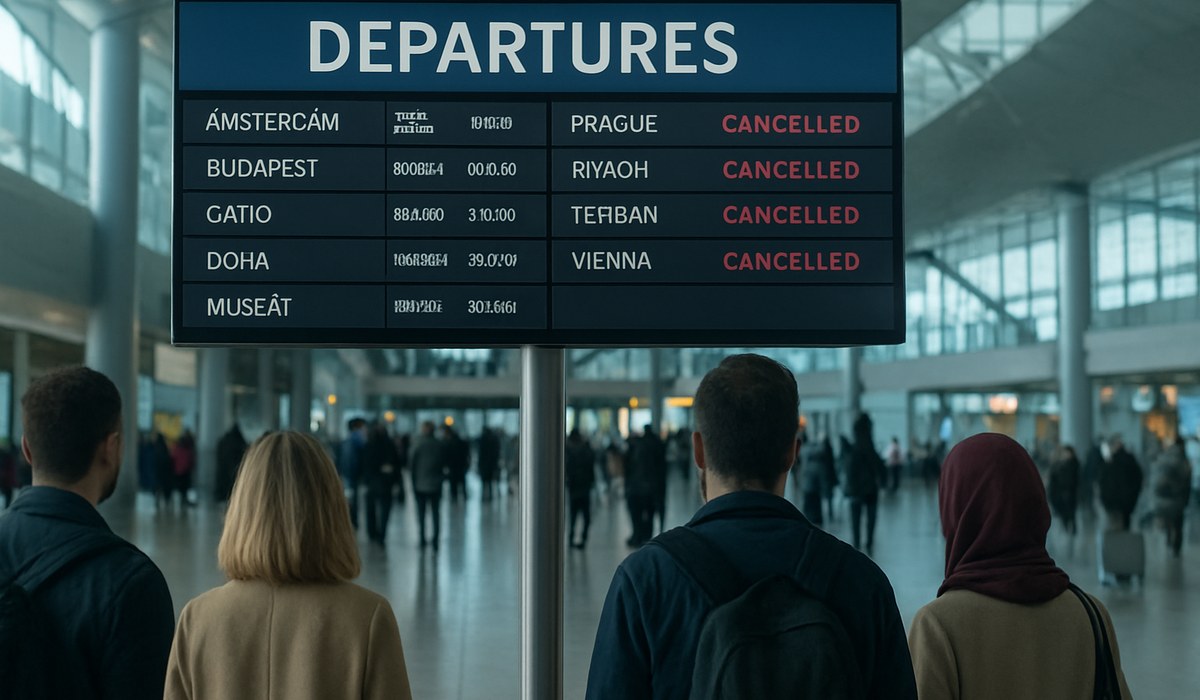
Image generated by AI
**> Quick Summary
- Five major UAE carriers suspended operations on 12+ international routes beginning March 30, 2026
- Affected destinations span from Western Europe to South Asia and the South Pacific
- Passengers are entitled to rebooking, refunds, and compensation under international aviation regulations
- Root cause appears linked to fleet constraints or infrastructure limitations at Dubai and Abu Dhabi hubs
- Airlines are offering limited guidance on recovery timeline and passenger accommodation**
Unprecedented Disruption Hits Middle Eastern Aviation Hub
Travelers from Amsterdam to Auckland woke to travel chaos this morning as a coordinated wave of cancellations rippled across the UAE's largest carriers. Emirates, Flydubai, Etihad Airways, and Air Arabia—together representing the backbone of Gulf region aviation—have suspended service on more than a dozen international routes as of March 30, 2026. For real-time tracking of affected flights and current delay statistics, travelers can monitor FlightAware{:target="_blank" rel="noopener noreferrer"} for live updates.
The scale of the disruption suggests systemic constraints rather than isolated operational hiccups. This broader disruption echoes earlier Emirates A380 route suspensions, suggesting ongoing fleet management challenges across the carrier's network.
Passengers across nine major international destinations—including Hungary's Budapest Ferenc Liszt International, the Netherlands' Amsterdam Airport Schiphol, and South Asia's Colombo Bandaranaike International—reported canceled bookings without advance warning. The simultaneous action by competing carriers hints at shared infrastructure problems or regulatory pressures affecting the entire Dubai and Abu Dhabi airport ecosystem.
Which Routes Are Affected and What We Know So Far
The cancellation footprint extends across three continents. Hungarian capital Budapest has seen multiple weekly services eliminated, stranding business travelers and tourism-dependent passengers. European gateway Amsterdam has experienced similarly severe cuts, disrupting connections for passengers transiting to Africa and Asia.
South Asian routes have absorbed significant impact. Colombo (Sri Lanka) services faced suspension, as did flights serving Pakistan's Lahore and Egypt's Cairo—critical hubs for diaspora communities and business travelers. Middle Eastern connectivity suffered as well, with Alexandria and regional feeder routes curtailed.
Most striking is the reach into the South Pacific. Auckland, New Zealand's largest aviation gateway, found itself suddenly undersupplied by Emirati carriers, cutting direct access from one of the world's most remote developed nations to the Middle Eastern transfer hub.
Hong Kong services, essential for Asia-Pacific business and logistics operations, have also been impacted. FlightRadar24 data confirms that schedule normalization is not expected within the next 72 hours for most affected routes.
Industry analysts estimate that combined passenger volume across these routes approaches 15,000+ travelers per day during normal operations, suggesting a domino effect across global booking systems and hotel cancellations.
Why Are UAE Airlines Canceling Flights Simultaneously?
The synchronized nature of the disruption across competing carriers raises critical questions. Industry-wide engine supply constraints may be contributing to the UAE carriers' operational limitations. Shared airfield congestion, maintenance facility bottlenecks, or regulatory restrictions could explain why independent carriers acted in concert.
One possibility centers on aircraft availability. The UAE's rapid fleet expansion over the past five years has created maintenance backlogs. If multiple carriers are experiencing simultaneous heavy checks or unscheduled maintenance on wide-body aircraft (the workhorses for international routes), capacity evaporation would be instantaneous and widespread.
Weather systems crossing the Persian Gulf region could also play a role, though meteorological reports from March 30 indicate favorable conditions across the UAE.
A third hypothesis involves slot allocation constraints. If Dubai International or Abu Dhabi International airports implemented reduced operations due to runway work, taxiway maintenance, or terminal construction, the carriers would be forced to shed flights simultaneously to honor airport capacity ceilings.
Ground crew staffing shortages—a persistent challenge in Gulf aviation post-pandemic—could also be the culprit. If multiple carriers share ground handling contractors (as is typical in Dubai), a strike, illness outbreak, or staffing crisis could cascade across all operations.
The disruption may accelerate passenger shifts to alternative carriers on critical Asia-Pacific routes like those now served from Western Sydney, where other Gulf and Asian airlines maintain less congested networks.
Passenger Rights and Compensation Options
Travelers holding bookings on affected routes are not without recourse. International aviation law provides concrete protections regardless of which carrier operates the flight.
Affected passengers flying to or from US destinations should review US DOT passenger rights and compensation rules{:target="_blank" rel="noopener noreferrer"}. The U.S. Department of Transportation mandates that carriers provide meals, accommodation, and communication facilities for cancellations within their control.
Under IATA standards{:target="_blank" rel="noopener noreferrer"}, carriers must provide rebooking or refunds for cancellations exceeding specific thresholds. European passengers on flights departing EU airports are protected under EU261 regulations, which guarantee compensation of €250–€600 depending on flight distance.
Passengers should take the following steps immediately:
- Contact the airline directly via phone or official website—email responses may take days
- Request rebooking on alternative carriers (including competitors) at no additional cost
- Obtain written confirmation of the cancellation reason and airline liability acknowledgment
- Document all out-of-pocket expenses (meals, accommodation, transport) with receipts
- File compensation claims through the airline or via third-party claim management services if initial requests are denied
Airlines are obligated to offer refunds or equivalent alternate routing. Accepting a voucher or travel credit should be a last resort—demand cash refunds for canceled services.
Which Airlines Are Most Impacted and Alternatives
Emirates operates the largest affected network, with multiple daily cancellations across European and Asian routes. The carrier's reliance on A380 and 777 equipment means that any fleet constraint produces immediate capacity shortages.
Flydubai, the low-cost subsidiary of Emirates, operates narrowbody regional services that feed the parent carrier's long-haul network. Disruption here suggests the problem originates upstream at Dubai International's facilities.
Etihad Airways (Abu Dhabi-based) has also suspended service, indicating the problem is not isolated to Dubai but affects the broader UAE aviation infrastructure.
Air Arabia, the independent low-cost carrier based in Sharjah, reported cancellations, further supporting the hypothesis that a shared resource—whether airport capacity, fuel supply, or regulatory mandate—is constraining all carriers.
Viable alternatives for passengers include Turkish Airlines (Istanbul hub), Qatar Airways (Doha hub), and Gulf Air (Bahrain hub). These carriers operate similar route networks and frequently offer competitive pricing during disruptions. Singapore Airlines, Cathay Pacific, and Thai Airways provide strong alternatives for Asia-Pacific connections.
What Affected Passengers Should Do Now
Immediate actions (first 24 hours):
- Contact your airline through their verified phone line, not social media
- Request written confirmation of cancellation and airline liability statement
- Ask explicitly about rebooking on competing carriers at no extra charge
- Secure
Disclaimer
This article is for informational and educational purposes only. It does not constitute legal, financial, or professional advice. While we strive to provide accurate and up-to-date information, travel policies, regulations, and conditions change rapidly. Always verify information with official sources before making travel decisions. Nomad Lawyer makes no representations about the accuracy, reliability, completeness, or suitability of the information provided. Readers should consult qualified professionals for advice specific to their circumstances. The views expressed in this article are those of the author and do not necessarily reflect the views of Nomad Lawyer.
Preeti Gunjan
Contributor & Community Manager
A passionate traveller and community builder. Preeti helps grow the Nomad Lawyer community, fostering engagement and bringing the reader experience to life.
Learn more about our team →