
Middle East Airspace Crisis: Dubai, Abu Dhabi, Doha Resume Limited Operations as Emirates, Etihad, Qatar Airways Adjust Schedules Amid Regional Tensions
Major Middle East airports including Dubai, Abu Dhabi, and Doha gradually restore services as geopolitical tensions persist. Emirates, Etihad Airways, and Qatar Airways implement reduced schedules with rebooking options for affected passengers.

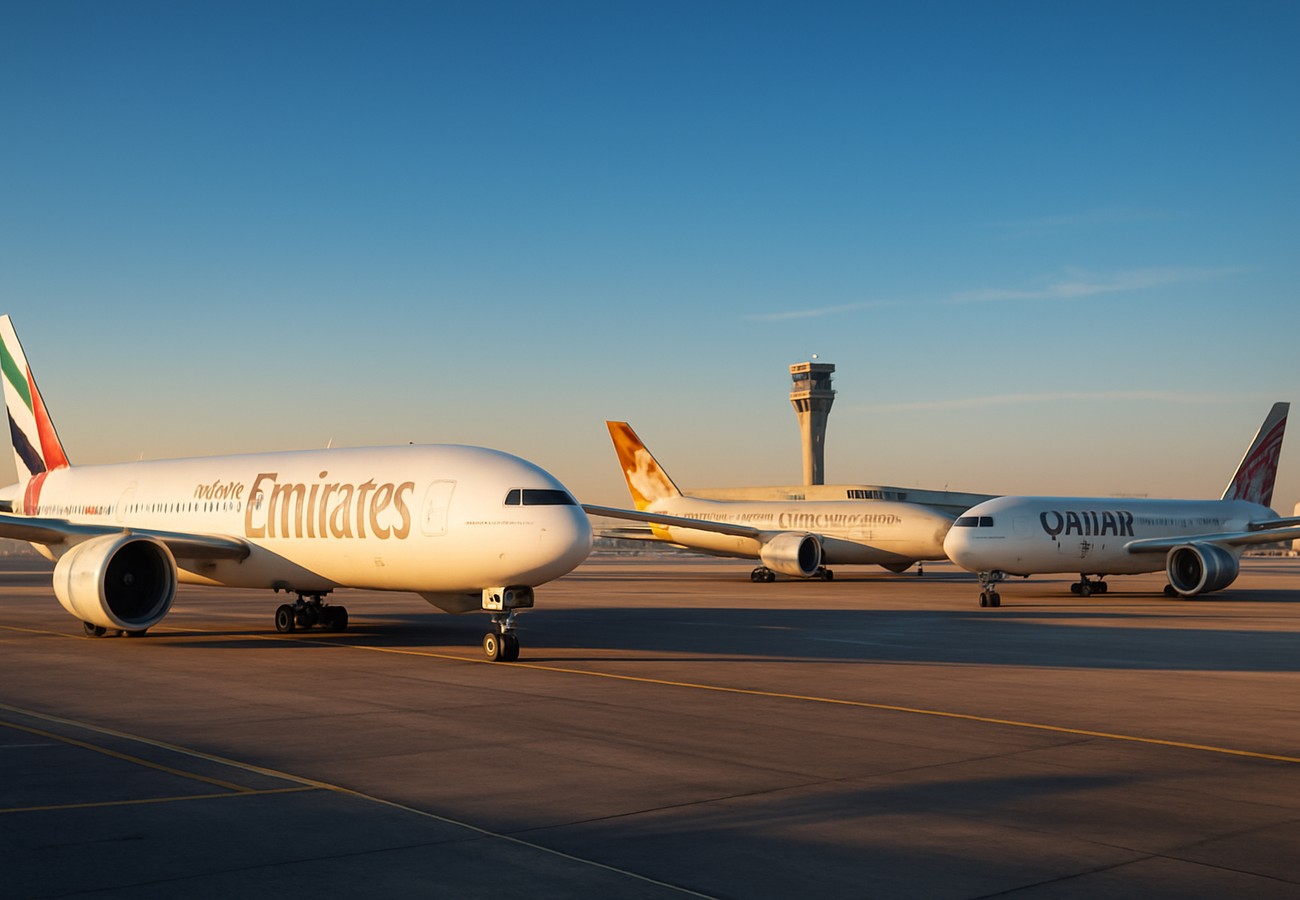
Image generated by AI
Middle East Aviation Faces Unprecedented Disruption as Major Hubs Gradually Restore Operations
The Middle East aviation sector is navigating a critical juncture as Dubai International Airport (DXB), Abu Dhabi (AUH), Doha (DOH), and other regional hubs cautiously resume limited operations following weeks of severe airspace restrictions. The ongoing geopolitical tensions and security concerns have triggered cascading disruptions across global air travel routes, forcing major carriers to fundamentally restructure their operational networks and implement sweeping schedule reductions through at least mid-June.
Emirates, Etihad Airways, Qatar Airways, and British Airways are among the carriers most heavily impacted, with each airline implementing distinct operational strategies to navigate the volatile conditions. The crisis underscores how regional instability can rapidly destabilize international connectivity, affecting millions of passengers and disrupting supply chains that depend on air cargo operations. According to the latest updates from aviation authorities, the situation remains fluid, with airspace restrictions subject to rapid modification based on evolving security assessments.
Operational Status: A Region-by-Region Breakdown
The restoration of services across Middle Eastern airports reflects a cautious, phased approach rather than a comprehensive reopening. Dubai International Airport, the world's busiest airport by international passenger traffic, has partially resumed operations but continues operating under significant constraints. Passengers are advised to verify flight status directly with their carriers before traveling to the terminal, as the schedule remains volatile and subject to last-minute adjustments.
Abu Dhabi's Zayed International Airport (AUH) is functioning with substantially reduced capacity, accepting only confirmed flights with explicit airline authorization. Similarly, Hamad International Airport in Doha (DOH) maintains a limited schedule under temporary authorization from the Qatar Civil Aviation Authority, with operations expected to remain restricted through mid-June. Muscat International Airport (MCT) has emerged as a critical alternative hub, maintaining regular commercial operations and serving as a base for special flights that provide relief for stranded passengers seeking alternative routing options.
Bahrain International Airport (BAH) is in the early stages of recovery, while Queen Alia International Airport in Amman (AMM) has reopened with commercial flight operations resuming. Conversely, Kuwait International Airport (KWI) remains completely shuttered, with all operations suspended indefinitely. Saudi Arabian airspace remains open, though conditions are subject to rapid changes. This fragmented operational landscape has forced airlines to implement complex rerouting strategies, often adding significant time and cost to passenger journeys.
Airline Response: Schedule Reductions and Passenger Accommodations
Etihad Airways has reduced its flight schedule through April 30, pending formal approval from the Civil Aviation Authority. The carrier is offering no-cost rebooking for passengers with confirmed bookings between February 28 and April 15, while those holding tickets for travel through June 15 are entitled to full refunds. This policy reflects the airline's acknowledgment that the crisis may extend well beyond initial projections.
Emirates, operating from the region's largest hub, has implemented a parallel reduced schedule covering the period from February 28 through April 30, with passengers eligible for rebooking or cancellation without additional charges. The carrier has directed travelers to consult its official website for real-time schedule updates, recognizing that traditional flight tracking systems may lag behind rapidly changing operational decisions.
Qatar Airways is operating under temporary authorization with a limited schedule extending through June 15, reflecting the extended timeline for airspace normalization. Most dramatically, British Airways has cancelled all flights to Abu Dhabi indefinitely, while suspending services to Bahrain, Amman, Tel Aviv, Doha, and Dubai until at least the end of May. This comprehensive suspension represents one of the most severe operational responses among legacy carriers, signaling deep uncertainty about regional stability.
Global Impact: Fuel Prices, Connectivity, and Economic Ripple Effects
The Middle East airspace crisis arrives amid already-elevated global fuel prices, compounding the financial pressure on carriers already struggling with thin margins. According to the International Air Transport Association (IATA), disruptions in this critical region—which serves as a crucial hub for connections between Europe, Asia, and Africa—threaten to cascade across global aviation networks. Airlines are forced to implement longer routing options, consuming additional fuel and extending flight times, which directly translates to higher operational costs passed along to passengers through elevated fares.
The crisis also threatens to exacerbate existing jet fuel supply chain vulnerabilities. Refineries in the region that supply aviation fuel to international carriers face potential disruption, while alternative sourcing routes require longer transportation distances. This dynamic has already begun pushing up air travel costs globally, with premium pricing evident on alternative routes avoiding the affected airspace. For business travelers and time-sensitive cargo operations, the extended flight times represent not merely inconvenience but genuine economic harm.
What This Means for Travelers
Passengers with bookings to or through Middle Eastern airports face several critical considerations. First, verify your flight status directly with your airline rather than relying on third-party tracking websites, which may contain outdated information. Most major carriers have established dedicated rebooking and cancellation policies specific to this crisis, offering either alternative routing or full refunds depending on your ticket class and booking date.
Travel insurance becomes particularly valuable during this period, though you must carefully review policy language regarding coverage for airspace closures caused by conflict or geopolitical unrest. Many standard policies exclude such scenarios, leaving travelers without financial protection. If you have flexibility in your travel dates, consider postponing non-essential trips until at least early June, when regional conditions may stabilize. For essential travel, budget additional time for potential delays, book refundable fares when possible, and maintain direct communication with your airline throughout your journey.
Expert Insight: Regional aviation crises of this magnitude typically require 4-8 weeks for full normalization, suggesting that travelers should anticipate disruptions through at least mid-May, with potential extensions into June.
Looking Ahead: Monitoring the Situation
The Middle East aviation sector faces an uncertain recovery timeline. While the gradual resumption of services at major hubs signals cautious optimism, the underlying geopolitical tensions remain unresolved. Travelers should monitor official airline announcements, airport authority updates, and resources like FlightAware for real-time departure information at Dubai (DXB), Abu Dhabi (AUH), and Doha (DOH) airports. The situation will likely continue evolving rapidly, with potential for both improvements and renewed restrictions depending on regional developments. Staying informed and maintaining flexibility remains essential for anyone planning travel through this critical aviation corridor.
Related Travel Guides
Disclaimer
This article is for informational and educational purposes only. It does not constitute legal, financial, or professional advice. While we strive to provide accurate and up-to-date information, travel policies, regulations, and conditions change rapidly. Always verify information with official sources before making travel decisions. Nomad Lawyer makes no representations about the accuracy, reliability, completeness, or suitability of the information provided. Readers should consult qualified professionals for advice specific to their circumstances. The views expressed in this article are those of the author and do not necessarily reflect the views of Nomad Lawyer.
Kunal K Choudhary
Co-Founder & Contributor
A passionate traveller and tech enthusiast. Kunal contributes to the vision and growth of Nomad Lawyer, bringing fresh perspectives and driving the community forward.
Learn more about our team →