
UAE Issues Urgent California Travel Advisory as Destructive Wildfires Force 16,000 Evacuations Across Orange County and Malibu
The UAE Ministry of Foreign Affairs issues an emergency alert for citizens and tourists in California as the Norte and Bryson wildfires trigger 16,000 evacuations and utility shutdowns.

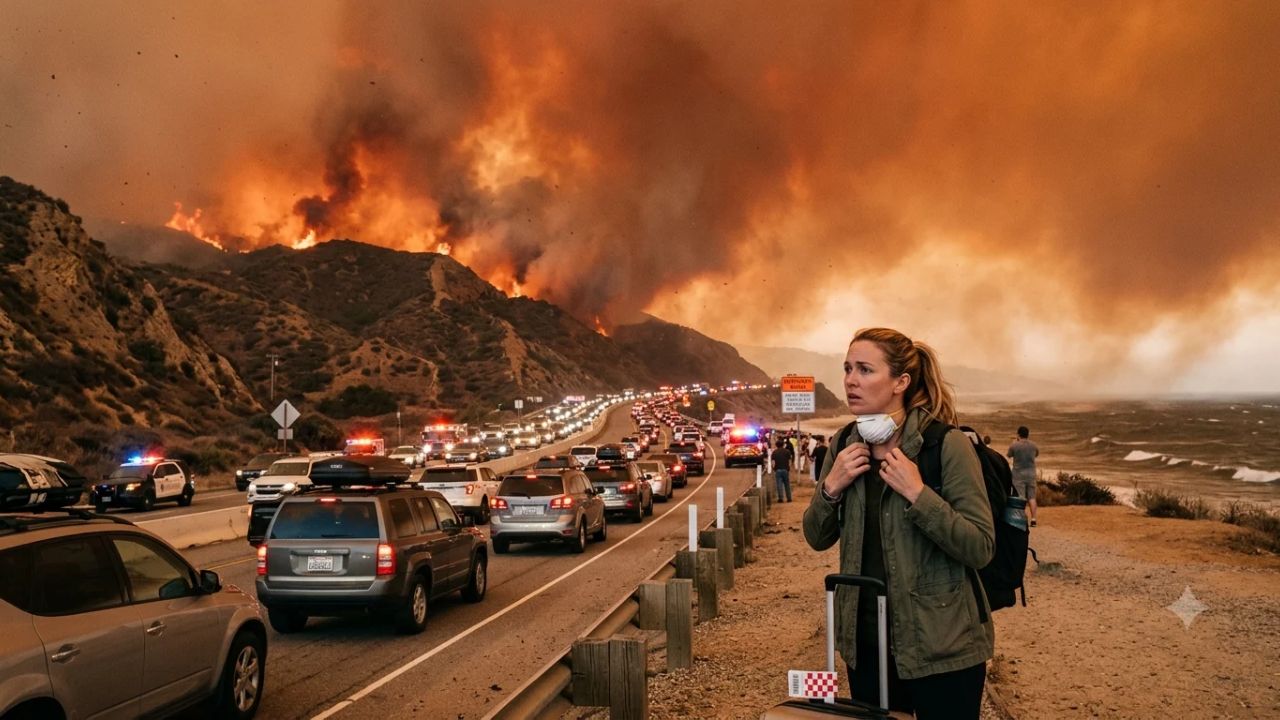
An urgent diplomatic travel alert was issued by the United Arab Emirates Ministry of Foreign Affairs and the UAE Consulate General in Los Angeles on 18 October 2026, directing all Emirati citizens, international students, business travelers, and tourists across Southern California to exercise extreme caution as ferocious, wind-driven wildfires force mass civilian evacuations. Driven by aggressive Santa Ana wind gusts, critically depleted relative humidity, and elevated seasonal temperatures, rapid-moving brush fires have swept into suburban residential perimeters and coastal canyon corridors across Orange County and western Los Angeles County. With thousands of structures threatened, mandatory evacuation orders in effect for approximately 16,000 residents, and preemptive electrical grid de-energizations cutting power to over 90,000 consumers, the UAE mission has placed its emergency response apparatus on highest alert.
The diplomatic notification underscores the severe operational volatility confronting international travelers and expatriate communities in Southern California. Unlike typical seasonal brush fires confined to remote wilderness tracts, the current blazes—principally the Norte Fire in southern Orange County and the Bryson Fire in Malibu—are burning in immediate proximity to densely populated metropolitan infrastructure, primary academic institutions, and high-volume tourist thoroughfares. Road blockades along the Pacific Coast Highway (PCH), intentional utility shutdowns, and dense smoke plumes drifting across the Greater Los Angeles Basin have severely disrupted regional transportation systems, prompting international consulates to activate crisis protocols.
Southern California Wildfire Escalation: Red Flag Warnings and Santa Ana Winds
The rapid ignition and uncontrolled propagation of the Southern California blazes stem from acute fire-weather conditions that triggered National Weather Service Red Flag warnings across the region. A high-pressure system positioned over the Great Basin generated powerful offshore Santa Ana wind events, funneling dry air masses down western mountain passes at speeds exceeding 50 to 65 miles per hour. When combined with ambient relative humidity levels plunging below 10 percent and months of parched chaparral vegetation, the winds transformed isolated spark incidents into fast-advancing firestorms.
Under these atmospheric conditions, multi-agency firefighting operations face extreme containment barriers. High-velocity winds generate dangerous ember casts, transporting ignited vegetative matter hundreds of yards ahead of the primary flame front. This airborne spotting has caused fires to leap multi-lane highways and suburban streets, igniting structural roofs and residential brush before ground crews can deploy defensive hoses. While aerial tankers and water-dropping helicopters have mobilized across the basin, erratic wind shifts frequently ground aircraft due to turbulence and zero-visibility smoke corridors.
Regional Fire Comparison: Norte Fire and Bryson Fire Impact Matrix
To evaluate the operational scope and civic disruption caused by the active blazes, the following matrix compares the footprint, structural toll, evacuation volume, and transport impacts of the two primary wildfire complexes:
| Impact Dimension | The Norte Fire (Orange County) | The Bryson Fire (Malibu / Los Angeles County) | Regional Infrastructure Basin |
|---|---|---|---|
| Primary Geographic Origin | San Clemente ridgelines moving into San Juan Capistrano | Encinal Canyon Road near western Malibu coastline | Greater Southern California coastal & canyon zones |
| Estimated Burn Footprint | Approximately 570 acres within initial operational operational run | Approximately 147 to 200 acres of dense chaparral | Multiple localized spot blazes across brush corridors |
| Initial Containment Level | 0% containment during primary offshore wind surge | Partial containment along highway access corridors | Red Flag warnings active across entire region |
| Evacuation Volume & Mandates | Mandatory evacuation orders affecting ~16,000 residents and visitors | Strategic evacuation warnings along canyon transit arteries | Emergency temporary shelter sites deployed |
| Structural Consequences | Multiple residential dwellings heavily damaged or leveled | Electrical distribution lines and cell towers destroyed | Commercial disruptions and campus monitoring |
| Primary Transportation Bottlenecks | Suburban artery closures and municipal road blocks | Severe congestion and partial halts on Pacific Coast Highway (PCH) | Commuter delays and canyon pass detours |
| Utility Grid Status | Local distribution outages and infrastructure repairs | Severe communications and cellular grid blackouts | 90,000 to 130,000 customers under Public Safety Power Shutoffs |
Orange County: The Norte Fire and 16,000 Mandatory Evacuations
The most acute civilian threat developed in southern Orange County, where the Norte Fire erupted in the coastal bluffs of San Clemente before gale-force winds propelled the firefront northeast into San Juan Capistrano. Within hours of ignition, the fire scorched approximately 570 acres, tearing through suburban brush interfaces and jumping defensive perimeters established by the Orange County Fire Authority (OCFA).
The sudden inland push overwhelmed localized containment efforts, forcing municipal law enforcement and sheriff’s deputies to execute door-to-door mandatory evacuation orders impacting an estimated 16,000 residents, students, and hotel guests. Multiple residential homes sustained severe fire damage or complete destruction as ember storms infiltrated suburban developments.
The municipal impact rippled across the region:
- Educational Facility Suspensions: The Capistrano Unified School District canceled all academic sessions across San Juan Capistrano, relocating staff and closing campuses threatened by heavy smoke and advancing flames.
- Emergency Shelter Activation: Civic community centers and athletic complexes were rapidly converted into American Red Cross emergency evacuation centers to house displaced families, tourists, and domestic pets.
- Surface Street Closures: Authorities closed primary regional connectors, including portions of Ortega Highway and local arterials, to prioritize unimpeded access for heavy bulldozers, structural strike teams, and water tenders.
Malibu and Los Angeles County: The Bryson Fire and Coastal Infrastructure Strain
Concurrently, seventy miles northwest along the rugged coastline of Los Angeles County, fire crews confronted the Bryson Fire. The blaze ignited near Encinal Canyon Road in western Malibu, burning between 147 and 200 acres of mature coastal scrub approximately eight miles from Pepperdine University.
While firefighters successfully protected the primary academic campus of Pepperdine University from direct structural exposure, the fire inflicted severe damage on localized regional infrastructure:
- Communications and Power Line Failures: Intense canyon heat burned through overhead power distribution corridors and knocked out commercial cellular transceiver towers, severing mobile phone connectivity and domestic internet across coastal pockets.
- Pacific Coast Highway (PCH) Congestion: Precautionary evacuation warnings triggered massive vehicular bottlenecks along State Route 1 (PCH), as coastal residents, vacation home renters, and day visitors attempted to exit narrow two-lane canyon passes simultaneously.
- Recreational Area Closures: The California Department of Parks and Recreation shuttered coastal trail networks, state beaches, and canyon campsites throughout the Santa Monica Mountains National Recreation Area to prevent hikers from becoming trapped by shifting flame fronts.
Utility Grid Safeguards: Public Safety Power Shutoffs and Transport Bottlenecks
Beyond the direct path of flames, the extreme wind and aridity prompted major regional utility operators—primarily Southern California Edison (SCE) and San Diego Gas & Electric (SDG&E)—to activate emergency Public Safety Power Shutoffs (PSPS). Under PSPS protocols, utilities deliberately de-energize high-voltage transmission lines traversing high-fire-risk districts to prevent falling branches or downed cables from igniting additional fires.
These proactive shutoffs affected between 90,000 and 130,000 households, retail businesses, and hospitality properties across Southern California. For international visitors and corporate travelers staying in short-term vacation rentals or regional hotels, the blackouts created substantial challenges:
- Digital Infrastructure Disruptions: Without domestic power, automated security gates, residential charging points, and Wi-Fi networks ceased operations, limiting access to real-time emergency broadcasts.
- Fuel Supply Limitations: Gas stations in de-energized municipal zones were unable to pump fuel, complicating vehicular departure plans for motorists lacking full fuel reserves.
- Air Travel Advisories: While major airport hubs including Los Angeles International (LAX), John Wayne Airport (SNA), and Long Beach Airport (LGB) maintained uninterrupted operations via backup generators, ground access corridors experienced heavy congestion from emergency service movements.
UAE Diplomatic Protocol: Tawajudi Portal Registration and Emergency Procedures
In light of the fast-evolving emergency, the UAE Ministry of Foreign Affairs (MOFA) and the UAE Consulate General in Los Angeles established round-the-clock emergency assistance desks. Diplomatic officials issued specific operational directives for all Emirati nationals currently residing in or visiting California:
- Mandatory Tawajudi Registration: The Ministry instructed all UAE citizens—including university students enrolled in California colleges, medical patients receiving treatment in regional healthcare systems, and holiday travelers—to immediately log into the official Tawajudi portal. Registering active geographic coordinates and current contact information enables consulate personnel to coordinate direct tracking, emergency welfare checks, and relocation assistance.
- Immediate Compliance with Local Evacuation Orders: The diplomatic advisory emphasized that individuals within designated evacuation zones must not hesitate or delay departure to protect personal belongings. Citizens must strictly adhere to instructions issued by Cal Fire, the Orange County Sheriff's Department, and the Los Angeles County Sheriff's Department without waiting to see visible smoke or flames.
- Device Preparedness and Documentation Safeguards: Due to expanding PSPS blackout zones, nationals are advised to keep cellular phones, laptops, and external battery packs fully charged at all times. Essential identification—including passports, consular registration cards, and medical documentation—should remain stored in waterproof, portable go-bags ready for instant transit.
- Emergency Consular Contact Lines: The UAE Consulate General in Los Angeles maintains active emergency phone lines and digital messaging channels, providing continuous coordination with American emergency dispatchers to assist stranded or displaced citizens.
With red flag wind warnings projected to persist over the coming days, international travelers throughout Southern California must maintain heightened vigilance, monitor local emergency news broadcasts, and confirm the operational status of highway corridors before attempting regional transit.
Key Takeaways
- Urgent Diplomatic Warning: The UAE Ministry of Foreign Affairs and the UAE Consulate General in Los Angeles issued an emergency advisory for all nationals in Southern California amid raging wildfires.
- 16,000 Under Evacuation in Orange County: The 570-acre Norte Fire prompted mandatory evacuation orders across San Clemente and San Juan Capistrano, damaging homes and shutting schools.
- Malibu Infrastructure Threatened: The 147- to 200-acre Bryson Fire ignited along Encinal Canyon Road near Malibu, destroying power poles and cell towers while gridlocking the Pacific Coast Highway.
- Widespread Utility Blackouts: Public Safety Power Shutoffs (PSPS) left between 90,000 and 130,000 Southern California utility customers without electrical power to prevent new ignitions.
- Mandatory Tawajudi Enrolment: The UAE directs all citizens, students, and tourists in the United States to update their location data on the government Tawajudi portal and obey sheriff evacuation mandates immediately.
FAQ: UAE California Wildfire Travel Advisory 2026
What prompted the UAE government to issue a travel warning for California?
The UAE Ministry of Foreign Affairs issued an emergency advisory due to the rapid spread of destructive wildfires in Southern California, driven by fierce Santa Ana winds that forced thousands of evacuations in Orange County and Malibu.
Which active wildfires are impacting Southern California travel?
The primary active blazes are the Norte Fire (burning 570 acres across San Clemente and San Juan Capistrano in Orange County) and the Bryson Fire (burning up to 200 acres in western Malibu near Encinal Canyon Road).
What is the Tawajudi service mentioned in the UAE advisory?
Tawajudi is an official emergency registration service provided by the UAE Ministry of Foreign Affairs. It allows Emirati citizens traveling or studying abroad to register their locations so consulates can locate and assist them during foreign natural disasters or crises.
Are flights in Los Angeles or Orange County cancelled because of the wildfires?
Major airports such as Los Angeles International Airport (LAX) and John Wayne Airport (SNA) remain operational, but local surface access routes and the Pacific Coast Highway have experienced severe traffic delays due to brush fire closures.
What should travelers in Southern California do during Public Safety Power Shutoffs (PSPS)?
Travelers should keep mobile phones and backup batteries fully charged, maintain adequate vehicle fuel since local gas stations may lose power, keep physical travel documents accessible, and monitor local Cal Fire advisories.
By adhering to official evacuation mandates and registering with diplomatic tracking portals, international travelers can navigate Southern California's volatile wildfire emergencies safely.
Related Travel Guides
- US Air Travel Paralyzed by 3,265 Flight Delays and 136 Cancellations: FAA Ground Stops and Turbulence Snarl Megahubs
- Australia Issues High-Caution Travel Advisories for Kenya, Indonesia, Albania, and Mexico: Critical Safety and Entry Rules
- United Kingdom and United States Issue Urgent Saudi Arabia Travel Warnings Amid Houthi Missile Threats and Airport Security Risks
Disclaimer
This article is for informational and educational purposes only. It does not constitute legal, financial, or professional advice. While we strive to provide accurate and up-to-date information, travel policies, regulations, and conditions change rapidly. Always verify information with official sources before making travel decisions. Nomad Lawyer makes no representations about the accuracy, reliability, completeness, or suitability of the information provided. Readers should consult qualified professionals for advice specific to their circumstances. The views expressed in this article are those of the author and do not necessarily reflect the views of Nomad Lawyer.
Raushan Kumar
Founder & Lead Developer
Full-stack developer with 11+ years of experience and a passionate traveller. Raushan built Nomad Lawyer from the ground up with a vision to create the best travel and law experience on the web.
Learn more about our team →