
Middle East Aviation Gridlock: Emirates and FlyDubai Suffer Massive Operational Collapse as 161 Delays and 24 Flight Cancellations Trigger UAE Travel Chaos
As unexpected operational bottlenecks paralyze the UAE's massive aviation infrastructure, a sudden wave of 161 flight delays and 24 cancellations traps hundreds of passengers in severe travel chaos.

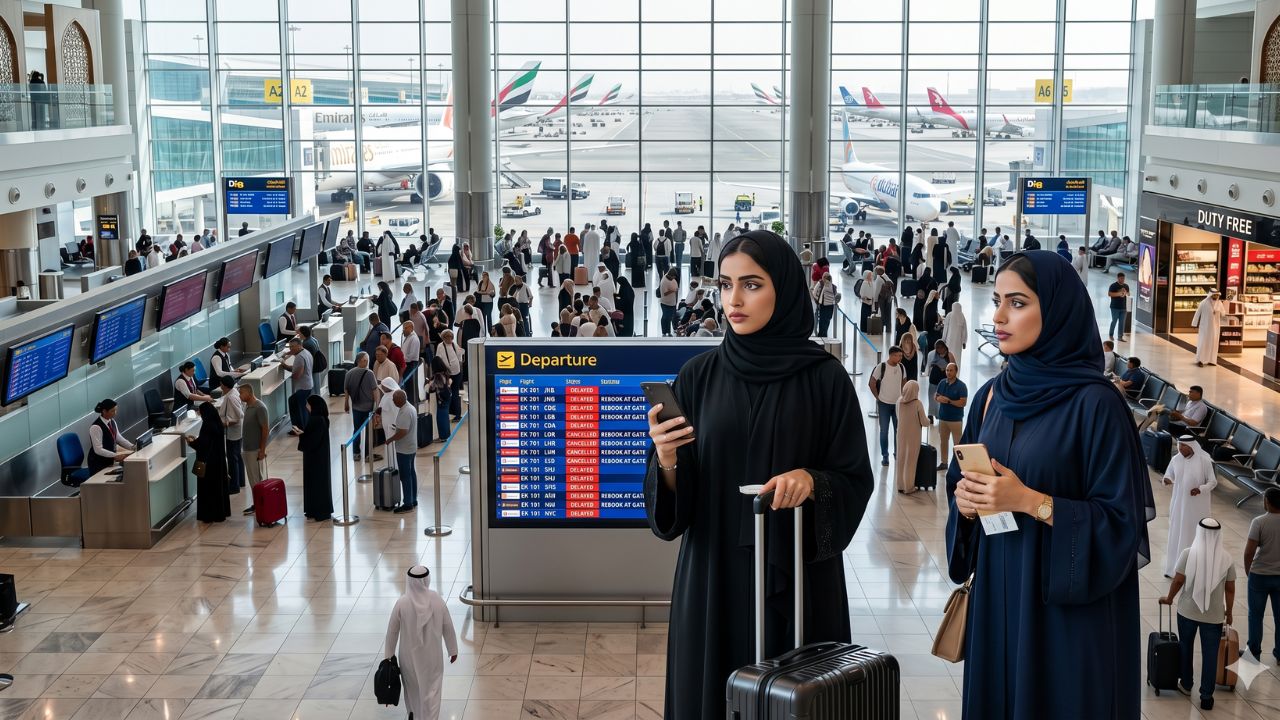
Image generated by AI
A Massive Operational Collapse Triggers Middle Eastern Terminal Panic
While massive sectors of the global passenger network frequently battle highly unpredictable extreme weather events, synchronized logistical bottlenecks, and horrific commercial fleet constraints, the sudden, unmanageable collapse of the Middle East's primary transit infrastructure remains the absolute most terrifying catalyst for cascading airport disruptions. Delivering highly urgent, breaking airline news, verified regional aviation trackers confirm that a massive operational disaster has actively detonated, completely exposing vulnerable domestic commuters and international tourists to severe travel chaos across the highly connected UAE aviation network. On June 3, 2026, highly alarming operational news forcefully emerged confirming that an unprecedented wave of sudden flight cancellations and agonizing delays completely paralyzed major hubs in Dubai and Sharjah, violently isolating hundreds of passengers.
While desperate travelers usually attempt to navigate terrifying terminal gridlock caused by isolated regional failures, these exclusive aviation updates reveal a highly systemic, incredibly dangerous logistical meltdown actively destroying flight schedules across the entire United Arab Emirates. Official tracking data confirms that the massive UAE aviation network violently recorded a staggering total of 161 severe flight delays alongside 24 absolute flight cancellations. The sheer scale of this disruption immediately plunged departure halls across the country into an absolute state of emergency. With massive global and regional carriers like FlyDubai, Jazeera Airways, Emirates, and Air Arabia frantically struggling to maintain basic operational integrity, highly vulnerable transit passengers are currently trapped inside overflowing terminals, facing totally ruined itineraries and brutal missed connections.
Expanded Overview: The Scale of the Transnational Flight Disruption
The sudden, highly publicized execution of this massive regional operational slowdown serves as an undeniable example of how rapidly complex continental logistics can collapse into extreme transit pressure. High-density corridors connecting hubs like Dubai International and Sharjah International serve as absolutely critical global crossroads bridging East and West. Aviation networks in this region are highly interconnected, meaning that any accumulation of scheduling alterations within the UAE reverberates across multiple continents, triggering a devastating domino effect across the wider airspace. When a simultaneous disruption of this magnitude strikes, it completely shatters the entire passenger pipeline. For a massive corporate and leisure corridor heavily reliant on incredibly robust, high-frequency flight schedules, this massive wave of flight delays heavily exposes the entire network to terrifying bottlenecks, severe travel safety concerns, and massive economic damage to regional tourism cycles.
The terrifying reality of the current transit crisis is found in the sheer volume of high-capacity aircraft abruptly grounded across the UAE. The sudden nature of these scheduling shifts meant that departure gates and terminal lounges were instantly populated by vast numbers of commuters seeking updated information from overwhelmed ground staff. For individuals transit-bound through the region, the disruptions necessitated immediate, highly stressful adjustments to connection windows, premium accommodation bookings, and personal schedules.
Detailed Airport Disruption Breakdown and Flight Data
To fully comprehend the massive operational scale and strategic deployment dictating this highly destructive capacity crisis, the following mandatory tables explicitly detail the exact flight metrics heavily impacting the UAE aviation network today:
Dubai International Airport (DXB) Gridlock
As one of the world’s busiest international gateways, Dubai recorded a massive 14 cancellations and 122 flight delays, severely impacting both long-haul connections and regional shuttle flights.
| Airline | Cancelled | Cancelled (%) | Delayed | Delayed (%) |
|---|---|---|---|---|
| FlyDubai | 6 | 2% | 33 | 14% |
| Jazeera Airways | 2 | 33% | 2 | 33% |
| Kuwait Airways Corporation | 2 | 25% | 3 | 37% |
| Emirates | 2 | 0% | 52 | 13% |
| Azerbaijan Airlines | 1 | 50% | 0 | 0% |
| flyadeal | 1 | 50% | 0 | 0% |
| Daallo Airlines | 0 | 0% | 1 | 25% |
| Fly Cham | 0 | 0% | 2 | 100% |
| IndiGo | 0 | 0% | 1 | 4% |
| Flynas | 0 | 0% | 1 | 12% |
| Kenya Airways | 0 | 0% | 1 | 50% |
| MEA | 0 | 0% | 1 | 25% |
| Egypt Air | 0 | 0% | 3 | 60% |
| Royal Jordanian | 0 | 0% | 3 | 60% |
| SpiceJet | 0 | 0% | 9 | 81% |
| Saudia | 0 | 0% | 1 | 16% |
| Uzbekistan Airways | 0 | 0% | 1 | 50% |
| Airblue | 0 | 0% | 2 | 20% |
| Ariana Afghan | 0 | 0% | 2 | 100% |
| Air India | 0 | 0% | 2 | 25% |
Sharjah International Airport (SHJ) Collapse
Operations at Sharjah were similarly restricted, with authorities logging 11 cancellations and 39 flight delays, creating a devastating environment for regional carriers like Air Arabia.
| Airline | Cancelled | Cancelled (%) | Delayed | Delayed (%) |
|---|---|---|---|---|
| Air Arabia | 10 | 5% | 23 | 13% |
| Air India Express | 0 | 0% | 2 | 9% |
| Ethiopian Airlines | 0 | 0% | 1 | 33% |
| Fly Jinnah | 0 | 0% | 4 | 44% |
| IndiGo | 0 | 0% | 1 | 12% |
| Air Cairo | 0 | 0% | 1 | 50% |
| Nile Air | 0 | 0% | 1 | 50% |
| Pegasus Airlines | 0 | 0% | 1 | 50% |
| Pakistan International Airlines | 0 | 0% | 1 | 25% |
| Qatar Airways | 0 | 0% | 2 | 14% |
| Airblue | 0 | 0% | 2 | 100% |
Industry Analysis: The Probable Impact on Tourism
When scheduling irregularities violently manifest on this scale within the UAE, massive concerns naturally arise regarding the broader impressions left upon international visitors. The smooth, uninterrupted operation of transport infrastructure is heavily relied upon by the hospitality sector to aggressively sustain the country’s status as a premium global destination. When hundreds of journeys are violently interrupted simultaneously, a terrifying ripple effect can be felt across luxury hotel reservations, pre-booked exclusive leisure tours, and critical international business conferences.
For the regional tourism sector, the immediate consequence of these 161 delays and 24 cancellations is a severe, temporary strain on local transit accommodation and airport customer service desks. If operational consistency is perceived to be compromised, long-term global travel habits can be influenced, prompting some cautious globetrotters to explore alternative transit hubs in neighboring states for their multi-leg journeys.
Passenger Impact: Navigating the Terminal Gridlock
For the modern commuter attempting to navigate this highly volatile Middle Eastern network, the passenger impact of this massive operational meltdown is completely terrifying. Reliable, on-time flights are the absolute backbone of regional transit, and this hub collapse completely destroyed that promise.
Q1: How can passengers verify the current status of their delayed or cancelled flights? Individuals who are scheduled to travel are strongly advised to aggressively monitor official digital channels rather than relying solely on third-party aggregators. Real-time updates are typically broadcast via the official mobile applications and websites of the respective airlines. Terminal flight information display screens within the massive Dubai departure halls should also be checked continuously for immediate gate changes and revised departure times.
Q2: What immediate steps should be taken if a flight cancellation occurs? When a journey is officially cancelled by a carrier, aggressive communication should be established immediately with the airline’s ground representatives or telephonic customer support. Rebooking options onto the next available service are generally provided. It is highly recommended that passengers secure written confirmation of the cancellation, as this documentation is absolutely crucial for potential insurance claims.
Q3: Are meals and accommodation provided during extended operational delays? Depending on the exact duration of the delay and the terms specified in the contract of carriage, refreshment vouchers are frequently distributed by airlines to passengers experiencing prolonged waits. Should a delay extend overnight, international aviation conventions generally dictate that hotel accommodation and ground transfer to and from the terminal be arranged and heavily covered by the carrier responsible for the scheduling shift.
Q4: How is checked luggage managed when a flight sequence is disrupted? In instances where connections are violently missed due to a delay, checked baggage is typically retained within the airport’s highly secure handling system and rerouted automatically onto the newly assigned aircraft. However, if a journey is completely terminated or delayed for an extended calendar day, travelers must furiously coordinate with the local baggage service desk to reclaim their items.
Conclusion: A Highly Destructive Aviation Meltdown
The massive, highly publicized collapse of flight schedules across the UAE represents a severe, incredibly dangerous wake-up call for the Middle Eastern aviation sector. By actively demonstrating that deep systemic congestion can instantly overwhelm the busiest aviation markets with 161 delays and 24 cancellations, this incident completely shatters passenger confidence in domestic hub reliability. As executive leadership across Emirates, FlyDubai, and Air Arabia frantically scramble to diagnose the logistical failures and appease hundreds of isolated passengers, international tourists are heavily urged to aggressively monitor their flight status via airline apps, actively prepare for sudden flight delays, and fully expect this unprecedented disaster to trigger massive regional travel chaos.
Key Takeaways
- Massive Regional Meltdown: A staggering 161 delays and 24 cancellations violently struck major UAE airports on June 3, 2026.
- Dubai and Sharjah Collapse: Dubai International Airport suffered the absolute worst disruptions (122 delays, 14 cancellations), while Sharjah International suffered heavy regional friction.
- Airlines Most Affected: Emirates, FlyDubai, and Air Arabia completely absorbed massive schedule friction across multiple hubs.
- Widespread Carrier Friction: International operators, including Kuwait Airways, SpiceJet, and Jazeera Airways, suffered heavily delayed arrivals and departures.
- Passenger Survival Tactics: Travelers caught in the disruption are aggressively urged to constantly monitor official airline notifications, secure written cancellation confirmation for insurance claims, and expect massive terminal delays.
Disclaimer: The specific flight cancellation metrics, airport delay data, and carrier impact assessments presented in this report are based on verified aviation tracking data from FlightAware regarding operations across the United Arab Emirates on June 3, 2026. Official airline technical reports, terminal congestion levels, and air traffic control clearances are highly volatile and subject to continuous, real-time update based on active operational shifts. Prospective passengers are urgently advised to fiercely monitor their specific booking status and verify active flight schedules directly via the airline's official portal prior to airport arrival.
Disclaimer
This article is for informational and educational purposes only. It does not constitute legal, financial, or professional advice. While we strive to provide accurate and up-to-date information, travel policies, regulations, and conditions change rapidly. Always verify information with official sources before making travel decisions. Nomad Lawyer makes no representations about the accuracy, reliability, completeness, or suitability of the information provided. Readers should consult qualified professionals for advice specific to their circumstances. The views expressed in this article are those of the author and do not necessarily reflect the views of Nomad Lawyer.
Kunal K Choudhary
Co-Founder & Contributor
A passionate traveller and tech enthusiast. Kunal contributes to the vision and growth of Nomad Lawyer, bringing fresh perspectives and driving the community forward.
Learn more about our team →