
TSA Discovers Two Live Smoke Grenades in Passenger Baggage at US Airport Security Checkpoint, One Concealed Inside Peanut Butter Jar
TSA Discovers Two Live Smoke Grenades in Passenger Baggage at US Airport Security Checkpoint, One Concealed Inside Peanu

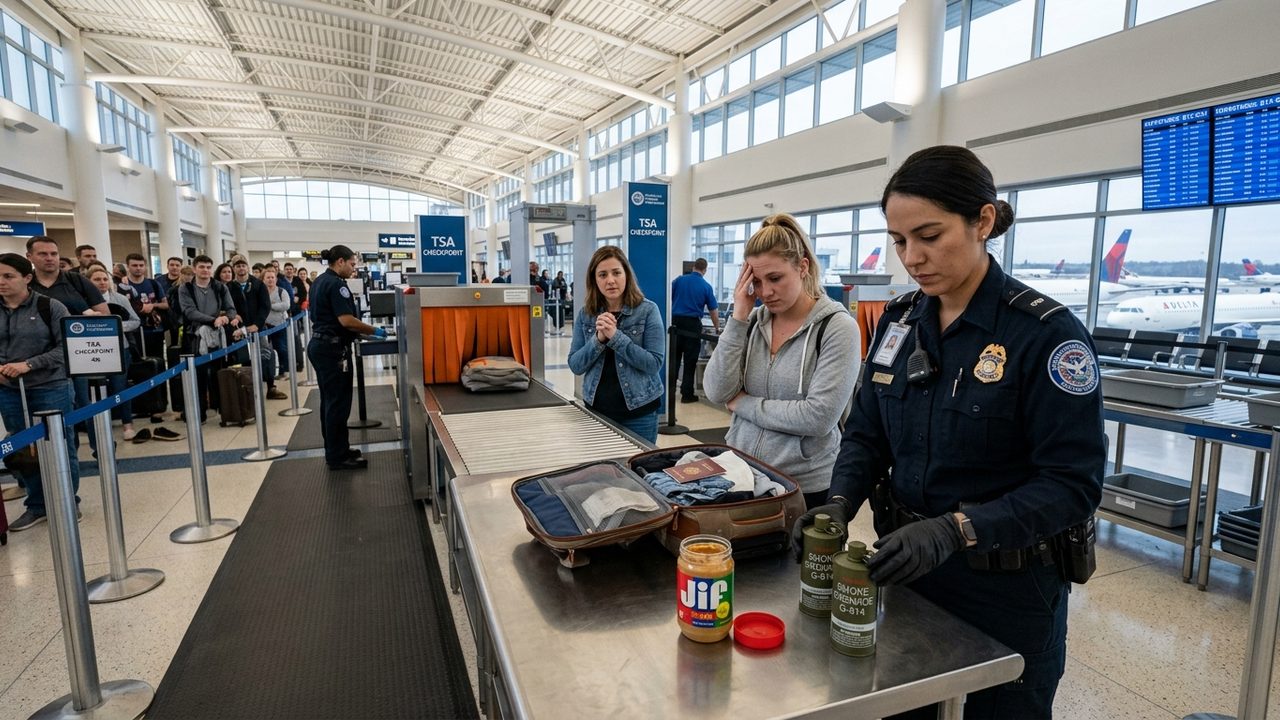
Image generated by AI
[WASHINGTON, June 26, 2026] — Transportation Security Administration officers intercepted two live smoke grenades from a traveler's bag at a US airport security checkpoint, with one of the devices deliberately hidden inside a peanut butter jar, according to reports. The discovery highlights the persistent challenge security personnel face in detecting concealed prohibited items among everyday carry-on belongings.
The incident, confirmed on June 26, 2026, underscores the ongoing threats that TSA screeners encounter during routine baggage inspections at American airports. Smoke grenades, classified as incendiary devices, are strictly banned from aircraft cabins and checked luggage under federal aviation regulations. The creative concealment method — embedding one grenade inside a food product — illustrates the lengths some passengers go to bypass screening protocols.
TSA Screening Procedures Catch Concealed Incendiary Devices at Airport Security
Transportation Security Administration officers are trained to identify prohibited items through multiple layers of screening technology, including advanced imaging X-ray machines, physical bag searches, and chemical detection systems. The interception of two live smoke grenades demonstrates how these layered security measures function in practice at US airport checkpoints.
Smoke grenades pose significant risks in aviation environments. When activated, they release dense chemical smoke designed for military, tactical, or recreational use. Inside a pressurized aircraft cabin, a deployed smoke grenade could cause immediate panic, reduce visibility to near-zero, trigger oxygen mask deployment, and force an emergency landing. The incendiary nature of these devices also presents fire hazards that could escalate rapidly in confined aircraft spaces.
According to reports, one of the two grenades was found concealed inside a peanut butter jar — a concealment tactic that attempts to exploit the dense, opaque nature of food products to mask suspicious objects from X-ray imaging. Peanut butter's thick consistency and uniform appearance on scanning equipment can potentially obscure irregular shapes embedded within, making detection more difficult for standard screening technology.
Peanut Butter Jar Concealment Raises Questions About Airport Security Screening Gaps
The decision to hide a live smoke grenade inside a food container represents a deliberate attempt to defeat airport security screening systems. TSA officers routinely encounter passengers attempting to disguise prohibited items within everyday objects, including food products, electronics, and personal hygiene items.
Peanut butter jars have been used in previous smuggling attempts at airport checkpoints. The dense, spreadable product creates visual interference on X-ray monitors, potentially masking the outline of hidden objects. TSA's Advanced Imaging Technology machines and certified screeners are specifically trained to identify such anomalies, and the successful detection of this concealed grenade validates the effectiveness of current screening protocols.
Aviation security experts note that concealment attempts using food products remain an ongoing concern. Common items like jars of spreads, containers of thick liquids, and packaged food products can create screening challenges because their natural density patterns may resemble or obscure prohibited objects. TSA protocols require secondary screening — including physical inspection and additional X-ray angles — when food items present unusual imaging characteristics.
Smoke Grenades Remain Strictly Prohibited Under Federal Aviation Security Regulations
Under TSA's prohibited items list and federal aviation security regulations, smoke grenades are categorized as explosive and incendiary devices. They are banned from both carry-on baggage and checked luggage on all commercial flights operating within, entering, or departing the United States.
The prohibition covers all variants of smoke-producing devices, including military-grade smoke grenades, commercial smoke signals used for marine or outdoor recreation, and novelty smoke products sometimes sold at fireworks retailers. Even inert or expended smoke grenade casings are typically prohibited because they can be mistaken for live ordnance by security personnel and other passengers.
Passengers found carrying such devices at airport checkpoints face several potential consequences. TSA officers are authorized to refer cases to local law enforcement, and criminal charges may follow depending on jurisdiction and circumstances. Civil penalties can also be imposed, with fines reaching thousands of dollars for bringing prohibited incendiary devices to security checkpoints. The specific outcome for the individual involved in this June 2026 incident has not been publicly detailed.
US Airport Security Continues to Intercept Thousands of Prohibited Items Annually
TSA officers screen millions of passengers and bags at more than 430 federalized airports across the United States. During routine operations, screeners intercept a wide range of prohibited items daily, including firearms, ammunition, knives, explosives, and incendiary devices.
The agency regularly publishes data on intercepted items. In recent years, TSA has reported detecting firearms at checkpoints at record rates, with thousands of guns confiscated annually — many of them loaded. The discovery of live smoke grenades, while less common than firearm detections, represents a serious security event given the incendiary capabilities of these devices.
Industry observers note that the volume and variety of prohibited items found at checkpoints reflect both passenger awareness gaps and deliberate concealment attempts. While many passengers claim ignorance of regulations when caught with prohibited items, cases involving deliberate concealment — such as hiding a grenade inside a food jar — suggest intentional efforts to circumvent security measures.
Aviation Security Officials Emphasize Layered Screening at US Airport Checkpoints
The TSA operates a layered security system designed to provide multiple opportunities to detect threats before they reach aircraft. This approach combines technology, personnel training, intelligence, and procedural protocols to create redundancy in threat detection.
Key components of this system include Advanced Imaging Technology X-ray scanners, millimeter-wave body scanners, explosive trace detection equipment, certified baggage screening officers, and behavioral detection officers. When one layer fails to identify a threat, subsequent layers are designed to catch what was missed.
The interception of two live smoke grenades — one concealed in a peanut butter jar — demonstrates this layered approach in action. The dense food product may have created initial ambiguity on X-ray imaging, but trained screeners identified the anomaly and conducted further inspection, leading to the discovery of the hidden device.
Incident Highlights Ongoing Need for Passenger Awareness of TSA Prohibited Items
Aviation security analysts emphasize that passenger education remains a critical component of checkpoint security. Many prohibited item detections result from passengers simply being unaware of what cannot be brought through security or packed in luggage.
However, concealment attempts involving creative methods — such as embedding devices in food containers — fall into a different category. These cases suggest deliberate intent to transport prohibited items onto aircraft, raising questions about passenger motivations and potential security threats.
The June 2026 smoke grenade discovery adds to a growing catalog of unusual concealment attempts documented at US airport checkpoints. Previous incidents have included weapons hidden inside stuffed animals, electronics, shoes, and even prosthetic devices. Each case informs ongoing refinements to screening protocols and officer training programs.
Impact on Airport Security Operations and Traveler Experience
When security officers discover prohibited items at checkpoints, the immediate impact extends beyond the individual passenger involved. Checkpoint operations may slow as officers conduct secondary screening, call supervisors, coordinate with law enforcement, and document the incident.
Other passengers in the security queue experience delays while the situation is resolved. Depending on the severity of the discovery, entire checkpoint lanes may be temporarily closed for additional screening or investigation. In cases involving explosive or incendiary devices, TSA protocols may require evacuation of the immediate area and deployment of explosive detection teams.
The broader impact on traveler experience includes longer wait times, enhanced screening procedures, and increased scrutiny of similar items. Following high-profile incidents, TSA sometimes adjusts screening protocols for specific item categories, leading to more thorough inspections of food products, containers, or other items associated with concealment attempts.
Why This Matters: The Evolving Challenge of Airport Security Screening
The discovery of two live smoke grenades — one hidden inside a peanut butter jar — at a US airport checkpoint represents more than an isolated security incident. It illustrates the evolving tactics used to defeat aviation security screening and the critical role that trained TSA officers play in maintaining flight safety.
Smoke grenades in aircraft cabins present genuine dangers that extend beyond the immediate release of chemical smoke. In a pressurized cabin at cruising altitude, a deployed smoke device could compromise visibility, trigger emergency oxygen systems, cause passenger panic, and force pilots to execute emergency descents and landings. The incendiary component of these devices adds fire risk to an already dangerous scenario.
The concealment method employed in this case — using a common food product to mask a prohibited device — demonstrates that screening challenges extend beyond obvious threats. Dense, opaque food items can create imaging complications for X-ray technology, requiring screeners to exercise judgment and conduct physical inspections when images appear irregular.
For the aviation industry, this incident reinforces the necessity of maintaining robust, well-staffed security screening operations. Proposals to reduce screening personnel, consolidate checkpoint operations, or increase reliance on automated screening technology must account for cases where human judgment and physical inspection remain essential to threat detection.
The successful interception also validates the multi-layered security approach that TSA employs. Despite the concealment effort, trained officers identified the anomaly and acted before the devices reached the secure side of the airport. This outcome demonstrates that current screening systems, when properly staffed and operated, can detect even carefully concealed threats.
For travelers, the incident serves as a reminder that airport security regulations exist for specific safety reasons. Items that may seem harmless in other contexts — including smoke-producing devices sold for outdoor recreation — can create serious hazards in aviation environments. Passengers are encouraged to review TSA's prohibited items list before packing and to declare any questionable items at checkpoints.
As screening technology advances and concealment tactics evolve, the ongoing cat-and-mouse dynamic between security personnel and those attempting to transport prohibited items will continue shaping airport security operations. The June 2026 smoke grenade discovery at a US airport checkpoint adds another data point to this ongoing challenge, informing both training protocols and technology development across the aviation security landscape.
Related Travel Guides
Disclaimer
This article is for informational and educational purposes only. It does not constitute legal, financial, or professional advice. While we strive to provide accurate and up-to-date information, travel policies, regulations, and conditions change rapidly. Always verify information with official sources before making travel decisions. Nomad Lawyer makes no representations about the accuracy, reliability, completeness, or suitability of the information provided. Readers should consult qualified professionals for advice specific to their circumstances. The views expressed in this article are those of the author and do not necessarily reflect the views of Nomad Lawyer.
Preeti Gunjan
Contributor & Community Manager
A passionate traveller and community builder. Preeti helps grow the Nomad Lawyer community, fostering engagement and bringing the reader experience to life.
Learn more about our team →