
Tyne Bridge Restoration 2026: Long-Term 40mph Speed Limit and Lane Closures Impact Newcastle-Gateshead Transit
Drivers between Newcastle and Gateshead face multi-year delays as the Grade II* listed Tyne Bridge undergoes structural restoration, enforcing a strict 40mph limit and single-lane traffic.

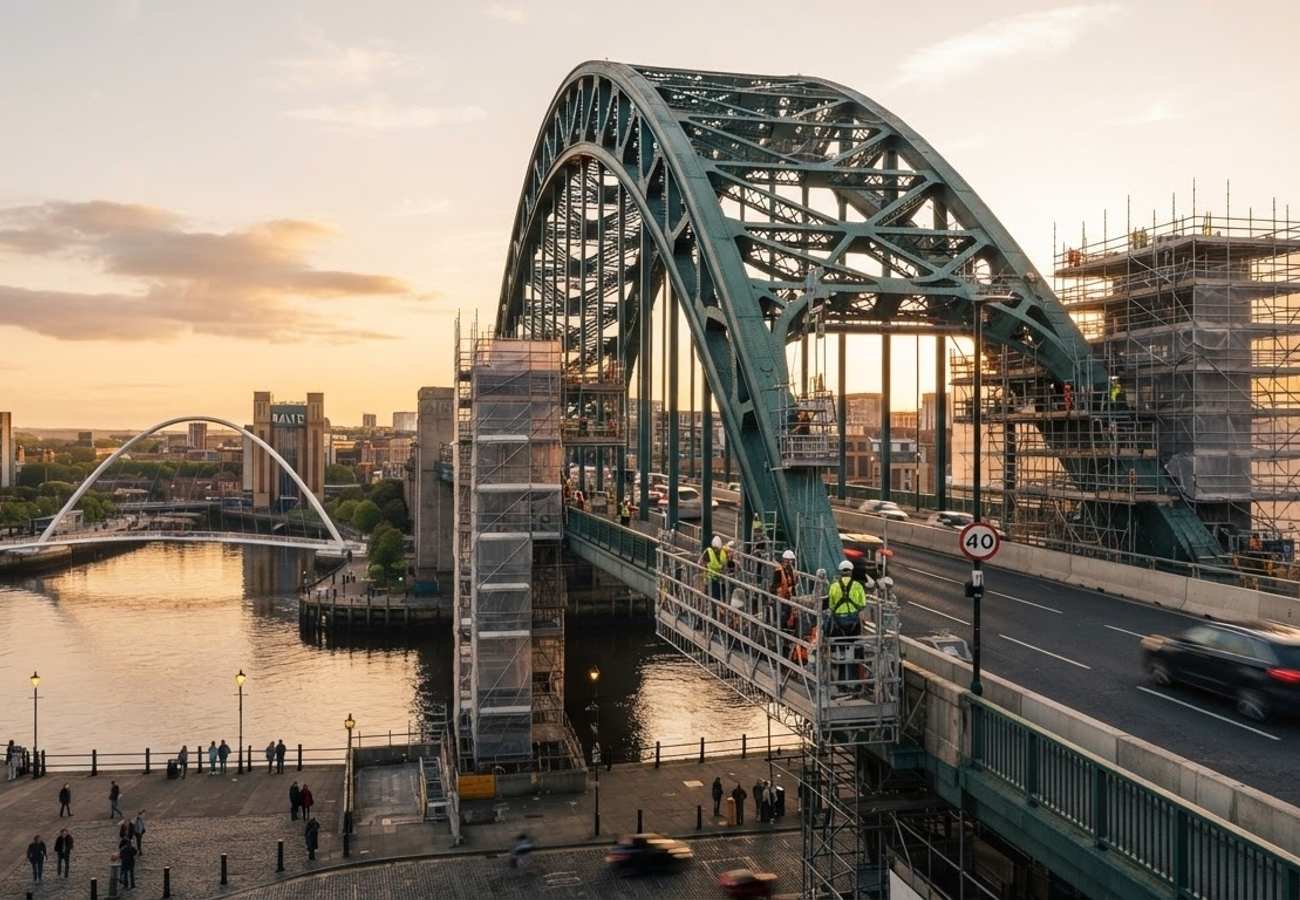
Image generated by AI
Drivers navigating the corridor between Newcastle and Gateshead must account for sustained transit delays as the Tyne Bridge restoration enforces a long-term 40mph speed limit and significant lane restrictions.
The Grade II* listed Tyne Bridge is currently undergoing an intensive, multi-year structural overhaul designed to ensure the landmark's resilience for several decades. To facilitate these repairs while keeping the crossing operational, Newcastle City Council and project engineers have implemented a phased traffic management strategy that prioritizes structural safety over vehicle throughput.
The scope of the restoration is extensive, involving grit blasting, steelwork repairs, and a full repainting in the signature Hollybush Green. Additionally, the project encompasses drainage upgrades, masonry repairs, and the renewal of bridge joints and deck waterproofing. Because the bridge is being stripped back and enclosed in encapsulated scaffolding, the operational capacity has been significantly reduced.
Transit Restrictions and Route Specifications
The current phase of the restoration has effectively halved the bridge's capacity. To protect workers operating in close proximity to live traffic and to manage the narrowed lane widths, a strict 40mph speed limit is in effect. This limit is not a temporary measure but a long-term requirement linked to the 20-phase scaffolding sequence used to avoid overloading the structure during critical strengthening works.
| Parameter | Current Status / Specification | Impact on Transit |
|---|---|---|
| Speed Limit | 40mph (Strictly Enforced) | Increased transit time across the span |
| Lane Configuration | One lane in each direction | Reduced throughput; peak-hour congestion |
| Structural Status | Encapsulated scaffolding in place | Narrowed lanes and restricted visibility |
| Primary Works | Steel, masonry, and deck waterproofing | Long-term duration (Multi-year project) |
| Enforcement | Active camera monitoring | High risk of penalties for speed violations |
Traveler Logistics Guide: Navigating Tyneside
From a ground-level perspective, the best way to navigate the current disruption is to treat the Tyne Bridge as a "last resort" for cross-river transit during peak hours. The reduction to a single lane in each direction creates a bottleneck that is highly susceptible to compounding delays if a single vehicle breaks down or a minor collision occurs.
Optimal Route Diversions To avoid the Newcastle city center congestion, drivers should pivot to the following trunk routes:
- The A1 and A19: Recommended for through-traffic bypassing the city core.
- Tyne Tunnel: The most efficient alternative for long-distance transit between the north and south banks.
- Scotswood Bridge: A viable alternative for those accessing western Newcastle.
Connection & Timing Advice If you must use the Tyne Bridge, avoid the weekday morning and evening peaks. For those heading to the Quayside or city center for events, factor in an additional 20-30 minutes of transit time. From a logistics standpoint, utilizing regional rail or Metro services is the only way to guarantee a predictable arrival time, as these modes bypass the road network bottlenecks entirely.
Digital & Compliance Notes Motorists should be aware that enforcement cameras are active on key corridors. Compliance with the 40mph limit is critical not only for legal reasons but to prevent "accordion-effect" braking in the narrowed work zones, which frequently leads to rear-end collisions.
Infrastructure Impact Assessment
The restoration of the Tyne Bridge is a critical component of a wider investment package in Newcastle’s road network, supported by UK government funding. While the current disruption is significant, the project is essential to prevent the eventual full closure of the bridge, which would be catastrophic for regional logistics.
The impact extends beyond road users; the Port of Tyne has issued notices to mariners confirming that scaffolding and work platforms extend into the navigational envelope of the River Tyne. This indicates a total-corridor management approach, affecting both maritime and terrestrial logistics.
While nearby work on the Central Motorway (A167M) is nearing completion, the intersection of these two major projects has created a complex pattern of lane closures that continues to stress the inner Newcastle network. The transition back to full capacity will only occur once the final phases of deck refurbishment and repainting are completed.
Preserving a landmark requires patience, but avoiding the 40mph zone entirely is the only way to ensure a timely arrival.
Related Travel Guides
Disclaimer
This article is for informational and educational purposes only. It does not constitute legal, financial, or professional advice. While we strive to provide accurate and up-to-date information, travel policies, regulations, and conditions change rapidly. Always verify information with official sources before making travel decisions. Nomad Lawyer makes no representations about the accuracy, reliability, completeness, or suitability of the information provided. Readers should consult qualified professionals for advice specific to their circumstances. The views expressed in this article are those of the author and do not necessarily reflect the views of Nomad Lawyer.
Kunal K Choudhary
Co-Founder & Contributor
A passionate traveller and tech enthusiast. Kunal contributes to the vision and growth of Nomad Lawyer, bringing fresh perspectives and driving the community forward.
Learn more about our team →