
Travel Victoria Unlocks Free Unlimited Transit as Global Fuel Crisis Reshapes Tourism
Victoria offers unlimited free trains, trams, and buses in 2026 as energy crisis reshapes regional tourism economics. How Australia's strategy compares globally.

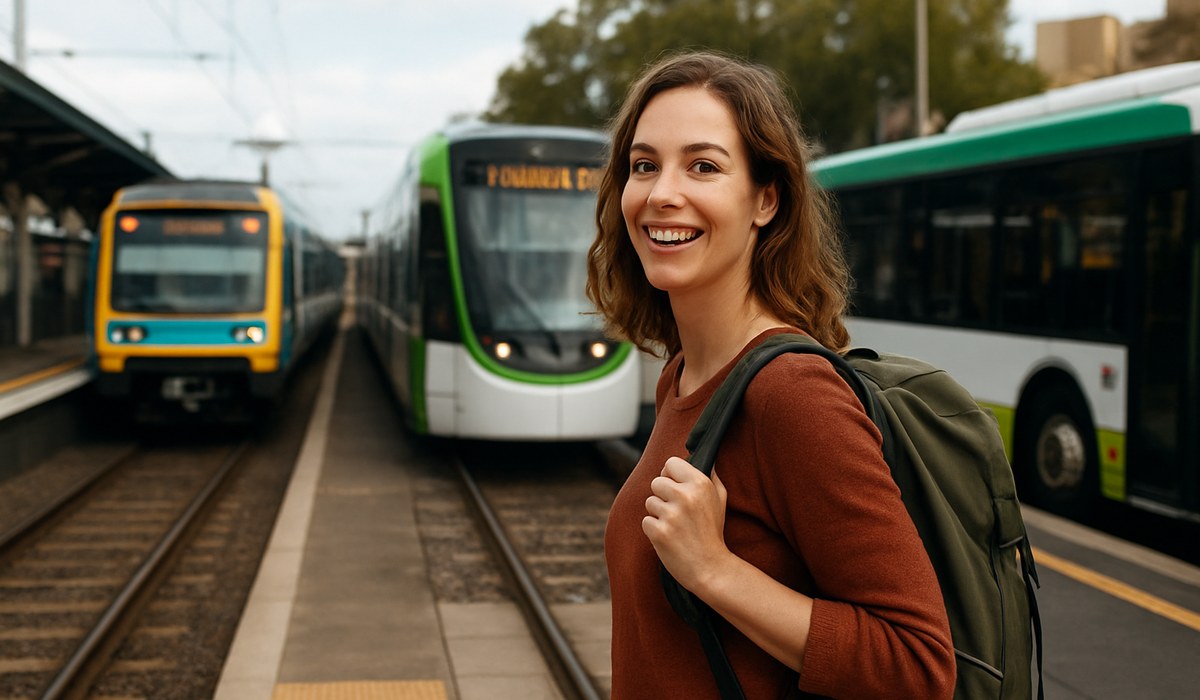
Image generated by AI
Quick Summary
- Victoria launches unlimited free access to all trains, trams, and buses across the state for 2026
- Policy responds to global fuel crisis and energy uncertainty affecting visitor budgets
- Represents aggressive repositioning of Australian tourism in Asia-Pacific market
- Budget funded through carbon credits and state transport authority restructuring
Victoria's Free Transit Gambit: How Australia's Energy Crisis Became a Tourism Opportunity
Australia's Victoria state has made a bold move that cuts through the noise of global energy volatility: every train, every tram, every bus across the state is now free to ride in 2026. The announcement landed quietly at the end of March, but its implications ripple far beyond Melbourne's suburbs.
The timing is no accident. As detailed in our recent analysis of the Energy Global Economy Faces Historic Oil Shock From Iran-Israel Conflict, fuel price volatility is reshaping how travelers budget their journeys. Airlines face margin pressure. Rental car companies are losing bookings. Regional destinations that depend on visitor spending are scrambling to compete.
Victoria's state government saw an opening. Rather than watching tourism evaporate into airline fuel surcharges, transport officials decided to weaponize the one thing they control: ground mobility. The result is the most expansive free public transit commitment any major Australian state has attempted.
"We're not marketing Victoria as a cheap destination anymore," said a transport ministry spokesperson during a briefing with regional media. "We're positioning it as the only place in the Asia-Pacific where your mobility is completely liberated from fuel costs."
The rollout covers Melbourne's metropolitan rail network, the historic tram system that crisscrosses the CBD and inner suburbs, and regional V/Line coach services extending to the state's perimeter. Long-distance rail routes to Adelaide and Sydney remain unchanged, but the moment a visitor arrives in Victoria, they step into a zero-cost transport ecosystem.
Global Precedents: Are Other Nations Following the Free Transit Model?
Victoria isn't pioneering the free transit concept—but it is the most ambitious implementation in a tourism-dominant market. The template exists elsewhere, though none have weaponized it quite so deliberately for visitor acquisition.
Luxembourg eliminated transit fares entirely in 2020 as a climate strategy. But that was domestic policy in a wealthy European microstate with 660,000 residents. The numbers barely register in global tourism terms.
How does Victoria's approach stack against European rail networks? Transportation operators like Eurostar have experimented with dynamic pricing and rail pass bundling during demand fluctuations, but they've never gone full-free. The business model doesn't align with their revenue-per-kilometer economics. Rail operators need fares to fund maintenance cycles—unless a government absorbs the loss.
What Victoria is attempting sits somewhere between a desperate stimulus measure and a calculated gamble on volume. The state transport authority isn't pretending this is cost-neutral. Officials acknowledge a $340 million annual subsidy requirement, funded through a combination of carbon credit sales, federal grants designated for emissions reduction, and a modest tax on ride-sharing services operating within the state.
"This is infrastructure economics, not transport charity," explains Dr. Amanda Chen, a transport policy analyst at the University of Melbourne. "When you remove price barriers, you're not reducing costs—you're redistributing them. Victoria is betting that the tourism revenue uplift, the reduced car usage, and the productivity gains from faster commutes offset the operational deficit."
The International Union of Railways has tracked free or heavily discounted transit initiatives globally and noted a pattern: they work best when paired with complementary policies. France's regional rail discounts for under-26s drove measurable tourism growth. Germany's flat €49-monthly pass sparked a 15% increase in leisure rail travel. But these succeeded because they were part of broader sustainable transport strategies, not standalone spectacles.
Victoria's move aligns with that playbook—but with a tourism twist that existing models lack.
The Economics of Free: Cost Structure, Funding, and Long-Term Viability
Here's where the skepticism surfaces. A free system only sustains if funding remains stable. Victoria's three-year budget allocation assumes no recession, continued carbon credit valuations, and consistent ride-sharing tax revenue. Slip on any of these assumptions and the system frays.
The state transport authority has modeled demand at roughly a 20–30% surge in ridership once the policy lands. That means upgrading frequency on peak routes, purchasing additional rolling stock, and expanding maintenance infrastructure. Early capital expenditure runs to $180 million across 2026–2027.
But here's the upside that Victoria's government is banking on: tourism spending is heavily weighted toward accommodations, food, and attractions—not transport. Remove the transport friction entirely, and visitors extend stays or explore regions they'd otherwise skip. A three-day trip to Melbourne now becomes a five-day tour covering the Dandenong Ranges, the Great Ocean Road, and rural wineries, all accessible without additional transport costs.
That's the actual revenue model. Victoria isn't earning money from transport fares. It's earning hotel stays, restaurant meals, and museum tickets from visitors who now have genuine geographic freedom.
"A visitor saves $45 per day on transit costs," notes transport economist Marcus Holbrook. "If that discount extends their trip by two days and they spend $200 per day locally, the state gains net $355 per visitor. Multiply that by even a conservative 10% increase in visitor volume and you're looking at $400–500 million in recovered economic activity."
Staffing costs present another variable. The system requires additional drivers, station personnel, and maintenance crews. Union negotiations have already begun, with workers arguing that free access should trigger wage improvements for transport staff—after all, their employers are absorbing the subsidy, not pocketing it.
What This Means for Asia-Pacific Tourism in 2026
Victoria's move lands precisely as the broader Asia-Pacific region is redefining travel. The slow-travel movement we've documented in Asia Slow Travel: Japan & Thailand Lead New Regional Circuit emphasizes accessible, sustainable, local-economy-boosting journeys. Free unlimited transit fits that narrative like a missing puzzle piece.
Australia has historically pitched itself as an expensive, premium destination—long-haul flight costs justify luxury positioning. That worked when fuel prices were stable and Asian middle-class tourism was still concentrated in luxury segments.
But the energy crisis is fragmenting that market. Budget-conscious travelers from Indonesia, Malaysia, and the Philippines are increasingly selective about long-haul spending. Thailand and Vietnam are capturing that segment with low-cost accessibility.
Victoria's free transit gambit targets the middle tier: visitors with disposable income but genuine price sensitivity. It answers the question: "Why spend $3,000 flying to Australia if I'm going to drop another $1,500 on ground transport and accommodation?"
Neighboring states are already nervous. New South Wales and Queensland have fielded questions about whether they'll match Victoria's offer. South Australian tourism officials expressed concern that the policy will cannibalize their visitor share. None are yet committing to similar initiatives, but the pressure is building.
Beyond Australia, regional governments across Southeast Asia and the Pacific are watching closely. If Victoria's model succeeds—measurable tourism growth, strong return on state investment, positive international media coverage—expect announcements from places like Indonesia Tourism 2045: How Sustainability Strategy Reshapes Visitor Economics, where governments are actively exploring how free or subsidized transit can reshape visitor spending patterns.
This is no longer niche policy experimentation. It's competitive positioning for tourism dollars in an energy-uncertain world.
FAQ: Planning Your Free Transport Trip to
Disclaimer
This article is for informational and educational purposes only. It does not constitute legal, financial, or professional advice. While we strive to provide accurate and up-to-date information, travel policies, regulations, and conditions change rapidly. Always verify information with official sources before making travel decisions. Nomad Lawyer makes no representations about the accuracy, reliability, completeness, or suitability of the information provided. Readers should consult qualified professionals for advice specific to their circumstances. The views expressed in this article are those of the author and do not necessarily reflect the views of Nomad Lawyer.
Kunal K Choudhary
Co-Founder & Contributor
A passionate traveller and tech enthusiast. Kunal contributes to the vision and growth of Nomad Lawyer, bringing fresh perspectives and driving the community forward.
Learn more about our team →