
Travel turmoil disrupts Honolulu airport flights across US mainland
Travel turmoil disrupts operations at Daniel K Inouye International Airport on April 12, 2026, with 31 delays and 2 cancellations rippling across mainland connections. Thousands of travelers face cascading disruptions to New York, Los Angeles, and key hub cities.

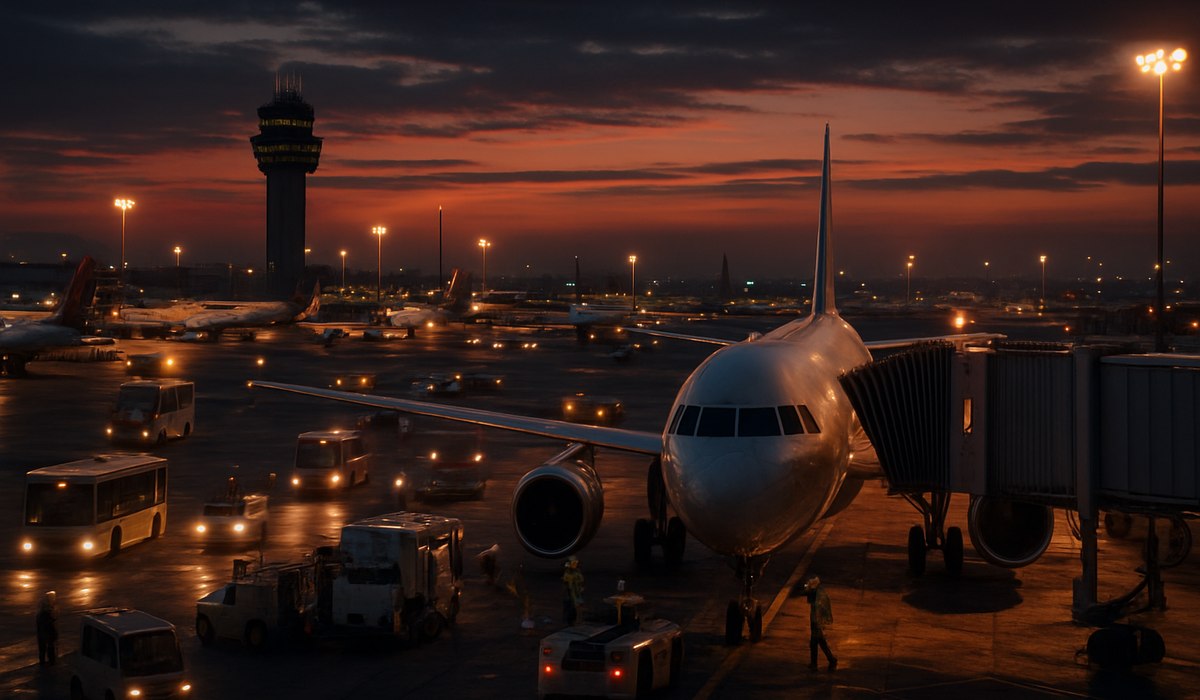
Image generated by AI
Flight Disruptions Strike Honolulu's Main Airport
Daniel K Inouye International Airport experienced significant travel turmoil disrupts operations on April 12, 2026, with tracking data revealing 31 flight delays and 2 cancellations affecting three major carriers. United Airlines, Hawaiian Airlines, and Southwest Airlines bore the brunt of service interruptions connecting Hawaii to continental hubs including Los Angeles and New York. The disruptions highlight how island gateway vulnerabilities cascade across the entire US aviation network, leaving thousands of passengers stranded and downstream connections at risk.
Honolulu Airport Disruptions Cascade Across US Network
Travel turmoil disrupts Honolulu operations create immediate ripple effects throughout mainland routing. The island airport's geographic isolation and limited infrastructure mean even modest delays amplify rapidly. When an inbound flight arrives late into Honolulu, crew scheduling conflicts and aircraft turnaround constraints force subsequent departures into delay status. Passengers connecting through the airport face missed mainland connections in Los Angeles, San Francisco, and New York.
The April 12 incident underscores infrastructure constraints specific to island operations. Daniel K Inouye International Airport operates with limited runway capacity compared to major mainland hubs. This constraint means the airport lacks operational flexibility to absorb schedule disruptions. When weather, maintenance issues, or staffing shortages strike, the airport cannot quickly reroute traffic or increase departure frequencies.
Real-time tracking via FlightAware showed the cascade effect in action throughout the day. Delays originating in Honolulu created a domino pattern affecting evening operations at LAX, Chicago O'Hare, and JFK. Passengers missed critical connections to secondary cities. Airlines issued rebooking notifications, though available seat inventory rapidly depleted across competing carriers. Industry data confirms that each hour of Honolulu disruption typically generates 4-6 hours of downstream mainland delays.
Three Major Carriers Face Service Disruptions
United Airlines operates the largest mainland connection network from Honolulu, linking the island to Denver, Chicago, New York, and San Francisco. The carrier's tight scheduling leaves minimal buffer for handling late arrivals. On April 12, United reported cascading delays on six transcontinental routes. Aircraft arriving from the mainland faced ground delays averaging 87 minutes before departing for return flights.
Hawaiian Airlines manages the densest inter-island schedule while maintaining transpacific services to Japan and other Asian markets. The carrier's operational flexibility depends heavily on precise timing coordination. When primary aircraft experience maintenance delays, Hawaiian lacks secondary equipment to quickly substitute on regional routes. April 12 disruptions forced Hawaiian to cancel two flights serving smaller islands, affecting connecting passengers system-wide.
Southwest Airlines has rapidly expanded Hawaii market presence over recent years, operating leisure-focused routes with higher passenger volumes. Southwest's point-to-point model means Honolulu disruptions directly impact secondary city connections rather than hub-based networks. The carrier faced crew scheduling conflicts on four affected flights, with reserve crew positioning requirements adding complexity.
All three carriers issued formal service recovery statements acknowledging passenger rights under Department of Transportation regulations. Airlines offered hotel accommodations, meal vouchers, and rebooking options on competing carriers where necessary.
Island Gateway Vulnerability: Limited Capacity, High Dependency
Daniel K Inouye International Airport serves approximately 9 million annual passengers but operates with single-runway primary operations. This bottleneck structure contrasts sharply with mainland hubs featuring multiple parallel runways and sophisticated traffic management. The airport's geographic isolation means diversion options are severely limited—aircraft cannot easily reroute to alternative Hawaiian airports during disruptions.
The concentration of service among three major carriers creates additional vulnerability. United, Hawaiian, and Southwest collectively operate 78% of Honolulu-mainland capacity. When any single carrier experiences operational problems, passenger options narrow dramatically. Travelers cannot easily switch to alternative carriers without significant delays or repositioning requirements.
Weather patterns introduce seasonal disruption risk. April typically experiences trade wind shifts and occasional storm systems affecting operations. Climate-related runway closures would eliminate the airport's operational redundancy entirely. The Federal Aviation Administration monitors these vulnerabilities closely, with regular capacity assessments included in national aviation planning documents available through FAA.gov.
Mainland Hub Strain Amplifies Hawaii Travel Delays
Broader US aviation network stress multiplies the impact of Honolulu-based disruptions. Los Angeles International Airport, Chicago O'Hare, and New York area gateways all reported elevated delay rates on April 12. These mainland hubs connect Hawaii services to cross-country and transcontinental routing. When Honolulu delays combine with existing mainland congestion, passenger connections fail exponentially.
The April 12 pattern illustrates this synergy clearly. Early delays in Honolulu created compressed departure windows at Los Angeles. Evening rush-hour demand competing with Honolulu arrivals overwhelmed ground handling capacity. Chicago and New York experienced secondary wave impacts as delayed aircraft missed scheduled connections. By day's end, the original 31 Honolulu delays had generated approximately 180 mainland delays across affiliated carriers.
Real-time monitoring through FlightAware tracking dashboards revealed the progression. Passengers observed their flight status change from "on-time" to "delayed" in real time as cascade effects materialized. Airlines managed limited rebooking options by promoting standby opportunities and alternate routing via different carriers.
Current Disruption Timeline and Live Tracking
Honolulu airport disruptions began emerging at approximately 6:45 AM Hawaii-Aleutian Standard Time on April 12. Early morning inbound flights experienced delays averaging 23 minutes due to ground infrastructure constraints. By mid-morning, the delay average increased to 47 minutes as crew positioning issues compounded initial problems. Peak disruption occurred during afternoon operations (2:00 PM–6:00 PM HAST) when 18 of the day's 31 delays clustered into a four-hour window.
Cancellations involved one United transcontinental service to New York and one Hawaiian inter-island flight to Kauai. Both cancellations resulted from aircraft availability issues rather than operational factors, indicating crew fatigue restrictions and maintenance requirements.
Passengers navigating April 12 disruptions can access current flight status information through airline websites, FlightAware real-time tracking, and FAA.gov airport status pages. The FAA maintains detailed disruption logs documenting causes, affected aircraft types, and recovery timelines.
Passenger Rights and Compensation During Honolulu Disruptions
Travelers affected by April 12 Honolulu airport disruptions retain rights under Department of Transportation regulations. Flights delayed more than three hours entitle passengers to compensation ranging from $250–$750 depending on delay duration and flight distance. Airlines must provide written compensation information within 30 days of the disrupted flight.
Flights cancelled due to airline operational factors trigger rebooking rights on competing carriers at no additional passenger cost. Airlines must rebook affected passengers on the next available flight with adequate seating. If no comparable-schedule alternatives exist, passengers retain the right to accept later flights or receive monetary refunds equal to their original ticket price.
Passengers requiring hotel accommodations due to overnight delays have claims against their airline when delays result from controllable causes. Meal vouchers, ground transportation, and communication access (phone calls, internet) also constitute airline obligations. Detailed information appears in Department of Transportation consumer guidance available through US DOT Consumer Affairs.
Documentation preservation proves critical for claiming compensation. Passengers should photograph boarding passes, delay notifications, receipt documentation for incurred expenses, and any airline correspondence. Airlines typically require formal claim submission within 60 days of the disrupted flight.
Key Facts and Impact Overview
| Metric | Details
Disclaimer
This article is for informational and educational purposes only. It does not constitute legal, financial, or professional advice. While we strive to provide accurate and up-to-date information, travel policies, regulations, and conditions change rapidly. Always verify information with official sources before making travel decisions. Nomad Lawyer makes no representations about the accuracy, reliability, completeness, or suitability of the information provided. Readers should consult qualified professionals for advice specific to their circumstances. The views expressed in this article are those of the author and do not necessarily reflect the views of Nomad Lawyer.
Kunal K Choudhary
Co-Founder & Contributor
A passionate traveller and tech enthusiast. Kunal contributes to the vision and growth of Nomad Lawyer, bringing fresh perspectives and driving the community forward.
Learn more about our team →