
Travel Turmoil Grips Philadelphia Airports April 6 as Frontier, Republic Airways Ground Flights
Travel turmoil grips Philadelphia International Airport as Frontier Airlines and Republic Airways groundings cascade into widespread domestic and transatlantic delays on April 6, 2026. Three aircraft groundings trigger disruptions across North American networks affecting hundreds of passengers.

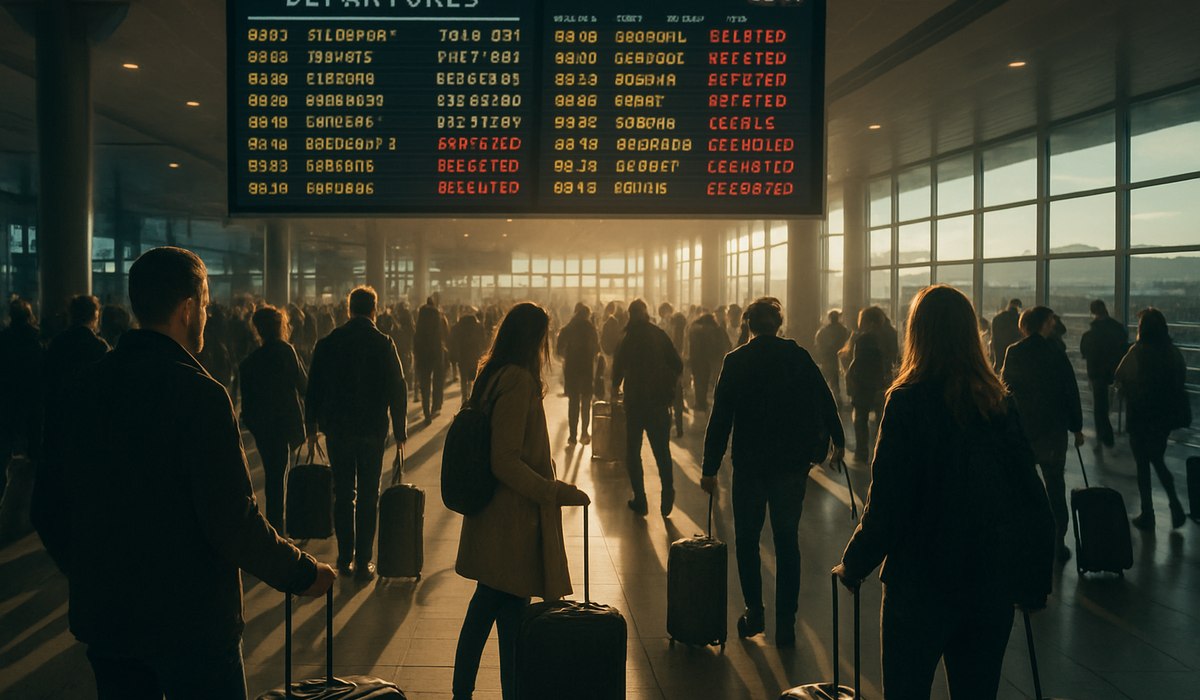
Image generated by AI
Travel Turmoil Grips Philadelphia as Aircraft Groundings Cascade Across Networks
Frontier Airlines and Republic Airways grounded three aircraft at Philadelphia International Airport on April 6, 2026, triggering a domino effect of cancellations and delays across domestic and transatlantic routes. The operational disruption affected hundreds of passengers booked on services to Buffalo, Santo Domingo, Atlanta, London, and Dublin, with ripple effects extending throughout North American aviation networks during peak spring travel season.
The cascading disruptions underscore how concentrated grounding events at major hub airports can paralyze regional and long-haul connectivity. Early morning cancellations created gaps in aircraft rotation and crew scheduling, forcing carriers to retimeabled departures throughout the day and forcing connections through alternative hubs.
Groundings at Philadelphia Ripple Across Key Routes
Travel turmoil grips airports when hub-level disruptions interact with lean operational models. Both Frontier's point-to-point network and Republic Airways' regional feeder system depend on reliable aircraft positioning between Philadelphia and spoke cities.
When three flights were grounded simultaneously, the cascading effect materialized within hours. Schedule data shows that services to Buffalo, Santo Domingo, London, Dublin, and Atlanta all experienced altered departure times. The impact proved most severe on routes with limited daily frequencies, where spare aircraft capacity is minimal and next-day rebooking options don't exist.
Frontier's operational model—characterized by direct city-pair service with minimal schedule buffers—meant that one grounded aircraft translated into immediate passenger disruptions. Republic Airways' role as a regional feeder for major carriers amplified the effect, as connection passengers were cascaded onto already-full evening and overnight services. According to FlightAware, the delays persisted throughout April 6 as carriers attempted to reposition equipment and manage crew duty-time regulations.
The broader operational context intensified the disruption. Early April 2026 saw elevated congestion across North American networks from weather-related delays on preceding days, leaving carriers with compressed recovery capacity.
Frontier Passengers to Buffalo, Santo Domingo and Atlanta Hit Hard
Frontier customers experienced the most acute disruptions on leisure-focused and visiting-friends-and-relatives routes where schedule flexibility is minimal.
Buffalo-bound travelers faced particular constraints. The Philadelphia-Buffalo corridor operates on limited daily frequencies, and Frontier's grounded departure removed a key morning travel window. Passengers attempting rebooking faced circuitous routing through connecting hubs—potentially adding six to eight hours to journey duration. Seasonal service patterns meant substitute flights often weren't available the same day, forcing trip postponements.
Santo Domingo traffic encountered similar challenges. This popular leisure destination route hosts passengers tied to strict schedules: holiday windows, family reunions, and onward Caribbean connections leave minimal flexibility. The combination of a grounded outbound flight and cascading inbound delays disrupted both directions simultaneously.
Atlanta connectivity demonstrated the broader network fragility. While multiple carriers serve Philadelphia-Atlanta, Frontier's grounding shifted at least one departure from its scheduled slot. Return traffic from Atlanta experienced secondary delays as crews repositioned and aircraft returned from unscheduled holding patterns. This bidirectional disruption on a major domestic corridor underscores how hub-level groundings affect full network connectivity.
Transatlantic Links to London and Dublin Experience Knock-On Delays
The Philadelphia disruption extended beyond domestic networks into international long-haul operations. Republic Airways' critical role as a transatlantic feeder carrier meant that regional groundings directly threatened connection integrity for evening and overnight European departures.
Passengers booked on connecting itineraries from secondary U.S. markets faced compressed connection times. A 90-minute connection requirement through Philadelphia to a London or Dublin overnight departure becomes impossible when feeder flights experience 45-minute delays. According to industry tracking, several passengers were rerouted through Boston and New York hubs, adding significant delays and shifting arrival times into the following calendar day.
Transatlantic sensitivity to upstream disruptions stems from tight scheduling economics on long-haul flights. A London-bound passenger connecting through Philadelphia must clear customs and security, collect baggage, and recheck for the next departure. Even minor delays on the connecting segment breach connection minimums, forcing rebooking onto next-available long-haul flights—often 24+ hours later during busy travel periods when spare business and premium-economy seats are unavailable.
This cascading effect highlights Philadelphia's vulnerability as a transatlantic hub. The airport's role in funneling regional passengers to evening European departures means that operational issues on short segments disproportionately impact long-distance itineraries.
Broader Operational Strain Across North American Networks
The April 6 disruption didn't occur in isolation. Early-spring 2026 saw elevated operational strain across major North American networks from multiple sources: weather delays, aircraft utilization constraints, and congestion at competing hub airports.
When Philadelphia experienced the grounding event, system-wide capacity was already compressed. Airlines had limited spare aircraft available for deployment to Philadelphia, and crew duty-time regulations prevented rapid repositioning. The combination meant that recovery timelines extended into the late evening and early morning of April 7.
Major carriers operating through Philadelphia—including American Airlines, as a primary hub operator—experienced secondary effects even when their own aircraft weren't grounded. Connection traffic from regional partners delayed inbound long-haul operations, and crews exceeding duty-time limits required schedule adjustments on subsequent days.
According to FAA operational data, Philadelphia experienced departure delays averaging 65+ minutes by late afternoon on April 6, with cumulative effects continuing into the evening banking window.
What Travelers Need to Know
Travel turmoil grips airport operations unpredictably, but travelers can take specific actions to protect themselves:
Real-time monitoring: Check FlightAware or your airline's mobile app 24 hours before departure to identify emerging delays or groundings affecting your specific flight.
Connection buffer assessment: If booked on a connection through Philadelphia, verify your minimum connection time exceeds 90 minutes for international connections and 60 minutes for domestic transfers.
Airline communication: Proactively contact your airline if delays are announced, before the airline initiates automatic rebooking onto suboptimal flights.
Documentation preservation: Photograph flight confirmations, booking references, and delay announcements for documentation of compensation claims.
Know your rights: Under US DOT regulations, passengers are entitled to compensation of $250–$550 for domestic flights with arrival delays exceeding 3+ hours, depending on flight distance.
Traveler Action Checklist
- Check real-time flight status on FlightAware 24 hours before departure.
- Review your airline's delay/cancellation policy and familiarize yourself with rebooking procedures.
- If connecting through Philadelphia, verify connection time exceeds minimum by 30 minutes buffer.
- Download your airline's mobile app for push notifications of schedule changes.
- Document all delay announcements with screenshots and booking reference numbers.
- Contact your airline directly before relying on automatic rebooking systems.
- Review your travel insurance policy for coverage of airline-caused delays and cancellations.
- If your flight is cancelled, request alternate routing immediately rather than next-available.
Frequently Asked Questions
Q: What happens to my booking if my Frontier flight was grounded on April 6? Frontier is required to rebook passengers on the next available service to the same destination at no charge. You may also request a full refund. Contact Frontier immediately via their website or phone line to confirm your status.
Q: Am I entitled to compensation for the April 6 disruptions at Philadelphia? Under DOT regulations, you may qualify for
Disclaimer
This article is for informational and educational purposes only. It does not constitute legal, financial, or professional advice. While we strive to provide accurate and up-to-date information, travel policies, regulations, and conditions change rapidly. Always verify information with official sources before making travel decisions. Nomad Lawyer makes no representations about the accuracy, reliability, completeness, or suitability of the information provided. Readers should consult qualified professionals for advice specific to their circumstances. The views expressed in this article are those of the author and do not necessarily reflect the views of Nomad Lawyer.
Kunal K Choudhary
Co-Founder & Contributor
A passionate traveller and tech enthusiast. Kunal contributes to the vision and growth of Nomad Lawyer, bringing fresh perspectives and driving the community forward.
Learn more about our team →