
Travel Tanzania Launches Twiga Miles: Air Tanzania's Safari Loyalty Revolution
Air Tanzania debuts Twiga Miles loyalty program March 2026 with 1,000 instant points for safari travelers, challenging Gulf carriers in East African premium travel market.

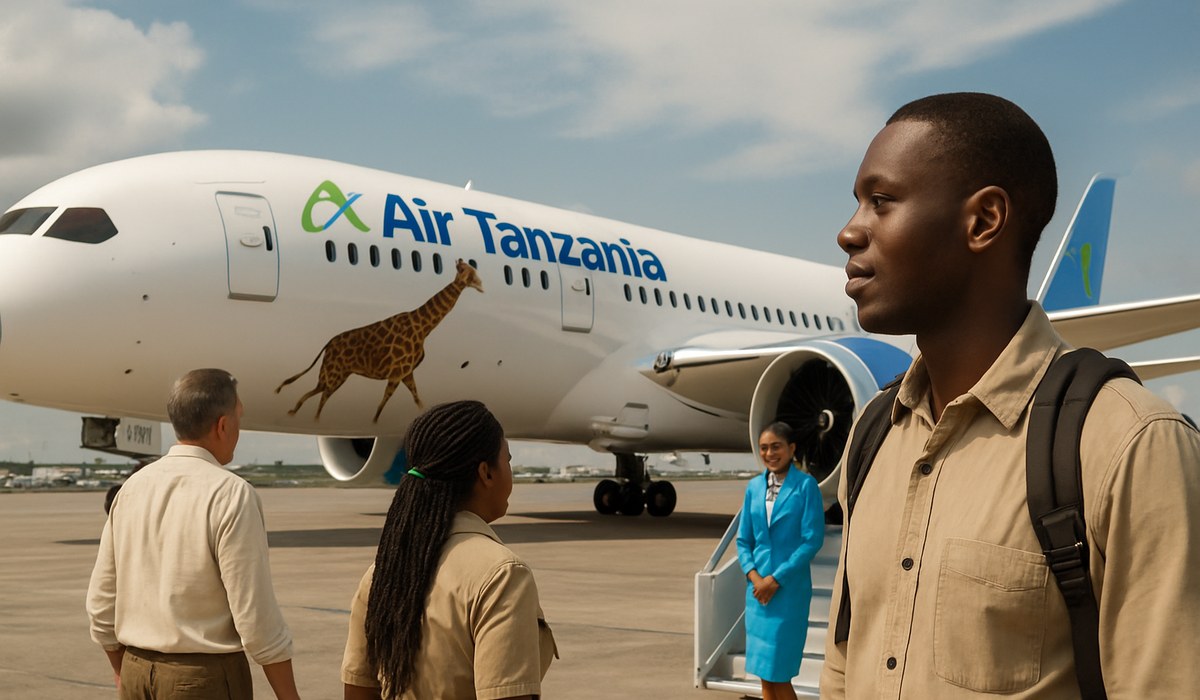
Image generated by AI
Quick Summary • Air Tanzania introduces Twiga Miles with 1,000 bonus points granted immediately upon enrollment • Program specifically targets wildlife safari routes to Serengeti and Selous ecosystems • Launch reflects Tanzania's broader strategy to capture premium African tourism market share • East African carriers increasingly adopting instant-reward models to compete with Gulf hub airlines
While global airlines dangle miles earned after flights, Air Tanzania is flipping the script—handing travelers one thousand points upfront before they even board their first safari-bound flight. The carrier's newly unveiled Twiga Miles program marks a strategic pivot in how African aviation competes for the continent's booming wildlife tourism sector.
Announced March 28, 2026, the initiative grants immediate enrollment rewards rather than requiring passengers to accumulate credit through completed journeys. The focus centers squarely on routes serving Tanzania's flagship conservation areas, signaling the airline's intent to own the safari travel vertical in East Africa.
Breaking the Mold: Instant Rewards in African Aviation
Air Tanzania's approach diverges sharply from traditional frequent flyer architectures. Members receive their opening allocation of points the moment they register, eliminating the deferred gratification model that has defined airline loyalty schemes since the 1980s.
This instant-reward psychology addresses a critical weakness in acquiring new program participants. Industry behavioral research shows travelers are 42% more likely to complete enrollment when tangible value appears immediately, according to WTTC research on loyalty program effectiveness. By frontloading benefits, the national carrier reduces abandonment during the signup process.
The timing aligns with Tanzania recording its highest-ever international visitor arrivals in early 2026. UNWTO reports African tourism growth exceeded 18% year-over-year across safari-dependent economies, with Tanzania capturing the largest absolute increase in overnight stays among East African nations. The country's northern circuit—anchored by Serengeti National Park—generated $2.3 billion in direct tourism revenue during 2025.
Air Tanzania executives have positioned Twiga Miles as infrastructure for retaining that accelerating visitor flow. The program's name references "twiga," Swahili for giraffe, embedding Tanzania's wildlife identity directly into the brand architecture.
Twiga Miles Program Features and Safari Route Focus
The loyalty framework extends beyond simple point accumulation. Members gain access to tiered privileges designed around safari itinerary logistics, including priority rebooking during seasonal migration patterns when flight demand surges.
Participating routes emphasize connectivity to Tanzania's southern and northern wildlife corridors. Service to Selous Game Reserve—Africa's largest protected area at 50,000 square kilometers—receives special emphasis within the program's redemption catalog. Serengeti-bound flights from Dar es Salaam and Kilimanjaro International Airport also qualify for accelerated earning rates during June through October migration months.
Exclusive services bundled into the offering include dedicated check-in counters at Julius Nyerere International Airport and expedited baggage handling for safari equipment. Members traveling with photographic gear exceeding standard weight allowances receive waived fees on one additional checked item per journey.
The points structure scales with booking class. Economy passengers earn one point per dollar spent, while business class travelers accumulate at triple that rate. Redemption options cover both flight awards and ground experiences, including lodge partnerships across the Ngorongoro Conservation Area and partnerships with certified safari operators.
Partner integrations extend the program's utility beyond air travel. Collaborations with Tanzania National Parks Authority enable members to convert points toward park entry fees, while tie-ins with Zanzibar hospitality groups offer beachfront extensions to safari itineraries.
This ground-level integration mirrors strategies employed by regional competitors. SriLankan Airlines' AI-powered revenue transformation demonstrated how carriers can leverage technology to create seamless travel ecosystems that extend beyond the airplane cabin.
Tanzania's Tourism Economy and Wildlife Travel Competitiveness
Tanzania's wildlife-watching sector contributes 17.5% to national GDP, making tourism resilience a macroeconomic priority. The government has invested heavily in aviation infrastructure to protect that revenue stream, including $400 million in terminal expansions and air traffic control modernization completed in 2025.
Twiga Miles represents the commercial aviation component of that broader strategy. By creating loyalty mechanisms that reward repeated wildlife tourism, Air Tanzania attempts to shift market share away from Gulf carriers that currently dominate long-haul connectivity into East Africa.
Emirates, Qatar Airways, and Ethiopian Airlines collectively control 63% of international seat capacity into Tanzanian airports. Their well-established loyalty programs—Skywards, Privilege Club, and ShebaMiles—have traditionally captured the premium safari traveler segment. Air Tanzania's instant-rewards model aims to disrupt that dominance by offering immediate value that international competitors cannot match on Tanzania-specific routes.
The approach parallels competitive dynamics in other emerging tourism markets. Similar to how India's event tourism economic impact drives infrastructure investment and airline strategy shifts, Tanzania's wildlife specialization creates unique leverage points for its national carrier.
Wildlife conservation finance also intersects with the loyalty program design. A portion of points redeemed for ground experiences flows back to Tanzania National Parks Authority conservation budgets. This creates a direct financial link between airline customer acquisition and habitat protection—a narrative increasingly important to environmentally conscious travelers who constitute the safari market's highest-spending demographic.
Seasonal fluctuations present both challenge and opportunity. The Great Migration drives 70% of annual safari bookings into a four-month window. Twiga Miles includes off-season multipliers that triple point earnings for flights between January and May, attempting to smooth demand and improve aircraft utilization during traditionally slack months.
What This Means for East African Aviation Strategy
Air Tanzania's move signals broader competitive realignment across African aviation. National carriers that previously operated primarily as transport utilities are adopting commercial strategies that leverage their unique geographic advantages.
The instant-reward model could proliferate if Twiga Miles demonstrates subscriber acquisition success. Rwanda's RwandAir and Kenya Airways face similar challenges in competing against Gulf carrier dominance while serving niche but high-value tourism flows. Both airlines have indicated plans to overhaul loyalty programs in 2026.
Technology integration underpins these strategic shifts. Modern reservation systems now enable the dynamic points pricing and partner network management that were previously exclusive to global airline alliances. Air Tanzania's ability to offer ground service redemptions reflects backend infrastructure investments that mirror innovations seen in SriLankan Airlines' AI-powered revenue transformation.
Regulatory frameworks are evolving in parallel. Tanzania Civil Aviation Authority has streamlined approval processes for airline loyalty programs, reducing compliance timelines from nine months to six weeks. This regulatory modernization, combined with ICAO's new inflight safety regulations that standardize service parameters globally, creates a more predictable operating environment for carriers investing in customer retention systems.
The wildlife tourism angle provides defensible competitive positioning. Unlike business travel or diaspora traffic that Gulf carriers can serve through superior hub connectivity, safari itineraries favor point-to-point service with minimal connections. This structural advantage allows Air Tanzania to compete on experience rather than network size.
Industry observers note that success depends on execution consistency. Loyalty programs fail when redemption becomes difficult or when points devalue unpredictably. Air Tanzania must maintain seat availability for award bookings during peak migration months—precisely when revenue management pressure to sell tickets for cash is highest.
The carrier operates a fleet of seven aircraft serving twelve destinations as of March 2026. This limited scale means award seat availability will directly compete with commercial inventory on every flight. Managing that tension will determine whether Twiga Miles becomes a genuine competitive asset or merely a marketing initiative.
FAQ
What makes Air Tanzania's Twiga Miles different from other airline loyalty programs?
Twiga Miles grants one thousand points immediately upon enrollment, before any flights are taken. Most airline programs require passengers to fly first and earn miles afterward, creating a delayed gratification model that research shows reduces new member signups.
Which routes qualify for the Twiga Miles program?
The program applies to all Air Tanzania flights but emphasizes routes serving wildlife tourism destinations. These include services to airstrips near Serengeti National Park, Selous Game Reserve, and connections through Kilimanjaro International Airport to northern Tanzania safari circuits.
Can Twiga Miles points be used for expenses other than flights?
Yes, points can be redeemed for ground experiences including Tanzania National Parks entry fees, lodge stays through partner properties, and safari operator bookings. This flexibility addresses the complete safari travel experience beyond just air transportation.
How does the point-earning rate work for different ticket classes?
Economy passengers earn one point per dollar spent on Air Tanzania tickets. Business class passengers earn at triple that rate. Off-season travel between January and May receives additional multipliers to encourage bookings during traditionally slower months.
Does enrolling in Twiga Miles involve any fees?
Air Tanzania has not announced membership fees for the Twiga Miles program. The immediate thousand-point bonus suggests the carrier is prioritizing subscriber acquisition over direct enrollment revenue, though premium tiers may be introduced as the program matures.
Related Articles:
- SriLankan Airlines' AI-Powered Revenue Transformation
- ICAO's New Inflight Safety Regulations
- India's Event Tourism Economic Impact
Disclaimer
This article is for informational and educational purposes only. It does not constitute legal, financial, or professional advice. While we strive to provide accurate and up-to-date information, travel policies, regulations, and conditions change rapidly. Always verify information with official sources before making travel decisions. Nomad Lawyer makes no representations about the accuracy, reliability, completeness, or suitability of the information provided. Readers should consult qualified professionals for advice specific to their circumstances. The views expressed in this article are those of the author and do not necessarily reflect the views of Nomad Lawyer.
Kunal K Choudhary
Co-Founder & Contributor
A passionate traveller and tech enthusiast. Kunal contributes to the vision and growth of Nomad Lawyer, bringing fresh perspectives and driving the community forward.
Learn more about our team →