
Travel Kenya Airways and Seven African Nations Launch Tourism Revenue Alliance
Kenya Airways, Qatar Airways, and Marriott back TOICE 2026 as South Africa, Ghana, Egypt, Morocco, Nigeria, Tunisia, and Uganda coordinate infrastructure to multiply tourism revenue in Africa.

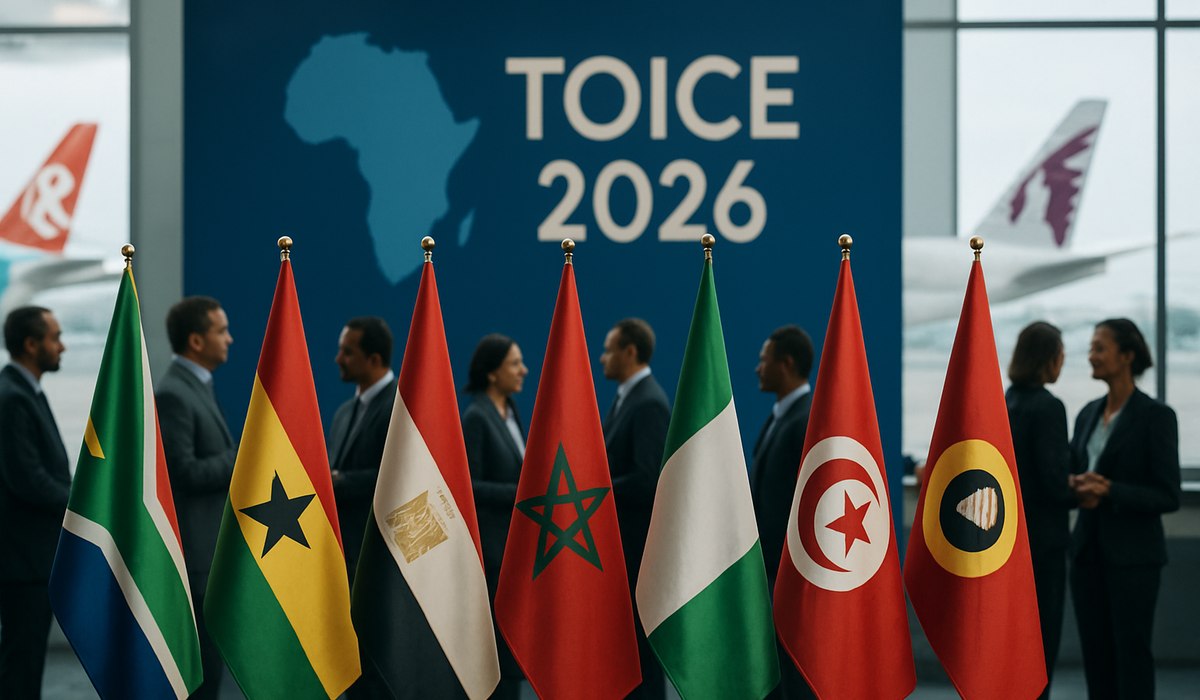
Image generated by AI
Quick Summary
- Seven African nations—South Africa, Kenya, Ghana, Egypt, Morocco, Nigeria, Tunisia, and Uganda—are coordinating a unified tourism expansion through TOICE 2026
- Kenya Airways, Qatar Airways, and Marriott International have signed on as strategic partners for the continental tourism conference
- The collaboration marks Africa's first multi-country aviation and hospitality partnership designed to synchronize infrastructure development and capture post-pandemic travel revenue
- Industry analysts view the partnership structure as a competitive response to Southeast Asia's coordinated tourism marketing campaigns
While global tourism hotspots wrestle with overcrowding, a different narrative is unfolding across Africa. Seven nations representing the continent's most diverse travel offerings—from South Africa's wine routes to Egypt's ancient monuments—have aligned behind a single initiative that could reshape Africa's position in global tourism rankings. Travel Kenya Airways announced its partnership alongside Qatar Airways and Marriott for the Tourism and Investment Conference for Economic Empowerment (TOICE) 2026, a gathering designed to translate collaborative planning into measurable visitor arrivals and hospitality revenue.
The timing carries strategic weight. According to UN World Tourism Organization data on African tourism growth{:target="_blank" rel="noopener noreferrer"}, the continent currently captures just five percent of global international arrivals despite possessing forty-five percent of the world's wildlife reserves and eight UNESCO World Heritage Sites among the seven participating countries alone. TOICE 2026 represents an attempt to close that gap through synchronized aviation route expansion, standardized visa processing, and coordinated marketing budgets pooled across national tourism boards.
Why Seven African Nations Are Betting on Coordinated Tourism Infrastructure
The partnership architecture differs fundamentally from past African tourism initiatives. Rather than competing for the same travelers, South Africa, Kenya, Ghana, Egypt, Morocco, Nigeria, Tunisia, and Uganda are developing complementary route networks and shared booking platforms. Ghana's tourism minister announced plans for regional travel circuits that bundle West African cultural sites with East African safari experiences, acknowledging that most long-haul visitors want multi-country itineraries but face prohibitive visa costs when crossing borders.
Kenya Airways' participation provides crucial connectivity. The Nairobi hub already serves as a transfer point between Europe and southern African destinations, but the airline has committed to introducing intra-African routes specifically designed for multi-country tourism packages. New service connecting Accra, Kampala, and Marrakech represents the kind of regional integration that travel Kenya Airways executives believe will unlock visitor spending currently lost to fragmented itineraries.
Egypt brings an established tourism apparatus but seeks to extend average visitor stays beyond Cairo and the Pyramids corridor. The country's TOICE representatives outlined plans for Red Sea resort packages marketed alongside Tunisia's Mediterranean properties, creating North African coastal alternatives to European summer destinations. Morocco contributes its proven success in converting cultural heritage into hospitality revenue—the country's riads and hammam experiences generate higher per-visitor spending than most African destinations.
Nigeria's involvement signals West Africa's infrastructure readiness. Lagos now handles five million annual passengers through its renovated terminal, and the government has fast-tracked visa-on-arrival eligibility for seventy-nine countries. Uganda positions its gorilla trekking permits and conservation-focused tourism models as premium products, deliberately avoiding mass-market strategies. South Africa anchors the partnership with established wine tourism infrastructure and luxury safari lodges that demonstrate what mature African tourism markets can achieve.
What Qatar Airways and Marriott Partnerships Signal About Africa's Aviation and Hospitality Gaps
Qatar Airways' commitment as TOICE 2026's aviation partner carries particular significance given the carrier's recent route challenges. While Qatar Airways' network faces operational challenges including March schedule disruptions, the airline's strategic investment in African connectivity reveals long-term confidence in the continent's tourism trajectory. The Doha hub provides one-stop access from Asian markets—particularly India and China—where African tourism awareness remains limited despite growing outbound travel spending.
The airline partnership addresses Africa's most persistent infrastructure constraint: insufficient direct long-haul capacity. Current aviation networks force travelers from North America or East Asia through European hubs, adding eight to twelve hours to total journey times. Kenya Airways and Qatar Airways plan to introduce codeshare agreements that reduce connection times and simplify ticketing for multi-country African itineraries. This coordination mirrors strategies employed by Vietnam Airlines' aggressive expansion into emerging markets, where aviation partnerships unlocked tourist flows by solving connectivity bottlenecks.
Marriott International's participation addresses hospitality inventory gaps that limit visitor capacity even when flight access improves. The hotel group announced plans to develop properties in secondary cities across all seven countries, moving beyond capital-city business hotels toward resort and boutique properties in tourism zones. Tunisia's Mediterranean coastline, Ghana's Cape Coast region, and Uganda's national park gateways will receive priority development under the TOICE framework.
Industry observers note that Marriott's investment follows traveler sentiment shifts documented in Tripadvisor's emerging African destination rankings{:target="_blank" rel="noopener noreferrer"}, where authentic cultural experiences and wildlife encounters now outrank beach resorts in traveler interest for African destinations. The hospitality giant's property pipeline includes eco-lodges and heritage conversions designed to capture demand for sustainable and culturally immersive experiences—a positioning that aligns with conservation-focused tourism models gaining traction in competitive destinations worldwide.
Revenue Multiplication Strategy: How TOICE 2026 Plans to Convert Coordination Into Bookings
TOICE 2026's revenue projection methodology centers on extending visitor stays across borders rather than simply increasing arrival counts. Current average stays in participating countries range from 4.2 nights in Egypt to 8.7 nights in South Africa. The conference targets a regional average of twelve nights by creating visa-free corridors and bundled multi-country packages that reduce the administrative friction currently discouraging extended itineraries.
Financial modeling presented in pre-conference briefings calculates that each additional night generates approximately $180 in direct spending on accommodation, meals, transportation, and experiences. Applied across the seven countries' combined target of fifteen million additional visitor-nights by 2028, the initiative projects $2.7 billion in incremental tourism revenue. Those figures exclude indirect economic impacts from job creation, agricultural supply chains serving hotels, and infrastructure improvements that benefit both tourism and local populations.
The partnership structure includes shared marketing funds totaling $120 million across 2026 and 2027, unprecedented cooperation among African nations that typically compete for limited travel marketing budgets. Campaign strategies will emphasize regional diversity rather than individual country selling points. Creative concepts tested in focus groups position Africa as "seven countries, one journey," directly challenging the perception that African travel requires choosing between distinct regional experiences.
Payment infrastructure standardization represents another revenue multiplier. Kenya's M-Pesa mobile money success provides a template for reducing cash dependency across tourist zones in participating countries. Uniform contactless payment acceptance and dynamic currency conversion at hotels, restaurants, and attraction sites remove transaction friction that currently limits visitor spending in markets where credit card infrastructure remains inconsistent.
Competitive Positioning: Africa's Tourism Play Against Established Asian and Latin American Markets
Africa's coordinated tourism push arrives as global travel patterns shift toward emerging destinations. The seven-nation alliance directly competes with Southeast Asia's established backpacker-to-luxury continuum and Latin America's adventure tourism infrastructure. TOICE 2026 participants acknowledge that African destinations carry perception challenges around health, safety, and accessibility that competitors have already overcome through decades of consistent international marketing.
The partnership counters those perceptions through infrastructure transparency and standardized quality benchmarks. Ghana's tourism board introduced real-time border wait-time tracking and digitized health certificate verification, innovations that address visitor anxiety around unpredictable travel conditions. Morocco shared its tourism police program framework, which other countries plan to adopt to provide visible security resources in high-traffic tourist zones without creating an overly militarized atmosphere.
Wildlife and cultural heritage assets provide differentiation opportunities that conference organizers plan to exploit aggressively. No other region offers comparable safari experiences across multiple countries, and the cultural diversity spanning Mediterranean, Saharan, Sahel, and equatorial African traditions presents narrative richness that travel content creators increasingly value. Uganda's emphasis on gorilla conservation tourism demonstrates how Africa can command premium pricing through exclusive, limited-access experiences that regenerative tourism models enable.
The competitive strategy acknowledges infrastructure deficits while positioning them as opportunities for rapid modernization. Several participating countries plan to leapfrog traditional hotel development by prioritizing distributed accommodation networks—home-stays, community lodges, and glamping operations—that reduce capital requirements while distributing tourism revenue more widely. This approach borrows from successful models in Bhutan and Costa Rica, where controlled growth and sustainability marketing created premium positioning despite late entry into international tourism markets.
Pricing strategies balance affordability with quality perception. Egypt and Morocco already compete effectively on value, offering four-star experiences at three-star prices compared to European alternatives. The challenge lies in preventing race-to-bottom pricing that would undermine revenue targets and attract budget travelers whose spending patterns don't support infrastructure investment. TOICE participants aim to establish minimum quality standards and dynamic pricing mechanisms that capture consumer surplus during peak seasons while maintaining accessibility during shoulder periods.
FAQ: Understanding TOICE 2026 and Africa's Tourism Expansion
What exactly is TOICE 2026 and when does it take place?
The Tourism and Investment Conference for Economic Empowerment (TOICE) 2026 is a pan-African gathering scheduled for late 2026 that brings together government tourism officials, aviation executives, hospitality developers, and travel industry stakeholders from seven participating nations. The conference serves as both a policy coordination forum and an investment showcase designed to connect African tourism projects with international capital.
Why are airlines like Kenya Airways and Qatar Airways essential to this tourism expansion?
Aviation access determines tourism viability for long-haul markets. Kenya Airways provides the intra-African connectivity that allows visitors to efficiently visit multiple countries, while Qatar Airways offers crucial access from Asian source markets through its Doha hub. Without coordinated airline partnerships, infrastructure and marketing investments cannot convert into actual visitor arrivals because travelers lack convenient flight options.
How will ordinary travelers benefit from the seven-country tourism coordination?
Tangible benefits include simplified visa processes, potentially allowing single visas valid across all seven countries; improved flight connections with reduced layover times; standardized quality expectations for hotels and tour operators; and bundled multi-country packages at lower prices than booking each destination separately. Travelers gain access to more diverse experiences within single trips without administrative complexity.
Which African destinations within these seven countries are seeing the most tourism investment?
Current priorities include Ghana's Cape Coast and Ashanti Region cultural sites; Uganda's Bwindi Impenetrable Forest for gorilla trekking; Tunisia's Djerba Island and Carthage archaeological zones; Morocco's Atlas Mountains and southern desert regions; Egypt's Red Sea resorts and Luxor; Nigeria's Lagos entertainment district and Calabar; and South Africa's Garden Route and Kruger private reserves. These areas combine attraction density with existing infrastructure that requires upgrades rather than complete development.
Are there legitimate concerns about whether Africa's tourism infrastructure can handle rapid visitor growth?
Absolutely. Environmental carrying capacity remains a critical concern, particularly around wildlife areas and heritage sites. The seven countries acknowledge that uncontrolled growth could damage the very assets that attract visitors. Conference planning emphasizes phased development tied to infrastructure capacity, waste management systems, and community consultation to ensure local populations benefit rather than experiencing only tourism's negative externalities. Success depends on maintaining this disciplined approach rather than pursuing short-term arrival number targets.
Related Articles:
- Qatar Airways' network faces operational challenges
- Vietnam Airlines' aggressive expansion into emerging markets
- Conservation-focused tourism models gaining traction
Disclaimer
This article is for informational and educational purposes only. It does not constitute legal, financial, or professional advice. While we strive to provide accurate and up-to-date information, travel policies, regulations, and conditions change rapidly. Always verify information with official sources before making travel decisions. Nomad Lawyer makes no representations about the accuracy, reliability, completeness, or suitability of the information provided. Readers should consult qualified professionals for advice specific to their circumstances. The views expressed in this article are those of the author and do not necessarily reflect the views of Nomad Lawyer.
Preeti Gunjan
Contributor & Community Manager
A passionate traveller and community builder. Preeti helps grow the Nomad Lawyer community, fostering engagement and bringing the reader experience to life.
Learn more about our team →