
Flight Cancellations Snarl Routes Through Doha: 2026 Travel Alert
11 flight cancellations snarl routes through Doha's Hamad International Airport in March 2026, affecting Gulf Air, Malaysia Airlines, Virgin Australia and Qatar Airways passengers on routes to Kuala Lumpur, Bahrain, Cairo, and Miami.

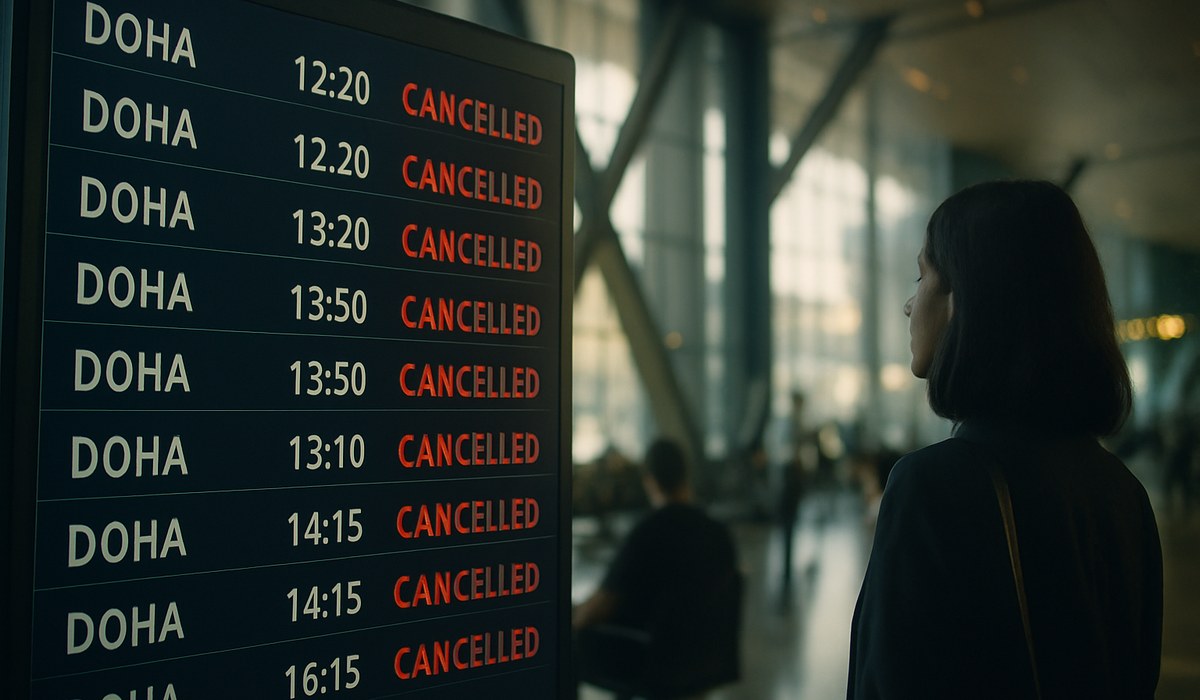
Image generated by AI
Hamad International Airport (DOH) has become the center of major travel disruption as 11 flight cancellations snarl routes through Doha, affecting thousands of passengers connecting between Asia, the Middle East, Europe, and the Americas. Gulf Air, Malaysia Airlines, Virgin Australia, and Qatar Airways have cancelled services linking Doha with Kuala Lumpur, Bahrain, Cairo, Miami, and other international destinations, creating cascading delays across multiple continents as of March 28, 2026.
Regional Airspace Restrictions Continue to Disrupt Doha Hub Operations
Hamad International Airport continues to operate under persistent disruption stemming from Qatari airspace closures and intermittent restrictions that began in late February 2026. The flight cancellations snarl operations at one of the Middle East's busiest transfer hubs, where airlines have been forced to operate revised schedules with limited approved air corridors. Qatar Airways has adjusted aircraft deployment and flight frequencies in response to changing airspace access, while partner carriers including Gulf Air, Malaysia Airlines, and Virgin Australia have recalibrated connectivity strategies through Doha. Aviation tracking data from FlightAware shows that scheduled commercial operations remain vulnerable to short-notice changes, with some repatriation and special services operating alongside reduced regular flights. The unstable regional aviation environment has reshaped traffic patterns across the Gulf, leaving transfer passengers particularly exposed to itinerary changes when connections fail to align.
Doha-Kuala Lumpur Routes Hit Hardest by March 2026 Cancellations
Malaysia Airlines and Qatar Airways codeshare services between Doha and Kuala Lumpur (KUL) have experienced significant frequency reductions throughout March 2026. The routes linking these two hubs serve as critical gateways for passengers traveling onward to Europe, North America, and across Southeast Asia, meaning cancellations strand travelers across multiple continents. Published schedule data shows several rotations between DOH and KUL have been cancelled or retimed as carriers align operations with approved air corridors. Passengers report being rebooked on later dates or rerouted through alternative hubs in East Asia and Europe when original Doha connections are withdrawn. According to IATA operational bulletins, Malaysia Airlines has prioritized trunk routes with high concentrations of stranded passengers, shifting aircraft capacity away from secondary destinations. Travelers holding tickets issued months in advance face irregular communications as reservation systems update on different timelines, with some discovering cancellations only hours before scheduled departure.
Gulf Air Adjusts Bahrain-Doha Services Amid Regional Airspace Complexity
Bahrain-based Gulf Air has navigated an evolving operating environment as flight cancellations snarl short-haul routes between Manama (BAH) and Hamad International Airport. Bahrain's proximity to restricted airspace and the increased use of alternative gateways such as Dammam in Saudi Arabia have complicated planning for itineraries that previously relied on quick regional hops. When a Doha sector is cancelled, passengers are frequently rebooked via other Gulf airports, lengthening travel times and increasing the risk of missed onward connections. Gulf Air operates under interline agreements with Qatar Airways, meaning disrupted segments can affect travelers holding through-tickets marketed by either carrier. Industry sources indicate that some passengers have been rerouted through Kuwait City (KWI) or Dubai (DXB) when Doha connections become unavailable, adding several hours to total journey times. The knock-on effects extend beyond the immediate Bahrain-Doha corridor, as missed connections at DOH force wholesale reissues of multi-segment tickets reaching into Europe and Africa.
Cairo and North African Gateways Face Connectivity Challenges Through Doha
Services covering Cairo (CAI) and other major North African destinations have been affected by the March 2026 disruption wave, particularly where codeshare arrangements link Egypt-bound traffic to the Qatar Airways network. When a single flight in this chain is cancelled, inventory constraints on remaining services limit short-term rebooking options for stranded passengers. Egypt remains a critical transit point for travel between Africa, the Middle East, and Europe, and the reduction of reliable connectivity through Doha has forced some travelers to seek alternative routings via Istanbul, Dubai, or European hubs. According to schedule filings reviewed by aviation analysts, Qatar Airways has maintained reduced frequencies on the Doha-Cairo trunk route throughout March, with aircraft types adjusted to match demand and operational constraints. Passengers report longer wait times for customer service assistance and limited availability on alternative flights during peak travel periods. The US Department of Transportation advises travelers affected by international flight disruptions to document all communications with airlines and request written confirmation of rebooking or refund options.
Miami and Long-Haul US Routes Experience Irregular Operations from Hamad International
Long-haul sectors connecting Doha with Miami (MIA) and other North American cities have seen cancellations and rescheduling as Qatar Airways phases back services and adjusts aircraft deployment. Industry data released in mid-March 2026 indicated that the carrier planned a gradual reinstatement of select long-range routes from Hamad International Airport, including limited frequencies to the United States. In practice, this has resulted in a patchwork of operations where some Miami-bound flights operate as planned while others are removed from schedules or merged, contributing to confusion among passengers holding advance-purchase tickets. Travelers on multi-segment journeys combining partner airlines on a single itinerary face particular challenges, as irregular communications and differing rebooking policies complicate recovery efforts. Because Miami, Doha, and other long-haul gateways are tied together through complex alliance and codeshare structures, a cancelled segment out of DOH can upend itineraries reaching as far as Latin America or secondary US cities. Passengers are advised to monitor flight status through FlightAware and contact airlines directly for rebooking assistance before traveling to the airport.
Virgin Australia Passengers Face Extended Disruption on Doha-Connected Itineraries
Virgin Australia passengers traveling on itineraries that connect through Doha under partnership arrangements with Qatar Airways have experienced extended disruption throughout March 2026. The Australian carrier markets joint itineraries that rely on Qatar Airways-operated segments through Hamad International Airport, linking Australian cities with destinations in Europe, the Middle East, and the Americas. When flight cancellations snarl these connections, passengers may find themselves navigating differing policies on rebooking, refunds, and alternative routing between the two carriers. Virgin Australia has advised affected travelers to contact the airline for rebooking assistance, though reports indicate that wait times for customer service have increased significantly during peak disruption periods. Some passengers have been offered rerouting through alternative hubs such as Singapore (SIN) or Dubai, while others face multi-day delays waiting for available seats on restored Doha services. The partnership model that underpins much of today's international travel is being tested by the persistent disruption at DOH, as coordination between schedules and shared responsibility for disrupted journeys becomes more complex.
| Route | Affected Airlines | Disruption Type | Alternative Hubs | Estimated Recovery Timeline |
|---|---|---|---|---|
| Doha-Kuala Lumpur | Qatar Airways, Malaysia Airlines | Frequency reductions, cancellations | Singapore, Bangkok, Dubai | Gradual through April 2026 |
| Doha-Bahrain | Gulf Air, Qatar Airways | Short-notice cancellations | Kuwait City, Dammam | Variable, dependent on airspace |
| Doha-Cairo | Qatar Airways | Reduced frequencies, inventory constraints | Istanbul, Dubai | Limited improvement expected |
| Doha-Miami | Qatar Airways | Merged services, irregular schedule | European hubs, Dubai | Partial restoration by late April |
| Australia-Doha connections | Virgin Australia, Qatar Airways | Partnership coordination issues | Singapore, Dubai | Case-by-case rebooking |
| Regional Gulf sectors | Multiple carriers | Cascading delays from DOH hub | Abu Dhabi, Muscat | Short-term volatility continues |
What This Means for Travelers
Passengers with upcoming travel through Hamad International Airport should proactively monitor flight status and prepare contingency plans:
- Check flight status 24-48 hours before departure through airline apps or FlightAware, as cancellations may occur with limited advance notice
- Contact your ticketing airline immediately if notified of cancellation to secure rebooking on the next available service or request routing through alternative hubs
- Document all schedule changes and communications with airlines in writing for potential compensation claims under applicable consumer protection regulations
- Consider purchasing flexible tickets or travel insurance that covers disruption when booking future itineraries through affected hubs
- Allow extended connection times (minimum 3-4 hours) when booking travel through Doha during the current disruption period
- If traveling on a multi-airline itinerary, verify which carrier is responsible for rebooking and assistance in the event of missed connections
Frequently Asked Questions
How many flight cancellations snarl operations at Hamad International Airport in March 2026? At least 11 flights operated by Gulf Air, Malaysia Airlines, Virgin Australia, and Qatar Airways have been cancelled as of March 28, 2026, affecting routes linking Doha with Kuala Lumpur, Bahrain, Cairo, Miami, and other destinations. Additional delays and irregular operations continue to impact transfer passengers across the Qatar Airways network.
Which routes through Doha are most affected by the current disruption? The Doha-Kuala Lumpur corridor has experienced the most significant frequency reductions, with cancellations also affecting services to Bahrain, Cairo, and Miami. Short-haul Gulf routes and long-haul connections to North America, Europe, and Australia face ongoing schedule volatility as airlines adjust to airspace restrictions that began in late February 2026.
What are my passenger rights if my flight through Doha is cancelled? Passenger rights depend on your ticketing jurisdiction and the airline's terms of carriage. Under most international regulations, airlines must offer rebooking on the next available flight or a full refund if the service is cancelled. For US-originating tickets, the Department of Transportation requires prompt refunds for cancelled flights. Document all communications and request written confirmation of your options.
When will flight operations through Hamad International Airport return to normal? Airlines estimate gradual service restoration through April 2026 as airspace access improves, but no definitive timeline has been announced. Qatar Airways and partner carriers continue to operate on revised schedules with limited frequencies on key trunk routes. Travelers should expect continued volatility and plan for potential disruption through at least mid-April 2026.
Related Travel Guides
Disclaimer
This article is for informational and educational purposes only. It does not constitute legal, financial, or professional advice. While we strive to provide accurate and up-to-date information, travel policies, regulations, and conditions change rapidly. Always verify information with official sources before making travel decisions. Nomad Lawyer makes no representations about the accuracy, reliability, completeness, or suitability of the information provided. Readers should consult qualified professionals for advice specific to their circumstances. The views expressed in this article are those of the author and do not necessarily reflect the views of Nomad Lawyer.
Preeti Gunjan
Contributor & Community Manager
A passionate traveller and community builder. Preeti helps grow the Nomad Lawyer community, fostering engagement and bringing the reader experience to life.
Learn more about our team →