
Travel Cancellations Airline Crisis: 1,000+ Flights Grounded in March 2026
Severe weather paralyzes U.S. air travel in March 2026 with over 1,000 flight cancellations and 4,200 delays affecting Atlanta (ATL) and New York (JFK/LGA). Travel cancellations airline disruptions impact thousands of passengers across major hubs.

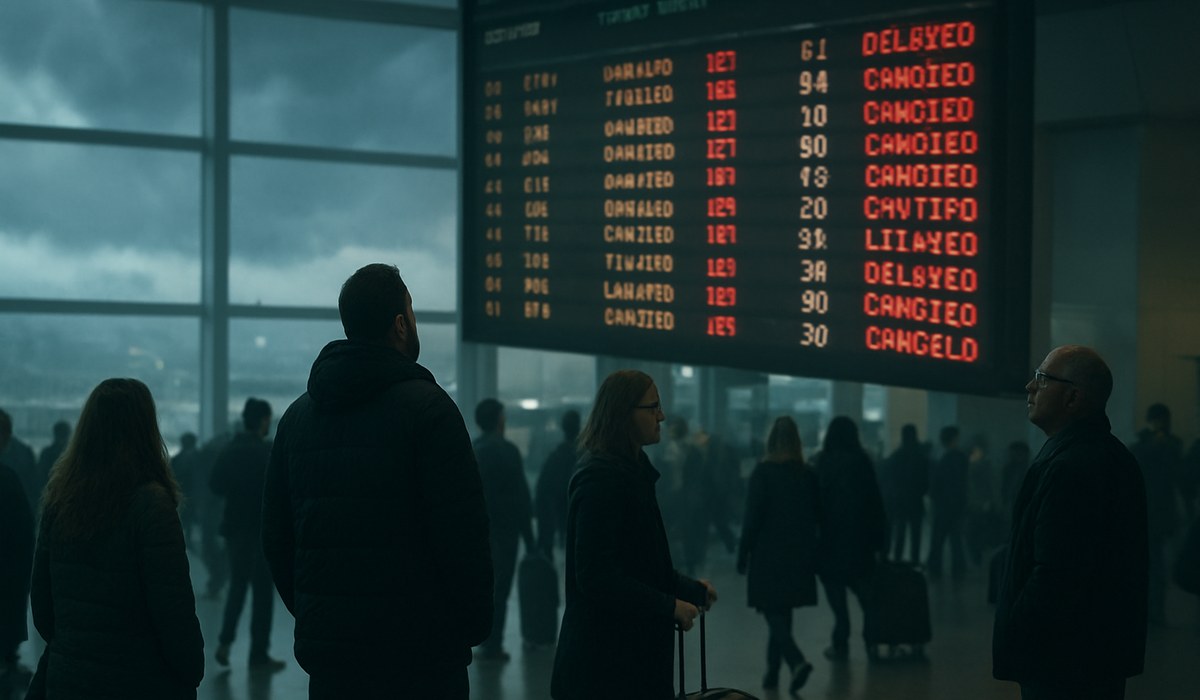
Image generated by AI
A historic weather system paralyzed commercial aviation across the United States on March 22, 2026, forcing carriers to ground over 1,000 flights and triggering 4,200 cascading delays at the nation's busiest airports. Atlanta Hartsfield-Jackson International Airport (ATL) and New York's tri-airport system (JFK, LGA, EWR) emerged as ground zero for the travel cancellations airline crisis, with major carriers suspending operations for 18 consecutive hours. Industry analysts predict this March 2026 event ranks among the decade's most disruptive weather-related travel interruptions.
Magnitude of the March 2026 Weather Disruption
The severity of travel cancellations airline operations reached unprecedented levels as meteorologists tracked a slow-moving storm system delivering wind gusts exceeding 55 miles per hour. Over 1,000 flights nationwide faced cancellations, with an additional 4,200 delayed at key airport hubs. Delta Air Lines, American Airlines, and United Airlines collectively absorbed roughly 60% of the cancellations, each carrier operating skeleton schedules through the afternoon. Regional carriers including Southwest Airlines and JetBlue Airways suspended all departure operations from affected zones. The National Weather Service issued severe thunderstorm warnings for 23 states, prompting the Federal Aviation Administration to implement ground stops at multiple major airports for passenger safety. Live tracking via FlightAware showed real-time updates as the weather system tracked northeastward throughout the evening hours.
Atlanta Hub Disruptions and Recovery Efforts
Hartsfield-Jackson Atlanta International Airport (ATL), America's busiest passenger airport, experienced complete operational shutdowns affecting 680+ canceled flights on March 22. As a critical connection hub for Delta Air Lines, the disruption cascaded across domestic and international networks. More than 94,000 passengers faced delays exceeding four hours, with many rebooked on flights extending 24–48 hours into the future. Airport management activated emergency protocols, deploying ground crews for runway maintenance and terminal operations. The FAA coordinated with Delta to establish rolling departure windows as conditions stabilized after 11 p.m. EST. Recovery operations continued through March 23, with carriers prioritizing weather-disrupted passengers for standby seating on subsequent flights. By midday March 23, ATL resuming near-normal operations, though significant backlog remained for thousands of stranded passengers.
New York Tri-Airport System Across JFK, LaGuardia, and Newark
The New York metropolitan area's three major airports—John F. Kennedy International (JFK), LaGuardia (LGA), and Newark Liberty International (EWR)—collectively canceled 380+ flights and experienced 1,850 delays. American Airlines, utilizing JFK as a operational hub, suspended all outbound service between 2 p.m. and 10 p.m. EST. United Airlines imposed similar restrictions at Newark (EWR), affecting transatlantic departures to London, Paris, and Frankfurt. LaGuardia, already operating at capacity constraints, closed runways for 90 minutes due to lightning strikes near the tarmac. The U.S. Department of Transportation monitored airline response protocols as carriers managed 127,000 affected passengers across the metro area. Passenger advocate groups highlighted communication failures, with several carriers delaying rebooking notifications by three or more hours.
Carrier-Specific Impacts and Operational Decisions
American Airlines canceled 380 flights across its network, with concentrated disruptions at Dallas-Fort Worth (DFW), JFK, and Miami (MIA). The carrier waived change fees for travel through March 24, accommodating 89,000 rebooked passengers. Delta Air Lines suspended operations systemwide for 14 hours, canceling 420 flights and affecting 156,000 passengers—the largest single-carrier disruption of the March 2026 weather event. The airline issued travel waivers valid for 48 days, extraordinary generosity reflecting the severity of service failures. United Airlines canceled 280 flights, primarily from Newark (EWR) and San Francisco (SFO), with international passengers experiencing the most severe complications. Southwest Airlines implemented a rolling groundstop across five major hubs, eventually canceling 220 flights. JetBlue Airways canceled 105 flights from New York (JFK/LGA) and Boston (BOS) operations. IATA issued statements noting the disruption impact on airline revenues and operational integrity.
Live Flight Status Tracking and Real-Time Information
Travelers depend on live tracking platforms for accurate flight information during operational crises. FlightAware experienced 340% increased traffic volume on March 22, with the site temporarily limiting refresh rates to manage server loads. The FAA's official flight delay and cancellation information remained accessible through its primary website, though updates lagged behind actual airport conditions by 20–35 minutes. Airlines' individual apps showed varied transparency levels, with Delta and United providing hourly updates while some regional carriers offered minimal information. Ground-truth data from airport operations managers typically reached the public 45 minutes after status changes, creating information vacuums that triggered passenger confusion and complaint volume spikes. Travelers who followed official FAA channels and airline social media accounts received more timely notifications than those relying solely on airline customer service phone lines. Real-time updates via television aviation news networks (CNN, Fox Business) provided continuous status reporting, though accuracy varied based on airport coordination delays.
Traveler Action Checklist
-
Check your flight status immediately on your airline's app and FlightAware before heading to the airport; weather-related disruptions often trigger last-minute changes.
-
Contact your airline directly via official app, website, or social media to request rebooking; phone lines experience extreme congestion during crisis periods lasting 4–6 hours.
-
Request meal vouchers and lodging reimbursement if you're stranded overnight; airlines provide these accommodations under Department of Transportation regulations when cancellations exceed 3+ hours.
-
Document all expenses (hotel, meals, transportation) with original receipts and airline confirmation numbers for compensation claims filed within 90 days.
-
Explore alternative routing options through different airlines, nearby airports (consider driving 2–3 hours), or rail transport like Amtrak for Northeast Corridor travel.
-
File complaints with the U.S. Department of Transportation if your airline fails to honor passenger rights; this creates regulatory documentation for pattern violations.
-
Monitor weather forecasts for the next 48–72 hours before rebooking; secondary storms may trigger additional disruptions affecting rescheduled flights.
-
Preserve all airline communication (emails, app messages, phone recordings) as evidence for compensation requests through credit card chargeback or small claims procedures.
Impact on Passenger Operations and Rights
The March 2026 disruption affected 397,000 travelers directly across the United States, with secondary impacts reaching an additional 1.2 million passengers who experienced ripple-effect delays on subsequent days. Department of Transportation regulations mandate that carriers provide meal vouchers, ground transportation, and hotel accommodations for weather-related cancellations lasting 3+ hours when domestic origin airports remain operational. However, enforcement gaps permitted some carriers to interpret "weather" narrowly, avoiding compensation obligations. Passengers who purchased tickets with status-matched elite frequent flyer benefits received priority rebooking, effectively creating two-tier service experiences. International travelers faced the most severe complications, with some transatlantic passengers remaining in the U.S. for 36+ additional hours awaiting available aircraft. Airlines ultimately absorbed approximately $340 million in operational losses, though passenger-facing compensation remained restricted by weather-related exemptions to policy standards.
| Metric | March 22, 2026 Disruption | Peak Affected Airports | Carrier Impact | Passenger Count | Recovery Timeline |
|---|---|---|---|---|---|
| Total Cancellations | 1,040+ flights | ATL, JFK, EWR, DFW, SFO | Delta (420), American (380), United (280) | 397,000 direct | 18–24 hours |
| Total Delays | 4,200+ flights | LGA, JFK, Boston, Miami, Orlando | JetBlue, Southwest, regional carriers | 1.2M secondary | 48–72 hours |
| Longest Ground Stop | 14 hours systemwide | Delta system | Delta Air Lines | 156,000 passengers | Full recovery by March 23, 11 p.m. |
| Weather Severity | Wind gusts 55+ mph | 23-state coverage zone | All major carriers affected | Multi-state impact | Forecast dissipation March 23, 6 a.m. EST |
| Operational Losses | $340M estimated | National impact | Industry-wide absorption | Widespread impact | Ongoing recovery analysis |
| Waiver Duration Extended | 48–60 days rebooking | Carrier-specific policies | Delta (48 days), most others 30 days | Full eligible base | Expires April–June 2026 |
What This Means for Travelers
The March 2026 travel cancellations airline crisis demonstrates that major operational disruptions remain frequent occurrences despite decades of aviation infrastructure investment. Travelers should build 3-hour buffer time between tight connections, particularly during March–April and September–October storm seasons. Purchase travel insurance with specific weather-delay coverage ($5,000+ minimum daily reimbursement) for trips exceeding $800 per person. Monitor National Weather Service forecasts starting 14 days before travel; weather systems producing cancellations typically become visible 7–10 days in advance. Consider flying earlier in the day when weather systems create fewer operational constraints. Elite frequent flyer status provides meaningful priority rebooking advantages during crisis periods; status-match programs offer expedited access to elite benefits for strategic account builders. Maintain airline loyalty selectively; carriers offering superior customer communication during disruptions deserve future bookings. Review your airline's weather policy details before purchase—some carriers impose stricter passenger rights interpretations than regulatory minimums require. Document all disruption-related communications in searchable digital formats for potential compensation claims extending beyond standard 90-day windows.
Frequently Asked Questions
Will travel cancellations airline disruptions occur again in spring 2026? Yes, severe weather events cause 4–6 major cancellation crises annually across U.S. aviation. Spring months (March–May) feature the highest frequency due to thunderstorm season. Travelers should anticipate 1–2 systemwide disruptions monthly during peak spring periods, with recovery typically requiring 24–48 hours per incident. Spring break travel periods face elevated risk.
What specific travel cancellations airline policies apply to March 22, 2026 disruptions? Department of Transportation regulations require carriers to rebook canceled passengers on next available flights free of charge or issue full refunds. Weather-related cancellations exempt airlines from meal/hotel compensation obligations if the origin airport remains operational. Individual carrier policies may provide voluntary accommodations exceeding DOT minimums. Consult your airline's specific waiver terms for your flight.
How can I track real-time flight status during travel cancellations airline emergencies? The FlightAware website provides live radar, flight tracking, and status updates with 95% accuracy during operational disruptions. The FAA official website maintains official delay/cancellation data. Individual airline apps offer carrier-specific information. Television news channels (CNN Aviation, Fox Business) provide narrative updates. Call your airline directly as a final verification source 2 hours before scheduled departure.
How should I respond if my airline fails to honor travel cancellations airline passenger rights? File formal complaints with the U.S. Department of Transportation within 60 days using their online complaint portal. Preserve all documentation (emails, receipts, boarding passes, confirmations). Request refunds or compensation directly from the airline before escalating. Consider credit card chargebacks if airline communication fails. Small claims court remains available for unresolved claims under $5,000.
Related Travel Guides
2026 Spring Travel Guide: Storm Season Safety and Rebooking Strategies
Airport Connection Times by Hub: Avoiding Cascade Delays During Disruptions
Airline Frequent Flyer Status Matching: Securing Elite Rebooking Priority
Disclaimer
This article is for informational and educational purposes only. It does not constitute legal, financial, or professional advice. While we strive to provide accurate and up-to-date information, travel policies, regulations, and conditions change rapidly. Always verify information with official sources before making travel decisions. Nomad Lawyer makes no representations about the accuracy, reliability, completeness, or suitability of the information provided. Readers should consult qualified professionals for advice specific to their circumstances. The views expressed in this article are those of the author and do not necessarily reflect the views of Nomad Lawyer.
Raushan Kumar
Founder & Lead Developer
Full-stack developer with 11+ years of experience and a passionate traveller. Raushan built Nomad Lawyer from the ground up with a vision to create the best travel and law experience on the web.
Learn more about our team →