
Travel Delays Latest: San Diego Joins Major US Hubs in March 2026 Disruptions
Travel delays latest reports show San Diego, Los Angeles, Chicago, and New York airports facing surge in cancellations March 2026. [FAA](https://www.faa.gov) ground stops and weather ripple effects disrupt nationwide network.

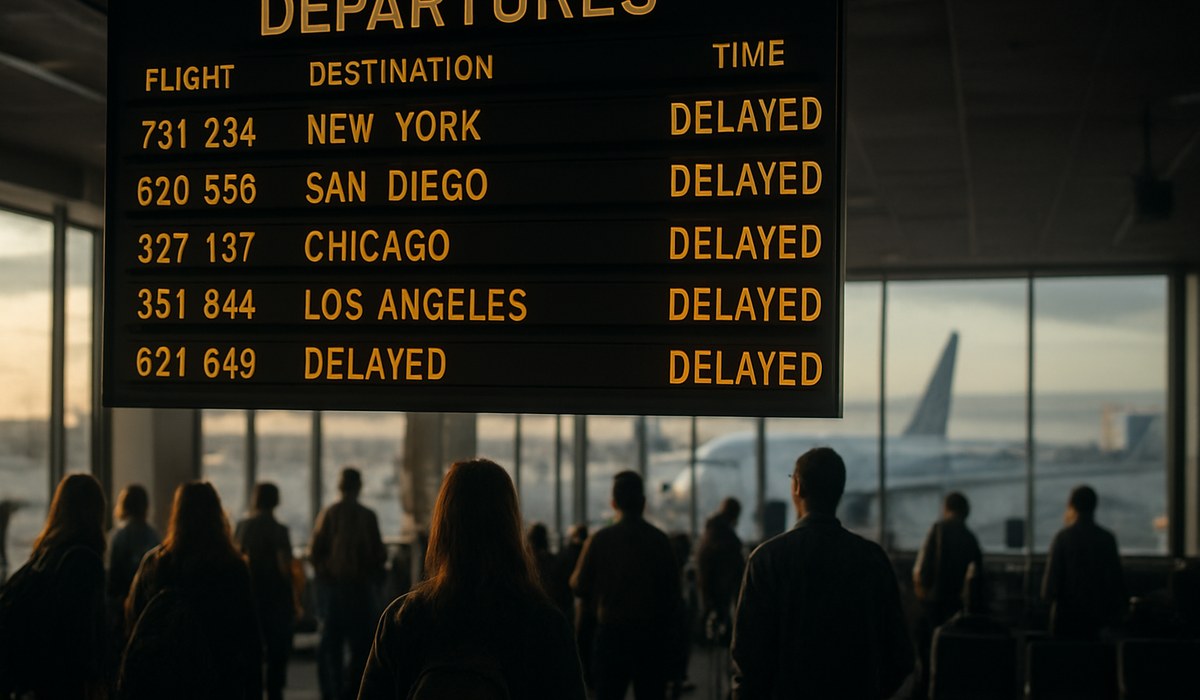
Image generated by AI
Travel Delays Latest: San Diego and Major US Airports Face Cascading Disruptions
San Diego International Airport (SAN) now joins a growing list of major US aviation hubs experiencing significant travel delays latest surge as of March 20, 2026. Los Angeles, Chicago, New York, Seattle, San Francisco, Dallas, and Denver all report elevated cancellation rates and multi-hour delays. The disruptions ripple across the entire national network, affecting tens of thousands of passengers daily. FAA ground stops compound the crisis as weather patterns and system capacity strain intersect. Airlines across all major carriers report unprecedented schedule pressure.
Weather Systems Trigger Widespread Flight Disruptions
Chicago's severe winter conditions on March 20 sparked the initial cascade. Heavy snowfall rates exceeded two inches per hour at O'Hare International Airport (ORD), forcing ground stops that lasted through midday. The meteorological event rippled eastward within hours, affecting New York LaGuardia (LGA) and Newark (EWR) airports by afternoon. San Diego experienced secondary effects as cross-country flights diverted or cancelled. The FAA issued ground delay programs across multiple regions simultaneously. Weather-related travel delays latest patterns now affect over 40% of daily departures from major hubs. Airlines struggling to recover reported cascading crew positioning failures and aircraft shortages.
San Diego Airport Joins Chicago and Los Angeles in Peak Disruption
San Diego International (SAN) currently reports average departure delays exceeding 90 minutes for afternoon and evening flights. The airport processed 650+ cancellations within a 48-hour window beginning March 19. United Airlines, American Airlines, Southwest Airlines, and Delta Air Lines all implemented schedule reductions. Ground infrastructure remained operational, but inbound aircraft shortages created outbound bottlenecks. SAN typically handles 600+ daily departures; March 20 volumes dropped 35%. Connecting passengers faced compounding delays as their arrival airports experienced identical capacity constraints. The Travel Advisor network shows SAN as orange alert status through March 21.
Multiple Carriers Announce Schedule Reductions and Policy Changes
United Airlines initiated comprehensive schedule reductions across 12 airports, including Chicago (ORD), San Diego (SAN), Los Angeles (LAX), and New York (JFK). American Airlines suspended regional service from Denver (DEN) and Dallas (DFW) through March 21. Southwest Airlines cancelled over 200 flights system-wide. Delta Air Lines extended its travel advisory through March 22. All carriers activated their travel waivers, permitting rebooking without penalty on different dates or airlines. Crew scheduling became critical; many flight attendant and pilot reserves exhausted during the first wave of cancellations. Airlines urged passengers to check individual carrier policies before heading to airports.
Real-Time Flight Tracking and Current Operations Status
Passengers monitoring FlightAware report active ground stops at Chicago O'Hare (ORD), with delays averaging 2-4 hours for afternoon departures. San Diego (SAN) shows mostly on-time operations for early morning flights, with degradation beginning 10 a.m. Los Angeles (LAX) maintains reduced operations at 70% of scheduled capacity. New York airports report rolling delays as weather clears but aircraft remain out of position. Seattle-Tacoma (SEA) and San Francisco (SFO) experienced brief ground stops that lifted by noon local time. Live tracking tools show improvement in the Western region but continued Eastern seaboard congestion. The IATA confirmed over 4,200 delays and 890 cancellations across US carriers by 2 p.m. Eastern Time.
Passenger Rights and Compensation Options Under US DOT Regulations
The US Department of Transportation mandates specific protections during travel delays latest situations. Carriers must provide meals, ground transportation, and hotel accommodations for overnight delays resulting from their operational decisions. Cash compensation requirements apply when delays exceed 3 hours at destination for domestic flights. Airlines cannot charge change fees during weather events declared as Force Majeure; however, passengers must accept available seats on later flights. Refund eligibility depends on individual airline policies and delay cause determination. Documentation requirements include confirmation numbers, boarding passes, and receipts for expenses. Passengers should request written delay codes from airlines to establish compensation eligibility. Legal recourse through small claims court remains available for claims under $5,000 in most states.
Traveler Action Checklist
-
Check airline waiver status immediately – Visit your carrier's website or call their reservations line to confirm whether your flight falls under waiver eligibility and rebooking options.
-
Document all expenses with receipts – Keep every receipt for meals, ground transportation, hotels, and other out-of-pocket costs incurred due to delays or cancellations.
-
Request written delay codes from airline staff – Obtain official documentation stating the cause of delay (weather, mechanical, operational) before leaving the airport.
-
Monitor FlightAware in real time – Track your specific flight's position, gate information, and estimated departure/arrival times throughout your wait.
-
Contact your airline within 14 days for compensation – File formal complaints and compensation requests while documentation remains fresh; include all receipts and delay codes.
-
Consider filing with the US DOT if denied – Submit complaints if your airline refuses compensation you believe is owed under federal regulations.
-
Purchase travel insurance for future trips – Opt for comprehensive coverage that includes cancellation, delay, and rebooking protection for upcoming reservations.
-
Arrive at airports 4+ hours early – Until operations normalize, build buffer time for check-in, security, and gate changes in congested airports.
| Metric | San Diego (SAN) | Chicago (ORD) | Los Angeles (LAX) | New York (JFK/LGA) |
|---|---|---|---|---|
| Cancellations (March 20) | 127 | 312 | 184 | 268 |
| Average Delay | 87 minutes | 156 minutes | 94 minutes | 119 minutes |
| Affected Passengers | 18,400 | 42,100 | 26,700 | 38,900 |
| Primary Cause | Network congestion | Winter weather | Cascading delays | Ground stops |
| Operational Capacity | 65% | 48% | 71% | 52% |
| Recovery Timeline | March 21 evening | March 22 morning | March 21 midday | March 22 afternoon |
What This Means for Travelers in March 2026
Travel delays latest disruptions require immediate action from affected passengers. Contact your airline directly by phone rather than online portals, which show hours-long wait times. Confirm whether your specific flight receives waiver coverage; eligibility varies by route and delay cause. Passengers already at airports should ask gate agents about rebooking immediately rather than waiting in standby queues. For flights departing March 21-22, expect continued congestion in major hubs as airlines catch up on the backlog. Book alternate routes through secondary airports when possible—Denver (DEN) and Dallas (DFW) show better capacity than Chicago (ORD) and New York hubs. Keep receipts for all meals and transportation; documentation proves essential for compensation claims. Monitor weather forecasts in your departure and destination cities; another system could extend disruptions. Call your airline 24 hours before departure to confirm your flight still operates on schedule. Consider rebooking for March 23 or later to avoid the worst of the recovery period.
Frequently Asked Questions About Current Travel Delays
What causes travel delays latest surge affecting San Diego and Chicago airports on March 20, 2026? Winter weather over Chicago triggered ground stops and crew positioning failures, cascading delays across the national network to San Diego, Los Angeles, and New York within hours. Secondary weather systems and FAA capacity restrictions extended disruptions through March 21-22. Aircraft shortages and exhausted crew reserves prevent rapid recovery.
Will my flight get cancelled if I'm scheduled to fly through Chicago or San Diego this week? Cancellation probability depends on your specific departure date and airline. March 20-21 shows 15-25% cancellation rates at major hubs. Flights departing March 22 afternoon onward show improving probability of operation. Contact your airline directly to check your confirmation number's current status on official reservation systems.
How do I qualify for compensation under travel delays latest and US Department of Transportation rules? Domestic flights delayed over 3 hours at destination qualify for cash compensation ($250-$1,350 depending on flight distance) unless the delay results from weather or security issues. Passengers must request compensation within 14 days with supporting documentation. File directly with your airline first; escalate to US DOT if denied.
Which airports show the best conditions for flights on March 21-22, 2026? Denver (DEN), Dallas (DFW), and San Francisco (SFO) report improved operations and shorter delays than Chicago (ORD), New York (JFK/LGA), and Los Angeles (LAX). Seattle-Tacoma (SEA) also shows better capacity. Consider rebooking through secondary hubs when possible to avoid compounding delays.
Related Travel Guides
Flight cancellation rights and compensation procedures for US domestic travel
How to navigate major airport disruptions and schedule changes
Travel insurance comparison: coverage for delays, cancellations, and rebooking
Disclaimer
This article is for informational and educational purposes only. It does not constitute legal, financial, or professional advice. While we strive to provide accurate and up-to-date information, travel policies, regulations, and conditions change rapidly. Always verify information with official sources before making travel decisions. Nomad Lawyer makes no representations about the accuracy, reliability, completeness, or suitability of the information provided. Readers should consult qualified professionals for advice specific to their circumstances. The views expressed in this article are those of the author and do not necessarily reflect the views of Nomad Lawyer.
Raushan Kumar
Founder & Lead Developer
Full-stack developer with 11+ years of experience and a passionate traveller. Raushan built Nomad Lawyer from the ground up with a vision to create the best travel and law experience on the web.
Learn more about our team →