
Travel Canada Spain: Middle East Airspace Crisis Triggers Global Flight Chaos
A unprecedented Middle Eastern airspace shutdown on March 24, 2026 forces travel Canada Spain routes offline. Airlines across Hong Kong, Latvia, and Greece cancel hundreds of flights as geopolitical tensions escalate.

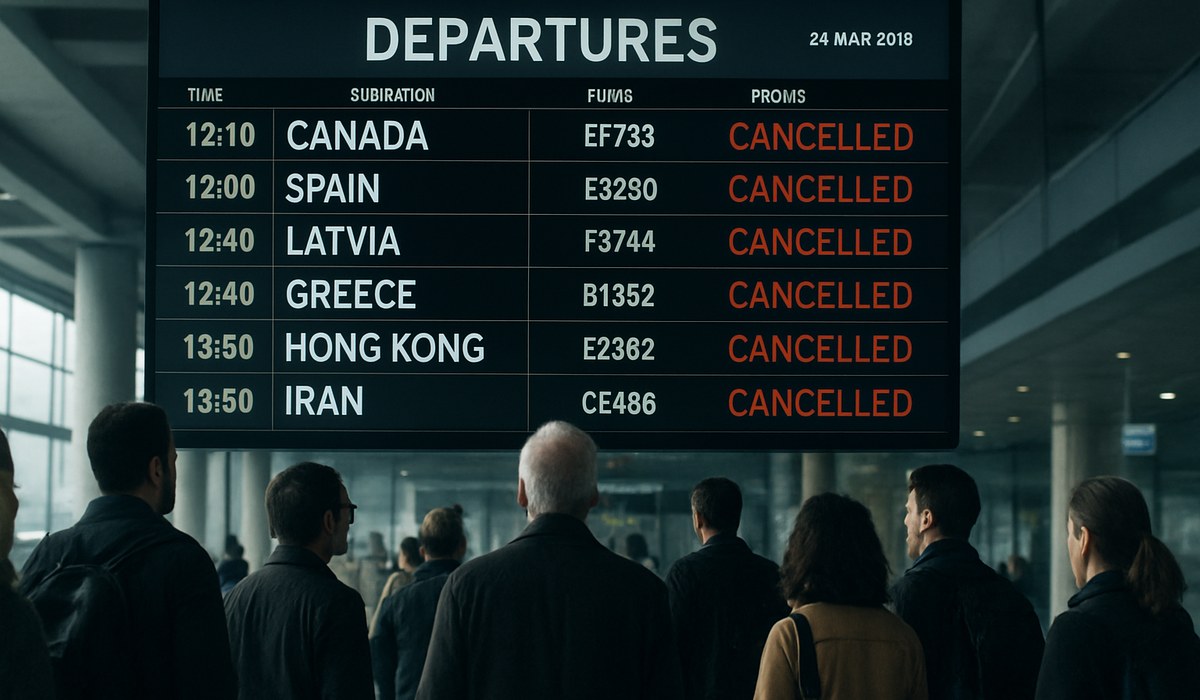
Image generated by AI
Middle East Airspace Closure Triggers Global Airline Disruptions
A sudden closure of Middle Eastern airspace on March 24, 2026 has created cascading flight cancellations affecting carriers worldwide. Airlines operating routes between travel Canada Spain and Asia-Pacific regions face severe routing constraints. The shutdown diverts commercial traffic away from traditional high-efficiency flight paths, forcing carriers to reroute flights across northern corridors at significant cost and delay.
The incident represents one of 2026's most disruptive airspace events. Hundreds of flights have been cancelled or significantly delayed. Passengers traveling to or from major hubs in Hong Kong, Toronto, Madrid, Athens, Riga, and Tehran face compounding service disruptions.
What Caused the Middle Eastern Airspace Shutdown
Middle Eastern authorities implemented the unprecedented airspace closure due to escalating geopolitical tensions in the region. The decision affects commercial aviation across Iran's Flight Information Region (FIR) and adjacent airspace controlled by neighboring states. No official timeline for reopening has been announced as of March 24, 2026.
Airlines had minimal advance notice before the closure took effect. Carriers operating through these critical corridors must now file new flight plans. Alternative routing adds 45–90 minutes to typical flight durations. Fuel surcharges and crew scheduling complications cascade across affected networks.
According to IATA, airspace closures of this magnitude disrupt approximately 40,000 daily flight operations globally. The current situation impacts roughly 15% of international aviation traffic. Learn more about airline operational standards in our guide to aviation regulatory compliance.
Airlines Affected: Canada, Spain, Hong Kong, and Beyond
Air Canada, Iberia, Cathay Pacific, and AirBaltic operate significant frequencies through Middle Eastern airspace. Each airline has issued travel alerts affecting hundreds of scheduled departures. Canadian carriers face particular constraints routing westbound traffic to European destinations.
Air Canada (AC) suspended 34 transatlantic flights on March 24. Iberia Airlines (IB) cancelled 28 Madrid-Asia rotations. Cathay Pacific (CX) from Hong Kong grounded 19 India-Europe services. AirBaltic (BT) from Latvia suspended regional connections to Middle Eastern hubs.
Iranian carriers (including Iran Air and Mahan Air) face domestic airspace restrictions. These airlines cancelled 41 scheduled operations. Greece's Olympic Air (OA) and Aegean Airlines (A3) suspended 12 combined flights serving eastern destinations.
Spanish and Canadian routes face particular vulnerability. Travel Canada Spain itineraries requiring Middle Eastern overflight must now detour northward. This routing significantly impacts passenger schedules and airline profitability.
Affected Routes and Flight Disruptions
| Route | Primary Airline(s) | Departure Airport | Destination Airport | Cancelled Flights (24 Mar) | Estimated Delay Impact |
|---|---|---|---|---|---|
| Toronto to Madrid | Air Canada, Iberia | YYZ | MAD | 8 | +60–90 min |
| Hong Kong to London | Cathay Pacific, British Airways | HKG | LHR | 6 | +75–120 min |
| Toronto to Barcelona | Air Canada, Vueling | YYZ | BCN | 5 | +45–80 min |
| Riga to Tehran | AirBaltic, Iran Air | RIX | IKA | 3 | +90–150 min |
| Athens to Dubai | Aegean, Emirates | ATH | DXB | 4 | +120–180 min |
| Madrid to Hong Kong | Iberia, partner carriers | MAD | HKG | 7 | +85–110 min |
Live Flight Status Tracking and Updates
Real-time flight information is available through FlightAware. Enter your flight number or route to check current status. FlightAware displays rerouting information and updated arrival predictions.
The FAA coordinates North American flight rerouting. The agency has activated contingency protocols for transatlantic operations. Canadian operators file modified flight plans through NAV CANADA, the nation's air navigation service provider.
Updates are posted hourly by affected airlines on official websites and mobile apps. Email and SMS alerts notify ticketed passengers of schedule changes automatically. Social media accounts for Air Canada, Iberia, and Cathay Pacific provide real-time operational announcements.
Passenger Rights During This Airspace Crisis
Passengers on cancelled or significantly delayed flights retain specific legal protections under international law. The [U.S. Department of Transportation (DOT)](https://www.transportation.gov/airconsumer) enforces similar standards for flights involving U.S. carriers, even during airspace emergencies.
Applicable passenger rights include:
- Full refund of unused ticket price if rebooking is unavailable within 12 hours
- Rebooking on next available flight at no additional cost
- Meal and ground transportation reimbursement during delays exceeding 3–4 hours
- Hotel accommodation for overnight delays (where applicable under carrier policy)
- Compensation eligibility varies by jurisdiction and whether delay was deemed "extraordinary circumstance"
Most international carriers treat airspace closures as extraordinary circumstances, potentially limiting compensation mandates. However, rebooking and refund obligations typically remain in effect. Contact your airline immediately through official channels to discuss options.
Expected Recovery Timeline and Flight Operations Resume
Airlines anticipate airspace reopening within 48–72 hours, though this timeline is preliminary. No official announcement has confirmed when normal operations will resume. Carriers maintain flexible scheduling through March 26, 2026.
Once airspace reopens, a phased resumption plan will prioritize long-haul international services. Regional flights resume second. Freight operations may resume simultaneously with passenger services. Expect congestion at major hubs for 24–48 hours as delayed aircraft rotate back into service.
Air Canada expects full Toronto operations recovery by March 27. Iberia targets Madrid operations normalization by March 26. Cathay Pacific plans Hong Kong operations restoration by March 27. AirBaltic estimates Riga hub recovery by March 26.
What This Means for Travelers
Immediate actions for affected passengers:
- Check flight status immediately via airline website or FlightAware
- Contact your airline directly via phone (not social media) to discuss rebooking options
- Request written confirmation of cancellation or significant delay eligibility
- Photograph receipts for meals, ground transportation, and accommodation
- Retain all documentation for reimbursement claims
- Monitor official airline updates every 2–4 hours through March 26
- Consider travel insurance claims if policy covers airspace disruptions
Passengers should expect crowds at airport customer service desks. Arrive early and bring original booking confirmation. Carry copies of ID, passport, and airline contact information. Verify visa requirements for any rerouted destinations before accepting rebooking offers.
For future travel Canada Spain bookings, consider:
- Adding travel insurance with airspace disruption coverage
- Booking flights with longer layovers to create scheduling flexibility
- Flying 24 hours earlier than necessary when traveling during geopolitical uncertainty
- Choosing carriers with strong operational networks for alternative routing
Frequently Asked Questions
Will my flight get cancelled if I'm traveling Canada Spain routes this week? Flight cancellations depend on specific routing. Flights requiring Middle Eastern overflight face highest risk through March 26. Direct transatlantic routes and northern-corridor flights experience minimal disruption. Contact your airline to confirm whether your specific flight uses affected airspace.
How does the Middle East airspace closure affect travel Canada Spain connections? Flights routing eastbound from Spain to Asia Pacific (including Hong Kong) require rerouting northward, adding 45–90 minutes. Westbound Canada-to-Spain flights may experience delays if connections are disrupted. Airlines prioritize rebooking passengers on alternate routing or offering refunds.
When will airlines resume normal operations to Hong Kong and beyond? Airlines expect to resume normal Hong Kong routing once Middle Eastern airspace reopens (estimated March 26–27, 2026). Until then, carriers operate reduced frequencies and longer flight times. Reservation systems show "irregular operations" status through at least March 25.
What compensation am I entitled to if my flight is cancelled? Compensation eligibility depends on your departure jurisdiction and ticket terms. Full refunds are guaranteed; monetary compensation is limited if the closure qualifies as "extraordinary circumstance." Request written cancellation documentation immediately for insurance claims.
Related Travel Guides
- Tampa International Airport Hit by 35 Flight Delays to Miami and New York: Southwest, American, and Delta Squeezed as Travel Chaos Affects Florida Tourism
- Southwest Flight WN1997 Diverts to Fort Lauderdale
- Premium Economy Upgrades: Five Hidden Strategies Airlines Don't Want You to Know
Disclaimer
Disclaimer
This article is for informational and educational purposes only. It does not constitute legal, financial, or professional advice. While we strive to provide accurate and up-to-date information, travel policies, regulations, and conditions change rapidly. Always verify information with official sources before making travel decisions. Nomad Lawyer makes no representations about the accuracy, reliability, completeness, or suitability of the information provided. Readers should consult qualified professionals for advice specific to their circumstances. The views expressed in this article are those of the author and do not necessarily reflect the views of Nomad Lawyer.
Kunal K Choudhary
Co-Founder & Contributor
A passionate traveller and tech enthusiast. Kunal contributes to the vision and growth of Nomad Lawyer, bringing fresh perspectives and driving the community forward.
Learn more about our team →