
Transport Military Cargo: Boeing Extends C-17 Globemaster Production Through 2026
Boeing continues manufacturing the C-17 Globemaster III heavy-lift transport military cargo aircraft for the US Air Force through 2026, extending production three decades after initial delivery in 1993.

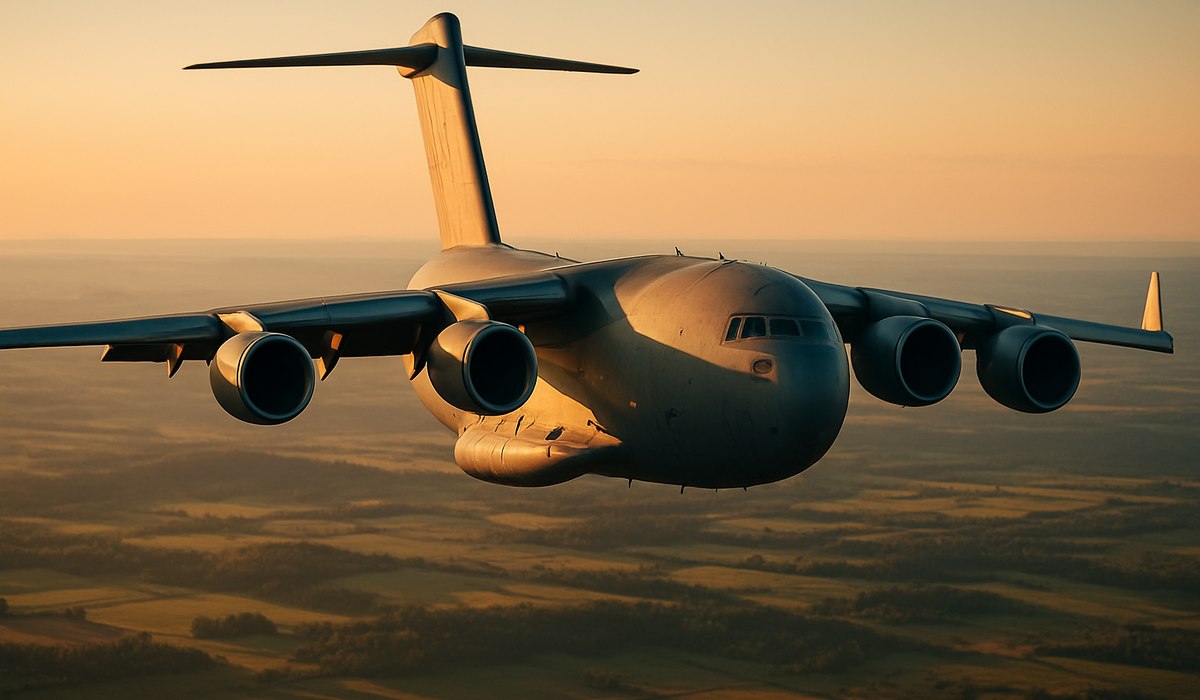
Image generated by AI
The C-17 Globemaster III Remains Essential to Military Logistics
Boeing's C-17 Globemaster III continues rolling off production lines as the backbone of United States Air Force heavy-lift operations, with manufacturing extending into 2026 despite the aircraft's debut entering service over three decades ago. Since its first operational delivery in 1993 and achieving full operational readiness by 1995, the Globemaster has become irreplaceable for global military transport missions. The extended production timeline reflects ongoing demand for this strategic airlift asset.
The decision to maintain C-17 Globemaster production underscores the aircraft's enduring importance for transport military cargo operations worldwide. No comparable heavy-lift platform has emerged to challenge its capabilities, and military logistics planners continue ordering new airframes to replace aging inventory and expand fleet capacity.
The C-17 Globemaster III: A Brief History
The C-17 Globemaster III emerged from decades of military airlift evolution. Boeing developed this heavy-lift transport military cargo aircraft to succeed the aging C-5 Galaxy fleet. Initial contracts awarded in the late 1980s led to the first production aircraft delivery in 1993, with the USAF declaring operational readiness by 1995.
Over three decades of service, the Globemaster has logged millions of flight hours supporting humanitarian operations, disaster relief, combat logistics, and strategic deployments across every continent. Its design enables the aircraft to land on unprepared airfields, a capability that distinguishes it from competing heavy-lift platforms. The fuselage accommodates 170,000 pounds of cargo or up to 134 fully equipped troops. These specifications made the C-17 the preferred solution for transport military cargo requirements across NATO allies and partner nations.
Early production aircraft, built throughout the 1990s and 2000s, remain in active service with minimal retirement. This longevity validates Boeing's engineering approach and explains why the USAF continues ordering new examples rather than retiring the program entirely.
Why Production Continues Through 2026
Boeing and United States Air Force planners determined that extending C-17 Globemaster production through 2026 addresses multiple strategic requirements. Attrition from operational wear, combined with aging airframes requiring retirement, creates genuine demand for replacement aircraft. Additionally, allied nations request American support for their own heavy-lift fleets through foreign military sales.
The current production rate balances economic efficiency with military necessity. Manufacturing continuity preserves skilled aerospace workforces at Boeing facilities and maintains supply chains for specialized components. Interrupting production and restarting it later would incur substantial costs and timeline delays.
Budget constraints and competing defense priorities mean that new-build aircraft represent the most cost-effective solution for expanding lift capacity. Modernization programs for existing aircraft prove expensive compared to manufacturing optimized new airframes incorporating current technology standards. This calculus supports maintaining production into 2026 and potentially beyond.
Strategic competition and global tension reinforce the military's conviction that robust airlift capacity serves deterrence. The ability to rapidly deploy forces across continental distances remains central to Pentagon planning. Transport military cargo capabilities directly support that mission, making the C-17 Globemaster a persistent procurement priority.
Global Impact and Military Logistics Network
The C-17 Globemaster serves as the linchpin connecting American power projection worldwide. From bases in Europe to forward operations across Asia-Pacific regions, these aircraft sustain military presence and rapid response capability. When humanitarian disasters strike, C-17s arrive first with relief supplies because their cargo capacity and landing flexibility prove unmatched.
International partnerships depend on American heavy-lift capacity. NATO allies regularly rely on USAF C-17 operations for exercise support, equipment movement, and tactical logistics. Partner nations in the Middle East, Asia, and Africa benefit from airlift support that strengthens security relationships and demonstrates American commitment.
Commercial aviation observes these military transport military cargo operations because they establish baseline expectations for logistics network performance. When military aircraft can deliver outsized cargo to austere locations, commercial operators understand that civilian air cargo markets demand similar flexibility and capacity. The C-17's operational success influences aircraft procurement across the broader aerospace industry.
Extended production through 2026 ensures that this global logistics backbone remains robust. Retiring aircraft without replacement would create capacity gaps that would constrain military planning and reduce international partnership options. Maintaining continuity serves strategic interests while supporting technical workforces across Boeing's supply chain.
Future Outlook for Heavy-Lift Transport
Beyond 2026, the C-17 Globemaster's future remains uncertain but likely. Boeing has not announced final production termination dates, leaving possibilities open for additional aircraft orders. Military planners consistently identify heavy-lift capacity as a requirement that existing solutions cannot fully satisfy.
Emerging technologies may eventually influence design parameters for next-generation transport aircraft. Hybrid-electric propulsion, advanced materials, and autonomous flight capabilities could redefine heavy-lift transport military cargo operations. However, these innovations remain developmental, and the C-17's proven capabilities ensure relevance for at least another decade.
International interest in C-17 variants or derivative aircraft may extend production implications beyond 2026. Several allied nations have expressed interest in acquiring their own Globemaster fleets. Export sales provide Boeing commercial justification for maintaining production capacity and continuing engineering support.
The aerospace industry recognizes that heavy-lift strategic airlift represents an enduring military requirement. No other platform combines the Globemaster's payload capacity, range, and operational flexibility in a single airframe. This competitive advantage likely ensures that C-17 production remains economically viable and strategically justified through the late 2020s.
Key Data Points on C-17 Globemaster Operations
| Specification | Detail |
|---|---|
| First Production Delivery | 1993 |
| Full Operational Readiness | 1995 |
| Maximum Cargo Payload | 170,000 pounds |
| Troop Capacity | 134 fully equipped personnel |
| Primary Operator | United States Air Force |
| Current Production Plan | Through 2026 |
| Primary Mission | Strategic heavy-lift transport military cargo |
| Operational Service Countries | 17+ nations through partnerships |
| Typical Range | 2,400+ nautical miles |
| Manufacturing Location | Boeing Long Beach, California |
What This Means for Travelers
While the C-17 Globemaster operates outside commercial aviation networks, extended military production affects global logistics infrastructure that supports civilian travel and commerce. Understanding military airlift capacity helps travelers appreciate how national security investments influence international connectivity.
Actionable Takeaways for Travelers:
-
Monitor international airspace notices through FlightAware and the FAA when planning flights near military operations areas, as military aircraft movements can affect civilian routing.
-
Recognize that military logistics networks support international commerce and tourism infrastructure, making them relevant to travel planning in allied nations.
-
Review airline alliances and cargo partnerships to understand how military transport military cargo operations indirectly affect commercial flight scheduling and cargo capacity.
-
Consider geopolitical stability when booking international travel, as military airlift capabilities directly support security relationships that influence travel safety and accessibility.
-
Check the US DOT consumer protection resources for understanding how government logistics priorities may influence airline operations and scheduling patterns.
Frequently Asked Questions
What is the C-17 Globemaster III used for?
The C-17 Globemaster III serves as the primary heavy-lift cargo aircraft for the United States Air Force, transporting oversized military equipment, humanitarian relief supplies, and personnel across global distances. Its design enables operations from unprepared airfields, making it essential for forward deployment and disaster response missions worldwide.
Why does the US military still build C-17 aircraft in 2026?
Continued production addresses operational requirements including aircraft attrition, fleet modernization, allied nation requests, and strategic capacity maintenance. Manufacturing continuity also preserves aerospace workforce capabilities and supplier networks while maintaining cost efficiency compared to program
Disclaimer
This article is for informational and educational purposes only. It does not constitute legal, financial, or professional advice. While we strive to provide accurate and up-to-date information, travel policies, regulations, and conditions change rapidly. Always verify information with official sources before making travel decisions. Nomad Lawyer makes no representations about the accuracy, reliability, completeness, or suitability of the information provided. Readers should consult qualified professionals for advice specific to their circumstances. The views expressed in this article are those of the author and do not necessarily reflect the views of Nomad Lawyer.
Preeti Gunjan
Contributor & Community Manager
A passionate traveller and community builder. Preeti helps grow the Nomad Lawyer community, fostering engagement and bringing the reader experience to life.
Learn more about our team →