
Delta Flight Returns to Boston After Smoke Detection Forces Mid-Atlantic Turnaround
Breaking airline news and aviation industry updates for 2026.

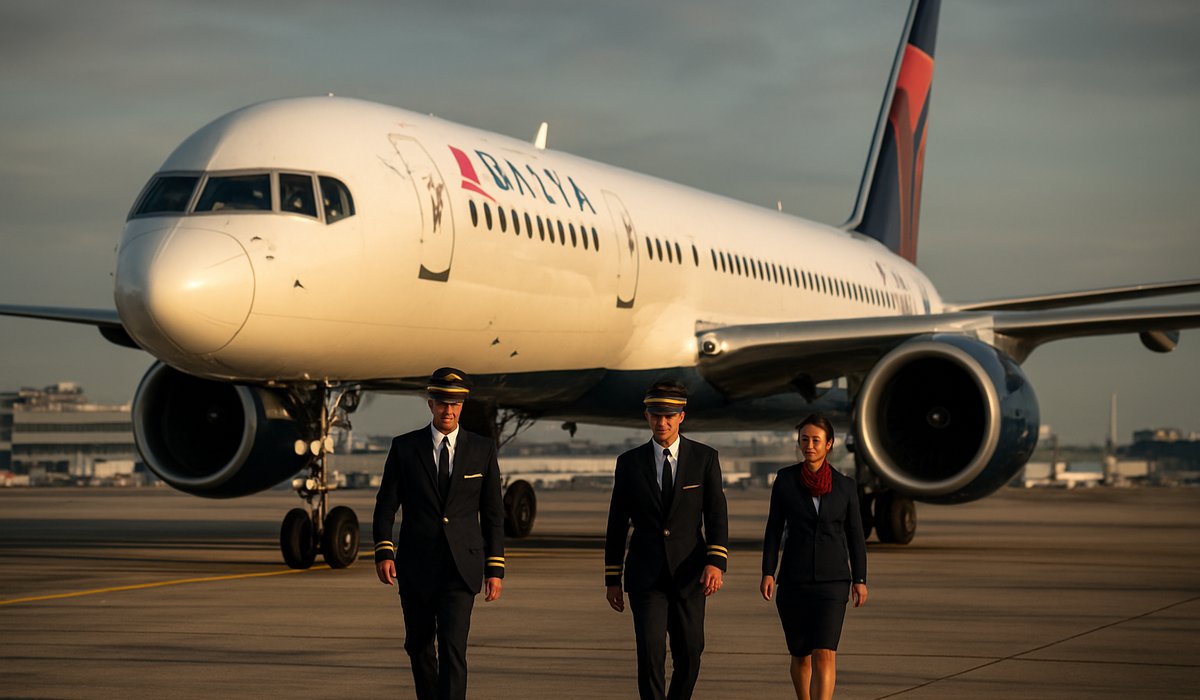
Image generated by AI
Delta Flight Returns to Boston After Smoke Detection Forces Mid-Atlantic Turnaround
Transatlantic service to Nice diverted within 30 minutes of departure; safety protocols triggered emergency landing
Unscheduled Return Highlights Aviation Safety Systems
A Delta Air Lines transatlantic flight made an unexpected return to Boston Logan International Airport on Tuesday after crew members detected smoke aboard the aircraft, underscoring the rigorous safety protocols that govern international aviation operations. Flight DL276, an Airbus A330-300 bound for Nice-Côte d'Azur Airport on France's Côte d'Azur, reversed course approximately 30 minutes after departure, initiating an immediate descent and diverting back to its origin airport.
Flight-tracking data confirmed the aircraft's sharp trajectory change as pilots executed standard emergency procedures in response to the onboard detection. The decision to return rather than proceed toward the European destination reflected established protocols requiring immediate assessment of any smoke or odor anomalies aboard long-haul services—particularly those spanning oceanic routes where emergency landing options are severely limited.
Safety Response and Operational Impact
Boston Logan authorities mobilized ground support upon notification of the in-flight emergency. The Airbus A330-300, a wide-body aircraft typically configured to carry between 250 and 350 passengers across extended routes, landed safely without incident, with no injuries reported among passengers or crew members.
Delta Air Lines, one of North America's "Big Three" carriers, maintained operational protocols throughout the incident. The specific cause of the smoke detection was not immediately disclosed, though maintenance teams typically conduct comprehensive inspections before clearing aircraft for return to service.
The incident occurred amid continued scrutiny of aviation safety standards, particularly following high-profile mechanical incidents across the industry in recent years. While modern commercial aircraft incorporate multiple redundant safety systems and sophisticated detection mechanisms, any indication of smoke or fire triggers mandatory emergency procedures designed to minimize risk.
Implications for Transatlantic Operations
Transatlantic operations represent a critical revenue segment for major U.S. carriers, with routes between Boston and European destinations commanding premium pricing due to competitive demand and operational complexity. Delays or cancellations on these long-haul services generate significant cascading effects for airline revenue, crew scheduling, and passenger itineraries.
Delta's Boston hub maintains substantial European connectivity, with Nice-Côte d'Azur serving as a gateway to the French Riviera's affluent tourism market and business travel segment. The carrier has positioned Boston Logan as a key departure point for transatlantic leisure and corporate travel.
Passengers affected by the diversion would typically face rebooking onto subsequent services, potential overnight accommodation arrangements, and compensation considerations depending on applicable regulations governing flight disruptions. The incident reinforces ongoing industry challenges balancing operational efficiency with stringent safety requirements.
FAQ: Understanding Aviation Safety and Flight Disruptions
What triggers smoke detection systems on commercial aircraft? Modern commercial aircraft employ multiple sensors throughout cargo holds, engine compartments, and passenger cabins that detect particulate matter and temperature anomalies. Any detection initiates automated alerts requiring immediate crew assessment and, typically, emergency descent procedures.
How often do transatlantic flights experience mid-journey emergencies? While statistically rare relative to flight volumes, oceanic routes maintain heightened safety protocols due to limited diversion options. Most incidents result in precautionary returns rather than critical emergencies.
Are passengers entitled to compensation for flight diversions caused by mechanical issues? Compensation eligibility varies by jurisdiction. EU regulations provide passenger compensation for delays exceeding three hours, though mechanical failures sometimes qualify as extraordinary circumstances limiting carrier liability.
What happens to aircraft after smoke detection incidents? Aircraft undergo comprehensive inspections by certified maintenance personnel before return to service. Depending on findings, repairs may require hours or days of downtime, impacting fleet utilization and scheduling.
How do airline fees and baggage charges apply to disrupted flights? Most carriers waive additional fees for passengers rebooked on alternative services due to mechanical disruptions, though policies vary. Passengers should contact their airline directly for specific compensation details.
Related Travel Guides
External Resources
Disclaimer
This article is for informational and educational purposes only. It does not constitute legal, financial, or professional advice. While we strive to provide accurate and up-to-date information, travel policies, regulations, and conditions change rapidly. Always verify information with official sources before making travel decisions. Nomad Lawyer makes no representations about the accuracy, reliability, completeness, or suitability of the information provided. Readers should consult qualified professionals for advice specific to their circumstances. The views expressed in this article are those of the author and do not necessarily reflect the views of Nomad Lawyer.
Raushan Kumar
Founder & Lead Developer
Full-stack developer with 11+ years of experience and a passionate traveller. Raushan built Nomad Lawyer from the ground up with a vision to create the best travel and law experience on the web.
Learn more about our team →