
20 Iconic American Cities for 2026: The Ultimate Cultural, Music, and Culinary Travel Guide

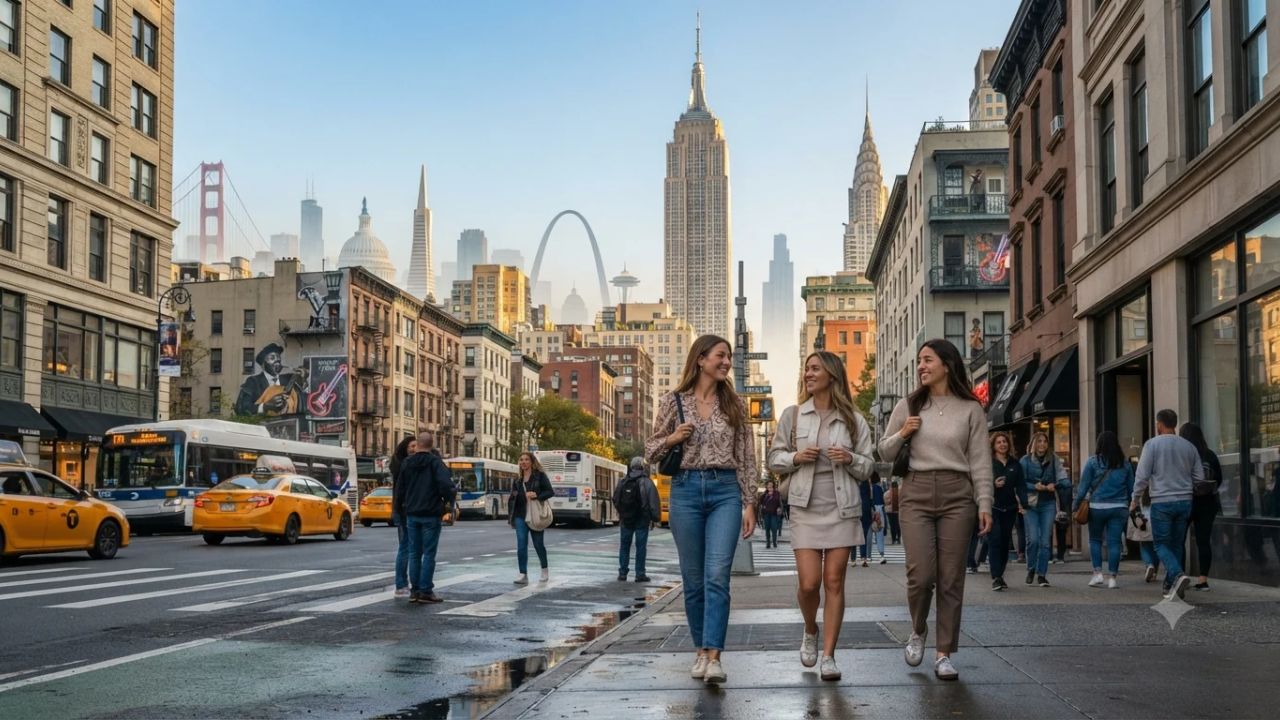
More than 80% of international visitors to the United States concentrate their travels in just three metropolitan gateways, yet the country's most compelling cultural movements are unfolding across twenty distinct urban centers in 2026. From the jazz-infused cobblestones of New Orleans and the high-altitude brewery clusters of Denver to the historic moss-draped squares of Savannah, American cities are redefining the travel experience around hyper-local cuisine, living music heritage, and accessible neighborhood arts.
Rather than approaching the United States as a monolithic vacation, travelers in 2026 are curating multi-city journeys that connect world-class museums, indigenous traditions, and regional foodways. Whether seeking the high-octane energy of Manhattan or the tranquil maritime sunsets of Key West, this curated guide reveals twenty essential American cities through an insider lens.
The Urban Renaissance: Twenty Distinct American Hubs
The twenty premier American destinations for 2026 span four distinct geographic and cultural corridors, each offering unique experiential highlights:
The Global Megacities and Cultural Capitals
- New York City, New York: Beyond Times Square, the five boroughs offer world-leading variety. Walk the Brooklyn Bridge at sunrise, ride the 7 subway train through Queens for authentic global street gastronomy, and explore the vast galleries of the Metropolitan Museum of Art. Comprehensive itineraries can be coordinated through Brand USA.
- Chicago, Illinois: The architectural capital of the Midwest pairs dramatic Lake Michigan waterfronts with the Chicago River architecture cruise, Millennium Park's public sculptures, and legendary deep-dish pizza alongside Michelin-starred innovation.
- Washington DC: The nation’s capital provides unparalleled educational depth anchored by the Smithsonian Institution, where world-class museums surrounding the National Mall offer free public admission alongside thriving Ethiopian dining in the U Street corridor.
- Los Angeles, California: Spanning Pacific surf breaks in Venice and Santa Monica to the creative film enclaves of Silver Lake and Hollywood, LA rewards travelers who explore beyond the freeways.
- San Francisco, California: Renowned for the Golden Gate Bridge, historic cable cars, and Chinatown's dim sum tea houses, the city serves as the ultimate springboard for Northern California coastal redwoods and wine valleys.
The Music and Culinary Epicenters
- New Orleans, Louisiana: The beating heart of American roots music. Walk Frenchmen Street for nightly brass-band jazz, sample slow-simmered seafood gumbo in the French Quarter, and experience Tremé's living African-Caribbean brass traditions.
- Nashville, Tennessee: The global capital of songwriting. From historic live performances at the Ryman Auditorium and the Grand Ole Opry to fiery hot chicken in East Nashville, Music City merges traditional country roots with contemporary sound.
- Austin, Texas: Famous for live music along South Congress, world-class Central Texas pit barbecue, breakfast tacos, and refreshing natural springs at Barton Springs Pool.
- Miami, Florida: Where tropical glamour meets Latin American culture. Admire South Beach’s Art Deco district, explore contemporary murals in Wynwood, and sip Cuban espresso along Calle Ocho in Little Havana.
- San Antonio, Texas: Centered along the shaded stone pathways of the historic River Walk, the city celebrates rich Tejano heritage, the Alamo UNESCO-affiliated missions, and authentic Tex-Mex gastronomy.
Historic Seaports and Southern Charms
- Boston, Massachusetts: A walkable journey through revolutionary history along the Freedom Trail, paired with fresh North Atlantic lobster rolls and world-class universities in Cambridge.
- Philadelphia, Pennsylvania: The birthplace of American democracy. Tour Independence Hall and the Liberty Bell, explore the vibrant Italian Market, and sample classic cheesesteaks across South Philly.
- Charleston, South Carolina: Cobblestone streets, antebellum pastel townhouses, waterfront harbor views, and refined Lowcountry coastal cuisine.
- Savannah, Georgia: Romantic public squares shaded by Spanish moss-draped live oaks, historic riverfront promenades, and traditional Southern hospitality.
- Key West, Florida: The southernmost point in the continental US, celebrated for nightly sunset celebrations at Mallory Square, conch fritters, and historic Victorian gingerbread architecture.
Pacific Northwest, Mountains, and Creative Havens
- Seattle, Washington: The Pacific Northwest gateway combining Pike Place Market artisan seafood stalls, world-class specialty coffee roasters, and Puget Sound ferry crossings with Mount Rainier views, protected within the National Park Service system.
- Portland, Oregon: An eco-friendly creative enclave celebrated for its farm-to-table food cart pods, independent bookstores like Powell’s, microbreweries, and urban rose gardens.
- Denver, Colorado: The Mile High City, offering craft brewery trails in RiNo, vibrant street art, and immediate access to Rocky Mountain hiking trails.
- Asheville, North Carolina: A bohemian mountain retreat nestled in the Blue Ridge Mountains, renowned for craft beer culture, the historic Biltmore Estate, and traditional Appalachian bluegrass circles.
- Las Vegas, Nevada: World-famous for immersive theatrical productions, celebrity chef dining along the Strip, and red-rock hiking excursions in nearby Red Rock Canyon and the Valley of Fire.
What Makes America's Urban Spectrum Different
The sheer geographic and cultural diversity of American cities sets them apart from compact European or Asian travel networks. A short three-hour domestic flight transports a traveler from the subtropical rhythms and Caribbean architecture of New Orleans to the crisp alpine mountain passes outside Denver or the modernist skyscraper canyons of Chicago.
Furthermore, American cities are fundamentally defined by their neighborhoods rather than centralized monument zones. In New York, the character shifts completely between the historic brownstones of Harlem and the industrial warehouse art lofts of Bushwick. In Miami, crossing the bridge from downtown takes you straight into the historic Bahamian roots of Coconut Grove.
This decentralized character means that travelers who step away from tourist centers discover an extraordinary wealth of immigrant culinary traditions, neighborhood record shops, craft coffee collectives, and grassroots community theaters that represent the true everyday life of the nation.
Visitor Insider Tips
To navigate multi-city US journeys smoothly and affordably in 2026, keep these practical tips in mind:
- Rely on Public Transit in Dense Hubs: Avoid costly parking fees and traffic gridlock by utilizing efficient transit networks: the subway in New York, the 'L' train in Chicago, Metro in Washington DC, and BART/Muni in San Francisco.
- Embrace Free Cultural Institutions: Take advantage of free admission at all 21 Smithsonian museums and the National Zoo in Washington DC, as well as designated free evenings at major art institutes in Boston, Philadelphia, and New York.
- Dine at Neighborhood Food Halls and Food Truck Pods: For authentic regional flavors on a budget, visit food truck hubs in Portland and Austin, French Market stalls in New Orleans, or Chelsea Market and Essex Market in New York.
- Pre-Book National Park and Monument Passes: If pairing city stays with nearby national parks (such as Shenandoah from DC, or Rocky Mountain from Denver), secure timed-entry vehicle permits well in advance during peak summer and autumn seasons.
- Tipping Etiquette and Contactless Payments: Standard hospitality tipping ranges from 18% to 22% for sit-down dining, while contactless mobile payments (Apple Pay and chip cards) are accepted virtually everywhere.
Cultural and Environmental Context
American cities in 2026 are increasingly balancing rapid urban tourism with environmental sustainability and historic preservation. From expanding electric bus fleets in Seattle to converting obsolete rail corridors into green public parks—such as the High Line in New York, the 606 in Chicago, and the BeltLine in Atlanta—urban planners are creating walkable green infrastructure that benefits residents and visitors alike.
Simultaneously, cities are actively preserving the cultural heritage of underrepresented communities. Heritage trails in Philadelphia, jazz preservation initiatives in New Orleans, and indigenous cultural exhibits in Denver celebrate the diverse social histories that built the country.
By patronizing independent, locally owned restaurants, minority-owned businesses, and community arts organizations, international travelers contribute to sustainable local economies that keep historic neighborhoods vibrant and distinct.
FAQ: Traveling US Cities in 2026
What are the top US cities for first-time international visitors?
New York City, Washington DC, San Francisco, and Chicago provide the most comprehensive mix of iconic landmarks, museums, and public transit.
Do I need a car to visit major American cities?
No. Cities like New York, Boston, Chicago, Washington DC, and San Francisco are highly walkable and feature extensive subway, light-rail, and bus networks.
What is the best season for a multi-city US holiday?
Spring (April to June) and autumn (September to November) offer mild weather, beautiful foliage, and fewer crowds across both northern and southern cities.
How do I travel between nearby US cities without flying?
Amtrak rail provides fast, scenic downtown-to-downtown links along the Northeast Corridor (Boston–NYC–Philly–DC) and Pacific Northwest routes.
Across coastlines, river valleys, and mountain plateaus, the cities of America invite travelers to write their own journey across twenty unforgettable stages.
Related Travel Guides
- Greater Fort Lauderdale Under Siege: Why This Jaw-Dropping 1.37 Trillion Dollar Travel Update Changes Your Vacation Plans Now!
- New York Travel Marks 25 Years Since 9/11: Memorial Tourism and the Global Aviation Legacy
- Guarulhos Airport Taxi Guide 2026: Navigating Guarucoop Fares and Passenger Safety at GRU
Disclaimer
This article is for informational and educational purposes only. It does not constitute legal, financial, or professional advice. While we strive to provide accurate and up-to-date information, travel policies, regulations, and conditions change rapidly. Always verify information with official sources before making travel decisions. Nomad Lawyer makes no representations about the accuracy, reliability, completeness, or suitability of the information provided. Readers should consult qualified professionals for advice specific to their circumstances. The views expressed in this article are those of the author and do not necessarily reflect the views of Nomad Lawyer.
Preeti Gunjan
Contributor & Community Manager
A passionate traveller and community builder. Preeti helps grow the Nomad Lawyer community, fostering engagement and bringing the reader experience to life.
Learn more about our team →