
Beyond South Beach: The Architectural Guide to Miami’s Historic and Modern Neighborhoods

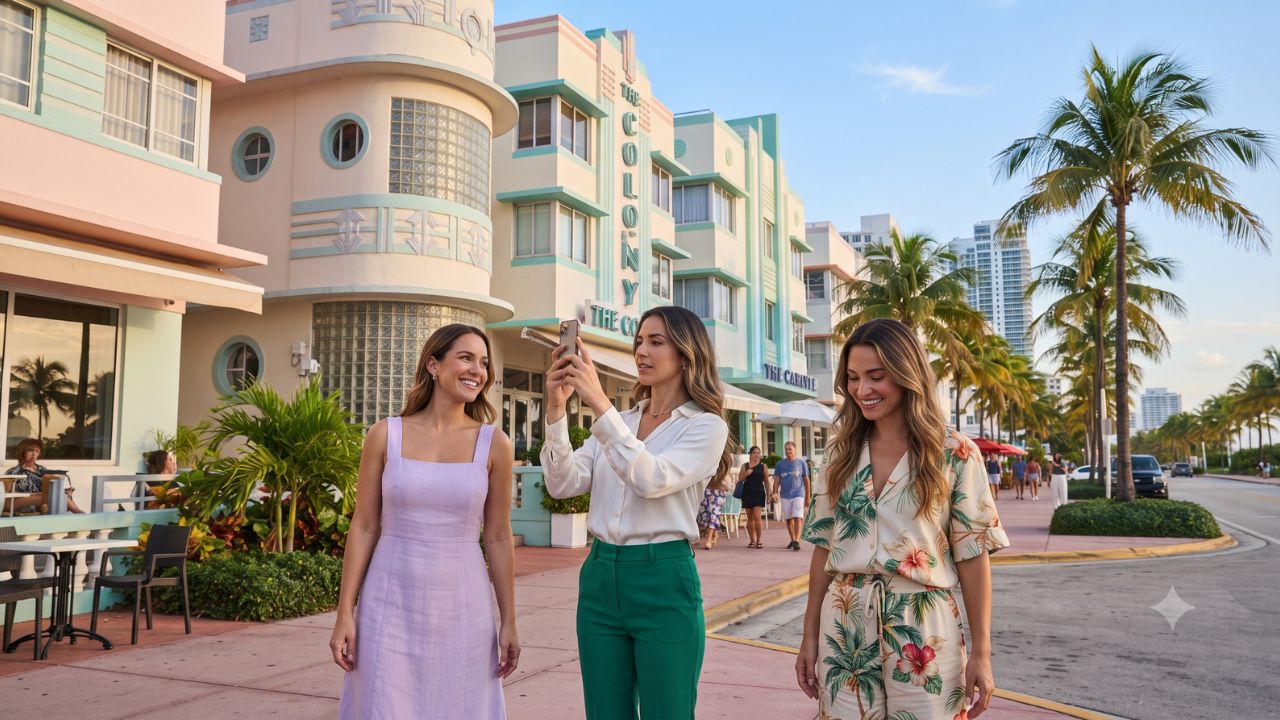
While millions of vacationers associate Miami strictly with poolside DJ sets and neon nightlife, the city’s architectural evolution spans from 1896 railroad hotels and post-1926 hurricane Art Deco rebuilds to Cuban refugee processing centers and hyper-modern towers. Across distinct municipal enclaves, travelers in 2026 are trading routine beach itineraries for neighborhood-by-neighborhood walking tours that reveal how immigration, climate adaptation, and urban design built South Florida.
The Multi-Era City: Nine Distinct Design Enclaves
Miami’s built environment reflects distinct historical thresholds rather than a uniform resort template:
- Downtown & The Freedom Tower: Following the arrival of Henry Flagler's Florida East Coast Railway in 1896, commercial centers expanded around Biscayne Boulevard. The 1925 Mediterranean-style Freedom Tower served as the federal processing facility for over 300,000 Cuban refugees during the 1960s and 1970s.
- Miami Beach Art Deco Historic District: Reconstructed rapidly after the devastating September 1926 hurricane, Ocean Drive, Collins Avenue, and Washington Avenue preserve the world’s largest concentration of 1930s resort architecture, defined by curved nautical corners, porthole windows, horizontal banding, and pastel stucco. The 2026 reopening of the Delano Miami Beach after an extensive multi-year renovation anchors the district alongside modern hospitality enclaves like the Faena District.
- Coconut Grove Tropical Vernacular: Miami's oldest continuously inhabited neighborhood features 19th-century pioneer homes like The Barnacle (built in 1891 with raised piers and maritime ventilation) alongside the Italian Renaissance villa of Vizcaya Museum and Gardens.
- Coral Gables Mediterranean Revival: Master-planned in the 1920s by George Merrick, this garden suburb features coral-rock plazas, the historic Biltmore Hotel, and the Venetian Pool, a public freshwater lagoon carved from a native coral quarry.
- Little Havana & Calle Ocho: Settled heavily after the 1959 Cuban revolution, this district pairs mid-century South Florida bungalows with cigar rolling shops, domino parks, and open-air espresso windows (ventanitas).
- Historic Overtown: Known as 'Colored Town' during the segregation era, Overtown preserves civil rights milestones at the Historic Lyric Theater and the Historic Hampton House, which provided lodging for Black luminaries and athletes barred from beachside hotels.
- Wynwood & The Design District: Transformed into global arts corridors following the launch of Art Basel Miami Beach in 2002, Wynwood showcases large-scale warehouse murals while the neighboring Design District showcases high-end retail structures by Pritzker Prize-winning architects.
- Brickell Waterfront: South Florida's financial center, where glass-sheathed supertowers line Biscayne Bay.
What Makes Miami’s Built Environment Different
| Neighborhood | Era & Architectural Style | Landmark Cultural Sites |
|---|---|---|
| Miami Beach | 1930s Art Deco & Streamline Moderne | Ocean Drive, Delano Miami Beach, Faena |
| Downtown | 1890s Railroad Era & 1920s Spanish Revival | Freedom Tower, Flagler Street |
| Coral Gables | 1920s Mediterranean Revival | The Biltmore Hotel, Venetian Pool |
| Coconut Grove | 1890s Subtropical Timber & Renaissance | The Barnacle, Vizcaya Gardens |
| Overtown | Early-to-Mid 20th Century Heritage | Lyric Theater, Historic Hampton House |
| Brickell | 21st-Century Contemporary High-Rise | Brickell Avenue, Biscayne Bayfront |
Visitor Insider Tips: Navigating Miami’s Architectural Corridors
- Take the Free Metromover Above Downtown and Brickell: Avoid congested city traffic by riding the automated elevated Metromover system, which offers panoramic views of Brickell’s modern high-rises and Downtown landmarks at zero cost.
- Join Morning Art Deco Walking Tours: Book early 09:00 walking tours led by the Miami Design Preservation League along Ocean Drive before afternoon heat and humidity build up.
- Swim at the Venetian Pool on Weekday Mornings: Coral Gables caps daily entry to preserve water quality in the 820,000-gallon natural spring pool; buy tickets online in advance to bypass morning sellouts.
- Order Café con Leche at Little Havana Walk-Up Windows: Stop along Southwest 8th Street (Calle Ocho) for a traditional cortadito and guava pastelito while watching locals play chess and dominoes at Maximo Gomez Park.
Cultural and Environmental Context: Preservation in a Coastal Climate
Preserving low-rise historical districts along Biscayne Bay requires balancing urban development pressures with environmental adaptation. Rising sea levels and hurricane exposure compel municipal engineers and preservation societies to install tidal backflow valves, elevate historical foundations, and restore natural mangrove buffers.
Cultural initiatives promoted by the Greater Miami Convention & Visitors Bureau encourage travelers to spread economic impact across independent neighborhood businesses, supporting historic Black theaters in Overtown, family-owned bodegas in Little Havana, and local conservation trusts throughout Dade County.
FAQ: Exploring Miami's Architecture 2026
What caused the building boom that created Miami Beach’s Art Deco district?
A devastating hurricane in September 1926 destroyed earlier wooden structures, prompting architects in the 1930s to rebuild using streamlined geometric Art Deco styles.
What is the historical significance of the Freedom Tower?
Completed in 1925, the Freedom Tower served as the federal reception and medical processing center for over 300,000 Cuban migrants during the 1960s and 1970s.
How can I travel between Downtown Miami, Brickell, and Wynwood affordably?
The elevated Metromover is completely free across Downtown and Brickell, while free municipal trolleys link Downtown with Wynwood, Little Havana, and Coconut Grove.
When did the Delano Miami Beach reopen?
Following an extensive multi-year preservation and renovation program, the historic Delano Miami Beach property reopened its doors in 2026.
Tracing Miami’s architectural lines reveals that beyond the turquoise surf lies a complex century of resilience, migration, and visionary design.
Related Travel Guides
Disclaimer
This article is for informational and educational purposes only. It does not constitute legal, financial, or professional advice. While we strive to provide accurate and up-to-date information, travel policies, regulations, and conditions change rapidly. Always verify information with official sources before making travel decisions. Nomad Lawyer makes no representations about the accuracy, reliability, completeness, or suitability of the information provided. Readers should consult qualified professionals for advice specific to their circumstances. The views expressed in this article are those of the author and do not necessarily reflect the views of Nomad Lawyer.
Naina Thakur
Contributor & Travel Specialist
Travel enthusiast and legal writer covering visa regulations, responsible tourism, and cultural journeys across global destinations.
Learn more about our team →