
Destination Campaigns: Tokyo Haneda Airport Launches North Satellite Facility
Tokyo Haneda Airport opens the Terminal 1 North Satellite Facility, featuring six gates to support Japan's 60 million visitor target.

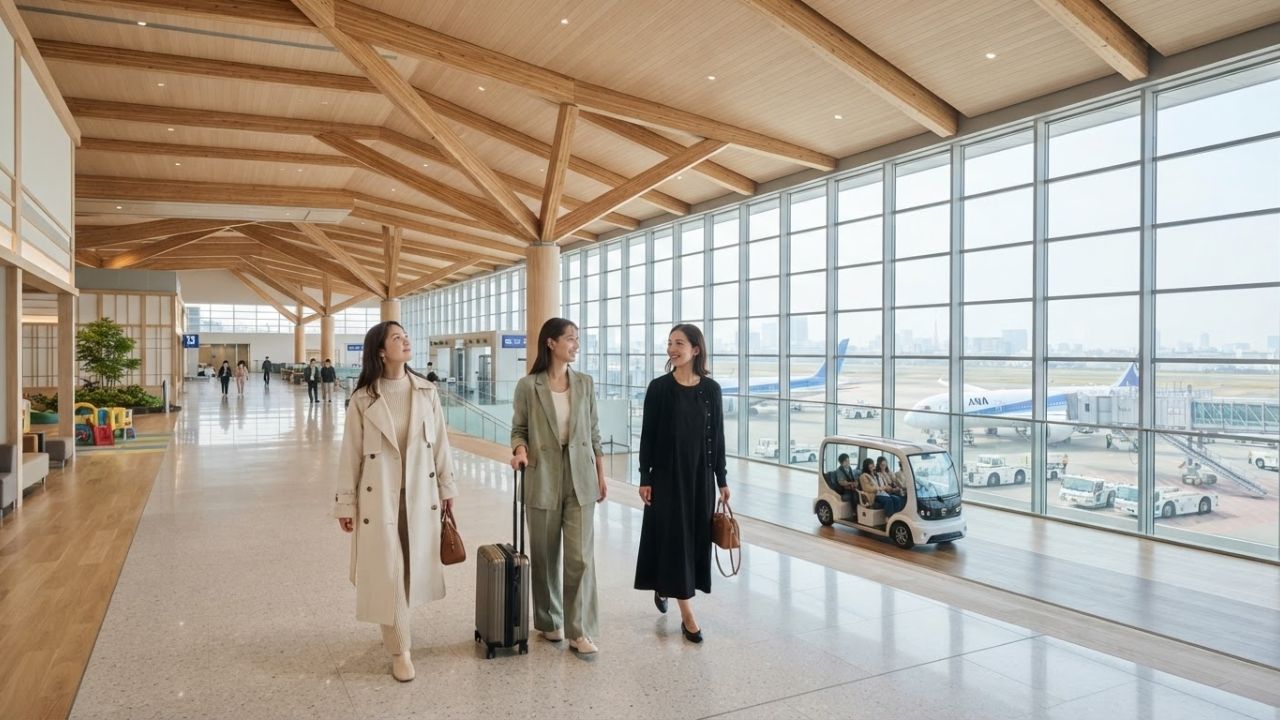
Image generated by AI
Tokyo Haneda Airport opens the Terminal 1 North Satellite Facility, featuring six gates to support Japan's 60 million visitor target. The Japan Tourism Agency (JTA) indicates that expanding terminal capacity at major international hubs coordinates rising traveler flows, supporting regional hotel networks across the prefecture.
The Transition of Airport Gateways to Environmentally Aware Transit Nodes
A notable trend in East Asian travel planning is the transition of airport gateways into environmentally aware transit nodes. Historically, international airport operators managed structural expansions using pure concrete and steel frameworks, treating passenger terminals as industrial transit spaces without local architectural reference. In 2026, rising global visitor demand and national carbon-neutrality pledges encourage aviation boards to adopt hybrid construction methods, integrating regional timber with steel structures to create welcoming, low-carbon environments for international arrivals.
By coordinating terminal design with sustainable resource parameters, operators minimize environmental footprints. This local-first development model coordinates support for regional forestry suppliers, airport utility systems, and domestic transit networks.
Tokyo Haneda Airport North Satellite Sourcing Parameters
The newly opened facility represents the largest single expansion of Terminal 1 since its operations began in 1993:
- Expanded Infrastructure: Features the North Satellite Facility at Terminal 1, adding six additional boarding gates.
- Eco-Conscious Materials: Built using steel and approximately 1,800 cubic metres of timber.
- National Target: Supports Japan's goal of welcoming 60 million international visitors annually by 2030.
- Annual Airport Volume: Handled more than 90 million passengers in the previous year (first time crossing this milestone).
- Flight Movement Density: Logged approximately 490,000 take-offs and landings, near the hub's operational limit.
- Autonomous Transit: Introduces free self-driving vehicles that carry up to four passengers to assist mobility.
- On-Time Flight Rates: The average on-time departure rate for top Japanese airlines stood at 83% during the 2025 fiscal year.
To improve luggage processing across the longer gate corridors, airlines have changed the domestic baggage check-in deadline from 20 minutes to 30 minutes before departure.
Japanese Tourism Sourcing and Campaign Coordinates
The table below breaks down the project sectors, specific gate expansions, material requirements, annual target timelines, transit capacities, and coordinating authorities recorded on August 25, 2026:
| Core Project Sector | Specific Gate Expansion | Material Requirement | Annual Target Timeline | Transit Capacity | Coordinating Authority |
|---|---|---|---|---|---|
| National tourism | Terminal 1: 6 new gates | 1,800 cubic meters timber | 60M tourists by 2030 | 90M passengers | Tourism Agency (JTA) |
| Airport infrastructure | North Satellite Facility | Steel and timber hybrid | 1993 Terminal 1 launch | 490,000 movements | Ministry of Transport (MLIT) |
| Passenger logistics | Baggage: 30-min deadline | Self-driving terminal cart | FY2025 on-time rate: 83% | 4 passengers max | Tokyo Airport Board |
| Eco-friendly design | Sustainable airport wood | Low-carbon steel frames | Regional forestry check | Terminal 1 walk routes | Tokyo Metropolitan Gov |
These coordinates outline the sectors, gates, materials, timelines, capacities, and authorities established for the national aviation programs.
Resource Stewardship and Eco-Aware Tokyo Travel
For the traveler, the benefit of choosing airports that construct passenger halls with sustainable timber is the lower carbon footprint compared to standard metal-only terminals. Checking bags early and using electronic boarding passes on mobile devices avoids paper check-in ticket waste.
Additionally, using the automated self-driving shuttles helps distribute transit flows smoothly without extra energy use. Purchasing food from independent local vendors in the terminal coordinates support for regional organic agricultural farms.
For comparison, you can explore the changing dynamics of TUI Launches Gatwick to Djerba Flights for Summer 2027 to see how operators expand package routes. For transit updates, comparing travel scheduling matches other networks, such as Philippine Airlines Seat Sale Promotes Regional Tourism updates. This trend is similar to the tourism growth seen in other destinations, as detailed in our guide on the Hacienda Heights Bus Fire Transport Safety regulations.
Passenger Insider Tips: Navigating the Haneda Terminal Expansion
If you are planning to transit through Tokyo Haneda Airport, keep these practical tips in mind:
- Observe the 30-Minute Baggage Rule: Ensure you check in your domestic flight luggage at least 30 minutes prior to departure to avoid missing your flight.
- Locate the Autonomous Shuttles: Look for the self-driving mobility zones in Terminal 1 to take advantage of the free four-passenger shuttle carts.
- Check Gate Distances in Advance: Note your gate assignment on your phone; the new satellite facility requires a longer walk from security checkpoints.
- Arrive Earlier at Security: Allow an extra 30 to 45 minutes for security lines, especially as flight movements average 490,000 annually.
- Use the Family and Quiet Zones: Utilize the newly opened children's play area and lounge in the North Satellite for a quieter pre-flight wait.
Long-Term Outlook for Japan's Aviation Transit Infrastructure
The long-term outlook for transit is focused on transitioning terminal cargo towing vehicles to electric battery power, upgrading runway radar tracking to support high-density traffic beyond the 490,000 landing limit, and expanding digital facial-recognition boarding gates. As international traveler numbers grow, national transport groups and regional aviation councils will cooperate to maintain passenger standards.
By developing sustainable transit options and protecting terminal resources, the tourism sector aims to build a sustainable transport network.
FAQ
When did the Haneda Airport Terminal 1 North Satellite open?
The new expansion facility commenced operations on August 25, 2026, marking a major milestone for Japan's aviation infrastructure.
How many boarding gates does the new satellite facility feature?
The North Satellite Facility adds six new boarding gates to Terminal 1 to handle growing domestic and international traveler volume.
What is the new check-in deadline for domestic luggage?
Passengers must check in their baggage at least 30 minutes before departure, compared to the previous 20-minute recommended deadline.
What sustainable materials were used in the terminal's construction?
The expansion combines structural steel with approximately 1,800 cubic meters of timber to reduce environmental impacts.
Stay updated on regional travel regulations and conservation campaigns shaping Japanese transit.
Related Travel Guides
Disclaimer
This article is for informational and educational purposes only. It does not constitute legal, financial, or professional advice. While we strive to provide accurate and up-to-date information, travel policies, regulations, and conditions change rapidly. Always verify information with official sources before making travel decisions. Nomad Lawyer makes no representations about the accuracy, reliability, completeness, or suitability of the information provided. Readers should consult qualified professionals for advice specific to their circumstances. The views expressed in this article are those of the author and do not necessarily reflect the views of Nomad Lawyer.
Raushan Kumar
Founder & Lead Developer
Full-stack developer with 11+ years of experience and a passionate traveller. Raushan built Nomad Lawyer from the ground up with a vision to create the best travel and law experience on the web.
Learn more about our team →