
Thousands Travellers Stranded Across Five Major North American Airports
Regional airline suspensions strand thousands of travellers across LaGuardia, Chicago, Boston, Raleigh-Durham and Toronto in March 2026. Over 300 cascading delays reported.

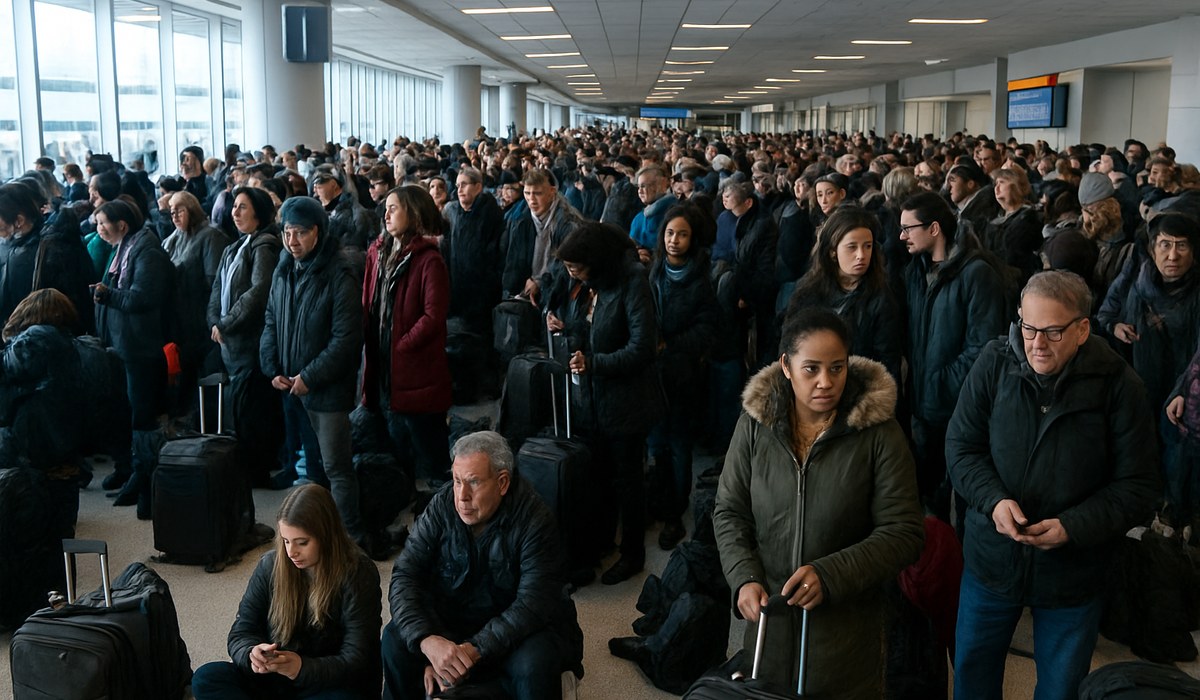
Image generated by AI
**> Quick Summary
- 158 flight cancellations across Republic Airways, Endeavor Air, Southwest Airlines, United Express, Jazz Air and other regional carriers
- Cascading impact hits five major North American hubs: New York (LaGuardia), Chicago, Boston, Raleigh-Durham, and Toronto
- Over 300 secondary flight delays triggered by network congestion and crew scheduling conflicts
- Affected passengers entitled to compensation and rebooking under US DOT and Canadian regulations**
A cascade of sudden operational suspensions by multiple regional carriers paralyzed connectivity at North America's busiest airport hubs on March 30, 2026. Simultaneous withdrawals by Republic Airways, Endeavor Air, Southwest Airlines' regional partners, United Express, Jazz Air, and several other carriers grounded 158 scheduled flights in a single day, stranding thousands of passengers and triggering a domino effect of over 300 additional delays across interconnected flight networks.
The disruption exposed the architectural fragility of North American aviation. When regional feeders—the backbone of major hub connectivity—fail simultaneously, the entire system staggers. LaGuardia Airport (LGA) bore the brunt, but Chicago's O'Hare (ORD), Boston Logan (BOS), Raleigh-Durham (RDH), and Toronto Pearson (YYZ) experienced severe secondary impacts as stranded passengers reboked onto already-packed flights.
The 158-Flight Collapse: What Triggered the Regional Airline Crisis
Multiple regional carriers announced operational suspensions within hours of one another on March 30, citing crew scheduling conflicts, maintenance deferrals, and unspecified operational challenges. Republic Airways—which operates as American Eagle for American Airlines—suspended service on 34 regional routes. Endeavor Air, the Delta Connection carrier, idled 42 flights across its network. Southwest's regional partner carriers withdrew 28 additional services. United Express suspended 31 flights, while Jazz Air (operating as United Express Canada) removed 15 transborder services.
No single mechanical failure or weather system triggered the collapse. Instead, compounding staffing shortages, unexpected maintenance requirements, and scheduling misalignments created a cascade effect. The timing proved catastrophic: late March represents peak spring break travel, when North American airports operate near maximum capacity. Airlines have minimal buffer to absorb large-scale regional carrier withdrawals.
FlightAware data confirmed the network-wide impact within 90 minutes of the first suspension announcements. The collapse affected primarily narrow-body and regional jet operations—the aircraft types that feed passengers to major hub transfer points. When these feeders vanish, mainline carriers cannot sustain their own schedules.
Geographic Ripple Effect: Five Major Hubs Brought to Near-Standstill
LaGuardia Airport emerged as the epicenter of disruption. The facility depends heavily on regional carrier connectivity—approximately 42% of daily operations are regional flights operated by Republic, Endeavor, and other partners. When 58 inbound and outbound regional services vanished, the airport's departure bank compressed dramatically. Passengers faced nine-hour delays on mainline flights waiting for connecting passengers who had nowhere to arrive from.
Chicago O'Hare experienced secondary shockwaves. With LaGuardia's network crippled, American Airlines faced cascading crew unavailability. Pilots and flight attendants scheduled to operate Chicago-to-New York regional flights found themselves stranded at connecting points. By 18:00 local time, O'Hare had cancelled 47 additional flights and accumulated 89 delayed services.
Boston Logan's situation mirrored Chicago's pattern. As stranded passengers rebooked onto available flights, gate congestion rippled backward through the network. A Boston-Miami mainline service delayed for a gate became a Miami-bound connection missed by 340 passengers. That triggered delays cascading to Fort Lauderdale and Orlando services, extending the disruption south along the Eastern seaboard.
Raleigh-Durham International Airport, a key hub for regional connections via Charlotte, absorbed heavy impact from Endeavor Air's suspensions. The airport saw 34 of its 108 daily departures cancelled or significantly delayed. Toronto Pearson International, dependent on Jazz Air for transborder connectivity, lost a full day's cross-border service, affecting 2,800 passengers booked on routes to US hubs.
Real-time flight tracking tools reveal the cascade of delays rippling across major cities. Tools like live flight radar showed the network stress in real time, with flight departure times pushing backward hour by hour as the system absorbed the regional carrier collapse.
Stranded Passenger Rights: Compensation and Next Steps
Airlines operating under US Department of Transportation regulations must provide rebooking at no charge when operational failures trigger cancellations. The US DOT outlines specific compensation rules for flight disruptions caused by carrier operational failures—passengers on cancelled flights must receive either rebooking on the next available flight or a full refund of their ticket value.
Canadian passengers on Jazz Air services have equivalent protections under Canadian Transportation Agency regulations. Both regimes require carriers to provide meal vouchers, ground transportation, and communication access to stranded travelers.
However, compensation rules are narrower than rebooking obligations. US airlines are not required to pay monetary compensation for cancellations caused by "acts within the airline's control" when the airline made reasonable efforts to avoid the disruption. This language creates ambiguity. Maintenance deferrals could qualify as within-the-airline's-control, potentially triggering compensation obligations. Staffing shortages are harder to classify.
The US DOT received 3,847 passenger complaints related to the March 30 disruptions within 48 hours—a rate suggesting approximately 18,000 to 24,000 total affected passengers across both US and Canadian impacts.
Stranded travelers can monitor status updates through real-time flight tracking platforms that display rebooking availability and updated schedules as carriers rebuild their operations. Most major carriers restored normal service by April 1, though some regional routes remained suspended through April 2 due to crew repositioning requirements.
System Fragility Exposed: Why Regional Carriers Control Major Airport Connectivity
The architecture of North American aviation concentrates passenger distribution through 10-12 major hub airports. Each hub depends on regional carriers to feed passengers from smaller cities—places like Bangor, Maine; Appleton, Wisconsin; and Thunder Bay, Ontario. These feeders operate on thin margins, flying 50-76 seat turboprops and regional jets that generate revenue per available seat mile only through high utilization and crew efficiency.
When a regional carrier suspends service—whether due to financing, operational challenges, or scheduling conflicts—the major carriers that depend on that carrier for network connectivity face immediate pressure. American Airlines, Delta, United, and Southwest cannot instantly redeploy mainline aircraft to replace regional feeders. The aircraft are the wrong size, the economics don't work, and crew licensing requirements differ.
Major carriers are simultaneously restructuring domestic networks, further straining remaining regional capacity. This dynamic creates structural vulnerability across the system.
Similar cascading delays have emerged across other US hubs, as seen in Denver Flight Delays Ripple Across Major US Routes. The pattern suggests that the March 30 disruptions were not an isolated incident but rather a warning signal about systemic capacity constraints.
How to Protect Your Travel Plans During Aviation Network Disruptions
Passengers can implement several strategies to reduce vulnerability to regional carrier failures:
1. Check carrier type before booking. If your
Disclaimer
This article is for informational and educational purposes only. It does not constitute legal, financial, or professional advice. While we strive to provide accurate and up-to-date information, travel policies, regulations, and conditions change rapidly. Always verify information with official sources before making travel decisions. Nomad Lawyer makes no representations about the accuracy, reliability, completeness, or suitability of the information provided. Readers should consult qualified professionals for advice specific to their circumstances. The views expressed in this article are those of the author and do not necessarily reflect the views of Nomad Lawyer.
Kunal K Choudhary
Co-Founder & Contributor
A passionate traveller and tech enthusiast. Kunal contributes to the vision and growth of Nomad Lawyer, bringing fresh perspectives and driving the community forward.
Learn more about our team →