
This Lesser-Known City in Vietnam Is Now a Surprising Smart Tourism Powerhouse as AI-Driven Travel Tech, Virtual Experiences, and Digital Innovation Completely Redefine How Visitors Explore the Region
Cà Mau is transforming into a smart tourism powerhouse using AI, virtual reality, and Resolution 57 to digitize the Meko

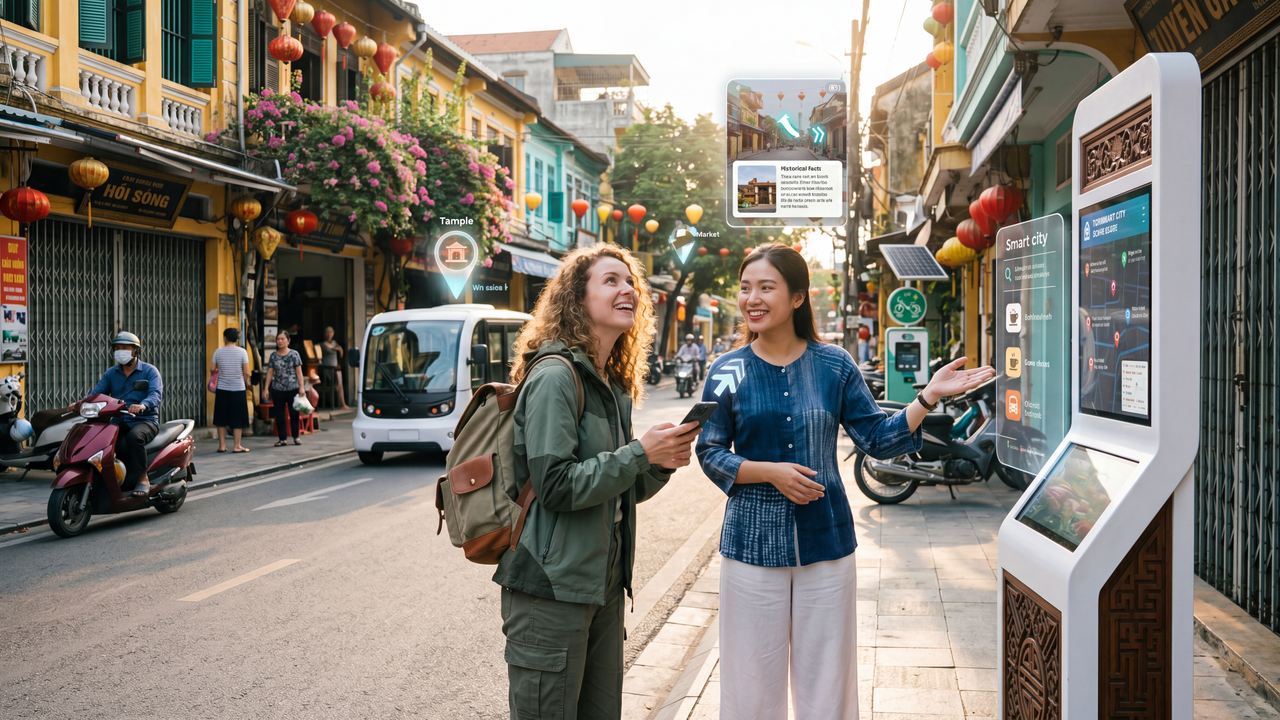
Image generated by AI
[Cà Mau, June 26, 2026] — The Vietnamese province of Cà Mau is undergoing a rapid digital metamorphosis, implementing AI-driven travel technology and virtual reality experiences to transition from a traditional destination into a regional smart tourism powerhouse. This systemic overhaul is being steered by Resolution 57, a strategic policy framework designed to modernize public services and tourism infrastructure through comprehensive digital innovation.
Strategic Digital Foundations in Cà Mau
Before deploying advanced tourist-facing applications, regional authorities focused on establishing a robust hardware and connectivity layer. Industry reports indicate that the province has successfully eliminated network dead zones, ensuring that digital services are accessible even in the most isolated coastal and rural sectors.
Current infrastructure benchmarks in the region include:
- Universal broadband and telecommunications coverage for the entire population.
- Deployment of fiber-optic connectivity across all residential zones and hamlets.
- Stabilized internet access in remote rural and coastal areas.
- A high-capacity digital backbone capable of supporting complex public and tourism data systems.
This foundational work is essential for the broader success of Mekong Delta tourism, as it allows smaller provinces to increase their global visibility and accessibility through digital channels rather than relying solely on physical infrastructure expansion.
Enhancing Visitor Engagement via Smart Tourism Vietnam
The shift from traditional tourism—characterized by physical maps and brochures—to a "smart" ecosystem is now evident in the visitor experience. Cà Mau is implementing a multi-layered digital strategy that allows travelers to interact with the destination long before they arrive.
According to industry observers, the province is integrating several key technologies to redefine exploration:
- Real-Time Navigation: Mobile applications providing live guidance and location-based services for visitors.
- Immersive Previews: 360-degree virtual tours of major attractions, allowing for digital "pre-visits."
- Digitized Heritage: The conversion of ecological and cultural sites into digital formats for easier access.
- Advanced Planning: The introduction of immersive tools to help tourists map out their journeys with high precision.
This approach aligns with the growing trend of virtual tourism in Vietnam, where the boundary between physical visitation and digital exploration is blurring, providing a more seamless transition for international and domestic travelers.
AI Integration and Data-Driven Tourism Management
Beyond the user interface, a sophisticated "invisible layer" of technology is being deployed to optimize how the province manages its resources and visitor flows. Cà Mau is increasingly relying on AI tourism platforms to move away from static planning and toward dynamic, real-time decision-making.
The backend technological stack currently includes:
- Behavioral Analytics: Using AI to analyze visitor movement patterns and preferences.
- Cloud Infrastructure: Centralized systems for managing administrative and tourism-related data.
- Predictive Modeling: Utilizing Big Data to forecast tourism trends and demand.
- Environmental Safeguards: Monitoring systems linked to tourism zones to track climate risks and coastal erosion.
By leveraging these tools, authorities can identify not only where tourists are congregating but also why they are choosing specific sites, allowing for targeted improvements in service delivery.
The Evolution of the Digital Travel Experience in Asia
The transformation in Cà Mau reflects a wider shift across Asia, where the travel experience is becoming increasingly decoupled from the physical act of arrival. The journey now begins with digital touchpoints that personalize the entire trip.
Modern travelers in the region now benefit from:
- Integrated platforms for comprehensive trip planning.
- Live updates regarding travel conditions and local accessibility.
- Digital repositories of cultural and natural information.
- Personalized itineraries generated through data-driven insights.
This integration ensures that visitors engage more deeply with the unique ecosystems and coastal attractions of Cà Mau through a hybrid of physical and digital interaction.
Modernizing Governance Through Resolution 57
While the tourist-facing tech is high-profile, the administrative modernization mandated by Resolution 57 is providing the necessary operational efficiency. The digitization of governance directly impacts the ease of travel by streamlining the bureaucracy associated with visiting the region.
The impact of these governance upgrades is reflected in the following data:
| Administrative Metric | Current Status / Achievement |
|---|---|
| Procedural Efficiency | Over 97% of administrative tasks processed on time |
| Transparency | Full public disclosure of all government procedures |
| Service Access | Expanded online public services for visitors and residents |
| National Integration | Full synchronization with national digital service platforms |
| Identity Management | Increased adoption of electronic identity (e-ID) systems |
Community Integration and Digital Literacy
To prevent a "digital divide," Cà Mau is ensuring that the smart tourism transition is not limited to government offices or luxury hotels. There is a concerted effort to push technology into the hands of local community members and small-scale entrepreneurs.
Efforts to democratize technology include:
- Digital literacy programs specifically designed for rural populations.
- Technical support to help small, community-based tourism businesses establish an online presence.
- The creation of community-led digital platforms for local engagement.
- Household-level training to ensure widespread adoption of online services.
This grassroots approach is vital for Mekong Delta tourism, as the region's primary appeal often lies in authentic, community-based experiences that require local participation in the digital economy.
Overcoming Implementation Barriers
Despite the rapid progress, the transition to a fully smart ecosystem faces several systemic challenges. Industry sources note that the gap between policy ambition and technical execution remains a hurdle.
Key obstacles include:
- A shortage of highly skilled digital professionals and data scientists.
- Inconsistent levels of digital proficiency across different rural communities.
- Budgetary constraints limiting the acquisition of the most advanced tourism technologies.
- Siloed data systems that hinder seamless integration between different government departments.
Future Trajectory of Cà Mau’s Tech Ecosystem
The next phase of development in Cà Mau is expected to move beyond basic digitization toward a fully integrated, intelligent tourism network. Future objectives include the deeper integration of AI into daily management, the creation of more sophisticated interactive virtual models, and enhanced real-time data sharing between various state agencies.
Why This Matters (Information Gain)
The transformation of Cà Mau serves as a critical case study in how "secondary" or lesser-known regions can leapfrog traditional development stages by adopting a digital-first strategy. By prioritizing the "boring" infrastructure—broadband and administrative digitization—before launching flashy AI apps, Cà Mau has avoided the common pitfall of deploying "smart" tools on a "dumb" foundation.
For the broader aviation and travel industry, this signals a shift in destination marketing. The value proposition is no longer just the physical landscape, but the "digital ease" of the journey. As Cà Mau integrates AI and Big Data, it creates a blueprint for other rural provinces in Southeast Asia to attract high-value, tech-savvy travelers who prioritize seamless, personalized, and sustainable experiences over mass tourism. This evolution suggests that the future of regional tourism in Asia will be defined by a hybrid model where the digital layer enhances, rather than replaces, the physical discovery of a place.
Related Travel Guides
Disclaimer
This article is for informational and educational purposes only. It does not constitute legal, financial, or professional advice. While we strive to provide accurate and up-to-date information, travel policies, regulations, and conditions change rapidly. Always verify information with official sources before making travel decisions. Nomad Lawyer makes no representations about the accuracy, reliability, completeness, or suitability of the information provided. Readers should consult qualified professionals for advice specific to their circumstances. The views expressed in this article are those of the author and do not necessarily reflect the views of Nomad Lawyer.
Kunal K Choudhary
Co-Founder & Contributor
A passionate traveller and tech enthusiast. Kunal contributes to the vision and growth of Nomad Lawyer, bringing fresh perspectives and driving the community forward.
Learn more about our team →