
Military's Giant Cargo Workhorse: Why the C-5 Galaxy Will Fly Until 2050
Breaking airline news and aviation industry updates for 2026.

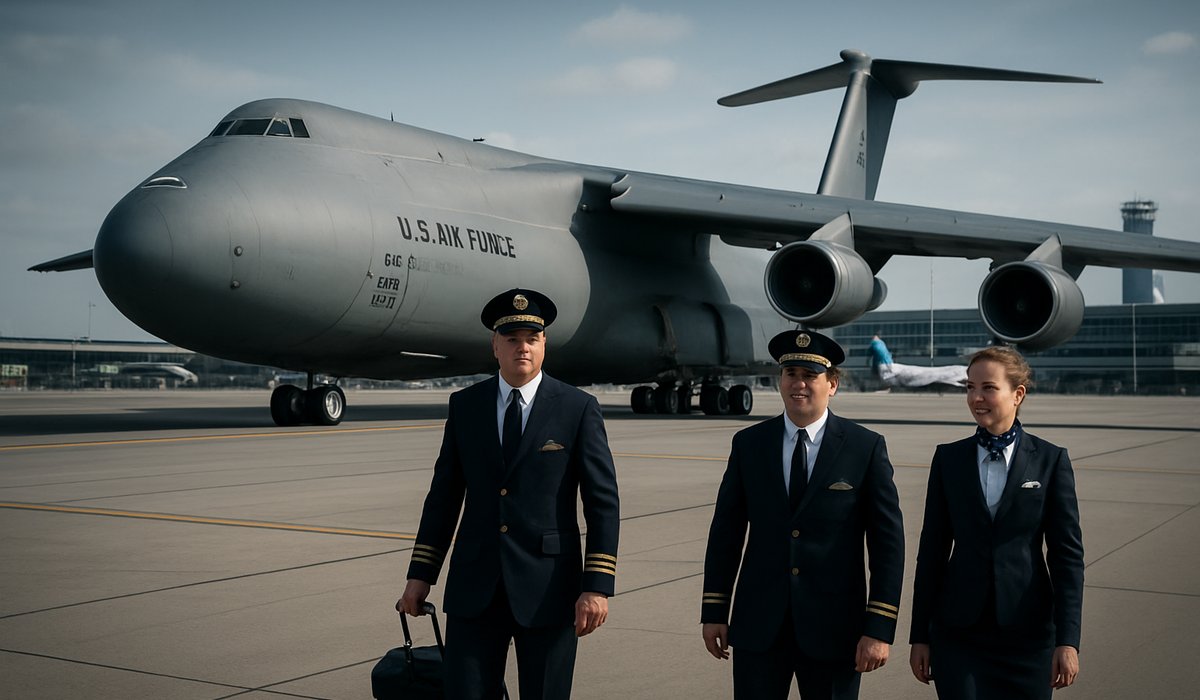
Image generated by AI
Military's Giant Cargo Workhorse: Why the C-5 Galaxy Will Fly Until 2050
As the U.S. Air Force extends the legendary transport aircraft's operational life, no viable replacement exists for its unique strategic capabilities
An Irreplaceable Asset in America's Military Arsenal
The Lockheed C-5 Galaxy stands alone in the American military aviation fleet. Nearly 60 years after its first operational flight, the massive strategic transport aircraft remains so functionally unique that the U.S. Air Force has committed to keeping it flying through 2050—meaning some airframes will exceed six decades of service life. Despite decades of periodic retirement discussions and technological advancement, no alternative platform can replicate the Galaxy's extraordinary cargo-carrying capabilities, effectively locking the military into a long-term operational commitment with the aging fleet.
A Legacy Aircraft with No Successor
The C-5 Galaxy was designed during an era when Cold War strategic requirements demanded an aircraft capable of transporting oversized military equipment—tanks, helicopters, and other heavy systems—across intercontinental distances without intermediate refueling. Over five decades later, that fundamental requirement remains unchanged, yet the aviation industry has produced no adequate replacement.
The Air Force's decision to extend operations through 2050 represents a pragmatic acknowledgment of operational reality. Developing and fielding a new strategic airlift platform would require years of research, development, and testing—a timeline the military simply cannot afford given ongoing global commitments. Meanwhile, retiring the C-5 fleet without a ready substitute would create a critical capability gap in America's power projection infrastructure.
The Economics of Extended Operations
While extending the C-5's lifespan presents significant maintenance and modernization costs, the expense pales in comparison to developing an entirely new aircraft from concept to operational deployment. Military procurement programs routinely exceed budgetary expectations and schedule delays; the C-5 modernization pathway offers relative cost predictability.
The aircraft's continued relevance reflects deeper trends in military logistics and geopolitical strategy. As global tensions persist and rapid force deployment remains central to American defense doctrine, the Galaxy's irreplaceable cargo capacity ensures sustained demand for its services.
What the Future Holds
The Air Force's operational planning through 2050 envisions continued modernization efforts aimed at improving reliability, extending component life, and integrating advanced avionics. These upgrades will sustain the fleet's effectiveness while managing aging infrastructure challenges.
Ultimately, the C-5 Galaxy's extended operational life underscores a critical reality in aerospace procurement: sometimes, the most strategically valuable asset is the one that already exists and performs its mission without equal.
FAQ: Understanding the C-5 Galaxy's Extended Service Life
Why can't the U.S. military replace the C-5 Galaxy with a newer aircraft? No existing or planned military transport aircraft possesses the C-5's combination of payload capacity, range, and landing capabilities. Developing a true replacement would require a multi-billion dollar program spanning 15-20 years, making fleet extension the more practical option.
How much does it cost to maintain the C-5 fleet? While specific annual figures fluctuate, sustainment and modernization efforts represent substantial ongoing investments. However, these costs remain lower than the developmental expenses for an entirely new strategic airlift platform.
What maintenance challenges does a 60-year-old military aircraft face? Aging airframes require more frequent component replacements, more intensive structural inspections, and careful management of corrosion and fatigue. Modern upgrades help mitigate these issues but cannot eliminate them entirely.
Could commercial cargo aircraft like the Boeing 747 or Airbus A380 replace military transport? Commercial freighters lack the military specifications required—including unpressurized cargo decks, specialized loading systems, and rough-field landing capabilities essential for forward military operations.
When will the C-5 Galaxy finally retire? Current Air Force plans extend operations through 2050, with some airframes potentially serving beyond that date depending on technological and geopolitical developments.
Related Travel Guides
External Resources
Disclaimer
This article is for informational and educational purposes only. It does not constitute legal, financial, or professional advice. While we strive to provide accurate and up-to-date information, travel policies, regulations, and conditions change rapidly. Always verify information with official sources before making travel decisions. Nomad Lawyer makes no representations about the accuracy, reliability, completeness, or suitability of the information provided. Readers should consult qualified professionals for advice specific to their circumstances. The views expressed in this article are those of the author and do not necessarily reflect the views of Nomad Lawyer.
Raushan Kumar
Founder & Lead Developer
Full-stack developer with 11+ years of experience and a passionate traveller. Raushan built Nomad Lawyer from the ground up with a vision to create the best travel and law experience on the web.
Learn more about our team →