
US Budget Airlines Demand $2.5 Billion Federal Bailout as Jet Fuel Crisis Escalates
Breaking airline news and aviation industry updates for 2026.

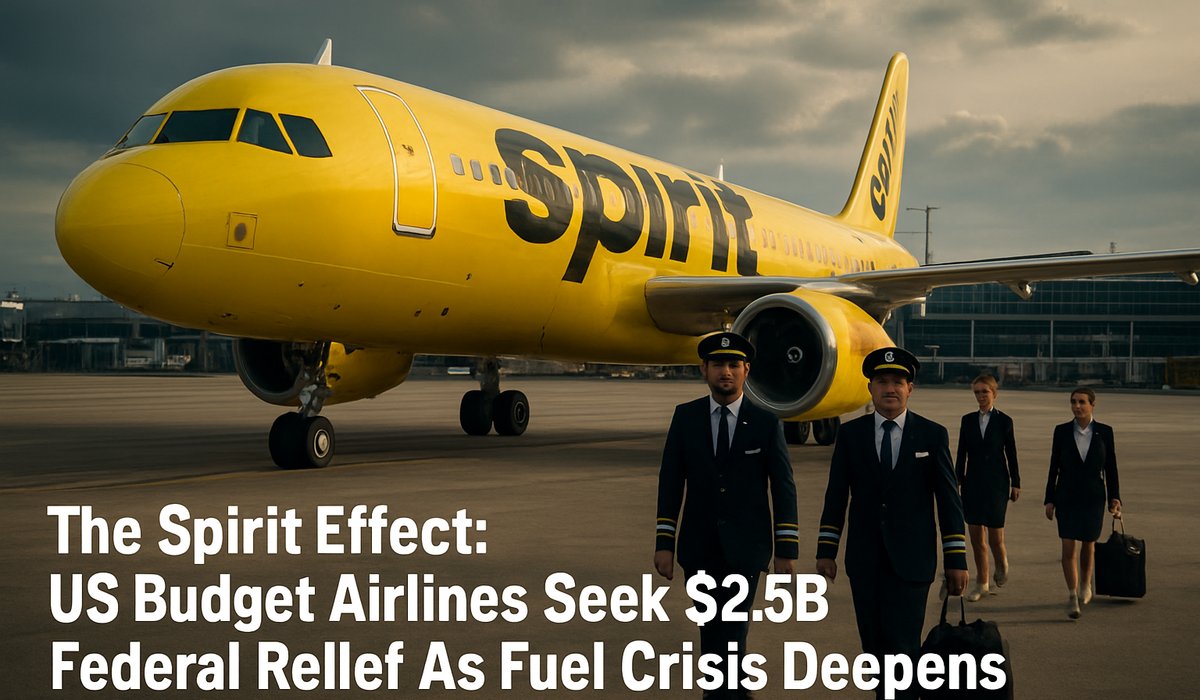
Image generated by AI
US Budget Airlines Demand $2.5 Billion Federal Bailout as Jet Fuel Crisis Escalates
Ultra-low-cost carriers face existential threat from geopolitical tensions driving energy markets higher
The Crisis Deepens for America's Discount Carriers
A coalition of United States budget airlines has launched an urgent appeal to Washington for $2.5 billion in emergency federal assistance, citing unsustainable increases in jet fuel costs stemming from escalating Middle East tensions. The move underscores growing alarm within the aviation sector over how geopolitical instability directly translates into operational hemorrhaging for carriers already operating on razor-thin margins.
The funding request comes as military developments involving the US and Israel have created turbulence in global energy markets, with crude oil prices surging and aviation fuel reaching levels that threaten the financial viability of low-cost operators.
Why Budget Airlines Are Most Vulnerable
Ultra-low-cost carriers (ULCCs) have built their business models around aggressive pricing strategies with minimal ancillary revenue compared to legacy carriers. With fuel costs representing up to 25-30% of total operating expenses—and that figure climbing rapidly—these airlines lack the financial cushion of larger competitors to absorb sustained price increases.
The $2.5 billion request represents an industry-wide acknowledgment that current revenue structures cannot accommodate prolonged exposure to elevated fuel prices without triggering service cuts, route closures, or fare increases substantial enough to undermine their competitive advantage.
Broader Implications for Travelers and the Industry
The appeal highlights a critical vulnerability in the modern aviation ecosystem. While passengers have benefited from fierce price competition among discount carriers over the past decade, that competition depends on stable fuel costs. Recent developments suggest that stability assumption is now obsolete.
Industry analysts predict that if federal relief is not forthcoming, budget airlines will have limited options: implementing significant baggage fee increases, reducing flight frequencies, suspending underperforming routes, or in worst-case scenarios, seeking bankruptcy protection.
The situation carries broader implications for the US travel market, where budget carriers now command approximately 25-30% of domestic capacity. Their potential retreat would reduce consumer choice and likely trigger fare increases across the entire industry.
What Comes Next
The federal government has not yet formally responded to the funding request. Historically, aviation relief packages have faced congressional scrutiny, particularly regarding whether assistance should come with operational or environmental strings attached.
Whether policymakers view this as a legitimate industry crisis requiring intervention—similar to pandemic-era relief—or as a market correction remains to be seen.
FAQ: Budget Airlines, Fuel Costs, and Travel
Q: Why are budget airlines more affected by fuel price increases than major carriers? A: Low-cost carriers operate with thinner profit margins and depend on competitive pricing. Unlike larger airlines with diversified revenue streams (premium cabins, loyalty programs), they cannot easily offset fuel surcharges through higher fares without losing market share.
Q: Could this crisis lead to higher airline baggage fees? A: Yes. If federal relief doesn't materialize, budget airlines will likely increase ancillary charges including baggage, seat selection, and change fees to recover lost margins from fuel costs.
Q: How do Middle East tensions directly impact jet fuel prices? A: Geopolitical instability in oil-producing regions creates supply uncertainty, prompting markets to price in risk premiums. Even without physical supply disruptions, anticipation of potential conflict drives crude and aviation fuel higher.
Q: Will consumers see immediate flight cancellations if relief is denied? A: Not immediately. Airlines will first exhaust options like raising fees and trimming frequencies on unprofitable routes before canceling service outright, though service reductions would likely appear within 2-3 months.
Q: Is the $2.5 billion request likely to be approved? A: That depends on congressional appetite for aviation subsidies and broader geopolitical calculations. Recent precedent suggests targeted industry relief can pass, but competing budget priorities may limit the amount ultimately allocated.
Related Travel Guides
Flight Delay Compensation Guide 2026
Understanding Airline Route Changes
Airport Security Process Updated (2026)
External Resources
Disclaimer
This article is for informational and educational purposes only. It does not constitute legal, financial, or professional advice. While we strive to provide accurate and up-to-date information, travel policies, regulations, and conditions change rapidly. Always verify information with official sources before making travel decisions. Nomad Lawyer makes no representations about the accuracy, reliability, completeness, or suitability of the information provided. Readers should consult qualified professionals for advice specific to their circumstances. The views expressed in this article are those of the author and do not necessarily reflect the views of Nomad Lawyer.
Raushan Kumar
Founder & Lead Developer
Full-stack developer with 11+ years of experience and a passionate traveller. Raushan built Nomad Lawyer from the ground up with a vision to create the best travel and law experience on the web.
Learn more about our team →