
FAA's New Secondary Cockpit Barrier Makes First Commercial Flight on Southwest Airlines Boeing 737
Breaking airline news and aviation industry updates for 2026.

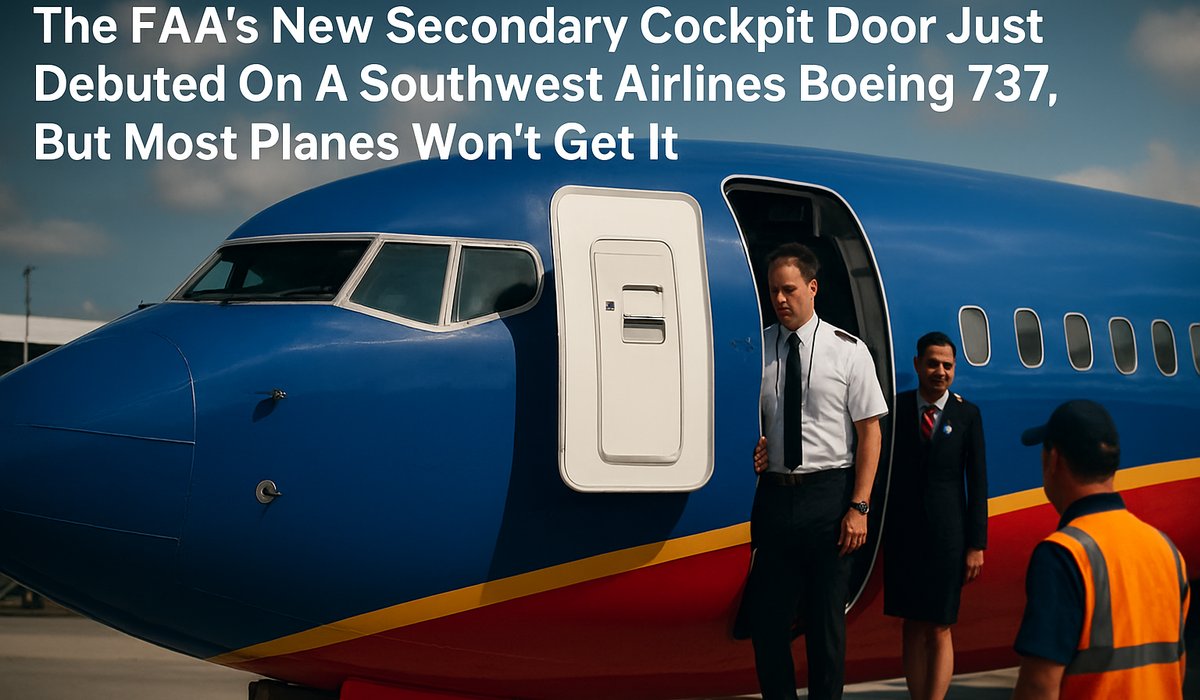
Image generated by AI
FAA's New Secondary Cockpit Barrier Makes First Commercial Flight on Southwest Airlines Boeing 737
Historic safety upgrade rolls out as aviation industry grapples with fortified cockpit access protocols
Breaking: Southwest Deploys First Secondary Cockpit Door in U.S. Commercial Aviation
Southwest Airlines marked a significant milestone in aviation security on August 29, 2025, when one of its Boeing 737 MAX 8 aircraft completed the inaugural commercial flight equipped with a newly mandated secondary cockpit barrier. The retractable gate—installed in the forward galley area—represents a groundbreaking addition to the Federal Aviation Administration's enhanced safety framework, creating an additional protective layer for the flight deck during vulnerable moments when the primary reinforced cockpit door is accessed.
The New Safety Architecture
The secondary barrier is designed to address a critical gap in existing cockpit security measures. While reinforced cockpit doors became standard across U.S. commercial aviation following post-9/11 protocols, the moments when pilots and crew members need to access the flight deck—whether for crew changes, emergency situations, or operational procedures—have historically presented potential vulnerabilities. The new retractable gate system mitigates this risk by providing an intermediate checkpoint in the galley vestibule.
This dual-barrier approach marks a fundamental shift in how the aviation industry conceptualizes cockpit access control. Rather than relying solely on a single reinforced door mechanism, the system now incorporates sequential security checkpoints that can be deployed independently or in combination.
Industry-Wide Rollout Timeline Remains Unclear
While Southwest's deployment represents a symbolic first step, regulatory observers note that widespread adoption across the commercial fleet remains years away. The FAA has issued the mandate, but implementation timelines and the costs associated with retrofitting thousands of existing aircraft have created uncertainty within the airline industry. Carriers must weigh capital expenditure requirements against competing operational priorities, from fleet modernization to fuel efficiency upgrades.
The aviation sector continues managing elevated operational expenses driven by persistent jet fuel price fluctuations tied to geopolitical tensions. Adding substantial retrofit costs to aircraft could further pressurize airlines already navigating narrow profit margins and rising passenger expectations regarding baggage charges, seat selection fees, and other ancillary revenue mechanisms.
What This Means for Passengers and Airlines
Southwest's early adoption positions the carrier as a safety-conscious operator willing to invest in enhanced cockpit security ahead of mandatory compliance deadlines. However, most commercial aircraft operating in U.S. airspace will continue flying with single-barrier cockpit door systems for the foreseeable future, as the retrofit process unfolds gradually across the industry.
Frequently Asked Questions
When will all U.S. commercial aircraft have secondary cockpit doors? The FAA has not announced a firm deadline. Implementation depends on individual airline retrofit schedules and engineering capabilities, likely spanning several years across the fleet.
Does this secondary barrier affect flight times or passenger experience? No. The retractable gate operates invisibly to passengers and creates no operational delays or procedural changes during normal flight operations.
Why now? What prompted this safety upgrade? The FAA regularly evaluates cockpit security protocols to address evolving threats and vulnerabilities. This mandate reflects ongoing assessments of aviation security best practices.
Will secondary cockpit doors increase ticket prices? Airlines have not indicated price increases specifically tied to this upgrade, though retrofit costs could factor into long-term operational expenses.
Are older aircraft exempt from this requirement? The FAA mandate applies to commercial operators, though retrofit timelines and technical feasibility may differ between aircraft types and airlines.
Related Travel Guides
External Resources
Disclaimer
This article is for informational and educational purposes only. It does not constitute legal, financial, or professional advice. While we strive to provide accurate and up-to-date information, travel policies, regulations, and conditions change rapidly. Always verify information with official sources before making travel decisions. Nomad Lawyer makes no representations about the accuracy, reliability, completeness, or suitability of the information provided. Readers should consult qualified professionals for advice specific to their circumstances. The views expressed in this article are those of the author and do not necessarily reflect the views of Nomad Lawyer.
Raushan Kumar
Founder & Lead Developer
Full-stack developer with 11+ years of experience and a passionate traveller. Raushan built Nomad Lawyer from the ground up with a vision to create the best travel and law experience on the web.
Learn more about our team →