
Boeing 777X Emerges as Successor to Airbus A380 as Aviation Enters New Era of Ultra-Long-Range Travel
Breaking airline news and aviation industry updates for 2026.

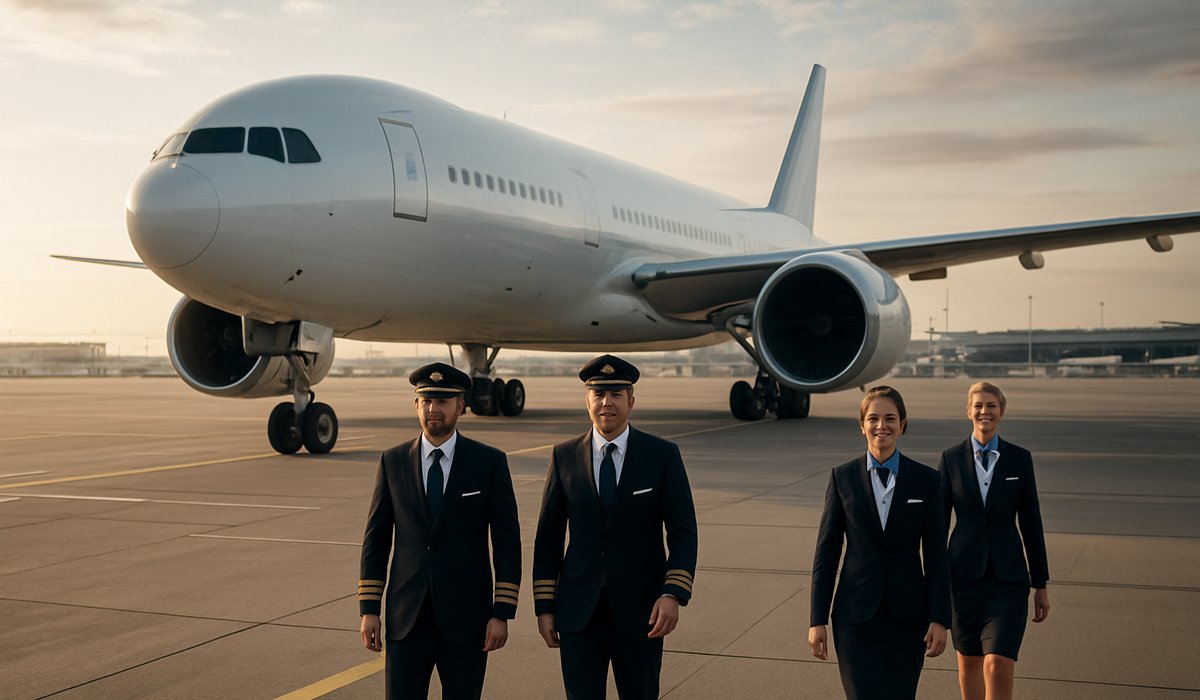
Image generated by AI
Boeing 777X Emerges as Successor to Airbus A380 as Aviation Enters New Era of Ultra-Long-Range Travel
The aviation industry pivots toward twin-engine efficiency as the superjumbo's reign comes to an end
The End of an Era for Four-Engine Giants
The Airbus A380, once heralded as the future of international aviation when it launched as the world's largest passenger quadjet, is gradually being phased out of commercial service. This epochal shift is prompting airlines and industry analysts to reassess which aircraft will inherit the mantle for ultra-long-haul operations that previously defined the superjumbo's dominance.
The answer increasingly points to Boeing's 777X, a next-generation twin-engine wide-body jet designed to deliver comparable range and capacity while fundamentally reshaping how airlines approach long-distance routes.
A Technological Transition
Rather than perpetuating the four-engine model that powered the A380's 15-year production run, manufacturers have pivoted toward advanced twin-engine architecture. The 777X, which features revolutionary engine technology and aerodynamic innovations, can connect distant city-pairs with greater fuel efficiency—a critical advantage as aviation grapples with rising jet fuel prices and environmental scrutiny.
The 777X family, including the 777-8 and 777-9 variants, offers configurations carrying between 384 and 426 passengers depending on cabin layout. While marginally smaller than the A380's maximum 853-seat capacity, the twin-engine design delivers operational advantages that appeal to modern carriers.
Why Airlines Are Making the Switch
The A380's decline reflects broader industry economics. Four-engine aircraft demand higher maintenance costs, greater fuel consumption on shorter routes, and require hub-dependent business models that prove increasingly inflexible in today's market.
By contrast, the 777X's design permits direct routing on ultra-long-haul flights—including unprecedented connections like London to Sydney or New York to Singapore—while maintaining lower operating expenses. Airlines including Emirates, Singapore Airlines, and All Nippon Airways (ANA) have placed substantial orders for the 777X.
Market Implications
Industry observers note this transition underscores a fundamental shift in aviation strategy. Rather than consolidating passengers into singular massive aircraft, carriers now prefer deployment flexibility that twin-engine wide-bodies provide.
Airbus has acknowledged the A380's sunset, confirming the final aircraft rolled off production lines as demand plateaued. Meanwhile, Boeing's 777X represents the future: advanced avionics, composite materials reducing weight, and modern powerplants optimizing fuel efficiency—factors increasingly central to airline economics as operational costs remain paramount.
Looking Ahead
The 777X's emergence signals aviation's evolution toward sustainability and efficiency. While the A380 symbolized the superlative-chasing 2000s, its successor embodies the pragmatic, technology-driven approach defining 21st-century aviation.
FAQs
What aircraft is replacing the Airbus A380? The Boeing 777X is emerging as the primary successor, offering advanced twin-engine technology optimized for ultra-long-haul routes while maintaining comparable passenger capacity with superior fuel efficiency.
Why did airlines retire the A380 superjumbo? Rising operational costs, higher maintenance expenses, and the shift toward flexible point-to-point routing made four-engine aircraft economically challenging for modern airlines facing volatile jet fuel prices and changing demand patterns.
Can the Boeing 777X fly the same routes as the A380? Yes—the 777X's advanced range capabilities permit direct routing on virtually all intercontinental corridors, often with superior economics despite marginally lower single-aircraft capacity.
How many passengers does the 777X carry? The 777X accommodates 384-426 passengers depending on cabin configuration, compared to the A380's maximum 853-seat capacity.
When will the 777X enter passenger service? Airlines including ANA and Emirates have placed substantial orders, with commercial operations expected as Boeing completes certification and delivery schedules throughout the mid-2020s.
Related Travel Guides
-
São Paulo-Congonhas Meltdown: 113 Delays and 60 Cancellations Hit LATAM, Azul, and Gol Across Brazil
-
Egypt Joins Middle East Tourism Alliance: 5-Nation Pact Targets 2026 Recovery
-
Passengers Stranded: Flight Cancellations at Suvarnabhumi and Bandaranaike
External Resources
Disclaimer
This article is for informational and educational purposes only. It does not constitute legal, financial, or professional advice. While we strive to provide accurate and up-to-date information, travel policies, regulations, and conditions change rapidly. Always verify information with official sources before making travel decisions. Nomad Lawyer makes no representations about the accuracy, reliability, completeness, or suitability of the information provided. Readers should consult qualified professionals for advice specific to their circumstances. The views expressed in this article are those of the author and do not necessarily reflect the views of Nomad Lawyer.
Raushan Kumar
Founder & Lead Developer
Full-stack developer with 11+ years of experience and a passionate traveller. Raushan built Nomad Lawyer from the ground up with a vision to create the best travel and law experience on the web.
Learn more about our team →