
São Paulo-Congonhas Meltdown: 113 Delays and 60 Cancellations Hit LATAM, Azul, and Gol Across Brazil
São Paulo's Congonhas Airport has erupted into Brazil's worst aviation crisis in months, recording 113 flight delays and 60 cancellations. LATAM, Azul, and Gol bear the brunt as passengers connecting to Brasília, Maceió, São Luís, Goiânia, and Chapecó are stranded. The ripple effects span Brazil's entire domestic air network.

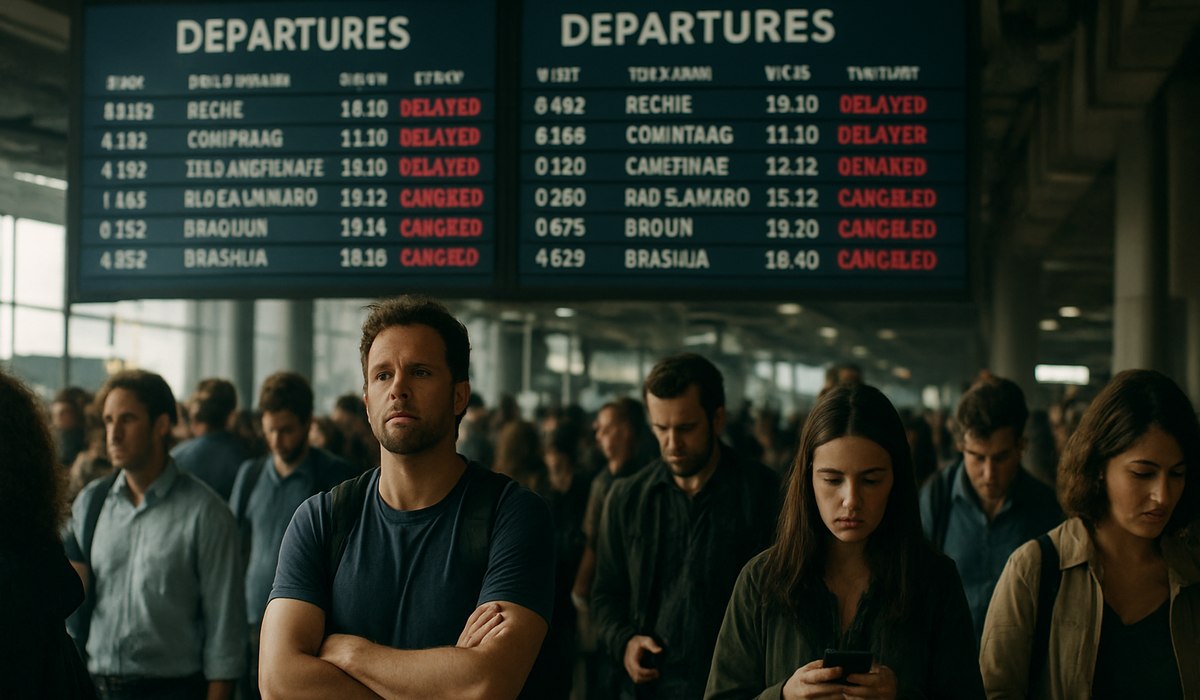
Image generated by AI
Congonhas Becomes Brazil's Epicenter of Aviation Chaos
São Paulo-Congonhas Airport—the pulsing heart of Brazil's domestic air network—has descended into a staggering operational crisis, with 113 flight delays and 60 cancellations spreading across the entire week's schedule and leaving passengers bound for Brasília, Maceió, São Luís, Chapecó, and Goiânia stranded in a labyrinth of missed connections and cascading rebooking queues. The disruption involves Brazil's three dominant domestic carriers—LATAM Airlines (operating as TAM domestically), Gol Linhas Aéreas, and Azul Brazilian Airlines—and exposes a systemic vulnerability at Brazil's busiest and most slot-constrained domestic hub.
Congonhas's geographic and operational position makes it uniquely fragile. Sandwiched into the southern São Paulo urban core with a single runway serving 200+ daily rotations, the airport has zero buffer capacity for disruptions. When a cascading event triggers at CGH, the damage propagates through the national network with extraordinary speed.
The Scale: A Week of Cancellations
The disruption is not a single-day event. Cancellations are spread across the full weekly schedule in both departure and arrival directions:
Monday through Sunday cancelled departures include 21+ specific flight operations, with Santos Dumont Regional Airport (SDU/Rio de Janeiro) generating the overwhelming majority of origin traffic. The most affected routes are the ultra-high-frequency Rio de Janeiro–São Paulo shuttle—one of the world's busiest air corridors—and connections to:
- Curitiba (CWB) — Afonso Pena International
- Porto Alegre (POA) — Salgado Filho International
- Florianópolis (FLN) — Hercílio Luz International
- Brasília (BSB) — Presidente Juscelino Kubitschek International
- Belo Horizonte (CNF) — Tancredo Neves International
- São Luís (SLZ) — Marechal Cunha Machado International
Gol and LATAM account for the overwhelming majority of affected operations, with Azul's Embraer E190 fleet contributing a smaller but significant cancellation tail.
The Congonhas Bottleneck: Why One Airport Can Paralyze Brazil
Congonhas (CGH) holds an outsized role in Brazilian aviation out of all proportion to its physical capacity. Despite being dramatically smaller than São Paulo Guarulhos International (GRU), Congonhas handles predominantly domestic traffic and functions as the origin or destination for Brazil's most-traveled business corridors.
Key structural vulnerabilities driving the disruption:
- Single-runway constraint — CGH operates a single active runway with no parallel-runway relief capability, meaning any operational disruption eliminates all redundancy
- Maximum slot utilization — The airport operates at 98%+ slot utilization during peak hours, leaving zero scheduling buffer
- Dense shuttle dependency — The CGH-SDU Rio-São Paulo shuttle generates 50+ daily rotations; disruption to this single corridor creates cascading effects on every subsequent rotation in the network
What Guests Get
- ANAC-mandated passenger rights — Brazilian aviation regulator ANAC requires airlines to offer full rebooking or refund on cancelled flights with no change fees
- Meal vouchers — For delays exceeding 1 hour, carriers must provide food and beverage assistance under ANAC Resolution 400
- Accommodation — For delays exceeding 4 hours on domestic services, carriers must provide hotel accommodation if overnight is required
- Real-time rebooking — LATAM, Gol, and Azul all offer mobile app self-service rebooking, bypassing congested airport service desks
Congonhas Disruption: Carrier Impact Breakdown
| Carrier | Cancellations (Est.) | Key Affected Routes | Aircraft Type |
|---|---|---|---|
| LATAM/TAM | Highest volume | Rio SDU, Curitiba, Porto Alegre, Florianópolis | Airbus A319/A320 |
| Gol Linhas Aéreas | High volume | Rio SDU, Brasília, Belo Horizonte | Boeing 737/737 MAX |
| Azul Brazilian Airlines | Moderate | Curitiba (CWB), Maceió (MCZ) | Embraer E190/E295 |
| Network-wide impact | — | São Luís, Goiânia, Chapecó, Joinville | Multiple types |
What This Means for Travelers
If you are booked on any Congonhas departure—or if your flight arrives at CGH with an onward Congonhas connection—execute your contingency options now rather than waiting at the airport. The mobile apps for LATAM, Gol, and Azul all include self-service rebooking interfaces that process alternatives within minutes. These digital queues move dramatically faster than physical service desks during high-disruption events.
Brazilian ANAC Resolution 400 is your legal shield. Under this regulation: delays over 1 hour require meal/beverage assistance; delays over 2 hours require alternative transportation or rebooking; delays over 4 hours require full refund options. If a carrier fails to proactively offer these services, request them explicitly by referencing ANAC Resolution 400.
For travelers heading to Brasília from São Paulo during this disruption, consider checking Guarulhos (GRU) as an overflow alternative—LATAM operates connecting frequency from GRU to BSB that may have open seats as Congonhas-bound traffic is rerouted.
FAQ: Brazil Congonhas Flight Disruption
Why is São Paulo Congonhas so vulnerable to cascading disruptions? Congonhas operates a single runway at near-maximum slot capacity, leaving zero operational buffer. Any disruption—weather, aircraft technical issue, or crew availability—immediately creates a queue of delayed aircraft with no capacity to absorb the backlog. This contrasts sharply with airports like São Paulo Guarulhos, which has multiple runways and more scheduling flexibility.
What is my right to compensation for a Gol or LATAM cancellation in Brazil? Under ANAC Resolution 400, if your flight is cancelled with less than 72 hours notice, you are entitled to: (a) alternative flight at no cost, (b) full refund including ancillary fees, or (c) travel credit. The carrier cannot charge change fees or rebooking fees for incidents classified as cancellations.
Should I reroute through Guarulhos (GRU) instead? Yes, for many routes, Guarulhos provides a more reliable alternative during Congonhas disruption events. It handles international connections and has greater slot flexibility. If your destination has both CGH and GRU service, check availability at Guarulhos via your carrier's app.
Related Travel Guides
Brazil Domestic Flight Guide 2026: LATAM vs Gol vs Azul Compared
Your Rights as an Airline Passenger in Brazil: ANAC Resolution 400 Explained
São Paulo Guarulhos vs Congonhas: Which Airport Should You Use?
Disclaimer
This article is for informational and educational purposes only. It does not constitute legal, financial, or professional advice. While we strive to provide accurate and up-to-date information, travel policies, regulations, and conditions change rapidly. Always verify information with official sources before making travel decisions. Nomad Lawyer makes no representations about the accuracy, reliability, completeness, or suitability of the information provided. Readers should consult qualified professionals for advice specific to their circumstances. The views expressed in this article are those of the author and do not necessarily reflect the views of Nomad Lawyer.
Raushan Kumar
Founder & Lead Developer
Full-stack developer with 11+ years of experience and a passionate traveller. Raushan built Nomad Lawyer from the ground up with a vision to create the best travel and law experience on the web.
Learn more about our team →