
Airbus A350-900ULR Achieves Record 9,700 Nautical Mile Range Through Strategic Weight Reduction, Not Fuel Expansion
Breaking airline news and aviation industry updates for 2026.

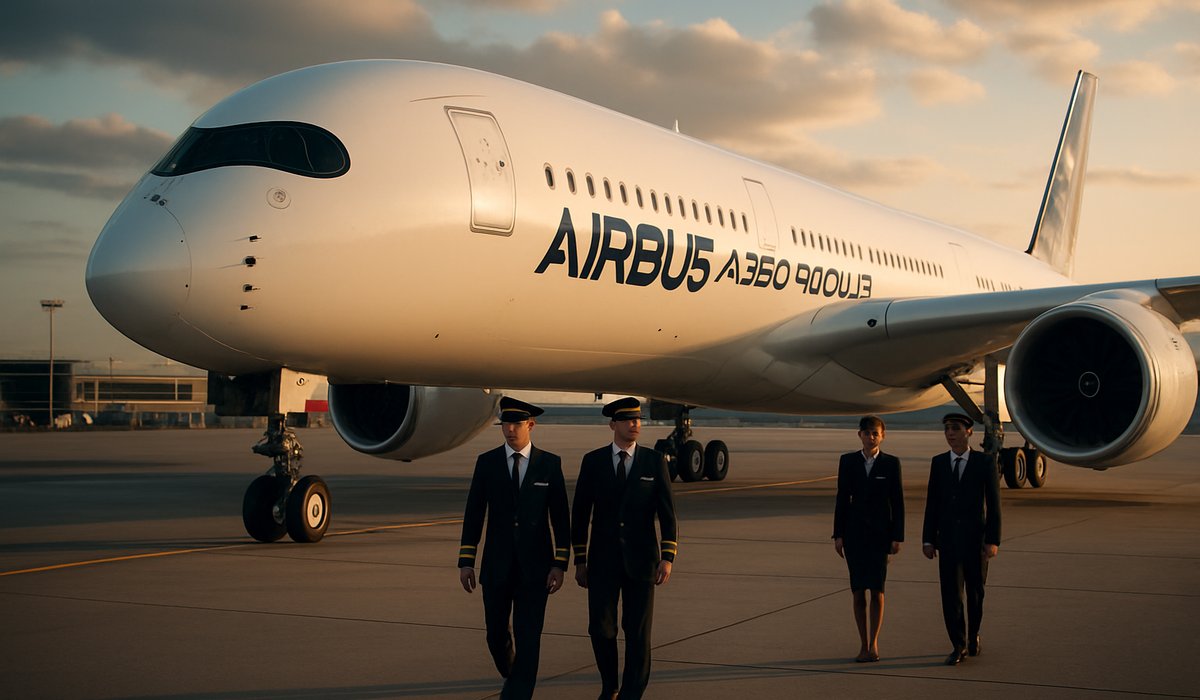
Image generated by AI
Airbus A350-900ULR Achieves Record 9,700 Nautical Mile Range Through Strategic Weight Reduction, Not Fuel Expansion
How aircraft manufacturers are solving ultra-long-haul economics by removing non-essential components rather than adding capacity
The Engineering Trade-Off Reshaping Long-Distance Aviation
Airbus has cracked one of commercial aviation's most persistent engineering puzzles: extending extreme-range flight without the prohibitive costs of larger fuel tanks. The A350-900ULR (Ultra Long Range) variant now achieves an operational range of 9,700 nautical miles—enabling direct flights between virtually any two major global cities—by strategically removing internal components rather than expanding fuel capacity.
This counterintuitive approach reveals how modern aircraft design prioritizes lightweight efficiency over brute-force engineering solutions, fundamentally altering the economics of ultra-long-haul aviation that have plagued airlines for decades.
The Economics of Extreme Range
Ultra-long-haul operations have long represented a financial minefield for carriers. Aircraft deployed on routes spanning transcontinental distances face an impossible equation: maximize fuel capacity to reach distant destinations while maintaining sufficient payload for passengers and cargo to generate revenue. Historically, this compromise has meant either sacrificing profitability or limiting market access.
"The traditional approach would have been to add more fuel tanks," explains the engineering logic behind Airbus's solution. Instead, the manufacturer identified non-essential interior systems, structural redundancies, and ancillary equipment that could be removed without compromising safety, passenger comfort, or operational reliability.
Design Innovation Meets Operational Reality
The A350-900ULR achieves its record range through a systematic weight-reduction program that strips approximately 2,000 kilograms of non-critical systems from the standard A350-900 configuration. This includes simplified galley arrangements, reduced emergency equipment redundancy in non-critical areas, and optimized seating density tailored specifically for ultra-long-haul operations where passenger comfort takes secondary priority to range capability.
By reducing aircraft weight rather than increasing fuel volume, Airbus maintains structural integrity, regulatory compliance, and safety margins while dramatically improving range efficiency. The same fuel volume now propels a lighter aircraft considerably farther.
Industry-Wide Implications
This design philosophy signals a broader industry shift toward operational optimization over raw capacity expansion. As fuel prices remain volatile and airlines face pressure to reduce per-seat emissions across their fleets, weight reduction strategies offer measurable financial and environmental returns.
Airlines operating the A350-900ULR gain access to previously unprofitable routes—such as direct connections between secondary Asian cities and North American markets—that were previously only accessible via hub connections, improving passenger convenience and competitive positioning.
FAQ
What is the A350-900ULR's maximum operational range? The Airbus A350-900ULR achieves a maximum range of 9,700 nautical miles, enabling non-stop service on virtually all commercial routes globally.
How did Airbus extend range without adding larger fuel tanks? The manufacturer removed approximately 2,000 kilograms of non-essential interior systems, equipment redundancy, and structural components from the standard A350-900, reducing weight while maintaining the same fuel capacity.
Which airlines currently operate the A350-900ULR? Singapore Airlines was among the first carriers to deploy the A350-900ULR, primarily on transcontinental Asian-North American routes.
Does weight reduction affect passenger safety or comfort? No. Safety systems and structural integrity remain unchanged. Modifications target non-critical interior systems and galley arrangements optimized for ultra-long-haul operations.
How does this approach impact airline economics? By enabling direct flights on previously unprofitable routes, the A350-900ULR improves seat-mile economics and reduces per-passenger operational costs while expanding market access for carriers.
Related Travel Guides
External Resources
Disclaimer
This article is for informational and educational purposes only. It does not constitute legal, financial, or professional advice. While we strive to provide accurate and up-to-date information, travel policies, regulations, and conditions change rapidly. Always verify information with official sources before making travel decisions. Nomad Lawyer makes no representations about the accuracy, reliability, completeness, or suitability of the information provided. Readers should consult qualified professionals for advice specific to their circumstances. The views expressed in this article are those of the author and do not necessarily reflect the views of Nomad Lawyer.
Raushan Kumar
Founder & Lead Developer
Full-stack developer with 11+ years of experience and a passionate traveller. Raushan built Nomad Lawyer from the ground up with a vision to create the best travel and law experience on the web.
Learn more about our team →