
Airbus A350-1000's Revolutionary Landing Gear System: Engineering Marvel Handles Extreme Touchdown Forces
Breaking airline news and aviation industry updates for 2026.

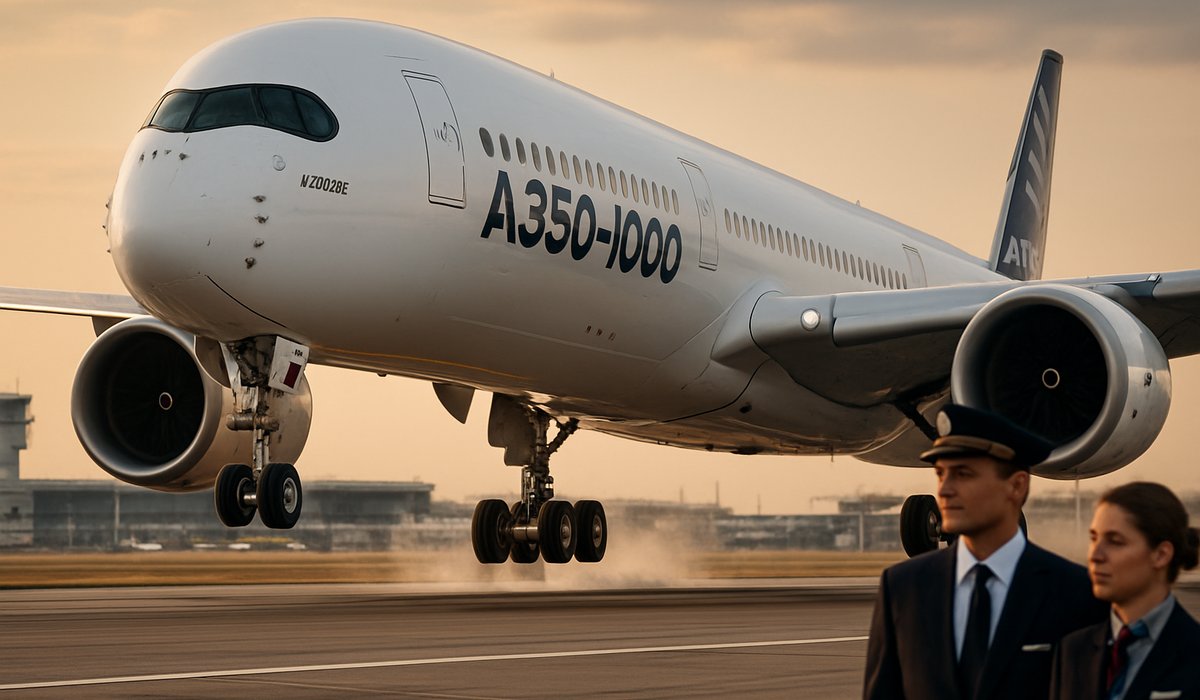
Image generated by AI
Airbus A350-1000's Revolutionary Landing Gear System: Engineering Marvel Handles Extreme Touchdown Forces
How advanced shock absorption technology transforms catastrophic runway impacts into controlled mechanical events
The Viral Landing That Sparked Aviation Debate
A recent video of a Cathay Pacific Airbus A350-1000 executing a heavy touchdown at London Heathrow Airport ignited widespread discussion within the aviation community. To casual observers, the footage appeared alarming—the aircraft's wings flexed dramatically, and substantial plumes of smoke erupted from its 12 main landing gear tires in what seemed like a systems failure. However, aviation engineers and industry experts quickly clarified that what the video captured was not a crisis but rather sophisticated engineering performing exactly as designed.
Engineered for Punishment: Inside the Landing Gear Architecture
The A350-1000's landing gear represents a quantum leap in shock-absorbing technology, deliberately engineered to withstand and dissipate the extraordinary forces generated during hard landings. The system's architecture combines multiple layers of mechanical resilience designed to convert kinetic energy into manageable thermal dispersal.
When an aircraft makes contact with a runway at significant vertical velocity, the landing gear's advanced suspension mechanisms engage immediately. Rather than transmitting this violent impact directly to the aircraft's fuselage, the system compresses hydraulic shock absorbers that gradually slow the aircraft's descent. This staged deceleration prevents structural damage while distributing forces across multiple components.
The tire smoke observed in viral landing videos represents a natural consequence of extreme friction. When landing gear tires encounter runway surfaces at high sink rates, the contact pressure generates intense heat through rubber friction—a phenomenon engineers anticipated and accepted as part of normal heavy-landing operations. Airbus designs the A350-1000's tire compounds and structural materials to withstand these thermal stresses without catastrophic failure.
Advanced Materials Meet Modern Aviation Demands
The landing gear struts incorporate titanium alloys and specialized composite materials that exceed previous generation aircraft in durability. These components experience repeated stress cycles throughout an aircraft's operational lifespan, enduring hundreds of takeoffs and landings before requiring scheduled replacement or inspection.
Modern widebody aircraft like the A350-1000 demand exceptional landing gear performance because they operate at higher maximum takeoff weights and frequently execute approaches into challenging airports with short runways and demanding approach geometries. London Heathrow—one of the world's busiest and most operationally constrained airports—frequently witnesses precisely these demanding landing scenarios.
What Appears Catastrophic Is Actually Routine Engineering
The aviation industry's understanding of landing gear performance has evolved dramatically over recent decades. What might have triggered genuine concern fifty years ago is now recognized as the predictable outcome of sound engineering meeting extreme operational reality. Modern aircraft undergo rigorous certification testing that simulates landing conditions far more severe than those encountered in routine commercial service.
For passengers and observers, understanding this distinction transforms anxiety into appreciation for the precision engineering that protects them during every flight operation.
FAQ: Understanding Aircraft Landing Gear Technology
Why do aircraft tires smoke during hard landings? Tire smoke results from extreme friction heat when rubber contacts the runway at high vertical velocity. This is a normal thermal response in engineered landing gear systems and does not indicate mechanical failure.
Is the Airbus A350-1000 landing gear stronger than previous generation aircraft? Yes—the A350-1000 incorporates advanced titanium alloys and composite materials that exceed durability standards of earlier widebody aircraft like the A330 and Boeing 777.
Can planes be damaged by hard landings? While normal heavy landings are engineered into aircraft design, excessive vertical impact forces exceeding manufacturer specifications can trigger structural inspections. Commercial pilots train extensively to minimize unnecessary impact forces.
How often does landing gear require maintenance? Modern aircraft landing gear undergoes scheduled inspection and maintenance based on flight cycles and operational hours rather than individual landing events, though hard landings may trigger additional inspections.
Why did the Cathay Pacific landing become controversial? The viral video appeared visually alarming to untrained observers, but aviation engineers confirmed the landing fell within normal operational parameters for modern widebody aircraft at major international airports.
Related Travel Guides
- US Lifts 41-Year Ban on Direct Lebanon Flights: Delta, United, and American Evaluate Nonstop Beirut Routes
- US Military Aircraft Losses in Iran Campaign Could Cost $7 Billion to Replace
- Aviation Updates: American Airlines AAL2939 Executes Emergency Diversion to Washington Dulles Amid East Coast Travel Chaos
Disclaimer
This article is for informational and educational purposes only. It does not constitute legal, financial, or professional advice. While we strive to provide accurate and up-to-date information, travel policies, regulations, and conditions change rapidly. Always verify information with official sources before making travel decisions. Nomad Lawyer makes no representations about the accuracy, reliability, completeness, or suitability of the information provided. Readers should consult qualified professionals for advice specific to their circumstances. The views expressed in this article are those of the author and do not necessarily reflect the views of Nomad Lawyer.
Raushan Kumar
Founder & Lead Developer
Full-stack developer with 11+ years of experience and a passionate traveller. Raushan built Nomad Lawyer from the ground up with a vision to create the best travel and law experience on the web.
Learn more about our team →