
South Africa Sees Rural Lodges and Guest-Farms Surge 28.2% as Travelers Pivot from Hotels to Countryside Stays: What Every Traveller Must Know
South African rural guest-farms jump 28.2% in revenue as traditional hotels stagnate at 0.8% and camping drops 19.7%, reshaping travel preferences.

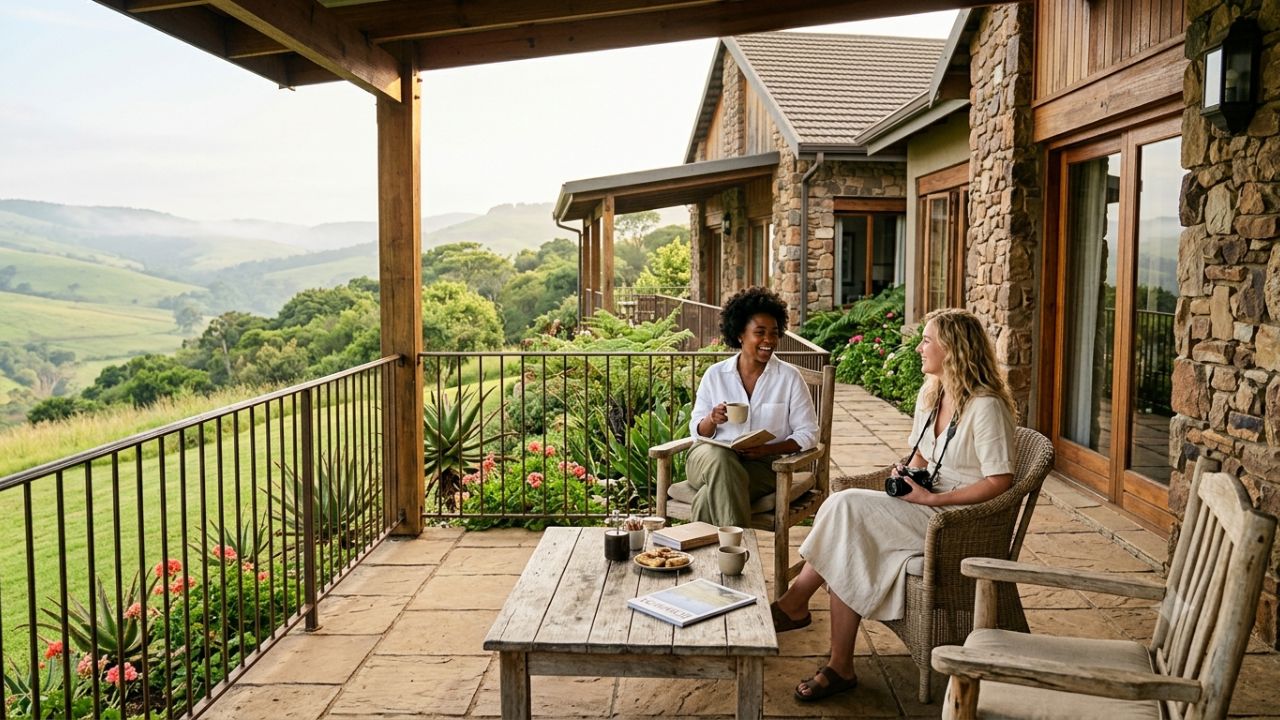
Image generated by AI
A profound structural shift is transforming the hospitality landscape across Southern Africa, as an extraordinary South Africa rural lodging surge sees revenue across countryside guest-houses and authentic guest-farms spike by 28.2% year-on-year. Official national lodging metrics for July 2026 confirm that total industry earnings expanded by 6.1%, propelled by a 7.4% rise in stay-unit nights sold as both domestic and international travelers deliberately bypassed standardized urban hotels in favor of secluded, nature-oriented countryside retreats. International travelers visiting South Africa can capitalize on competitive pricing—with average income per stay-unit dipping slightly by 0.3%—even as booking demand surges across boutique eco-lodges, self-catering cottages, and private game reserves throughout the nation’s nine provinces.
[!NOTE] Quick Summary: Key Developments at a Glance
- 28.2% Rural Lodging Revenue Spike: Countryside guest-houses and working guest-farms recorded an exceptional 28.2% annual revenue surge, fundamentally outperforming all conventional accommodation formats.
- Alternative Lodgings Outpace Corporate Hotels: Eco-lodges, bed-and-breakfasts, and self-catering units achieved 15.7% income growth, while traditional corporate hotels stagnated at just 0.8% year-on-year.
- Severe Contraction in Camping and Caravans: Rustic camping grounds and caravan parks suffered a sharp 19.7% revenue plunge, continuing a sustained monthly decline of 18.7% to 36.5% recorded since February 2026.
- National Occupancy Rises to 43.9%: Overall room utilization climbed 3.3 percentage points from 40.6% in June to 43.9% in July 2026, supported by mid-year school holidays and robust cross-border arrivals.
- Macroeconomic Foreign Currency Influx: Monthly foreign traveler expenditure climbed to $376 million (USD) in July, contributing to 6,576,169 cumulative international arrivals between January and July 2026.
This consumer migration into non-metropolitan regions has redistributed travel wealth directly into secondary and tertiary communities. Small agricultural towns, coastal hamlets, and wilderness buffer zones are reaping substantial financial benefits, creating extensive employment multipliers that support regional farmers, local artisans, private transport operators, and conservation anti-poaching units.
July 2026 Lodging Performance Breakdown: Alternative Stays vs. Traditional Hotels
The performance metrics documented across South Africa's hospitality sector reveal a sharp polarization in traveler spending habits. Across the broader market, total lodging income increased by 6.1% in July 2026 compared to the prior year, building on a 4.1% revenue expansion recorded over the combined three-month window from May through July 2026.
However, the distribution of these financial gains was heavily skewed toward specialized, independent properties. While overall stay-unit nights sold jumped by 7.4%, the average revenue earned per stay-unit night sold experienced a marginal reduction of 0.3%. Industry economists explain that property owners utilized competitive, accessible pricing models to secure high volume, allowing travelers to enjoy favorable nightly rates while lifting total sector turnover.
The stark divergence between accommodation formats underscores changing global traveler mentalities:
| Property Category | July 2026 Revenue Growth (YoY) | Operational Dynamics & Consumer Behavior | Market Implications for Travelers |
|---|---|---|---|
| Rural Guest-Houses & Guest-Farms | +28.2% | High demand for scenic seclusion, agritourism, and localized hospitality | Advance booking required; premium demand in agricultural belts |
| Alternative Lodging (B&Bs, Eco-Lodges) | +15.7% | Preference for private, self-catering facilities and flexible family layouts | Strong value proposition; distributed regional availability |
| Traditional Corporate Hotels | +0.8% | Near-stagnant growth; rising overheads and corporate travel cutbacks | Competitive discounting; high room availability in metro centers |
| Camping Grounds & Caravan Parks | -19.7% | Sustained slide (down 18.7%–36.5% monthly since Feb); unseasonal winter cold | Operators retrofitting sites into fixed, heated eco-cabins |
| All Commercial Establishments | +6.1% | Total stay-units sold up 7.4%; average rate per unit down 0.3% | Favorable exchange rate value for international visitors |
While intimate farmsteads and luxury eco-lodges operated at peak seasonal capacity, multi-story urban hotels struggled to capture leisure bookings, compelling corporate hospitality brands to review their standardized service offerings.
Risks and Challenges: Camping Slump and Winter Climate Headwinds
While rural lodges celebrated record windfalls, other hospitality segments encountered acute operational distress:
- Sustained Outdoor Hospitality Deficit: Accommodation earnings across open-air caravan parks and rustic campsites collapsed by 19.7% in July 2026. This downturn reflects an ongoing structural decline, with monthly losses oscillating between 18.7% and 36.5% since February 2026.
- Weather and Budget Pressure on Campers: Unseasonal mid-year winter cold snaps, combined with tightened household discretionary budgets, pushed traditional campers indoors. Rather than braving the elements in tents, holidaymakers upgraded to budget self-catering chalets offering guaranteed heating and private amenities.
- Capital Reinvestment Urgency: Plunging revenues have forced rustic campsite operators to execute emergency capital shifts, converting traditional grass caravan stands into fully furnished, all-weather glamping pods to stabilize seasonal cash flows.
- Corporate Hotel Margin Compression: With corporate hotel revenue expanding by a negligible 0.8%, urban hotel operators face tight profit margins amid rising utility, labor, and municipal rates, restricting their capacity to reinvest in physical renovations.
These dynamics demonstrate that traveler spending is not contracting, but rather migrating decisively toward private, weather-resilient, and character-rich accommodation.
What Industry Analysts Are Saying: The Economics of Decentralized Travel
Economic analysts and hospitality specialists note that the inverse relationship between surging stay-unit sales (+7.4%) and slightly softer unit rates (-0.3%) created an ideal operational equilibrium. By keeping nightly rates competitive, lodge proprietors sustained high occupancy levels without depressing aggregate gross revenues.
Crucially, because accommodation costs remained stable, international and domestic vacationers redirected surplus travel budgets into ancillary regional services. Discretionary spending expanded across off-resort dining, regional winery tours, guided safari game drives, and community-based cultural tours, providing vital financial liquidity to rural micro-enterprises far beyond the hotel floor.
Furthermore, tourism economists emphasize that the hospitality boom generated approximately 185,000 new jobs nationwide. The labor-intensive nature of boutique guest-farms and wildlife lodges—requiring higher staff-to-guest ratios across culinary preparation, housekeeping, guided excursions, and land management—has turned decentralized lodging into one of the country's most effective job creation engines.
Practical Travel Advice for Booking Rural Escapes Across South Africa
Travelers organizing itineraries across South Africa should adopt strategic booking habits to navigate current capacity and pricing trends:
- Secure Countryside Lodges 60 to 90 Days Early: Due to the 28.2% revenue surge and limited room inventory at boutique guest-farms in the Western Cape, KwaZulu-Natal Midlands, and Mpumalanga, book rural accommodations well in advance of peak holiday cycles.
- Capitalize on Exceptional Long-Haul Currency Value: With average stay-unit rates down 0.3% and strong foreign exchange purchasing power for holders of USD, EUR, and GBP, long-haul travelers can upgrade to luxury self-catering chalets and private game reserves at highly competitive rates.
- Opt for Weather-Resilient Lodging over Rustic Camping: If traveling during cooler mid-year winter periods, avoid bare tent camping. Choose fixed eco-cabins or heated self-catering cottages, which offer modern climate control and private cooking facilities.
- Explore Secondary Regional Corridors: Bypass congested tourist centers in central Cape Town or Johannesburg. Consider self-drive routes through the Garden Route hinterland, the Drakensberg foothills, or the Great Karoo, where intimate guest-houses offer authentic cultural immersion and lower rates.
- Budget Discretionary Funds for Local Experiences: Allocate saved accommodation funds toward private safari trackers, artisanal farm-to-table dining, and regional craft cooperatives, ensuring your spending directly empowers local host communities.
Macroeconomic Scale: Inbound Tourism Surges and Regional Source Markets
The commercial health of South Africa's lodging sector is strongly anchored by accelerating cross-border travel. Official border statistics record that 991,696 international tourists arrived in July 2026 alone, marking a 12.5% year-on-year increase. Over the first seven months of the year (January to July 2026), cumulative international arrivals reached 6,576,169 visitors, representing a 12.4% year-to-date expansion.
This sustained influx generated $376 million (USD) in monthly foreign currency receipts in July, climbing sharply from the $329 million (USD) recorded in June 2026. This capital injection directly fortified national foreign exchange reserves and strengthened service industry liquidity.
Geographic arrival patterns reflect a highly effective dual-market architecture:
- Regional African Feeder Markets: Neighboring Southern African Development Community (SADC) nations supplied the majority of cross-border visitors, led by Mozambique (231,398 arrivals), Zimbabwe (224,686 arrivals), and Lesotho (135,672 arrivals), sustaining steady baseline occupancy across commercial transit hubs and regional self-catering units.
- High-Yield Overseas Travelers: Long-haul visitors originating primarily from Europe and North America constituted 20.2% of total tourist arrivals, delivering exceptional per-guest yield across luxury safari lodges, boutique wine estates, and coastal country retreats.
Looking Ahead: A Permanent Realignment of Global Hospitality Models
The divergence observed through mid-2026 signals a lasting evolution in global travel preferences. As international consumers place a premium on mental wellbeing, open spaces, and authentic regional heritage, institutional investors are recalibrating capital allocations away from high-density city-center hotels toward decentralized eco-resorts and luxury guest-farms.
With the national average occupancy rate rising to 43.9% and foreign currency earnings climbing past $376 million monthly, South Africa stands as a prime case study of how destination diversity, community-led hospitality, and accessible pricing can drive sustainable tourism growth across an entire economy.
Frequently Asked Questions: South Africa Rural Lodging and Tourism Trends
How much did rural guest-house and farm revenue grow in South Africa in July 2026?
Revenue across rural guest-houses and authentic guest-farms surged by an extraordinary 28.2% year-on-year in July 2026, significantly outperforming all other lodging categories nationwide.
Why did revenues for camping grounds and caravan parks drop so sharply?
Caravan parks and camping sites experienced a 19.7% annual revenue decline due to unseasonal mid-year winter weather, tightened domestic holiday budgets, and a strong consumer preference for heated, fully furnished indoor self-catering units.
How did traditional corporate hotels perform compared to alternative accommodations?
Standard corporate hotels saw near-stagnant revenue growth of just 0.8% year-on-year, whereas alternative lodgings—such as eco-lodges, bed-and-breakfasts, and self-catering homes—achieved robust 15.7% income growth.
What was South Africa's national accommodation occupancy rate in July 2026?
The national average occupancy rate reached 43.9% in July 2026, marking a 3.3 percentage point increase compared to the 40.6% occupancy rate recorded in June 2026.
How many international tourists visited South Africa between January and July 2026?
South Africa welcomed 6,576,169 cumulative international tourists during the first seven months of 2026, representing a 12.4% year-to-date increase over previous benchmarks.
Related Travel Guides
Disclaimer
This article is for informational and educational purposes only. It does not constitute legal, financial, or professional advice. While we strive to provide accurate and up-to-date information, travel policies, regulations, and conditions change rapidly. Always verify information with official sources before making travel decisions. Nomad Lawyer makes no representations about the accuracy, reliability, completeness, or suitability of the information provided. Readers should consult qualified professionals for advice specific to their circumstances. The views expressed in this article are those of the author and do not necessarily reflect the views of Nomad Lawyer.
Raushan Kumar
Founder & Lead Developer
Full-stack developer with 11+ years of experience and a passionate traveller. Raushan built Nomad Lawyer from the ground up with a vision to create the best travel and law experience on the web.
Learn more about our team →