
Thailand and Malaysia Stand Alongside Southeast Asia’s Tourism Heavyweights as Spending Outpaces Arrival Growth
Thailand and Malaysia Stand Alongside Southeast Asia’s Tourism Heavyweights as Spending Outpaces Arrival Growth

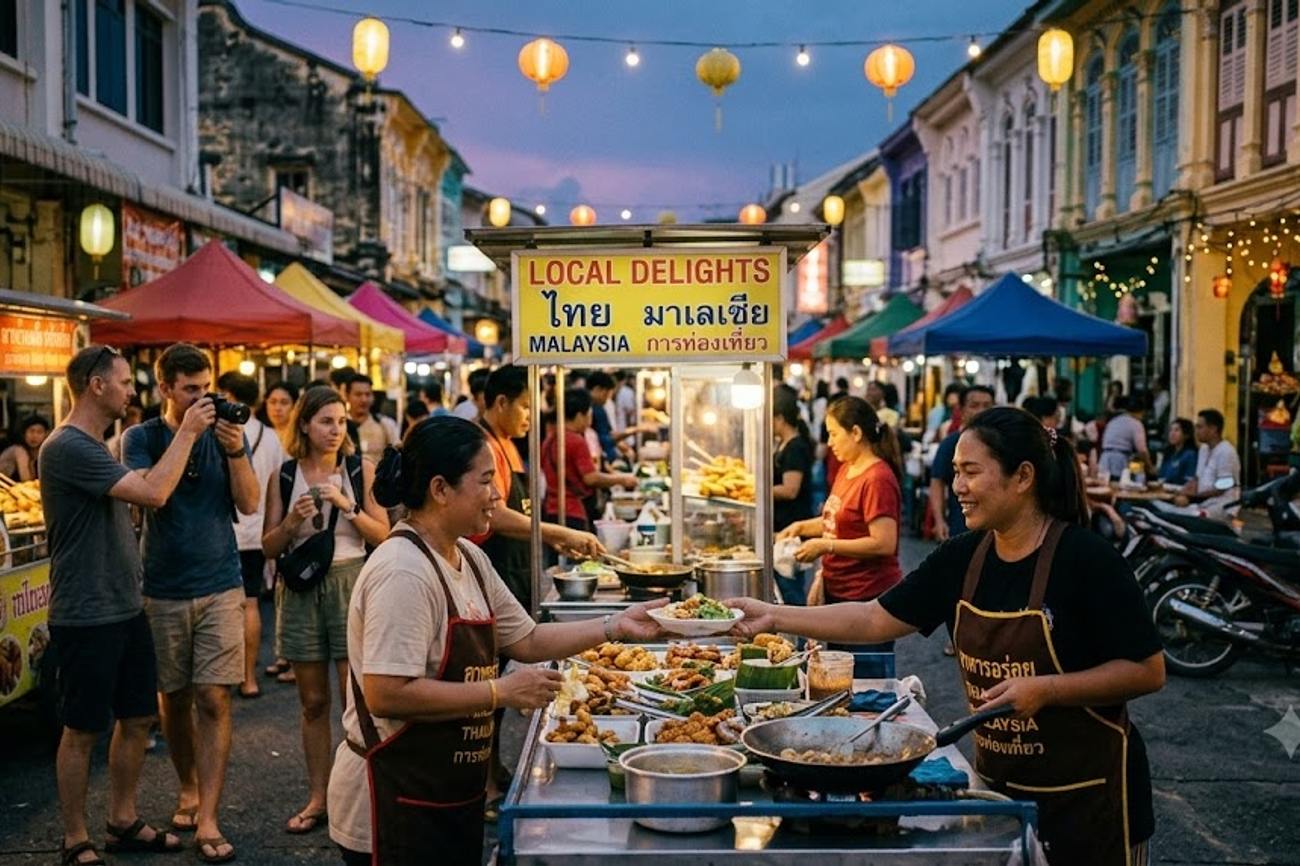
Image generated by AI
Analysis by Nomad Lawyer Travel Industry Trend Analyst
Thailand’s international visitor volume in 2024 reached 35.55 million, nearly 2.5 times the 14.35 million arrivals recorded by Indonesia, yet this raw volume masks a deeper shift toward value-based tourism metrics across Southeast Asia. While Thailand maintains the lead in sheer scale, the regional data reveals a pivot where "receipts per traveler" and "average length of stay" are replacing "arrival counts" as the primary indicators of market health. This transition signals a move away from mass-market volume toward high-yield tourism, where the economic footprint of a single long-stay visitor in Indonesia may outweigh several short-haul arrivals in neighboring hubs.
The Value Pivot in Numbers: Beyond Arrival Volume
The 2024 data for the ASEAN region demonstrates that arrival numbers are a lagging indicator of economic impact. Thailand dominated the volume metric with 35,545,714 international tourists, generating more than THB1.8 trillion in revenue. However, the 2025 trajectory shows a correction: Thailand’s international visitors dropped by 7.23% to 32.97 million, causing foreign-tourism receipts to slide 4.71% to THB1.54 trillion. This volatility highlights the risk of relying solely on high-volume, short-stay models.
In contrast, Malaysia and Indonesia are optimizing for expenditure. Malaysia’s inbound tourism expenditure grew from RM107.0 billion in 2024 to RM124.8 billion in 2025—a 16.5% increase—despite a more modest growth in arrivals (from 25 million to 26.6 million). This indicates a significant rise in the "quality" of the visitor. According to World Travel & Tourism Council (WTTC), this shift toward high-value tourism is a global trend as destinations combat overtourism while seeking higher GDP contributions.
Indonesia provides the most striking evidence of the "long-stay" value proposition. While recording the lowest arrival volume of the three at 14.35 million in 2024, the average visitor stayed 11.42 nights. This duration transforms the economic impact, as each visitor spent an average of US$1,391.85 per trip, or approximately US$121.88 per night.
Comparative Context: Volume vs. Value Benchmarks
When comparing these three markets, a clear divergence emerges between Thailand’s volume-centric model, Malaysia’s retail-driven growth, and Indonesia’s duration-based value. Malaysia's 2024 data shows that shopping accounted for 36.1% of inbound expenditure, the highest category of spend among the three nations. Meanwhile, Indonesia's spending is heavily weighted toward accommodation (US$517.97 per visitor), reflecting the nature of its long-stay tourism.
The following table breaks down the shift in Malaysia's tourism economy, illustrating how value added grows even as the share of spending shifts.
| Malaysia Tourism Indicator | 2024 Value | 2025 Value | YoY Change |
|---|---|---|---|
| Inbound Tourism Expenditure | RM107.0bn | RM124.8bn | +16.5% |
| Tourism Industry Value Added | RM291.9bn | RM323.0bn | +10.7% |
| Tourism Share of GDP | 15.1% | 15.9% | +0.8 pts |
| Tourism-Related Employment | 3.5m | 3.7m | +5.7% |
| Shopping Share of Expenditure | 36.1% | 35.3% | -0.8 pts |
| Accommodation Share | 18.5% | 16.4% | -2.1 pts |
This data confirms that Malaysia is successfully decoupling revenue growth from arrival growth. In 2024, tourist receipts rose 43.4% from 2023, while per-capita expenditure grew by 15.4%. This suggests that the average traveler to Malaysia is spending more per day, regardless of whether the total number of visitors increases.
Practical Traveler Advisory and Strategic Insights
For the individual traveler or digital nomad, these industry shifts translate into tangible changes in pricing, availability, and destination experience.
- Expect Premiumization in Malaysia: With shopping and retail driving over 35% of inbound spend, expect higher-end retail experiences and luxury shopping infrastructure to expand in urban centers. If you are visiting Malaysia in 2025, be aware that the "value" shift may lead to increased pricing in the retail and transport sectors as the government targets higher-spending demographics.
- Indonesia’s Infrastructure for Long-Stays: The data shows an average stay of 11.42 nights. This signals that Indonesia is the primary regional hub for "slow travel." Travelers should find better availability and competitive pricing for long-term rentals and extended-stay villas compared to the high-turnover hotel markets of Thailand.
- Thailand’s Volume Volatility: The 7.23% dip in international visitors for 2025 suggests a cooling period. For travelers, this may result in better bargaining power for luxury accommodations and fewer crowds at major sites in the short term. However, with airline seat capacity having jumped 26% in 2024 to 47 million seats, flight availability remains high.
Thailand continues to optimize its tourism infrastructure by streamlining entry processes to attract high-spending visitors. Travelers can find the most current visa requirements and entry regulations through the official Tourism Authority of Thailand portal.
To optimize booking, travelers should monitor IATA reports on capacity shifts. If Thailand continues to see a dip in arrivals, Q3 and Q4 may offer opportunistic pricing for those who book 6-8 weeks in advance.
Forward Projection: The Era of the High-Yield Visitor
The trajectory of Southeast Asian tourism is moving toward a "High-Yield" model. Thailand is already diversifying its revenue streams; while international receipts fell 4.71% in 2025, domestic tourism provided a massive cushion of THB1.17 trillion. This suggests that Thailand is insulating itself against global volatility by strengthening its internal market.
Malaysia is on a path toward deeper GDP integration. With tourism already accounting for 15.9% of national GDP in 2025, the focus will likely shift from attracting "more" people to attracting "better" spenders. We can expect to see more targeted visa policies and luxury-tier incentives.
Indonesia will likely continue to leverage its "length of stay" advantage. By focusing on the US$121.88 per-night average, Indonesia can maintain economic growth without the infrastructure strain that comes with Thailand-level arrival volumes. The expansion of the Passenger Exit Survey to 17 provinces in 2025 indicates that the government is now tracking spending patterns more granularly to optimize regional development.
FAQ: Southeast Asia Tourism Trends 2025
Will travel costs increase in Malaysia? Yes, likely in the retail and transport sectors. With per-capita expenditure rising 15.4% in 2024 and a strong focus on high-value receipts, service providers are adjusting prices to match the higher-spending profile of current visitors.
Is Indonesia a better value for long-term travelers? Statistically, yes. With an average stay of 11.42 nights and a heavy expenditure focus on accommodation (US$517.97 per trip), the market is structured to support longer visits more efficiently than high-turnover destinations.
Why are Thailand's arrival numbers dropping in 2025? The 7.23% decrease reflects a market correction after a period of rapid expansion. However, the high airline seat capacity (47 million seats) suggests that the infrastructure for a rebound is already in place.
Which country is best for luxury shopping? Malaysia. Data shows shopping represents 35.3% to 36.1% of all inbound expenditure, indicating a mature and dominant retail tourism ecosystem compared to its regional peers.
The data is clear: the era of counting heads is over; the era of counting wallets has begun.
#ASEAN-Tourism-GDP-2025 #Malaysia-Inbound-Expenditure #Thailand-Visitor-Volatility #Indonesia-LongStay-Metrics #SoutheastAsia-HighYield-Tourism
Related Travel Guides
- Uganda Boosts Ishasha Lion Recovery as Tourism Routes via Mbarara and Fort Portal Support Safari Access
- Puerto Rico Follows Aruba And More Caribbean Destinations As Tourism Demand Rises With Cruise Arrivals And Wellness Experiences
- Japan Teams Up With Malaysia and More as Phu Quoc Targets More Visitors With New Flight Connections
Disclaimer
This article is for informational and educational purposes only. It does not constitute legal, financial, or professional advice. While we strive to provide accurate and up-to-date information, travel policies, regulations, and conditions change rapidly. Always verify information with official sources before making travel decisions. Nomad Lawyer makes no representations about the accuracy, reliability, completeness, or suitability of the information provided. Readers should consult qualified professionals for advice specific to their circumstances. The views expressed in this article are those of the author and do not necessarily reflect the views of Nomad Lawyer.
Raushan Kumar
Founder & Lead Developer
Full-stack developer with 11+ years of experience and a passionate traveller. Raushan built Nomad Lawyer from the ground up with a vision to create the best travel and law experience on the web.
Learn more about our team →