
Texas Travelers Hit by Severe Disruptions as Dallas, Houston, Austin and San Antonio Airports See 420 Flight Delays and 11 Cancellations by PSA, United, SkyWest and Other Carriers, Latest Update
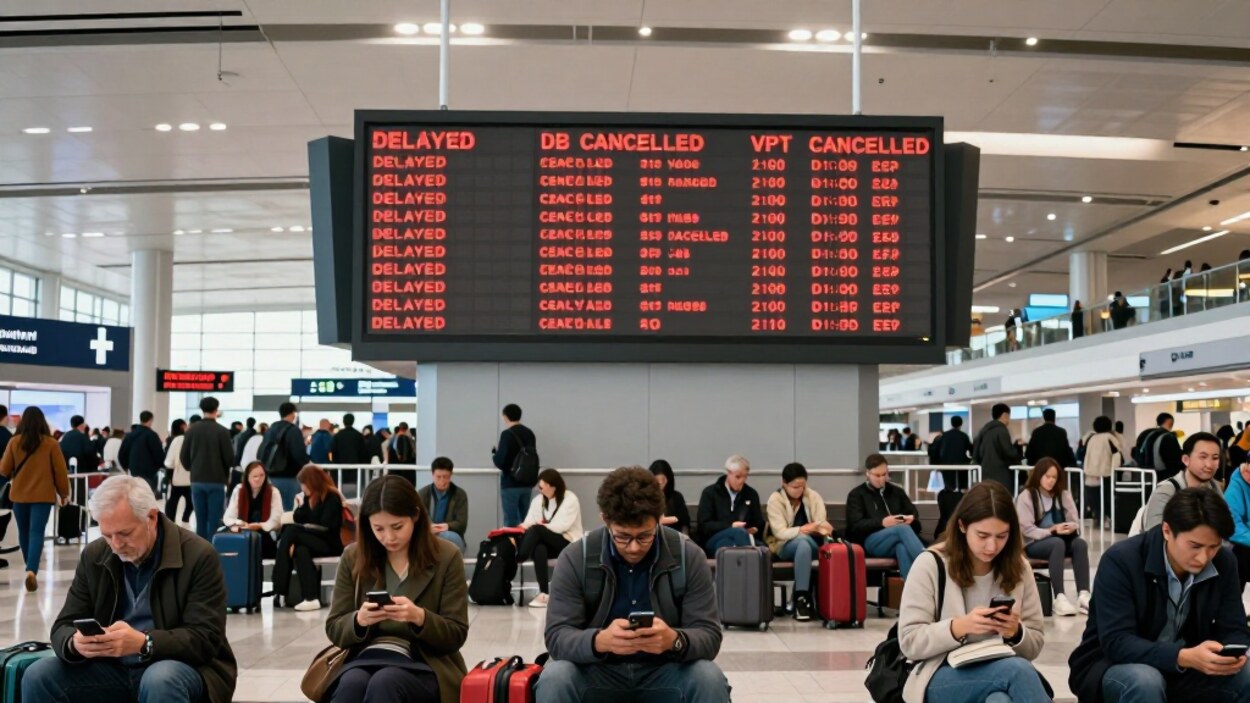
Massive disruption across Texas airports on March 19th—420 delays and 11 cancellations ground travelers. What happened, which airlines were hit hardest, and what passengers need to know now.

Quick Summary
- 420 flight delays & 11 cancellations hit Texas airports on March 19, 2026
- Dallas-Fort Worth airport hardest hit with 225 delays and 6 cancellations
- Four major hubs affected: Dallas, Houston, Austin, and San Antonio
- Dozens of carriers including American, United, and Southwest impacted
Breaking: Texas Airport Gridlock Affects Hundreds of Thousands
One of the biggest travel disruptions in recent Texas aviation history struck the state's major airport hubs on March 19th, leaving hundreds of thousands of passengers stranded, rerouted, or scrambling for alternatives. Flight data tracked by Bureau of Transportation Statistics (BTS) reveals a staggering 420 delays across the system, coupled with 11 total cancellations spanning Dallas, Houston, Austin, and San Antonio. The cascading operational failures rippled through the networks of America's largest carriers, exposing vulnerabilities in an already fragile US aviation network.
For travelers passing through Texas—whether for business, leisure, or connecting flights—the day became a lesson in just how quickly transport infrastructure can unravel. The geographic concentration of the disruption, hitting four major aviation gateways simultaneously, amplified the impact on the entire region's connectivity.
What Happened: A Four-Airport System Under Strain
The disruptions were not confined to a single airport or carrier failure. Rather, systemic pressures across Texas's primary aviation hubs created a compound effect that tested the resilience of the entire region's air travel capabilities.
Dallas-Fort Worth International Airport stood at the epicenter of the chaos. As the nation's busiest airport and a critical hub for American Airlines, Southwest, and United, DFW recorded the highest impact: 225 delays and 6 cancellations. The scale reflects just how central this facility is to both US domestic and international travel networks. With hundreds of daily departures and arrivals, even minor scheduling friction snowballs into massive disruption.
PSA Airlines bore significant cancellation impact with 3 cancellations and 25 delays at DFW. American Airlines, operating the lion's share of daily flights from the airport, recorded 146 delays. The situation was compounded by operational strain from carriers including SkyWest (17 delays), United (5 delays), and Frontier (8 delays). Multiple international carriers—Qatar Airways, Qantas, Cathay Pacific, EVA Air, Korean Air, and Iberia—also experienced delays, signaling that the disruption touched every corner of global connectivity routed through Dallas.
| Airline | Cancellations | Cancellations (%) | Delays | Delays (%) |
|---|---|---|---|---|
| PSA Airlines (AAL) | 3 | 1% | 25 | 16% |
| Spirit | 1 | 2% | 10 | 29% |
| Qantas | 1 | 20% | 1 | 20% |
| Qatar Airways | 1 | 20% | 0 | 0% |
| Alaska Airlines | 0 | 0% | 2 | 20% |
| Cathay Pacific | 0 | 0% | 2 | 33% |
| Delta Air Lines | 0 | 0% | 2 | 3% |
| Envoy Air (AAL) | 0 | 0% | 16 | 4% |
| EVA Air | 0 | 0% | 1 | 25% |
| Frontier | 0 | 0% | 8 | 11% |
| Iberia | 0 | 0% | 1 | 100% |
| JetBlue | 0 | 0% | 2 | 50% |
| Korean Air | 0 | 0% | 1 | 33% |
| Key Lime Air | 0 | 0% | 1 | 25% |
| SkyWest | 0 | 0% | 17 | 11% |
| United | 0 | 0% | 5 | 8% |
| Contour Airlines | 0 | 0% | 1 | 8% |
| Avelo Airlines | 0 | 0% | 1 | 50% |
| American Airlines | 0 | 0% | 146 | 13% |
George Bush Intercontinental Airport in Houston, the second-largest facility affected, logged 93 delays and 2 cancellations. United Airlines—the dominant carrier at this Houston hub—recorded 43 delays and 1 cancellation. Spirit Airlines added 1 cancellation and 10 delays. The airport's role as a critical international gateway meant that delays here rippled across connecting flights destined for Mexico, Central America, and beyond. Additional carriers affected included SkyWest (13 delays), CommuteAir (6 delays), and Frontier (3 delays).
| Airline | Cancellations | Cancellations (%) | Delays | Delays (%) |
|---|---|---|---|---|
| United | 1 | 0% | 43 | 7% |
| Spirit | 1 | 3% | 10 | 30% |
| Air Canada | 0 | 0% | 3 | 37% |
| All Nippon | 0 | 0% | 1 | 50% |
| Air New Zealand | 0 | 0% | 1 | 33% |
| Mesa (UAL) | 0 | 0% | 12 | 6% |
| Delta Air Lines | 0 | 0% | 4 | 8% |
| Envoy Air (AAL) | 0 | 0% | 1 | 10% |
| EVA Air | 0 | 0% | 1 | 50% |
| Frontier | 0 | 0% | 3 | 8% |
| SkyWest | 0 | 0% | 13 | 12% |
| Avianca El Salvador | 0 | 0% | 1 | 50% |
| ZIPAIR | 0 | 0% | 1 | 50% |
| CommuteAir (UAL) | 0 | 0% | 6 | 4% |
| VivaAerobus | 0 | 0% | 1 | 10% |
| Volaris | 0 | 0% | 2 | 25% |
| American Airlines | 0 | 0% | 3 | — |
Austin-Bergstrom International Airport reported 80 delays and just 1 cancellation, suggesting comparatively more contained disruption at the state capital's facility. However, the impact remained significant for regional travelers. Southwest suffered the most acutely with 41 delays, while American Airlines (11 delays) and Delta (11 delays) also experienced substantial schedule degradation. SkyWest recorded the sole cancellation at this location.
| Airline | Cancellations | Cancellations (%) | Delays | Delays (%) |
|---|---|---|---|---|
| SkyWest | 1 | 2% | 9 | 18% |
| American Airlines | 0 | 0% | 11 | 14% |
| Air Canada | 0 | 0% | 1 | 50% |
| Copa Airlines | 0 | 0% | 1 | 50% |
| Delta Air Lines | 0 | 0% | 11 | 14% |
| Frontier | 0 | 0% | 1 | 5% |
| JetBlue | 0 | 0% | 1 | 16% |
| Spirit | 0 | 0% | 4 | 40% |
| Southwest | 0 | 0% | 41 | 15% |
| United | 0 | 0% | 4 | 5% |
San Antonio International Airport, the smallest of the four affected hubs, nevertheless felt sharp impact with 22 delays and 2 cancellations. Spirit Airlines, already stretched thin elsewhere in Texas, recorded both cancellations here alongside 1 delay. Southwest dominated the delay count with 15 delays at this facility.
| Airline | Cancellations | Cancellations (%) | Delays | Delays (%) |
|---|---|---|---|---|
| Spirit | 2 | 50% | 1 | 25% |
| AeroMéxico | 0 | 0% | 1 | 50% |
| Alaska Airlines | 0 | 0% | 1 | 33% |
| Delta Air Lines | 0 | 0% | 2 | 5% |
| Frontier | 0 | 0% | 1 | 10% |
| SkyWest | 0 | 0% | 1 | 8% |
| Southwest | 0 | 0% | 15 | 15% |
| American Airlines | 0 | 0% | 1 | 2% |
Which Carriers Took the Biggest Hit?
The disruption was distributed unevenly across carriers, with some airlines experiencing far greater strain than others—a pattern that often reflects network structure and scheduling density.
American Airlines accumulated the most delays system-wide with 161 total disruptions across the four airports. Their reliance on Dallas-Fort Worth as a primary hub concentrated much of their exposure.
Southwest Airlines recorded 57 delays primarily concentrated in Austin and San Antonio, reflecting their strong presence in those markets.
United Airlines logged 43 delays at Houston Bush plus additional delays at Austin and Dallas, cementing the disruption's reach across their network.
SkyWest Airlines, a regional carrier often operating under American Airlines and United Airlines codeshares, accumulated 40 delays across multiple airports.
Frontier Airlines recorded 13 total delays spread across the four airports, while Spirit Airlines accumulated 12 delays and 4 cancellations—making them one of the more severely impacted low-cost carriers.
International carriers including Air Canada (4 delays), Delta (29 delays across Texas), United (63 delays system-wide), and international players like Volaris, VivaAerobus, Avianca El Salvador, and regional Mexican carriers all experienced friction navigating the Texas corridor.
Tourism & Economic Implications for Texas
Texas's reputation as a reliable, well-connected business and leisure destination depends heavily on aviation infrastructure delivering consistent performance. The state attracts millions of travelers annually who arrive via its four primary airport gateways—many of them first-time visitors forming critical impressions.
A single day of massive disruption carries measurable economic consequences. When international visitors experience multi-hour delays upon entering the US via Dallas or Houston, it shapes their entire vacation experience and influences future destination choices. Potential visitors weighing Texas against competing leisure destinations—Florida, California, Las Vegas—factor reliability into their decision-making calculus.
For business travelers, delays at DFW or Bush Intercontinental directly impact corporate decision-making regarding conference hosting, relocation, and facility expansion. Companies evaluate the stability of transportation networks when choosing operational hubs.
The tourist economy—hotels, restaurants, attractions, rental cars—operates on thin scheduling margins. When passengers miss connections or arrive exhausted after hours of delays, spending patterns and satisfaction metrics shift downward. Multiple consecutive days of disruptions could measurably impact the state's quarterly tourism performance.
Passenger Rights: What You Can Do If You Were Affected
Travelers caught in the March 19th disruptions have several formal rights and practical options for recourse.
Contact Your Airline Immediately
Most carriers maintain specific protocols for irregular operations. Reaching the airline's customer service team—by phone, chat, or airport customer service desk—should be the first step. Under US Department of Transportation rules, airlines are obligated to provide either alternative routing on the next available flight or, in cases of outright cancellation, rebooking on competitor airlines or refunds for unused ticket portions.
Document Everything
Retain receipts for any essential expenses incurred due to delays or cancellations—meals, hotel accommodations, ground transportation, childcare arrangements. These expenses are often eligible for reimbursement or insurance claims, particularly if delays exceeded specified thresholds (typically 3+ hours for domestic flights in the US).
Understand Your Airline's Contract of Carriage
Each carrier's Contract of Carriage is a binding legal document outlining specific obligations during irregular operations. These documents detail compensation policies, reaccommodation procedures, and passenger rights. The FAA's overview of passenger protections and each airline's Contract of Carriage are available on their respective websites and should be reviewed before claiming entitlements.
Use Airport Resources
All four airports provide real-time flight status updates through their official platforms: Dallas-Fort Worth (DFW), Houston Bush Intercontinental (IAH), Austin-Bergstrom (AUS), and San Antonio International (SAT). Passengers can also use FlightAware for independent real-time tracking of specific flight numbers. Monitoring these resources before heading to the airport during future travel helps clarify current conditions.
Travel Insurance Considerations
Passengers with comprehensive travel insurance may be eligible for delay or cancellation reimbursement. Policies vary significantly; review your coverage documentation or contact your insurance carrier directly.
FAQ: Your Questions About Texas Flight Disruptions
Q: Why did 420 flight delays happen all at once across Texas? A: Multiple factors can trigger compound disruptions when they coincide: weather systems, mechanical failures, staffing shortages, air traffic control issues, or cascading effects from delays at one airport backing up flights at others. When multiple pressures hit simultaneously across interconnected hubs, even one facility's disruption cascades through the network.
Q: Can I get compensation for a cancelled flight in the US? A: US Department of Transportation regulations require airlines to offer rebooking on the next available flight or a refund. However, airlines are not required to provide monetary compensation for domestic flight cancellations due to irregular operations—unlike international flights or EU regulations (EC 261/2004). Check your airline's specific policy in their Contract of Carriage.
Q: Which Texas airport should I use if I want the most reliable service? A: No single airport guarantee avoids all disruptions; however, Austin-Bergstrom—with the lowest disruption count on March 19th—occasionally sees lighter congestion than the mega-hubs. That said, airline selection, time of day, and seasonal factors matter more than airport choice for predicting delays.
Q: Does a delay automatically entitle me to hotel reimbursement? A: Not automatically. However, if your airline cancels your flight and rebooking occurs the following day, most major carriers will provide hotel accommodations. For delays without cancellations, reimbursement typically requires documented expenses and often depends on delay length and specific airline policy.
The Path Forward for Texas Aviation
As of March 20th, Texas airports are working to clear passenger backlogs and restore schedule integrity. The disruptions underscore the fragility of interconnected aviation networks and the importance of infrastructure investment in handling peak and crisis periods. For travelers, the takeaway is clear: flexibility, early arrival, and documented communication with carriers provide the best protection against future disruptions.
Whether you're planning Texas travel in the coming weeks or already have bookings, monitoring real-time flight status via FlightAware or the FAA Air Traffic Control System Command Center and maintaining contact with your airline remains your best strategy. You can also file a formal complaint with the DOT Aviation Consumer Protection Division if you believe your rights were violated.
Meta Information:
Disclaimer
This article is for informational and educational purposes only. It does not constitute legal, financial, or professional advice. While we strive to provide accurate and up-to-date information, travel policies, regulations, and conditions change rapidly. Always verify information with official sources before making travel decisions. Nomad Lawyer makes no representations about the accuracy, reliability, completeness, or suitability of the information provided. Readers should consult qualified professionals for advice specific to their circumstances. The views expressed in this article are those of the author and do not necessarily reflect the views of Nomad Lawyer.
Kunal K Choudhary
Co-Founder & Contributor
A passionate traveller and tech enthusiast. Kunal contributes to the vision and growth of Nomad Lawyer, bringing fresh perspectives and driving the community forward.
Learn more about our team →